Start with the coins you want to store
An album can give a collection a clear order: a page for each date, mintmark or design, with empty spaces showing what is still missing. Before choosing one, decide which coins it will hold. Check the denominations, diameters and number of spaces rather than assuming that an album labeled for a series will fit every coin you own. Some collectors prefer a series-specific album; others need flexible pages for a mixed collection.
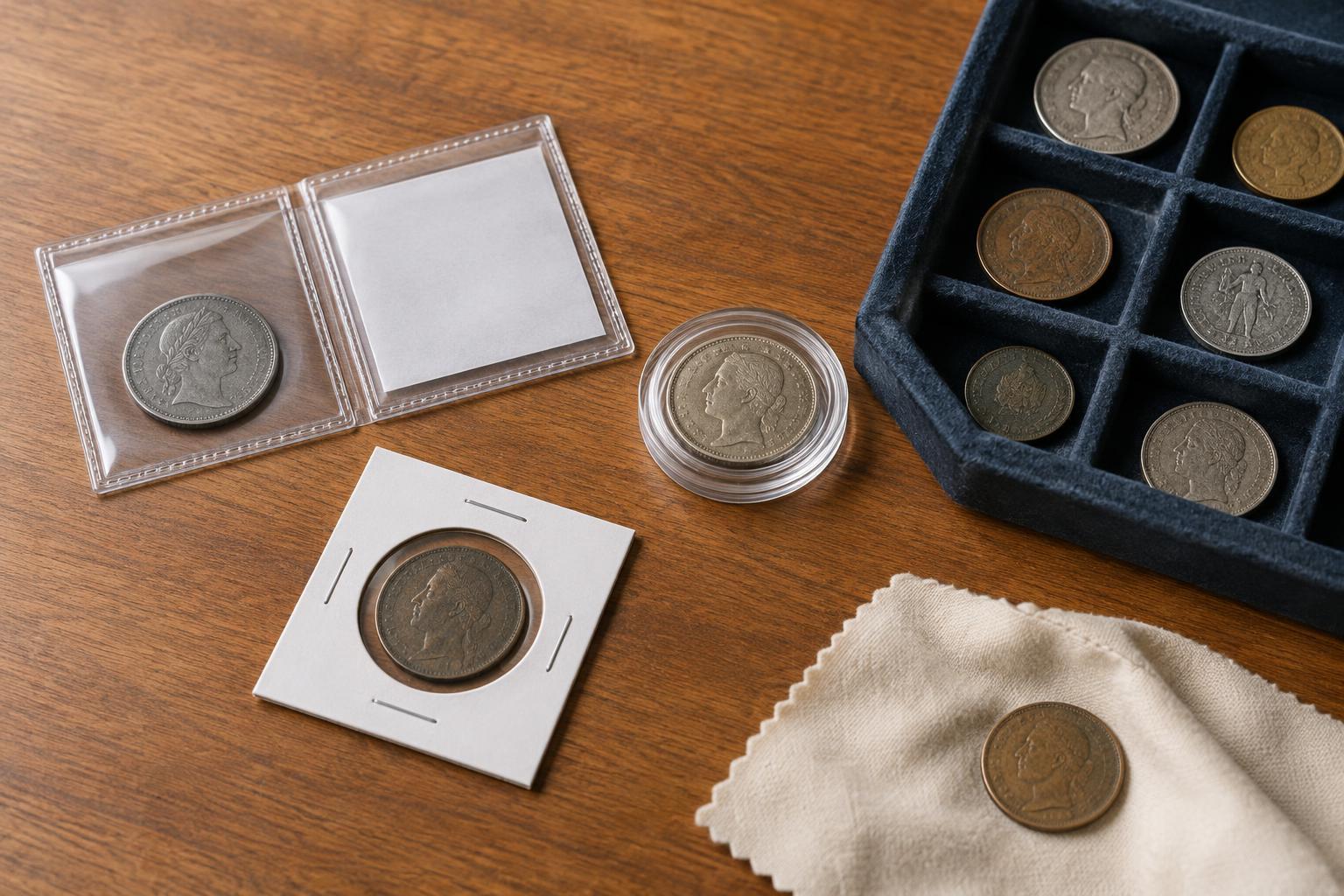
Think about how often you expect to rearrange the coins. Fixed spaces are satisfying for a planned set, but they can be awkward when you add varieties or change your collecting goals. Pages that accept individual holders offer more flexibility, although they make the album thicker. If a coin has delicate surfaces, unusual thickness or a holder you do not want to remove, let that coin’s needs guide the storage choice instead of trying to make every piece fit the same album.
Understand pages, openings and sliding covers
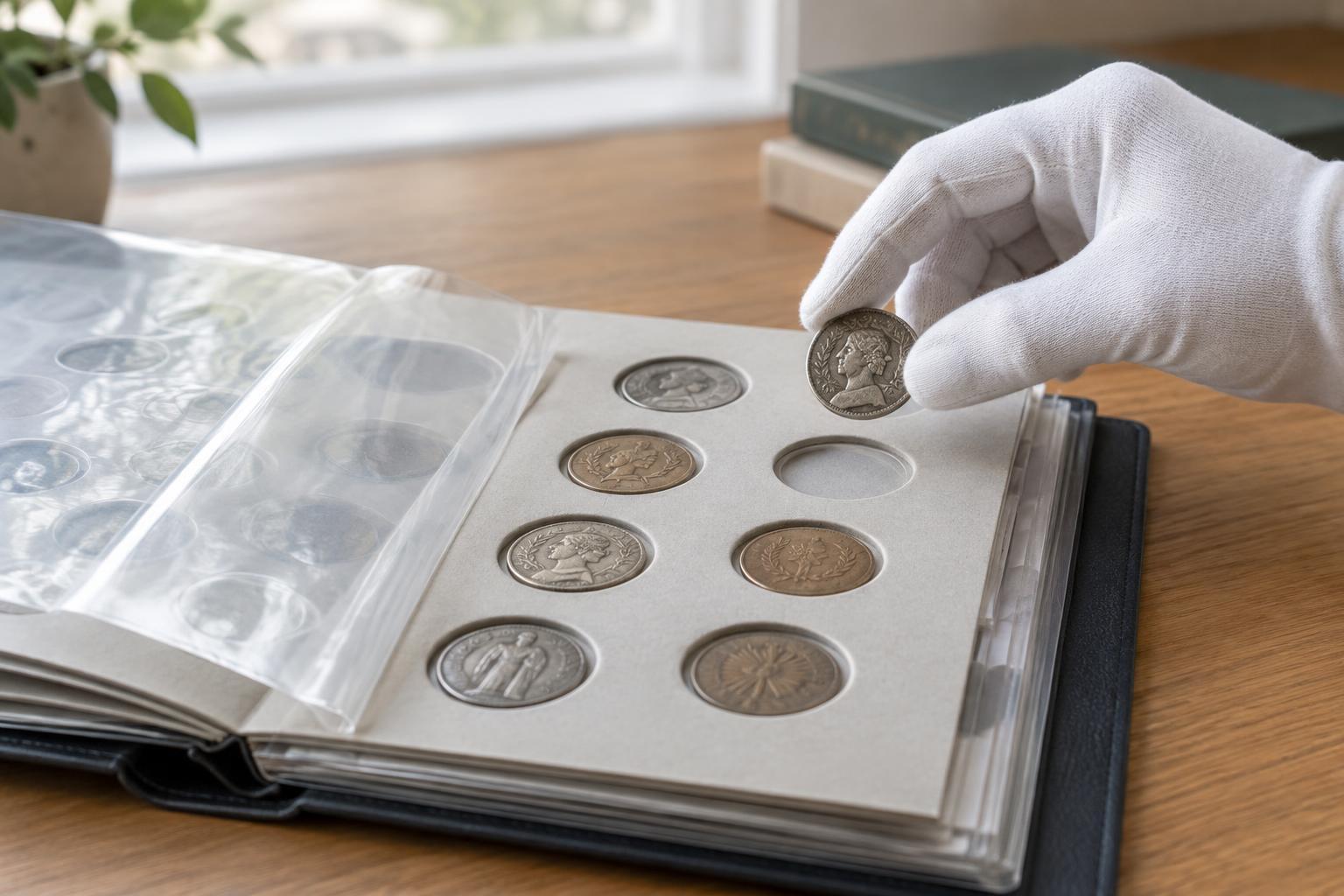
Album designs hold coins in different ways. Some pages have circular openings that grip a bare coin by its edge. Others use pockets for coins already enclosed in holders. In a slide-style album, a clear sheet is pulled across openings to keep coins in place while allowing a view of both sides. A slide can be convenient, but its movement matters: if it drags across a coin’s face, a trapped speck of grit may leave a mark.
Look at how a coin enters and leaves the page. Does it press into a tight opening? Can you reach the edge without touching the design? Can a sliding cover be moved without scraping over the coin? A firm fit helps prevent a coin from falling out, but forcing one into a hole that is too small can damage the coin or page. If the fit is uncertain, test the album with an ordinary duplicate before placing a coin you especially want to preserve.
Check what may touch the coin
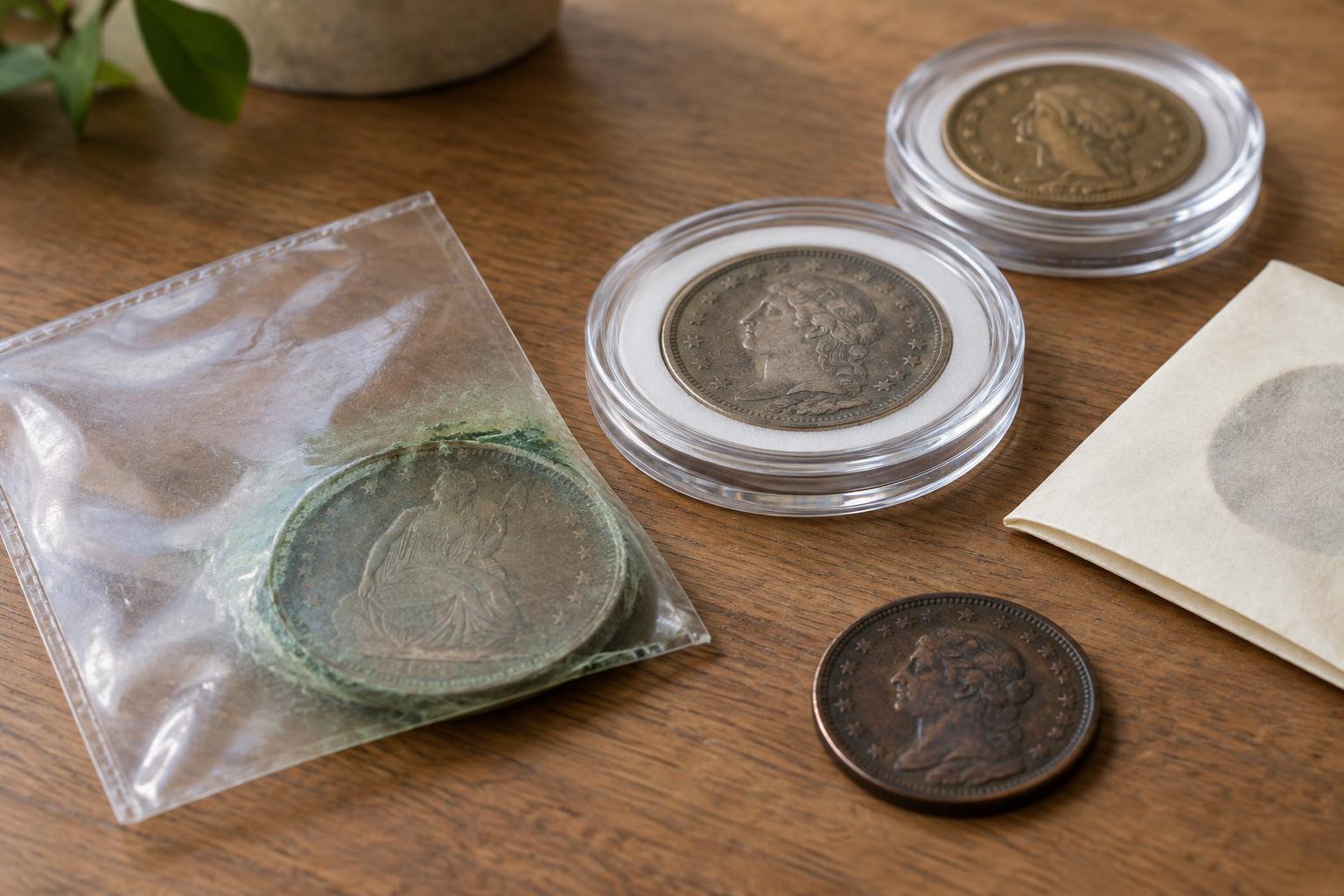
A coin in an album may touch the page opening, a pocket lining, a clear slide or a separate holder. Read the material description for each part, not just the cover. Collectors often look for products described as PVC-free or made with materials intended for long-term coin storage. Avoid assuming that words such as “archival” or “acid-free” tell you everything about the parts in direct contact with metal. If a manufacturer does not identify those materials, you may prefer a design that keeps the coin inside a known holder.
Surface contact is not only a question of plastic or cardboard. Dust, loose fibers and repeated rubbing can also affect a coin’s appearance. Album pages should be clean and dry when coins are inserted, and sliding covers should move freely. Keep food, drinks and adhesives away from open pages. If you notice a sticky feel, a strong plastic odor or visible residue in an old album, it is sensible to inspect its coins and consider moving them to suitable holders rather than continuing to use the album unquestioningly.
Choose a handling routine before filling the album
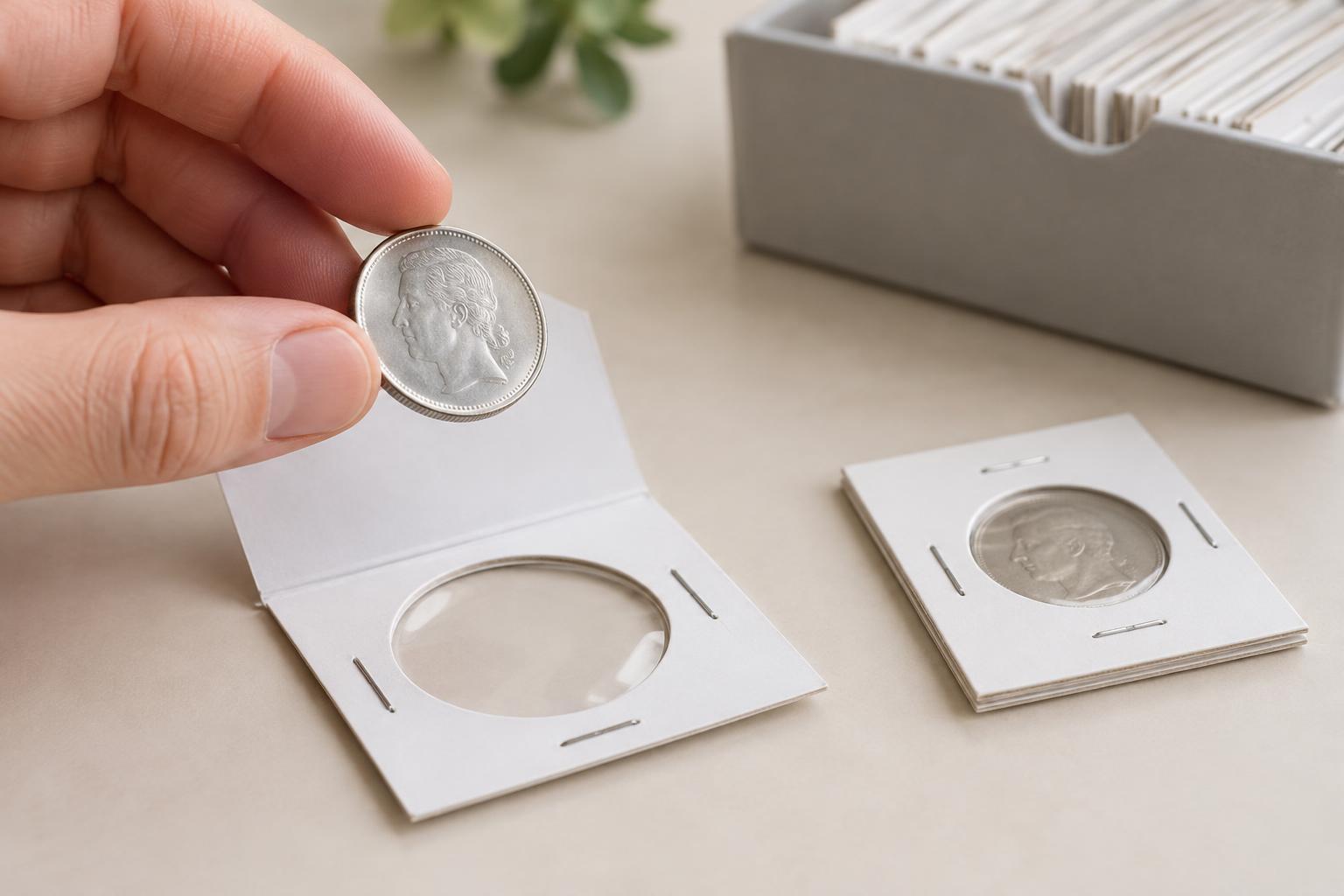
Prepare a clear work surface with enough room to lay an open album flat. Handle a bare coin by its edge with clean, dry hands, and work over a soft, clean surface in case it slips. Hold the page steady while placing the coin; avoid pushing on the raised design to seat it. For an album with slides, move each slide slowly and check that the coin is positioned correctly before closing the page. Do not repeatedly open and close a slide just to improve its alignment.
Resist the urge to clean a coin before putting it away. Rubbing can leave fine scratches, and even a gentle-looking method may alter a surface that collectors value. An album helps organize and display coins; it cannot reverse existing wear, and it does not eliminate the need for careful handling.
Store the filled album with care
Choose a stable, dry place away from leaks, direct sunlight and frequent temperature swings. Avoid compressing an album under heavy books, which can strain its pages or put pressure on coins and holders. Keep its cover closed when it is not in use, and open it occasionally to check for shifting coins, worn pages or changes in appearance. If a page begins to tear or a pocket no longer holds securely, replace it rather than relying on a loose fit.
No single album is ideal for every collection. A convenient display album may suit frequently viewed, ordinary examples, while coins you handle rarely or consider especially sensitive may be better kept in individual protective holders. The useful question is not simply whether an album looks attractive, but whether its fit, materials and handling method let you enjoy the collection without unnecessary contact with the coins.