What a holder can—and cannot—do
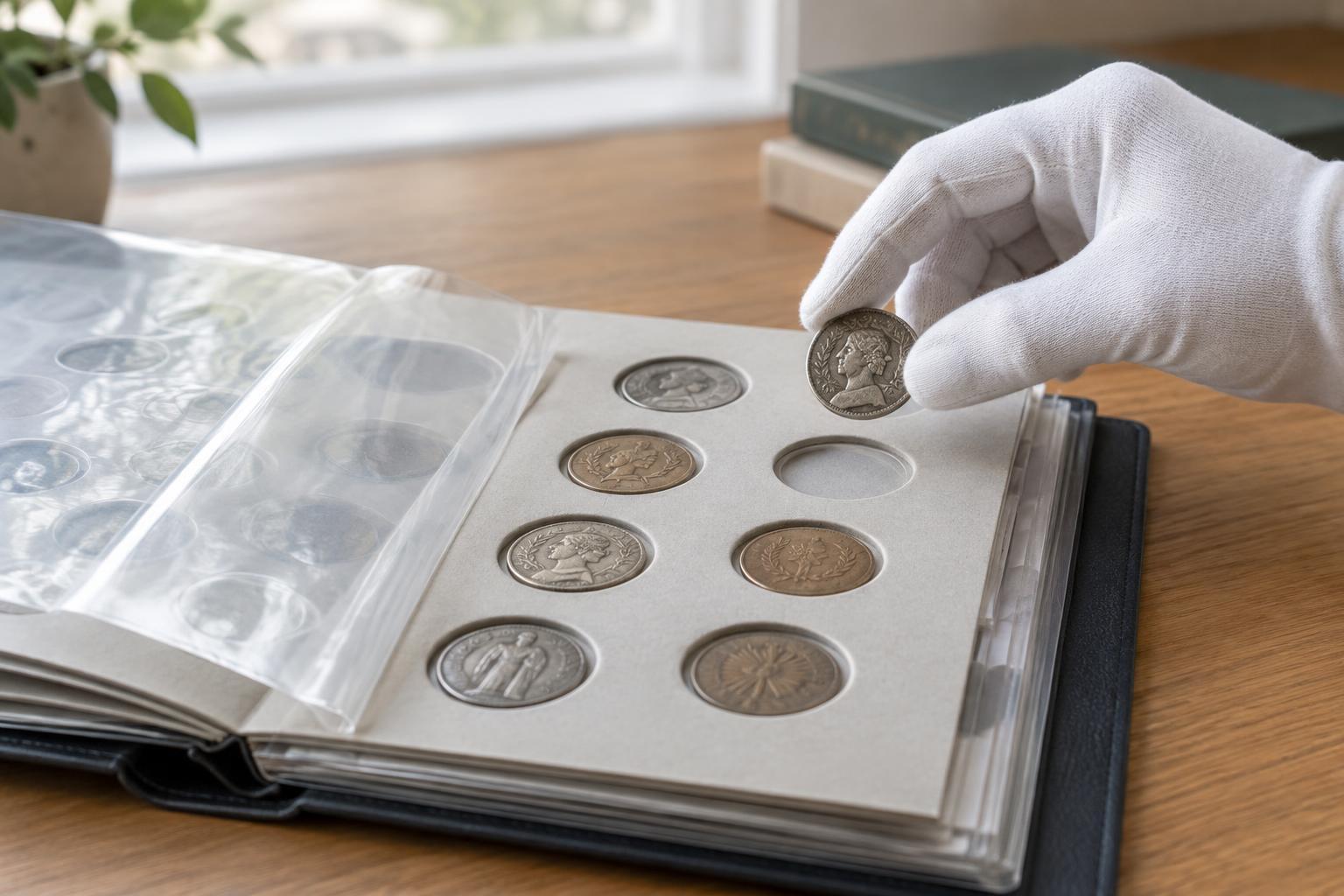
A holder gives a coin a place to live and reduces the need to touch its surfaces. Different styles also make coins easier to label, display or organize. No holder, however, can undo existing wear or protect a coin from every hazard. A coin can still be scratched while being inserted, and poor storage conditions can affect coins even when they are enclosed.
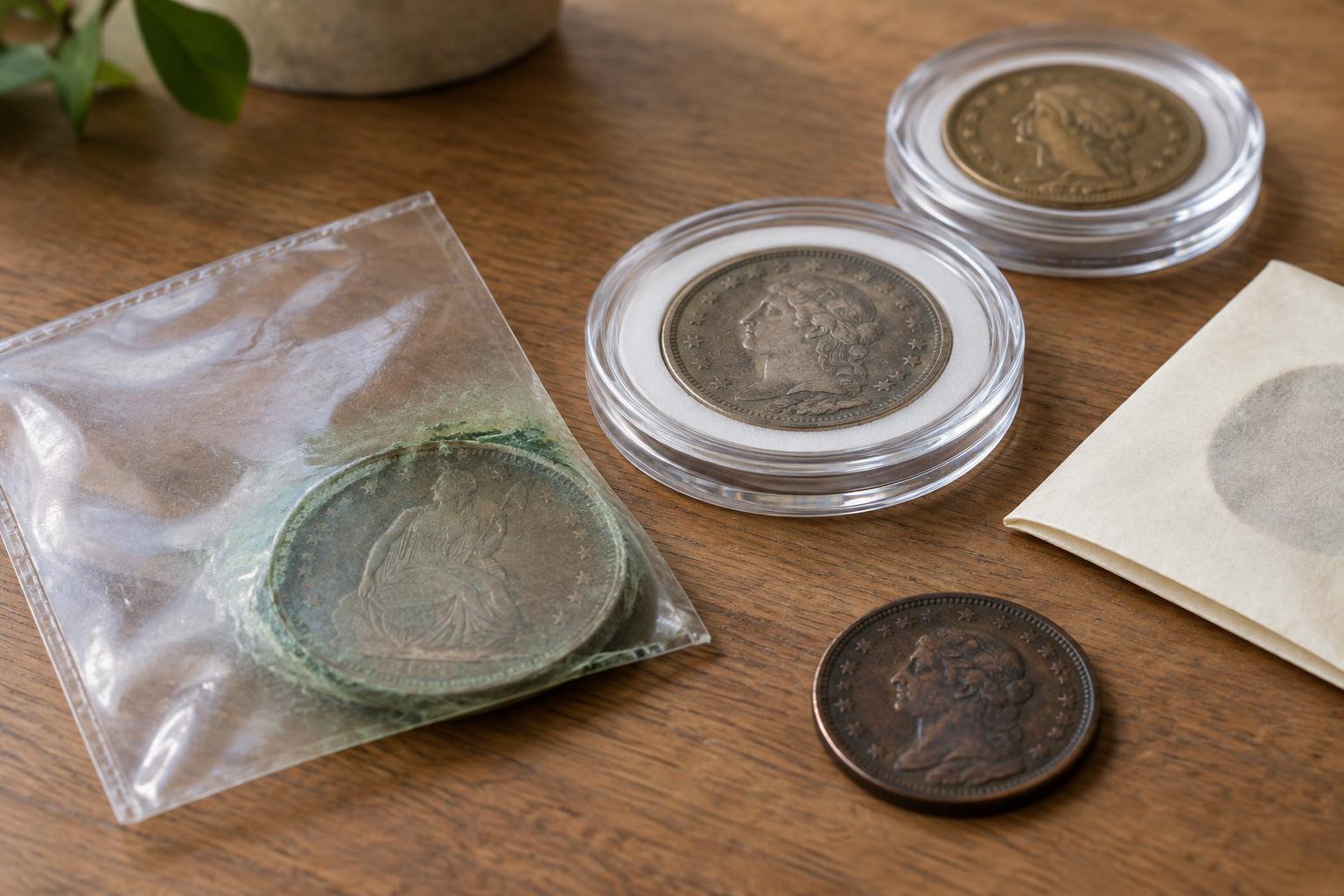
Before comparing styles, consider three questions: Will you need to remove the coin often? Do you want to see both sides without handling it? How will you store and identify it? Whatever you choose, look for materials intended for long-term coin storage. Some soft plastics contain additives that may affect coin surfaces over time; avoid unidentified flexible holders, especially for coins you plan to keep for years.
Flips: flexible for sorting and labeling
A flip is a small plastic holder, often with two pockets: one for the coin and one for an identification card. Flips are useful when you are sorting a new group of coins, recording dates and mintmarks, or arranging pieces in boxes. They take up little space, and a written insert can travel with each coin without marking the holder itself.
Material matters more than appearance. Flexible vinyl flips may contain plasticizers and are generally a poor choice for long-term storage. Stiffer flips made from materials such as polyester are commonly used as an alternative, though their rigidity means a coin can be scraped if pushed in carelessly. Hold the coin by its edge, open the pocket gently and avoid forcing a tight fit. Keep paper labels in a separate pocket so ink and paper do not rest against the coin.
Capsules: rigid protection with a clear view
A capsule is a rigid, usually transparent holder that closes around a coin. It allows both faces to be viewed while limiting direct handling. Capsules can be a good match for coins you revisit frequently, display individually or want to keep apart from neighboring pieces. They are bulkier than flips, so a large collection may require more storage space.
Choose a capsule sized for the coin rather than one that merely looks close. A loose coin may shift inside; a tight opening may make insertion or removal risky. Some capsules use an insert or ring to accommodate different diameters. Check that the insert and capsule are intended for coin storage, and make sure both the coin and the inside of the capsule are free of loose debris before closing it. Capsules are not automatically airtight, so they still belong in a suitable storage environment.
Cardboard 2×2s and trays: two ways to organize
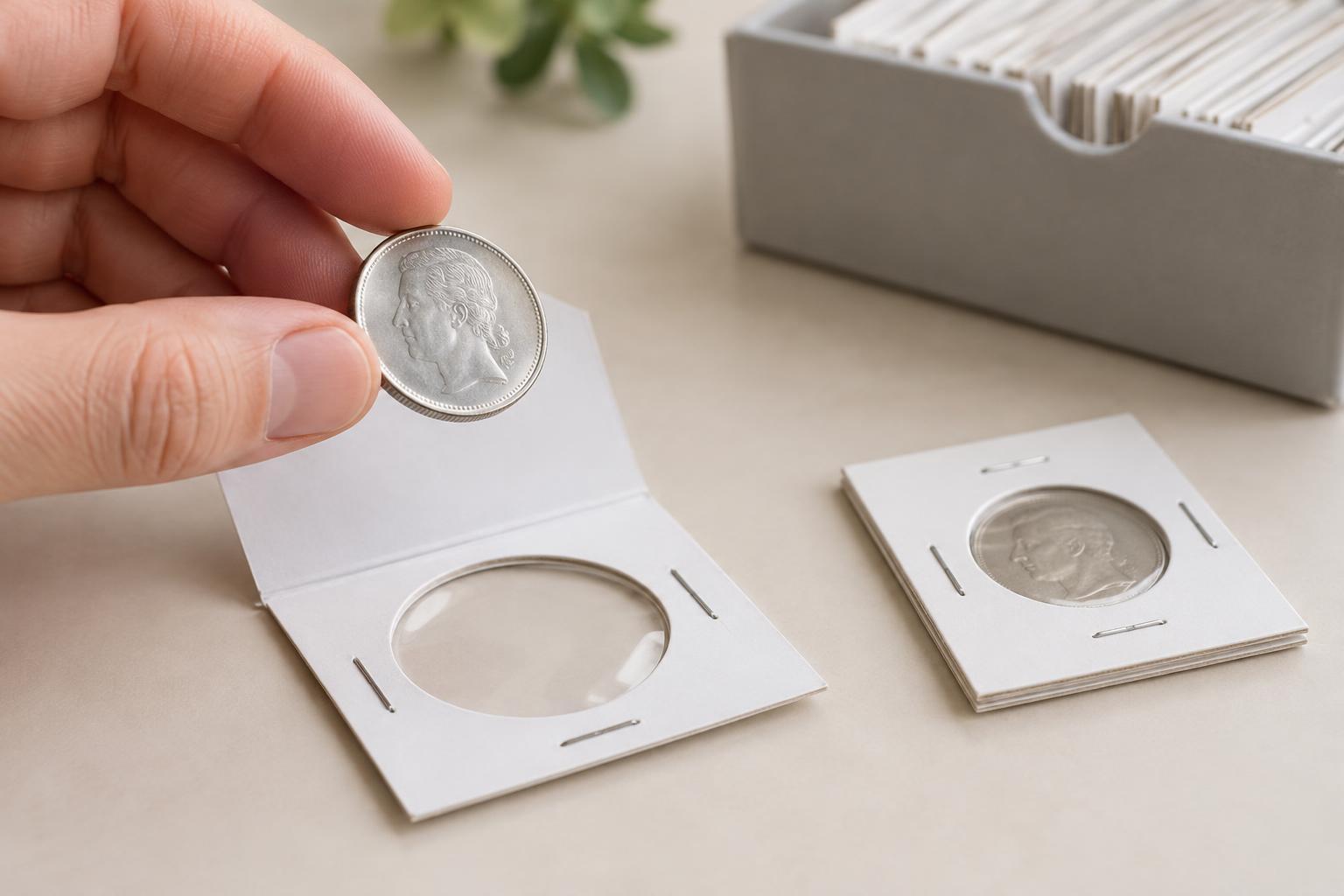
A cardboard 2×2 is a folding holder with a clear window. It offers room to write basic details on the cardboard and fits into many coin storage boxes and album pages. The window lets you inspect the coin without removing it. When closing a stapled 2×2, keep staples well away from the window and flatten their ends; a raised staple can scratch another holder or coin during stacking. Self-adhesive versions avoid staples, but check that the product is intended for coins and that its seal stays secure.
A tray organizes coins in individual spaces rather than sealing each one. Trays make it easy to view a group at once and can suit coins that already have their own holders. An uncovered coin in a tray remains exposed whenever the tray is opened, so handle the tray carefully and avoid crowding its compartments. If the tray has a lining, choose a material intended for coin storage and check it periodically for dust, loose fibers or deterioration.
Match the holder to the collection
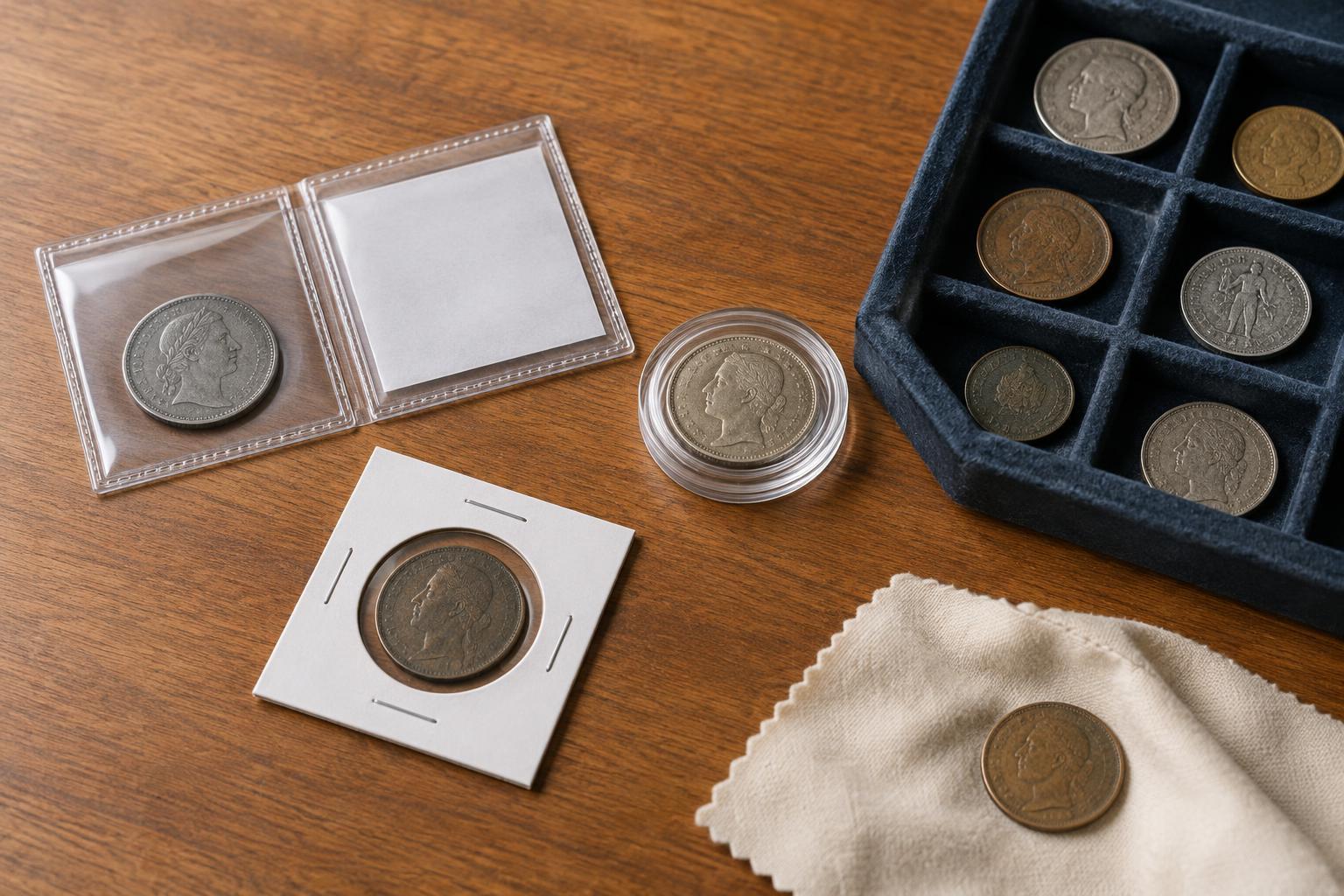
There is no single best holder for every coin. Flips and 2×2s make labeling and compact filing straightforward. Capsules offer a rigid barrier for coins you want to examine without touching. Trays provide an at-a-glance arrangement but usually work best inside a cabinet or box that keeps dust and accidental bumps at bay. For unusually shaped or fragile pieces, prioritize a secure fit over a uniform-looking display.
Whichever format you select, prepare a clean work surface and handle coins by their edges. Avoid cleaning a coin merely to make it look better in a holder; cleaning can alter its surface. Store holders in a stable, dry place away from leaks, excessive heat and frequent temperature swings. Check the collection from time to time for damaged holders or changes to coin surfaces. Good storage is less about buying the most elaborate container than choosing appropriate materials, fitting them carefully and leaving the coins undisturbed.