Why fingerprints matter
A fingerprint is more than a visible smudge. Skin can transfer oils, moisture, and other residues to a coin. On some surfaces, a mark may become more noticeable over time. Polished-looking fields, proof finishes, and coins with delicate toning can make even a small touch easy to see. The safest habit is therefore to avoid touching the broad front and back surfaces, which collectors call the obverse and reverse.
The goal is not to make every coin untouchable. Many circulated coins have already passed through countless hands, and careful handling may be all they need. But if you want to preserve a coin’s present appearance, treat every unnecessary contact as a chance to leave a mark. Handle it only when there is a reason to inspect it, photograph it, or move it into suitable storage.
Prepare the space before picking up a coin
Set up a clean, dry, uncluttered area before opening an album or holder. Work over a soft, stable surface, such as a clean cloth or pad, so an accidental drop is less likely to damage an edge. Keep food, drinks, pens, and loose objects away from the coin. Good lighting lets you see details without repeatedly turning or repositioning it.
Wash your hands and dry them thoroughly before handling coins, even if you plan to touch only the edges. Clean hands reduce the chance of transferring residue from a holder, table, or another object. If you are handling several coins, place their holders where you can reach them easily. Preparing each destination in advance means you spend less time holding a coin in the open.
Hold the edges, not the faces
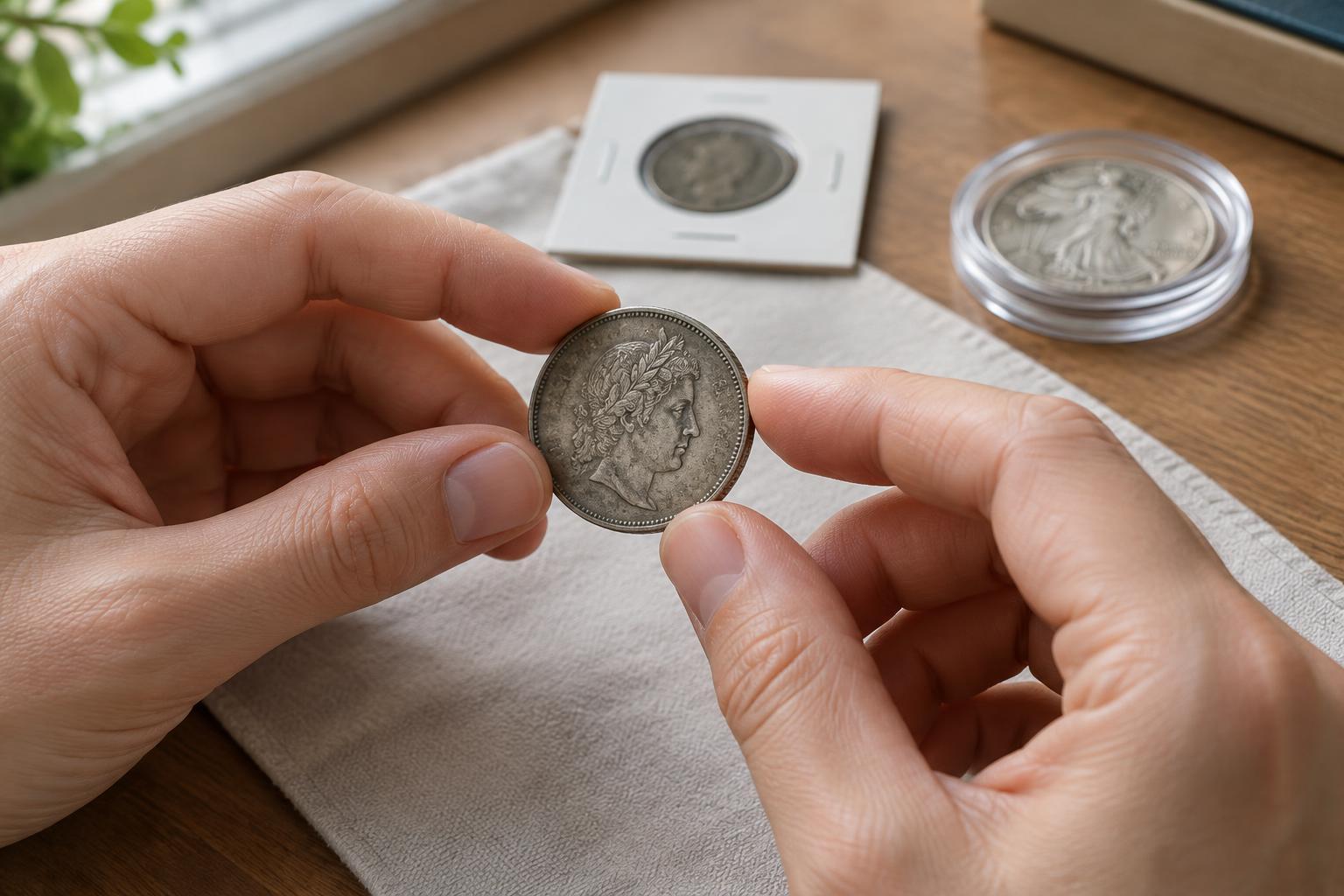
Pick up a loose coin between your thumb and forefinger by its rim or edge. Use a gentle but secure grip, and keep it low over your work surface. Avoid pressing a fingertip onto the design to steady it. If you need to see the other side, rotate the coin while maintaining your edge grip rather than laying a finger across its face.
Some coins are very small, thin, or awkward to grip. Do not force a precarious edge hold if you are likely to drop the coin. A holder that allows viewing from both sides may be the better way to inspect it. When a coin is already in a protective capsule or other suitable holder, handle the holder instead of removing the coin merely for a closer look.
Decide whether gloves will help
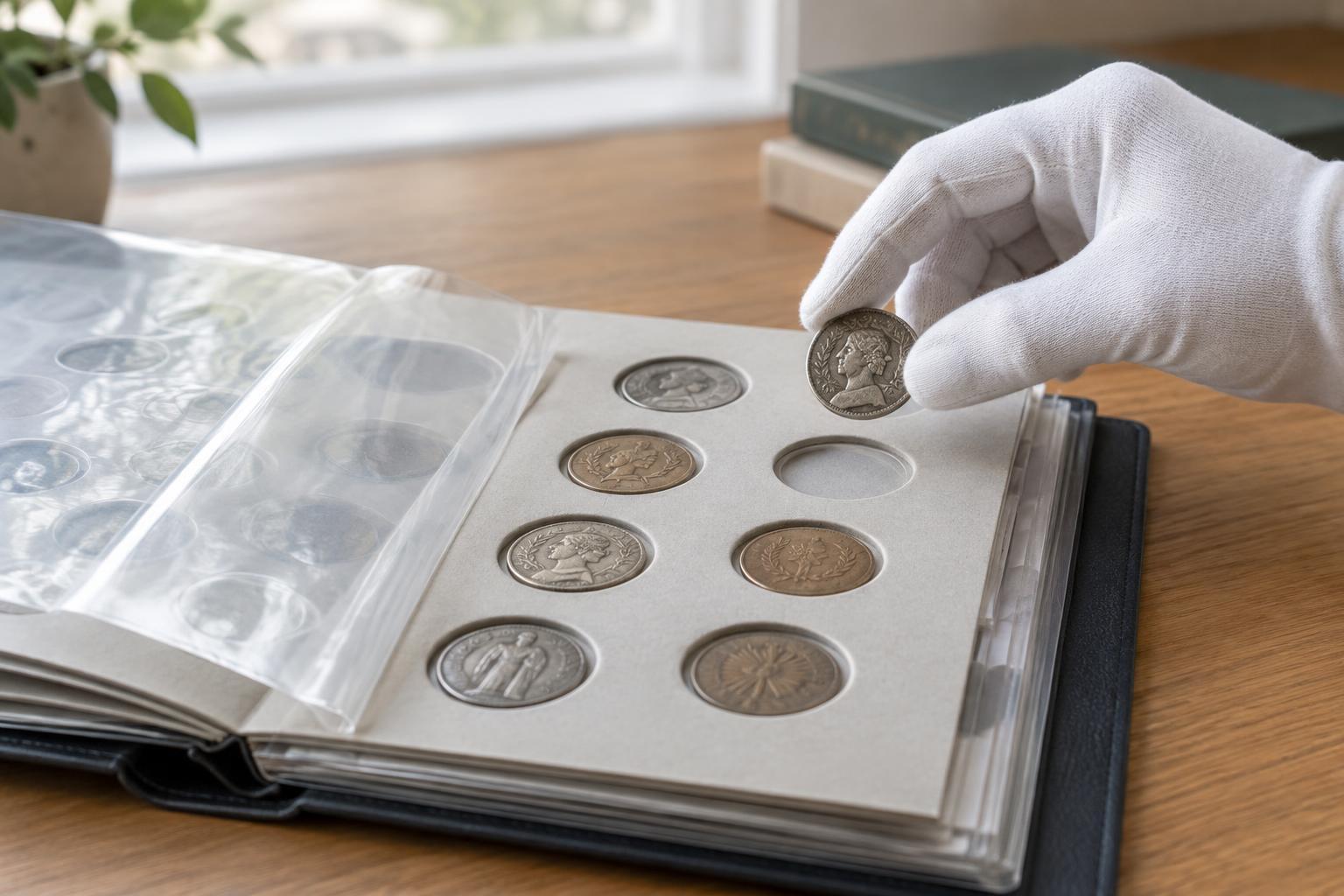
Gloves can provide a barrier between skin and metal, but they are not a substitute for careful handling. Clean, well-fitting, powder-free nitrile gloves may help when handling coins that are easy to mark. Replace a glove if it becomes dirty or damp, and continue to hold coins by their edges. A glove that has touched a tabletop, phone, or face can transfer residue too.
Cotton gloves are sometimes used for collectibles, but their loose fit can make small coins harder to grip, and fibers may catch on raised details. Bare, clean, dry hands used only on a coin’s edge may offer better control for some tasks. Choose the approach that lets you maintain a secure grip with the least contact. If you are unsure, leave a coin in its holder while examining it.
Put coins away without trying to erase a mistake
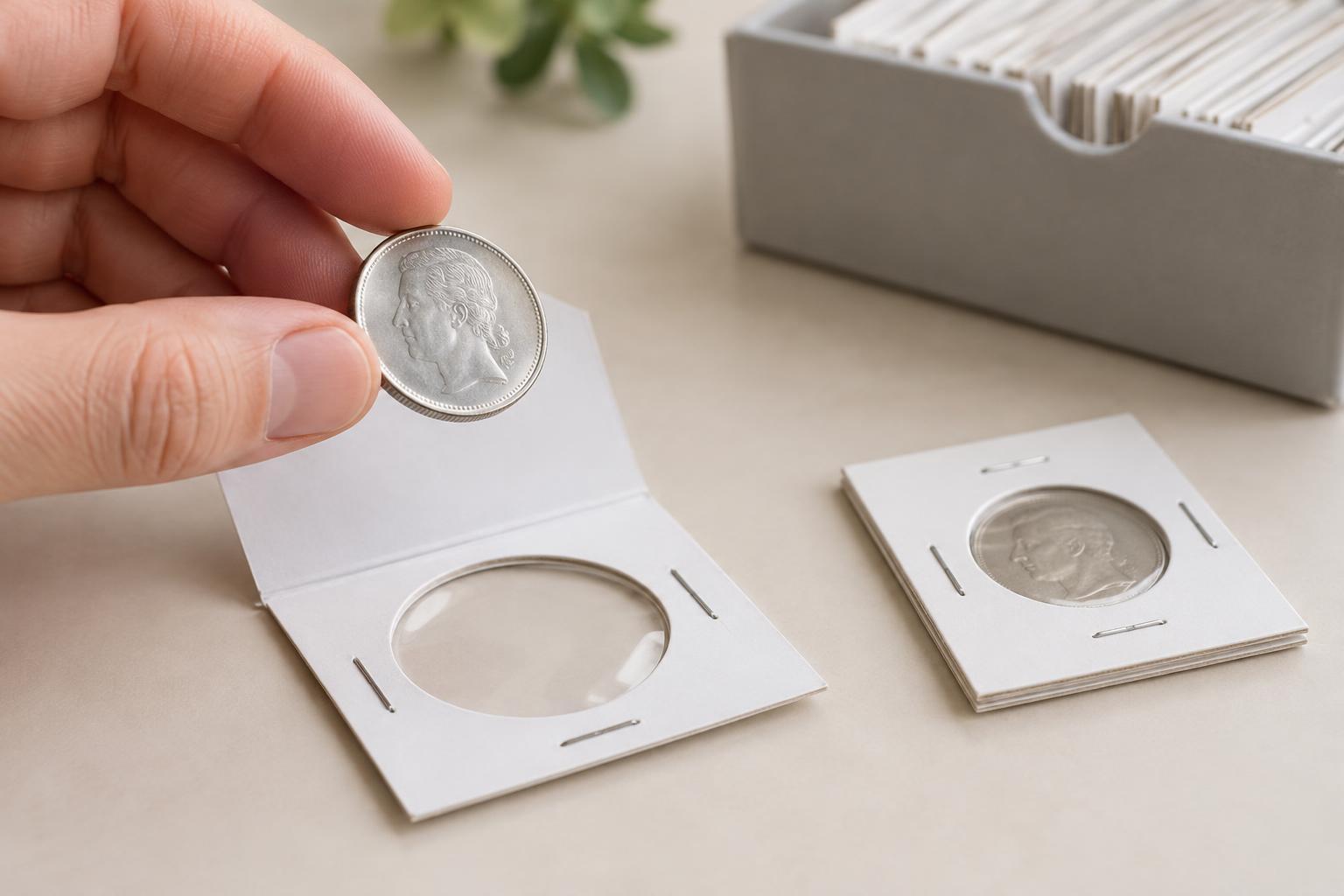
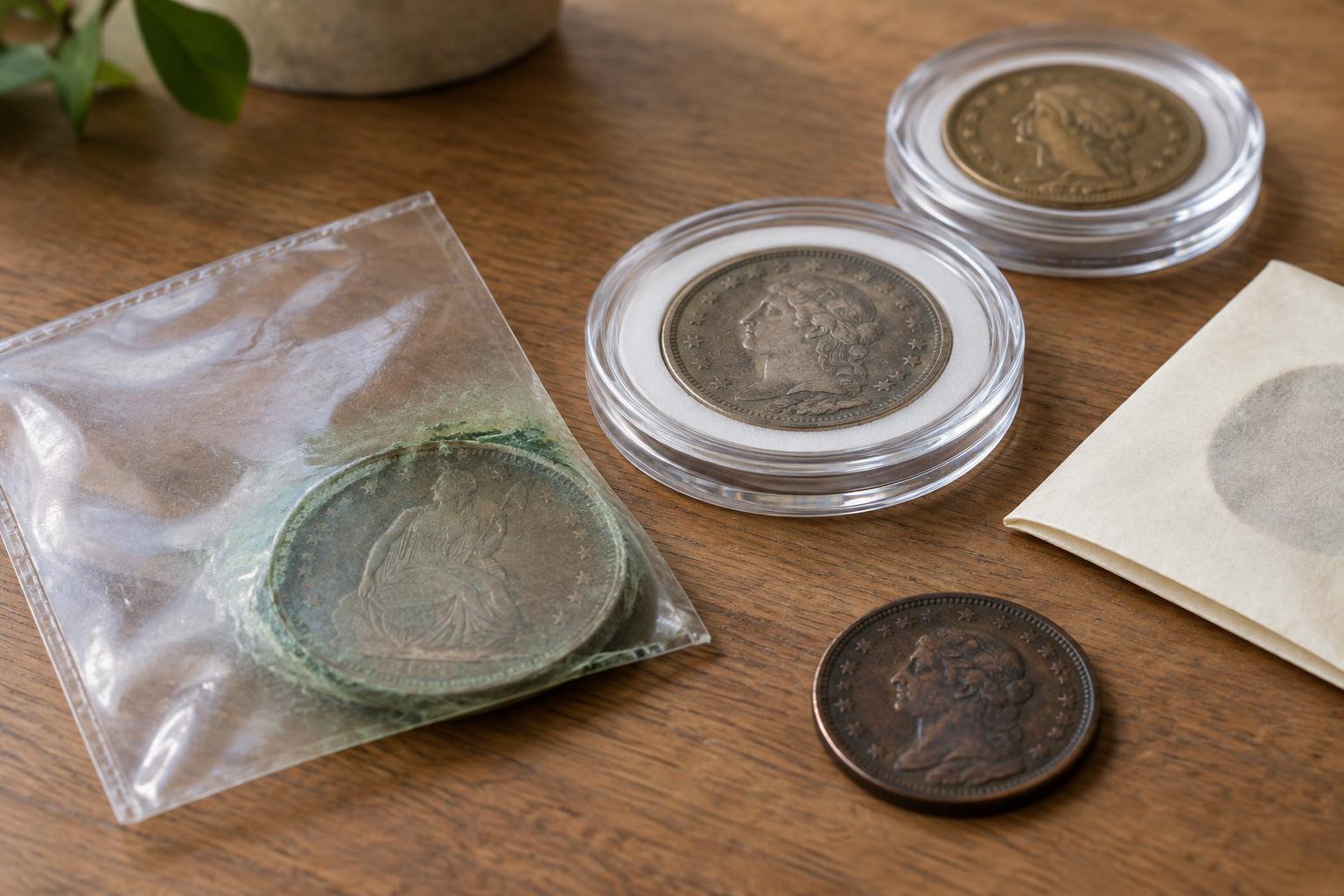
Have a suitable holder ready before you remove a coin from its current one. Hold the new holder open where possible, and avoid sliding a coin against a hard edge or pressing on its faces to seat it. Choose holders intended for coin storage, and check that materials touching the coin are appropriate; some soft plastics can cause problems over time. Store coins in a dry, stable place and handle their holders whenever you can.
If you accidentally touch a coin’s face, resist the urge to rub away the fingerprint. Wiping can leave fine scratches, and an attempted cleaning may change the coin’s appearance more than the mark itself. Put the coin somewhere safe while you decide what to do. For a coin you consider particularly important, seek advice from a qualified coin-conservation specialist before attempting any treatment. Prevention is usually simpler than correcting a handling mark.