Why sulfur matters to silver coins
Silver can react with sulfur-containing compounds in its surroundings. The resulting surface change may appear as pale gold, brown, gray, or darker toning. It can develop gradually, and its appearance depends on the coin’s surface and storage conditions. Humidity and temperature changes may also affect how quickly a coin changes, so the material touching a coin is not the only consideration.
Toning is not automatically damage. Some collectors appreciate an evenly toned coin, while others prefer a brighter appearance. The practical goal of careful storage is not to guarantee that silver will never change color. It is to avoid preventable exposure and give each coin a more stable environment. That matters whether a coin is kept for its design, history, or place in a collection.
Look beyond the coin holder
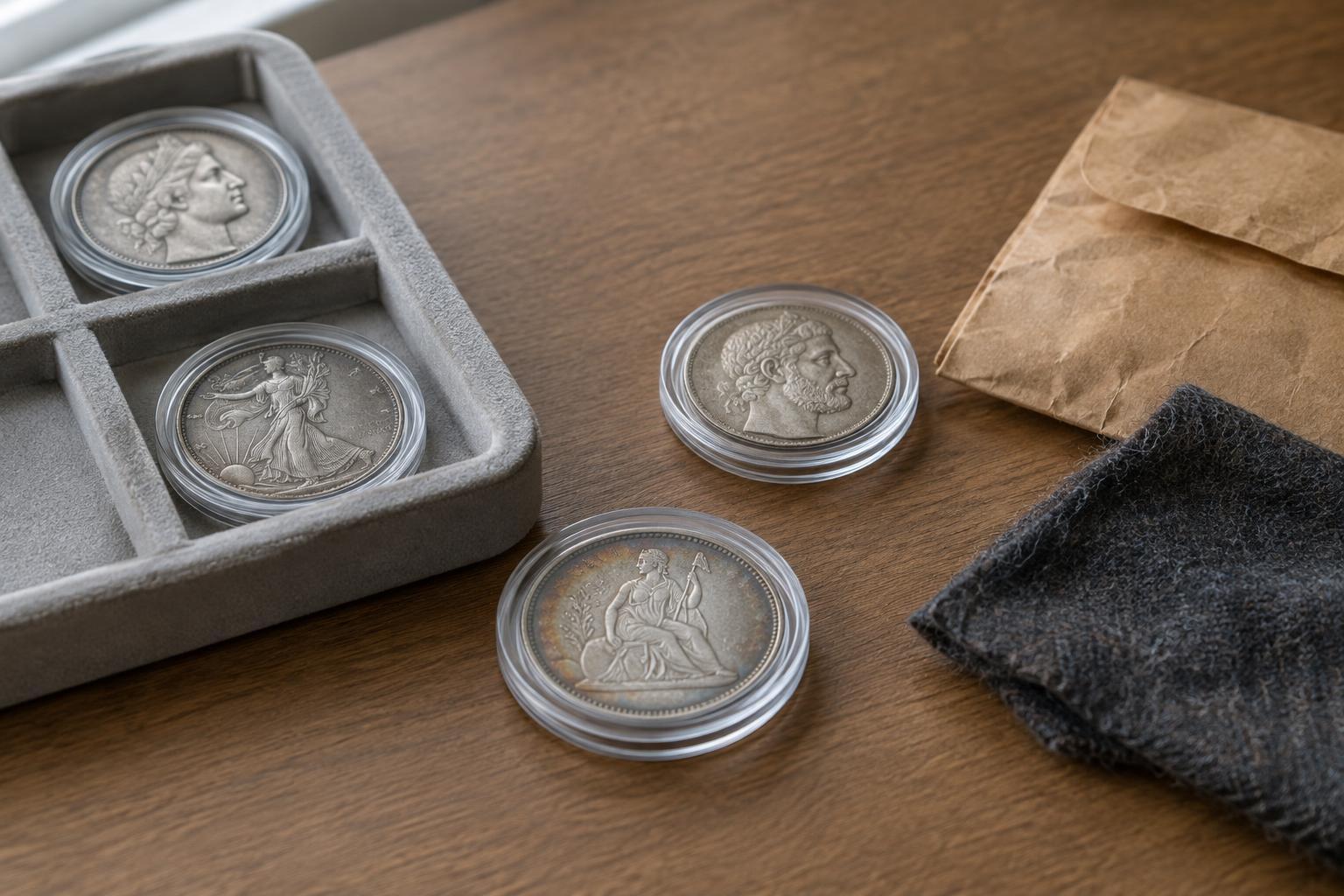
A coin can be exposed to materials beside its holder as well as materials touching it. Certain papers and cardboard products, wool, felt, rubber, adhesives, and some foams may contain sulfur or release compounds that affect silver. Their composition varies, so appearance alone is not a reliable guide. An old envelope or a display case lined with fabric may look suitable while still being a poor long-term choice.
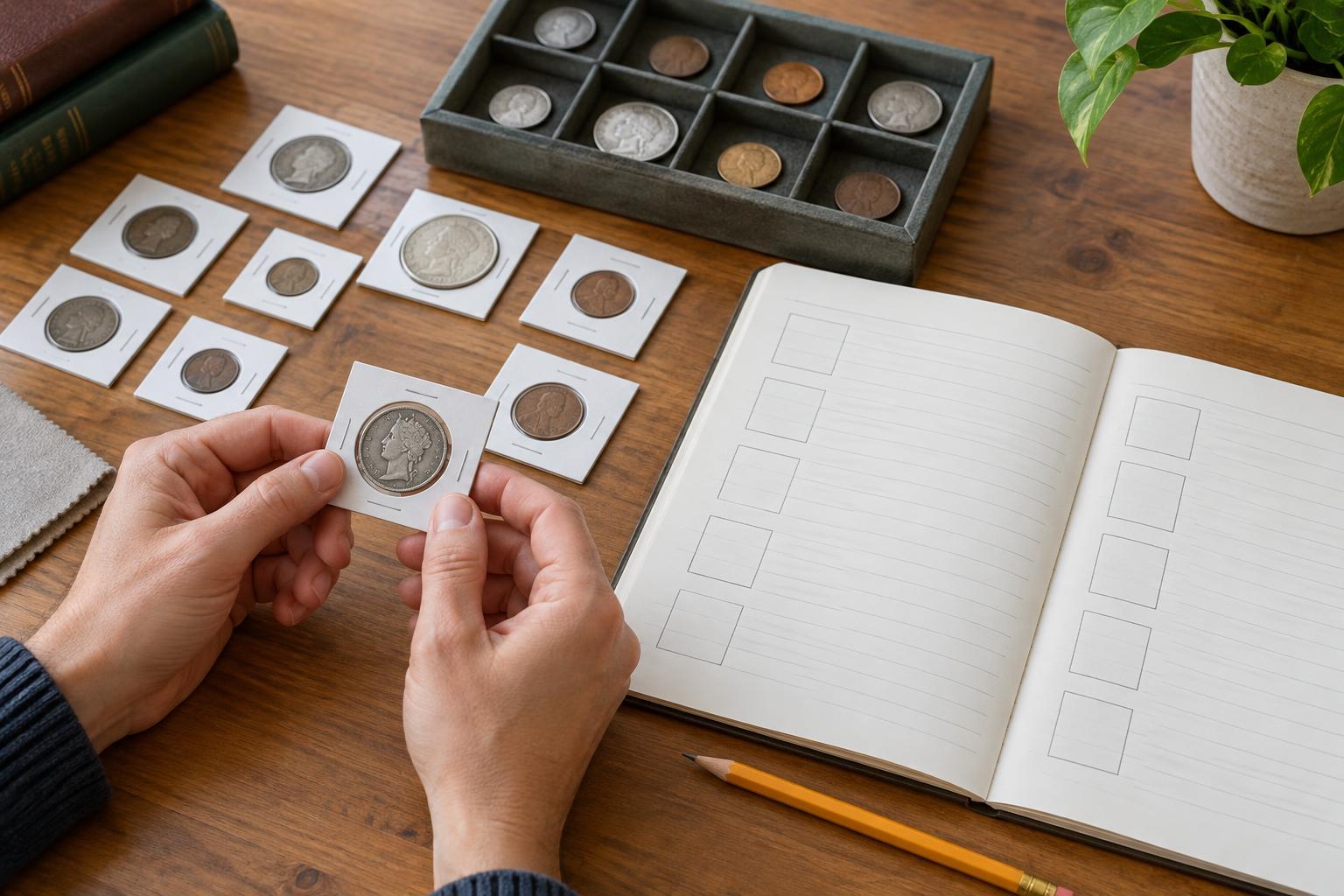
Consider the whole storage arrangement: the insert inside a box, the label tucked into a flip, the cushioning beneath a tray, and any bands holding a group of coins together. Avoid placing rubber bands directly around holders or leaving loose silver coins against ordinary paper or cardboard. If a coin has been stored in an unknown material, moving it into a more suitable holder is usually simpler than trying to identify every ingredient in the old one.
Choose holders with known materials
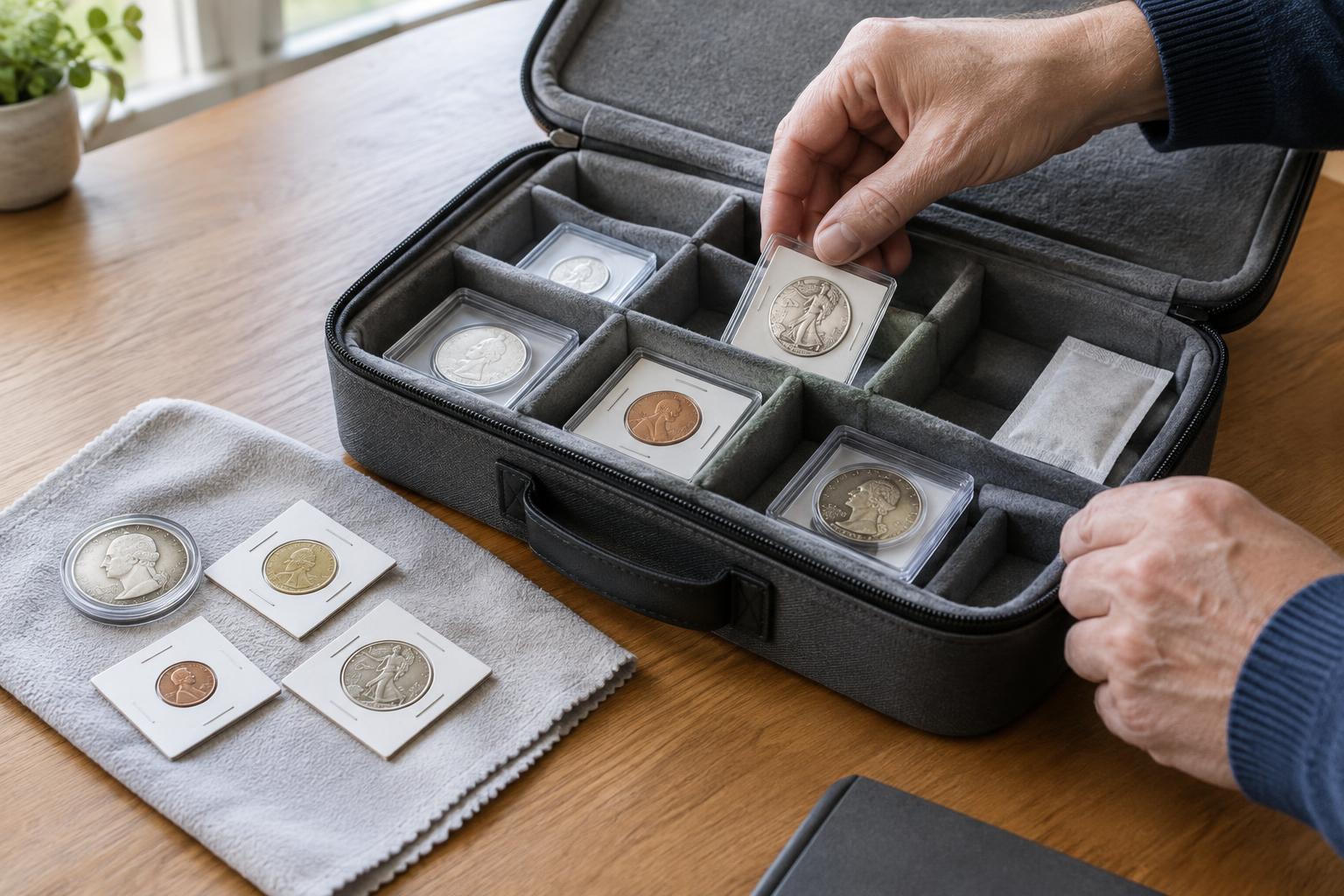
For individual coins, look for holders made from materials commonly used for long-term coin storage, such as polyester, polyethylene, or polypropylene. Rigid capsules and tubes can also be useful when their materials are identified and the coins fit properly. A holder should protect the coin from contact and handling without pressing on its surfaces or allowing it to rattle excessively.
Choose paper inserts, envelopes, and boards made for archival coin storage when those items are needed, but treat broad labels such as “archival” or “acid-free” as a starting point rather than proof that a product is sulfur-free. Check the maker’s material description when possible. Avoid soft, flexible plastic holders of uncertain composition; some plastics can create storage problems of their own. A clear, well-documented holder is generally a better choice than an attractive display material with unknown contents.
Set up a steady storage space
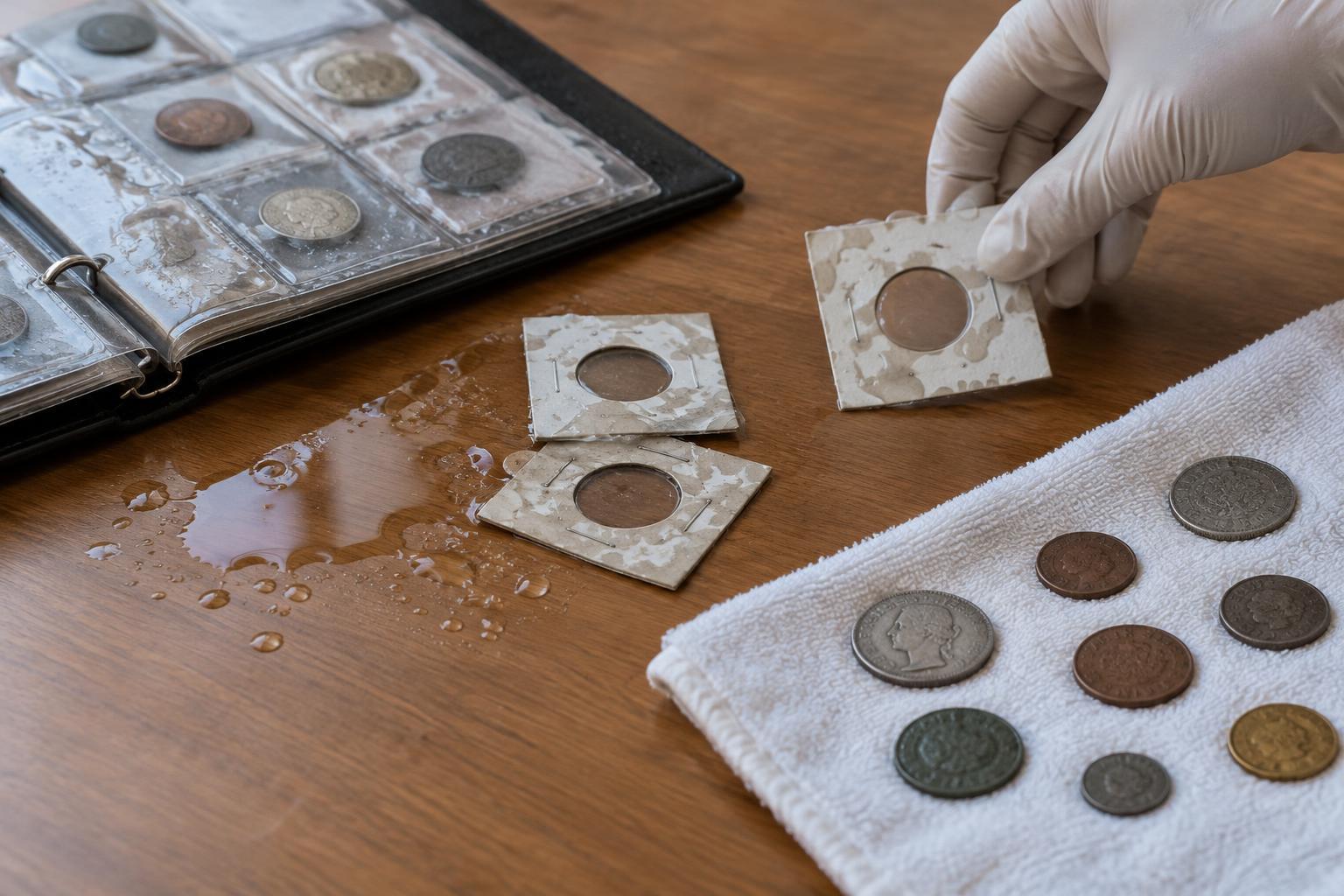
Keep housed coins in a clean, dry area away from frequent temperature swings. Moisture can encourage unwanted surface changes and can also affect paper packaging. A closed cabinet or storage box offers protection from dust and casual handling, but a closed container is not a guarantee against reactions if unsuitable materials are sealed inside it.
Separate coins from household products and display materials whose composition you do not know. If you use a humidity-control product, keep it from touching coins and follow its instructions; it does not replace suitable holders. Check stored coins occasionally so you can notice a damaged holder, trapped moisture, or an unexpected change in appearance. Handle a coin by its edges over a soft, clean surface when rehousing it, and avoid touching its faces.
What to do if a coin has already toned
If a silver coin has changed color, first consider its storage. Remove it from a questionable envelope, tray, or holder and place it in a suitable replacement. Keep a note of where it was stored and whether the appearance continues to change. This helps you make better storage decisions without assuming that every dark area has the same cause.
Do not rub, polish, or dip a coin simply to restore a bright look. Cleaning can alter the surface, leave scratches, or remove details of its history that collectors may wish to preserve. A stable, toned coin may need no treatment beyond better storage. For a coin you consider especially important, seek an experienced numismatic conservator’s opinion before attempting any surface treatment.