Stop the water and take a careful look
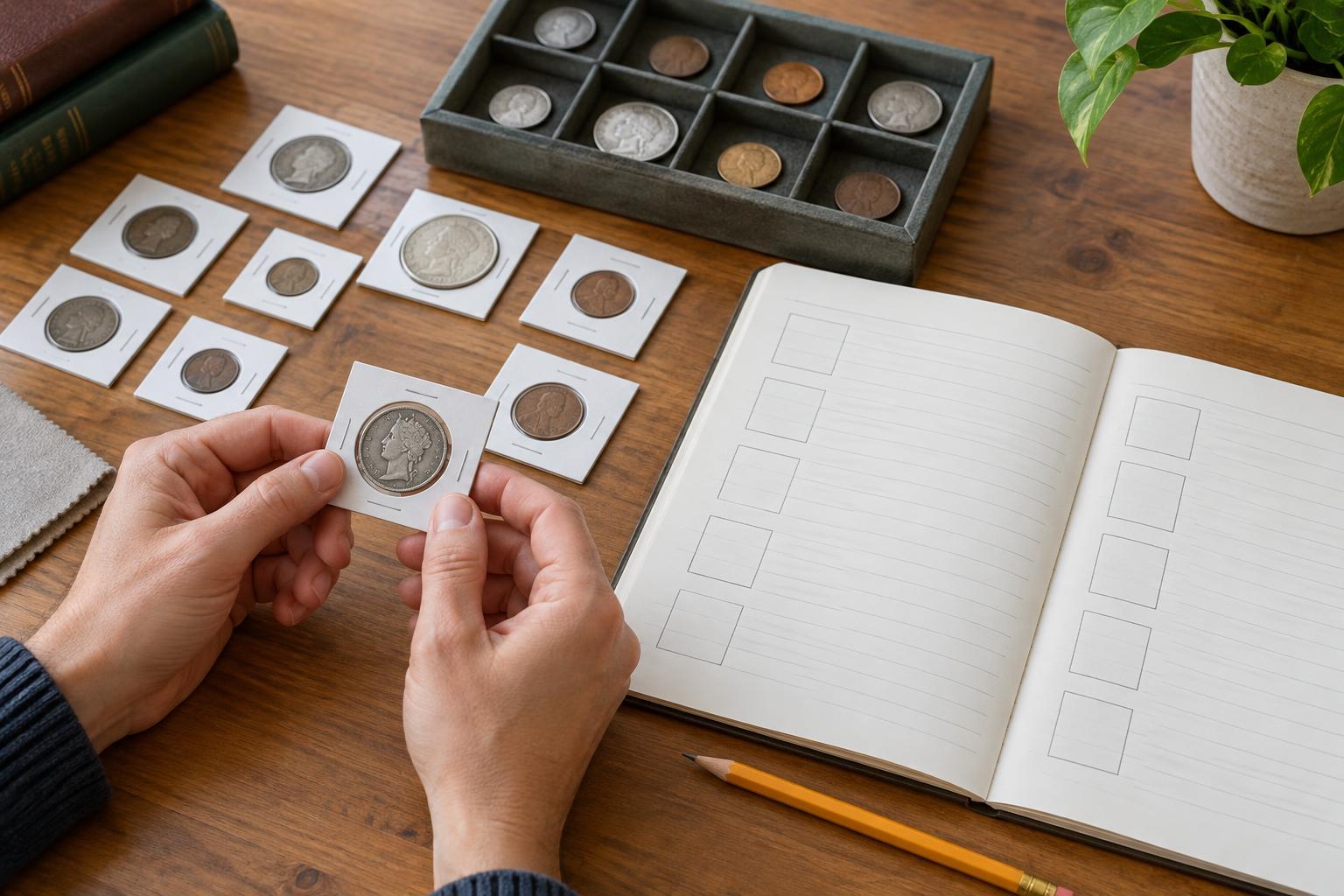
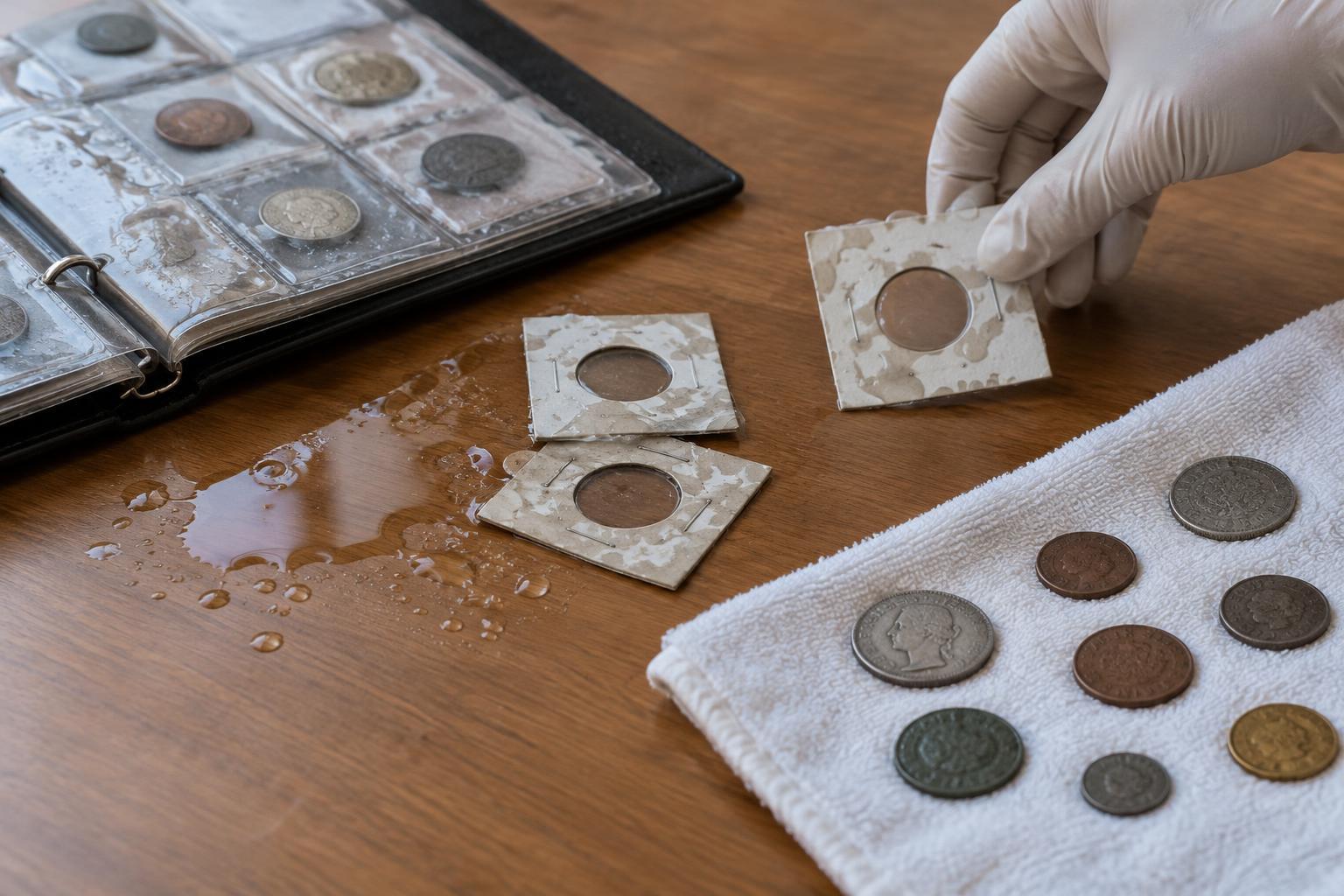
First, move the collection away from the leak or spill, provided it is safe to do so. If water is near electrical equipment or the area is otherwise hazardous, deal with that safety issue before handling the coins. Set the collection on a clean, dry surface and note what got wet: loose coins, individual holders, cardboard flips, albums or storage boxes.
Try to identify the water source. A small spill of clean water is different from a flood that may have carried dirt, salt or other contaminants. You do not need to determine exactly what is in the water before acting, but the distinction helps you decide whether gentle drying is enough or whether to ask a coin-conservation specialist for guidance. If you can, photograph the collection as you found it. Photos can help you keep track of which coins belonged in which holders.
Handle coins as little as possible
Clean, dry hands are useful for handling ordinary coins by their edges. If you use gloves, make sure they are clean and fit well enough that you will not drop anything. Avoid touching the front and back surfaces, where fingerprints can leave residues. Work over a soft, clean surface so a coin has a short, cushioned fall if it slips.
Do not rub, scrub or polish a wet coin, even if you can see dirt on it. Grit can scratch the surface, and wiping can change the appearance of a coin in ways that cannot be undone. Avoid household cleaners, metal polish, heat guns and hair dryers. Trying to make a coin look bright is not the same as protecting it from moisture.
Separate wet packaging from the coins
Damp cardboard, paper envelopes and album pages can hold moisture against coins. When you can remove a coin without forcing it, separate it from wet packaging and keep its label or identifying information nearby. Work with a few items at a time, recording where each one came from so dates, mint marks or collection notes do not get mixed up. Handle torn or stuck holders gently rather than pulling a coin free.
Some coins are sealed in hard plastic holders. If the inside appears dry, leave the holder closed and dry its exterior. If you see moisture or fogging inside a sealed holder, do not pry it open as a first step; ask a knowledgeable dealer or conservation professional how to proceed. Keep wet paper records apart from the coins while they dry, since transferring ink, fibers or dirt onto a coin creates another problem.
Let ordinary coins dry without friction
For loose coins touched by clean water, place them separately on a clean, nonabrasive surface in a dry room with gentle air circulation. Give them space rather than stacking them. Letting water evaporate without wiping is generally safer than blotting the coin’s surfaces. A room fan can circulate air nearby, but avoid a strong stream that could blow coins or debris across the work area.
If a coin has been exposed to salt water, muddy water or an unknown liquid, drying alone may leave residues behind. Resist experimenting with rinses or chemicals, particularly on coins you think may be valuable, unusually toned or historically important. A specialist can help you weigh the risks of leaving contamination in place against the risks of treatment. Do not put still-damp coins straight into new holders: trapped moisture can continue to affect their surfaces.
Check, document and rehouse only when dry
Once the coins and your work area are dry, look for new spots, haze or other changes without trying to remove them. Make a simple list of affected items and any changes you notice. Coins with active-looking residue, persistent moisture inside a holder or damage that matters to you are good candidates for an expert opinion. What is appropriate for a common circulation coin may not be appropriate for a rare or delicate one.
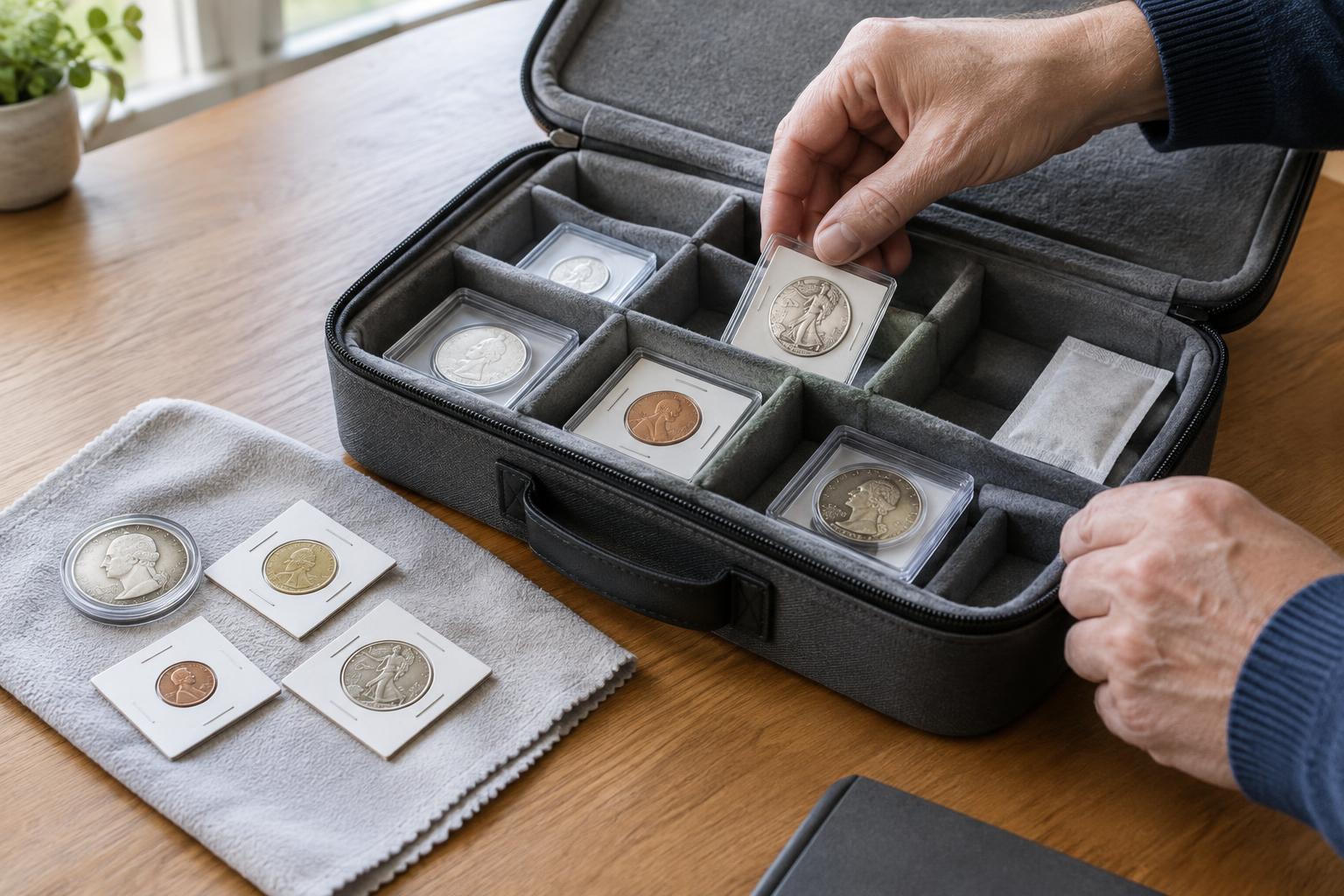
Replace water-damaged packaging with clean, dry holders intended for coin storage. Store the collection in a stable, dry location away from likely leaks, rather than returning it immediately to a damp box or cabinet. Check it again after a short interval: the first drying session may not reveal moisture trapped in an album, label or storage space. The goal is not to restore every coin to its previous appearance. It is to prevent avoidable additional damage while preserving the information that makes the collection meaningful.