Start with a purpose, not a perfect system
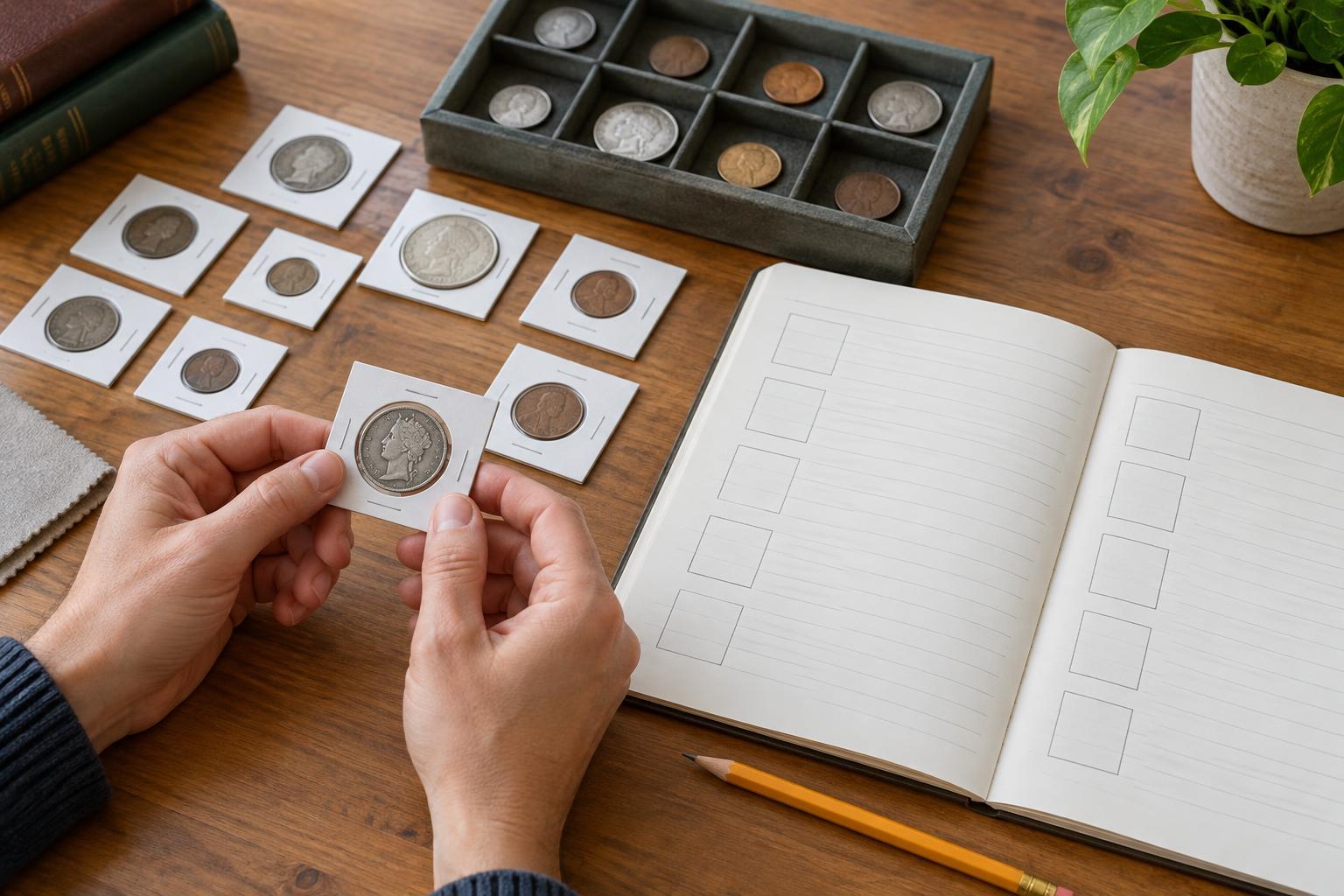
A coin inventory is a list that helps you answer ordinary questions: Do I already have this coin? Where did I put it? Which details did I notice when I last examined it? It does not need to be a formal catalog or a running estimate of your collection’s value. A notebook, a spreadsheet, or a simple document can all work if you are comfortable updating them.
Before entering anything, decide what one entry represents. For a small collection, make one entry for each coin, even if several appear to be the same type. That lets you record differences in condition, appearance, and storage location. If you have a large group of common duplicates, you can list them together for now and separate them later when there is a reason to do so.
Record the details you can see
Begin each entry with the country or issuing authority, denomination, date, and mintmark if one is present. Add a short description if those details do not clearly distinguish the coin: for example, a portrait, a prominent symbol, or words on the reverse. If you cannot read a date or identify a design, write “uncertain” rather than guessing. An inventory remains useful when it shows which questions are still open.
Give each coin an inventory number that you control, such as 001, 002, and 003. Put that number beside its entry and, if practical, on the outside of its holder or on a separate label associated with it. Never write directly on a coin. The number gives you a stable way to connect your notes, photographs, and storage location even if you later correct an identification.
A brief example might read: “014 — country uncertain; small silver-colored coin; date appears to end in 8; bird on reverse; stored in box A, slot 6.” That entry is incomplete, but it is enough to find the coin and continue investigating. A clear description is more helpful than a confident label you have not verified.
Make location easy to understand
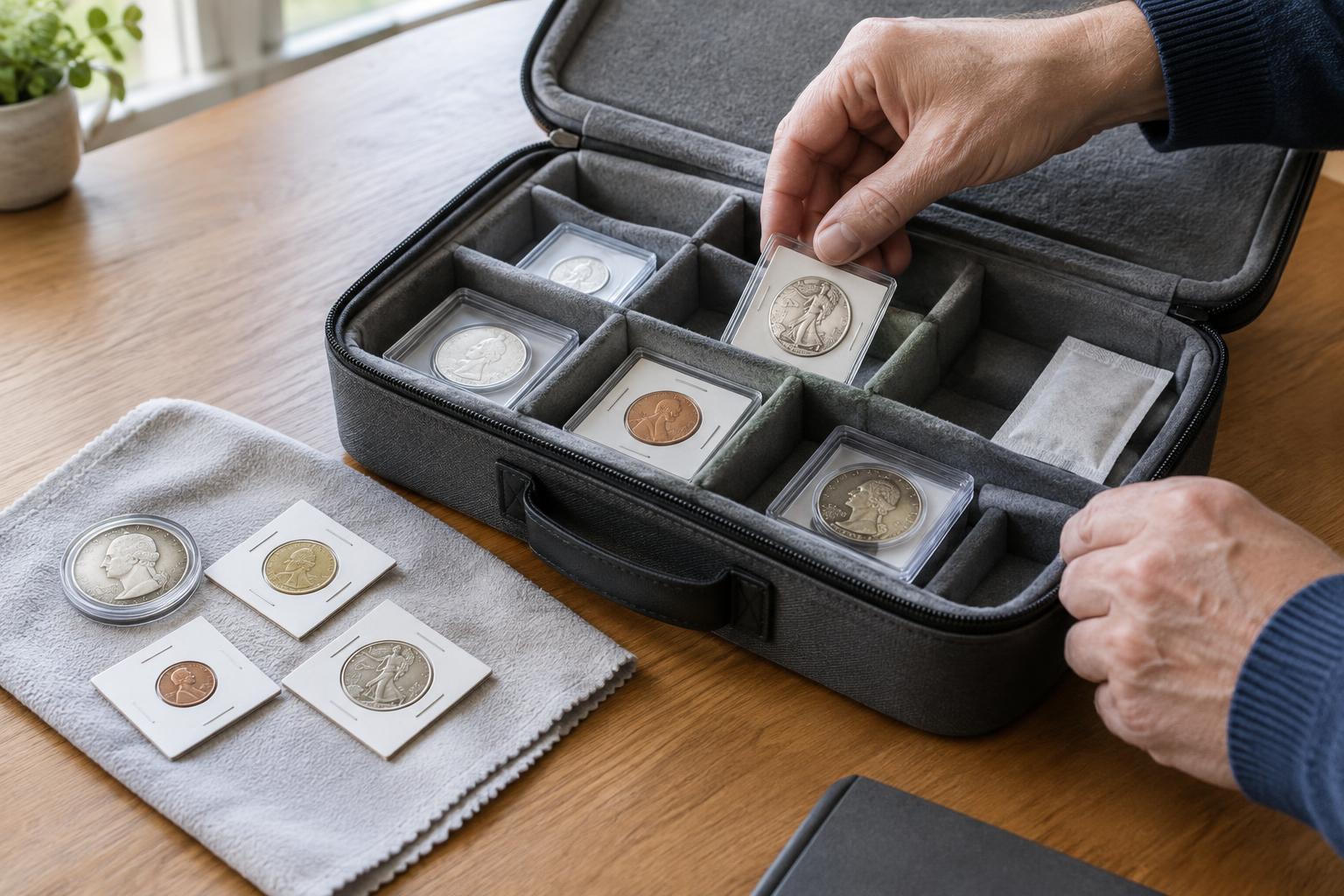
An inventory is especially helpful when it tells you where to find a coin. Choose location names that make sense in your own space, such as “blue album, page 3, position 5” or “storage box B, envelope 12.” Keep the labels on containers consistent with the wording in your list. If you move a coin, update its location at the same time; otherwise, the inventory may quickly become frustrating to use.
If you take photographs, use the inventory number in the image filename or in a note beside the image. Pictures of both sides can help you compare similar coins without repeatedly taking them out of their holders. Photographs are a supplement to the physical coin, however: lighting and camera settings can change how color, surface marks, and fine details appear.
Separate observations from opinions
Give yourself room for notes, but be clear about what kind of note you are making. “Scratch across portrait” describes something you can inspect again. “Rare variety” is an identification that may need confirmation. You might use separate fields called “observations” and “questions to check” so an early hunch does not become an unquestioned fact when you reread the entry months later.
You can also record when and how you acquired a coin if that information matters to you. A note such as “gift from a relative” may be more meaningful than a price. If you do record a purchase price, keep it separate from any estimate of current value. Coin prices can vary with condition, attribution, demand, and the circumstances of a sale, so your inventory does not need a value column to be complete.
Keep the habit small enough to maintain
The best inventory is one you will update. Start with five or ten coins rather than trying to describe everything in a single sitting. Decide on a few essential fields, enter them consistently, and add optional details only when they help you answer a question. You can expand the system later without discarding your original entries, especially if every coin already has a unique number.
Review the list occasionally for entries marked uncertain, missing locations, or coins you want to photograph. Correcting one detail at a time is part of learning to collect, not evidence that you started incorrectly. Over time, your inventory becomes more than a count: it becomes a practical record of what you have noticed, what you have checked, and what you would like to understand next.