Why copper and bronze need a little extra thought
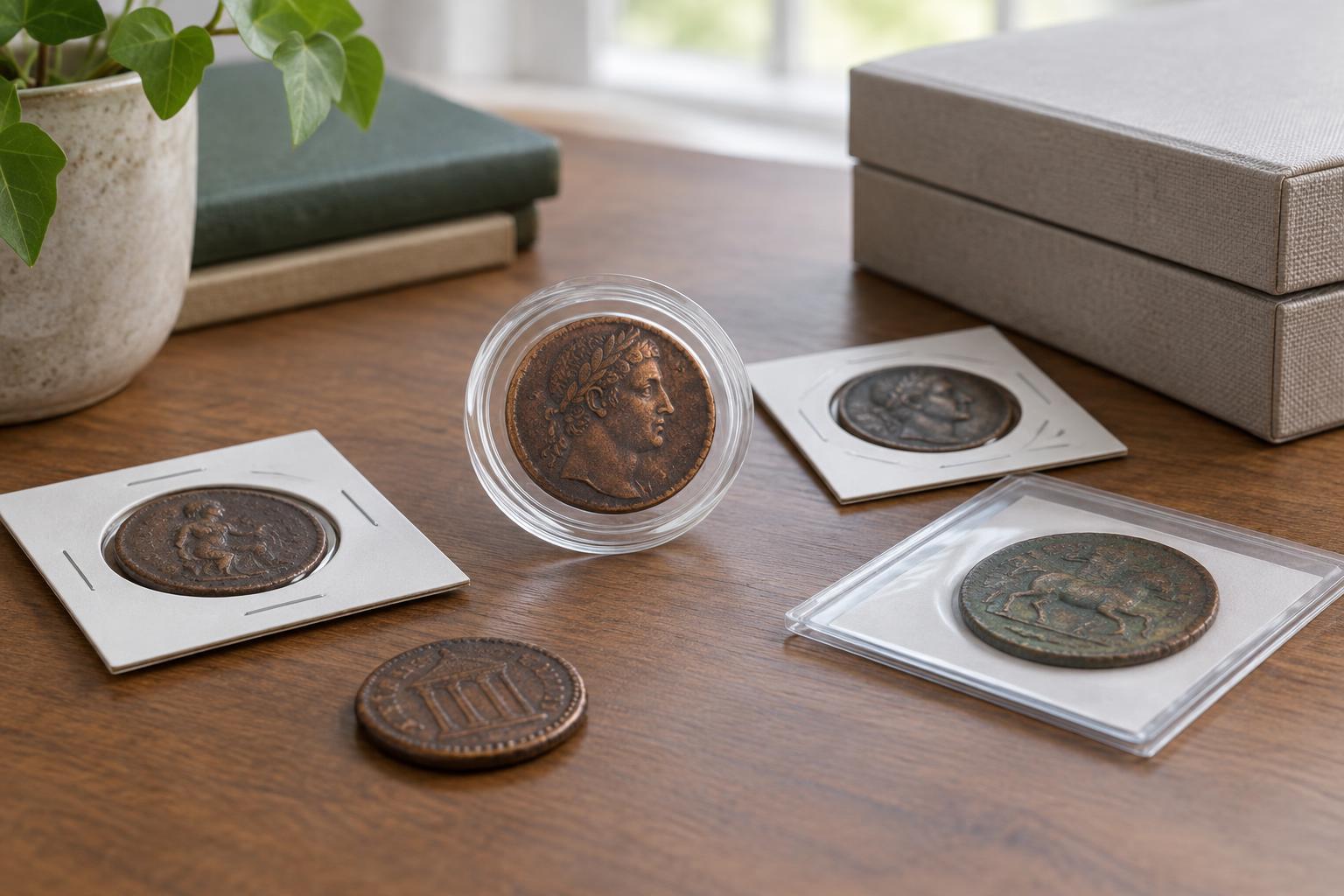
Copper and bronze coins change appearance as their surfaces react with the surrounding environment. Brown tones and darker patinas are common on older pieces, and an even, stable patina is not necessarily a problem to solve. A collector’s goal is usually to prevent avoidable damage, not to keep every coin looking freshly minted.
Bronze is an alloy containing copper, and its exact composition can vary. Different coins may therefore age differently, even when stored together. Moisture, airborne contaminants, skin oils and contact with unsuitable packaging can all affect their surfaces. Storage cannot stop every change, but it can reduce the risks you can control.
Choose holders with care
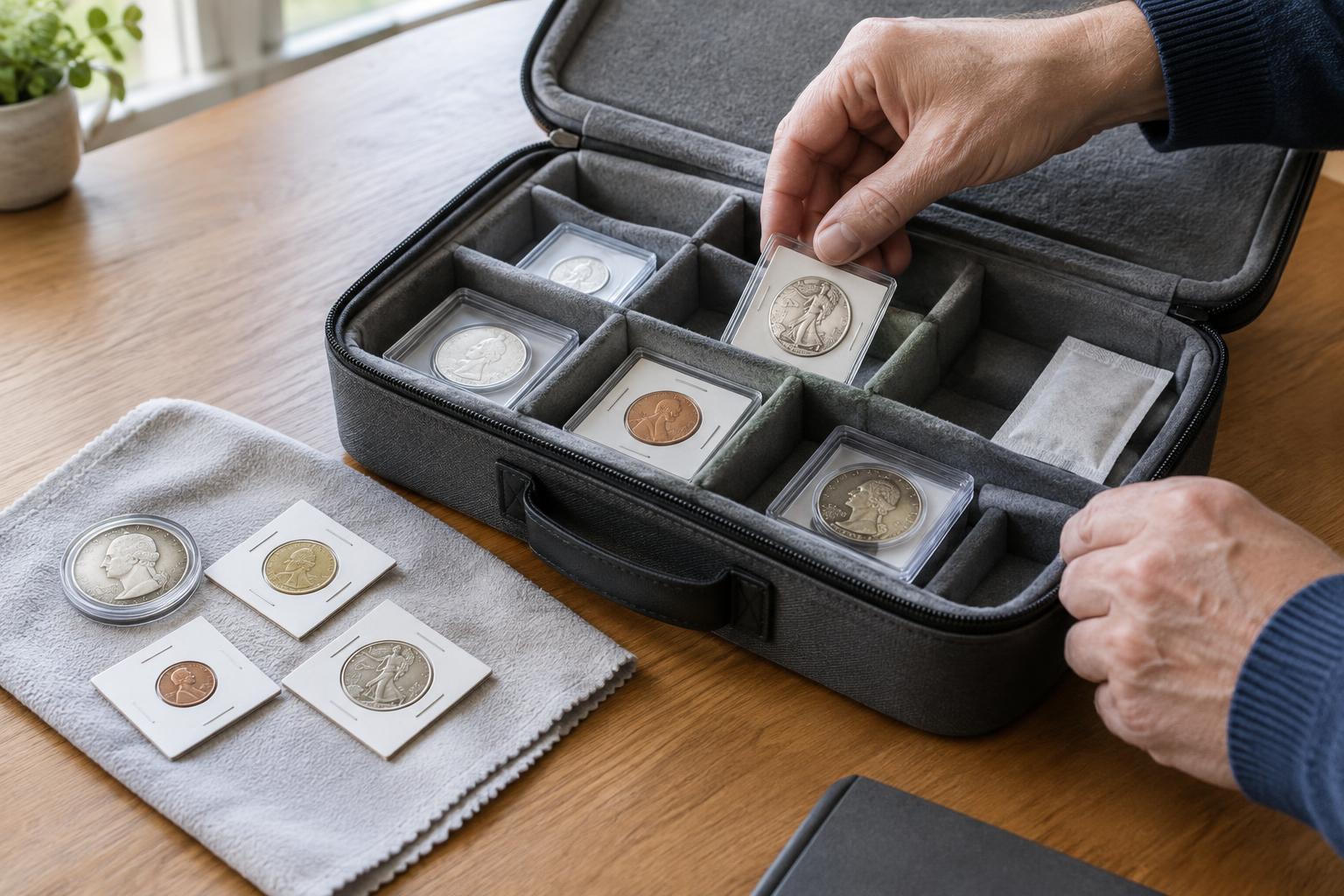
A holder should keep a coin from rubbing against other objects while using materials that are suitable for long-term storage. Rigid coin capsules, appropriately sized holders and flips made from materials such as polyethylene, polypropylene or archival polyester are common options. Check the manufacturer’s material description rather than relying on the words “coin safe” alone, and make sure the coin fits without being forced into place.
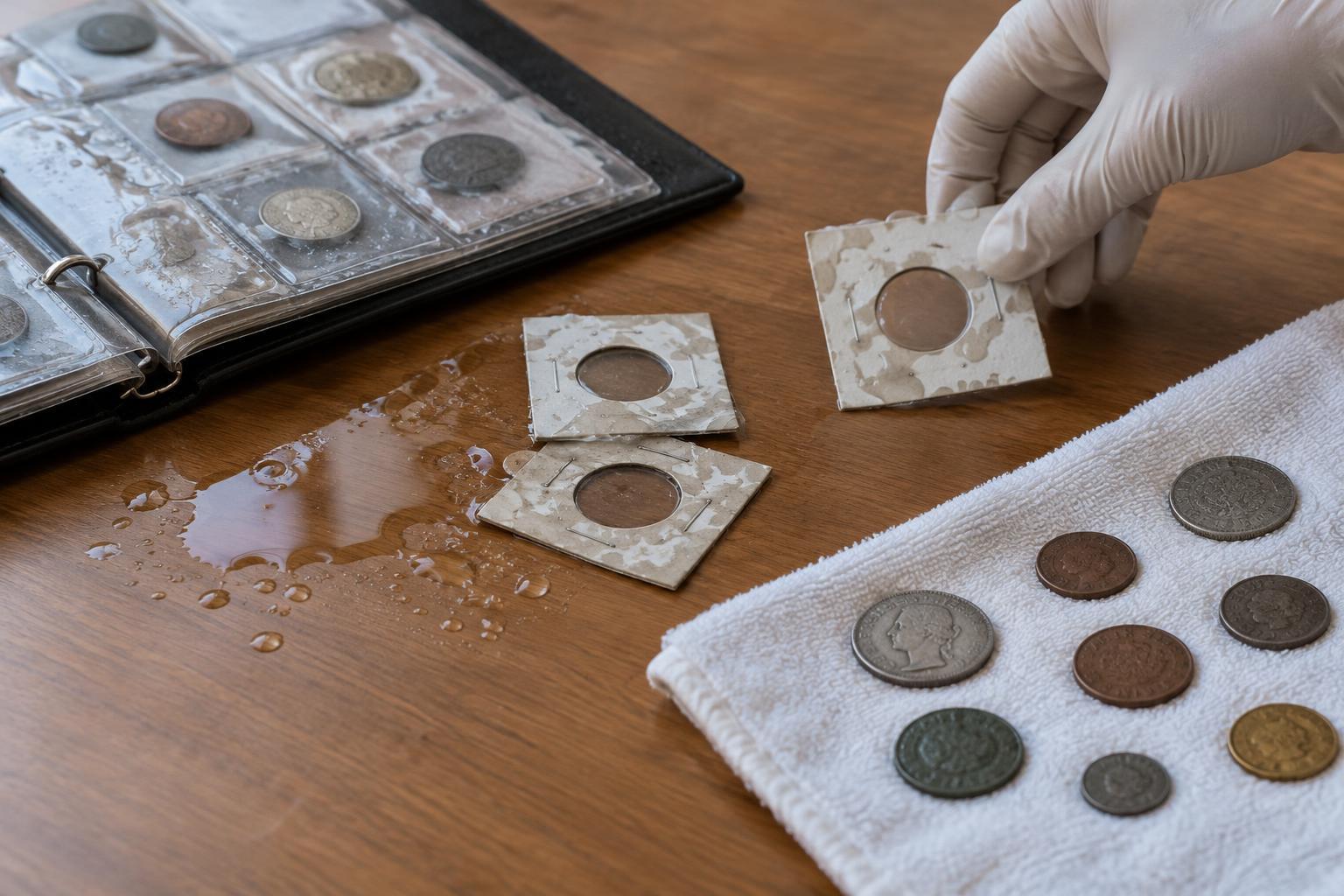
Be wary of soft plastic flips if their composition is unclear. Some contain PVC, which can deteriorate and leave a residue that is difficult to remove safely. Paper products deserve scrutiny too: ordinary envelopes, cardboard and adhesives may introduce unwanted chemicals or shed material onto a coin. If you use a cardboard coin holder, keep staples away from the coin and from neighboring holders. Store coins separately so their edges and faces cannot strike one another.
Keep the environment steady
Aim for a clean, dry storage area with relatively stable conditions. Avoid places prone to dampness, condensation, leaks or sharp temperature changes, such as an unconditioned attic or a humid basement. A closed cabinet or storage box can add protection from dust and handling, though it does not make a damp room safe for coins.
If you use a desiccant in a storage container, keep it separate from the coins and follow its replacement or recharging instructions. It is a supplement to a suitable room, not a substitute for one. Be cautious about sealing coins in a container when they or their packaging may already be damp. Check stored coins periodically so you can notice a change before it affects an entire group.
Handle less, and resist the urge to clean
Handle a coin by its edge over a soft, clean surface, and avoid touching its faces. Clean, dry hands are useful; well-fitting, clean gloves can also help, provided they do not make the coin harder to grip. Arrange holders and labels before removing a coin from storage so it spends as little time exposed as practical.
Do not rub a copper or bronze coin to brighten it. Even a soft cloth can leave fine scratches, and chemical cleaning may remove an established patina or alter the surface unpredictably. A darker coin is not automatically a damaged coin. For a piece with historical, sentimental or potentially significant collectible value, seek advice from a qualified coin conservator before attempting treatment.
Watch for changes, not just color
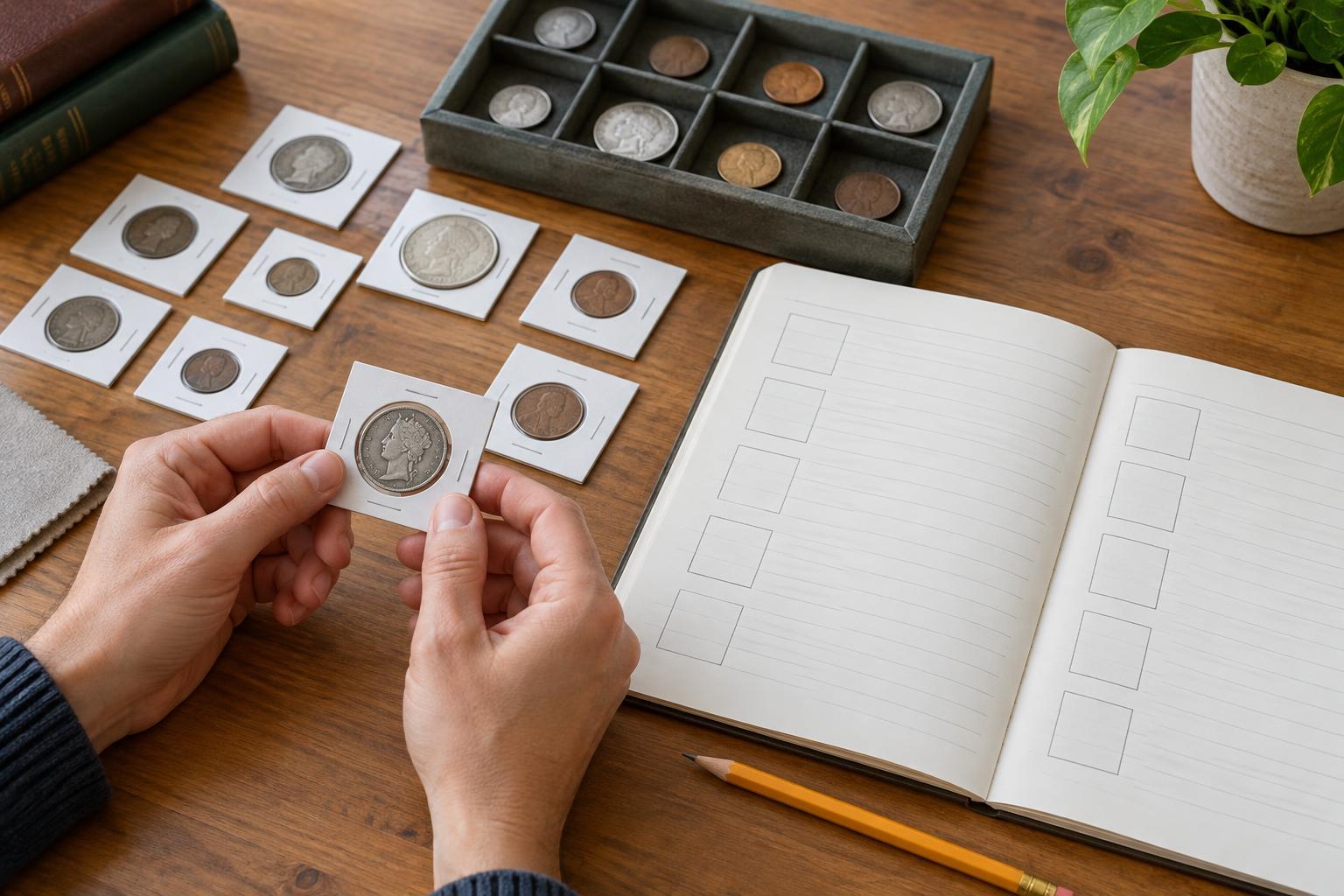
A useful storage routine includes a simple record of each coin’s appearance and holder. Clear photographs taken when you put a coin away can help you distinguish an existing mark from a new one later. When inspecting, look for fresh residue, spreading spots, a sticky film or a powdery deposit rather than treating every color variation as an emergency. Deposits can have different causes, and appearance alone may not identify them reliably.
If a coin appears to be developing a new problem, separate its holder from other coins and review the storage conditions. Avoid scraping or washing the affected area. Copper and bronze coins reward patient care: suitable materials, a steady environment and minimal handling usually do more for their long-term preservation than attempts to improve their color.