Start with the holder and its label
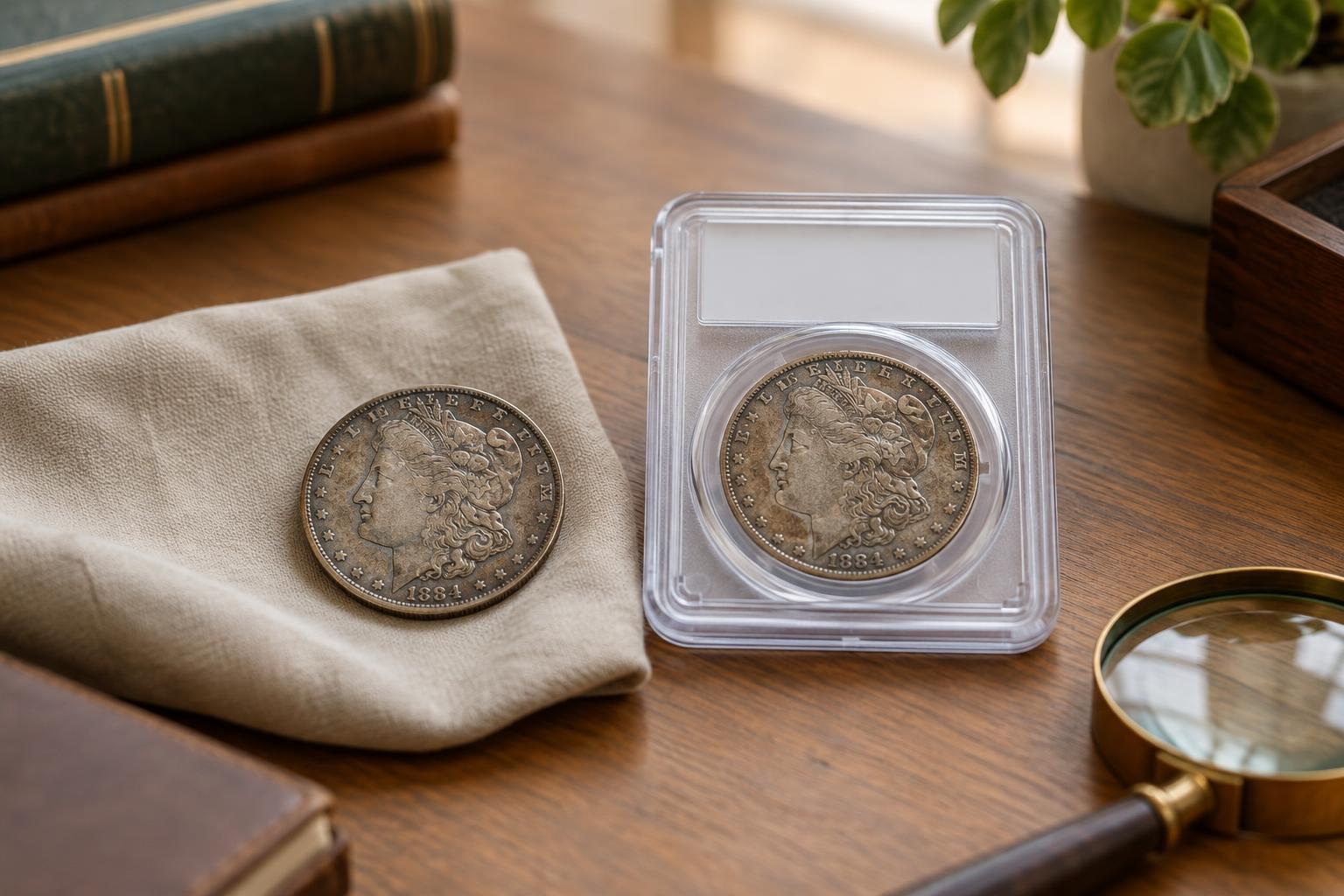
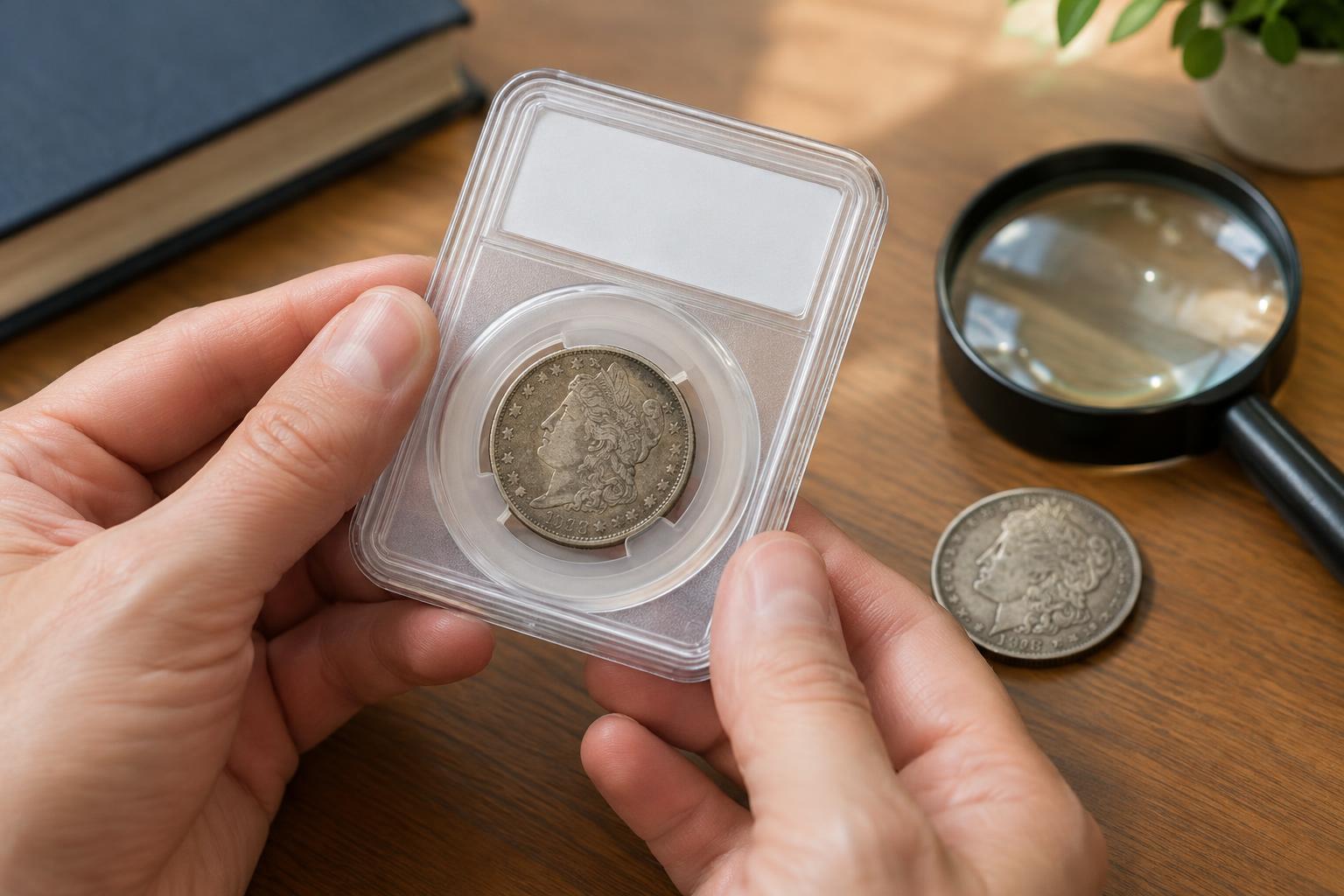
A certified coin holder is a protective case containing a coin that has been examined and described by a grading service. Collectors often call the rigid case a slab. Its label is a compact identification record, not a complete history of the coin. Label layouts vary, but most put the service’s name alongside a date, denomination, grade, and certification number.
Before reading the smaller print, look at the holder as a whole. Is the label legible? Does the coin appear securely enclosed? Obvious damage, separation, or signs that the case has been opened are reasons to pause and investigate rather than rely on the printed information alone. A tidy holder does not, by itself, prove that every detail is correct or that the holder is genuine.
Match the identification to the coin
The date identifies the year shown on the coin; the denomination tells you its face value. A mintmark, when present, identifies the mint indicated on the coin. Depending on the issue, a label may also name a country, ruler, series, variety, or catalog attribution. Read these fields as a set: two coins with the same date can be different issues if their mintmarks, denominations, or varieties differ.
Compare what you can see through the holder with the label. Check the date and mintmark carefully, allowing for their small size or wear. A variety attribution refers to a specific, identifiable version of an issue; it is more precise than a general series name. If an abbreviation or variety name is unfamiliar, look up its meaning before assuming it makes the coin rare. The label can help you ask better questions, but it should not replace looking at the coin.
Understand the grade and condition notes
Many services use a numerical grade from 1 to 70, with higher numbers generally indicating better preservation under that service’s standards. A grade is an assessment of condition, not a measure of a coin’s age, historical importance, or market value. Words or letters next to the number may describe how the coin was made or how much detail is visible. For example, a label may distinguish a circulation strike from a proof, which is a coin made using a different production method.
Not every coin receives a straight numerical grade. A label may instead say “Details” and identify a concern such as cleaning or damage, while still describing the coin’s apparent level of wear. Such notes matter because two coins that look similarly worn can be evaluated differently when one has a surface problem. Services can also use special designations for particular visual qualities. Read these as specific descriptions governed by the service’s criteria, not as guarantees that every collector will prefer that coin.
Use the certification number as a check
A certification number identifies the service’s record for a particular holdered coin. Some services provide an online record where you can check the label description and, sometimes, photographs. If that option is available, compare the record with both the label and the coin in front of you. A mismatch in the date, grade, variety, or visible marks deserves a closer look.
A matching number is useful, but it is not a substitute for examining the holder and coin. Numbers and label information can be copied, and a database entry only tells you what the service recorded. If you are unsure about a holder, consult the grading service’s own guidance on its security features or seek help from a knowledgeable collector. Avoid making a decision based only on a photograph of a label, especially when the coin itself is hard to see.
Know what the holder does not promise
Extra text on a label may identify a collection name, a special issue, or another distinction. Find out exactly what that wording describes before treating it as part of the coin’s identity. A named collection is not necessarily a complete ownership history, and a special label does not automatically mean the coin is scarce. Likewise, a grade does not set a fixed price: demand, availability, eye appeal, and the condition of comparable coins can all affect what someone is willing to pay.
Keep the holder protected from scratches, strong impacts, and unsuitable storage conditions. Avoid trying to open it just to inspect an edge or test the coin; doing so can damage the case or coin and removes the benefit of its existing certification. For a beginner, the best habit is simple: read every line of the label, compare it with the coin, check unfamiliar terms, and leave room for questions the holder cannot answer.