What “raw” and “certified” mean
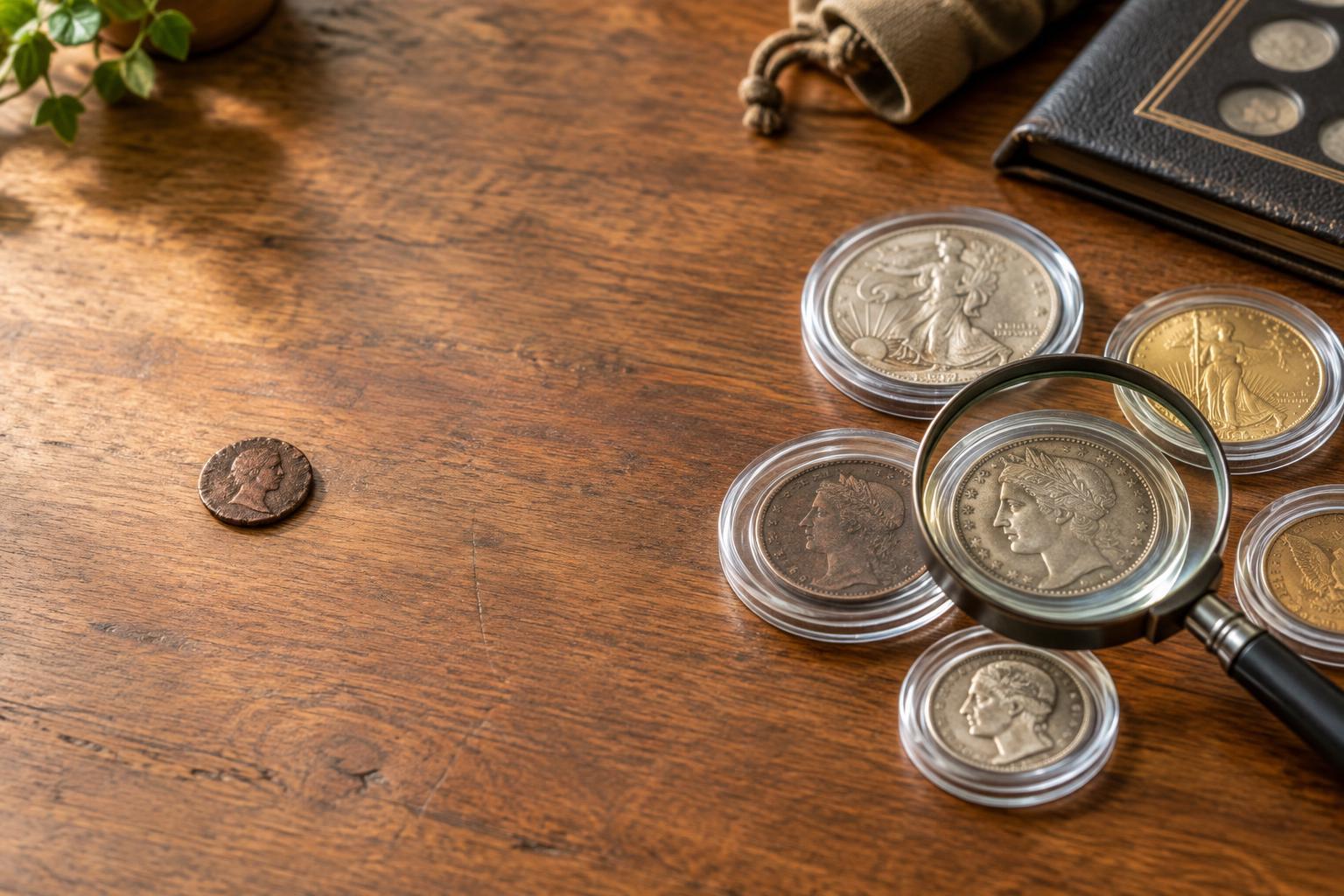
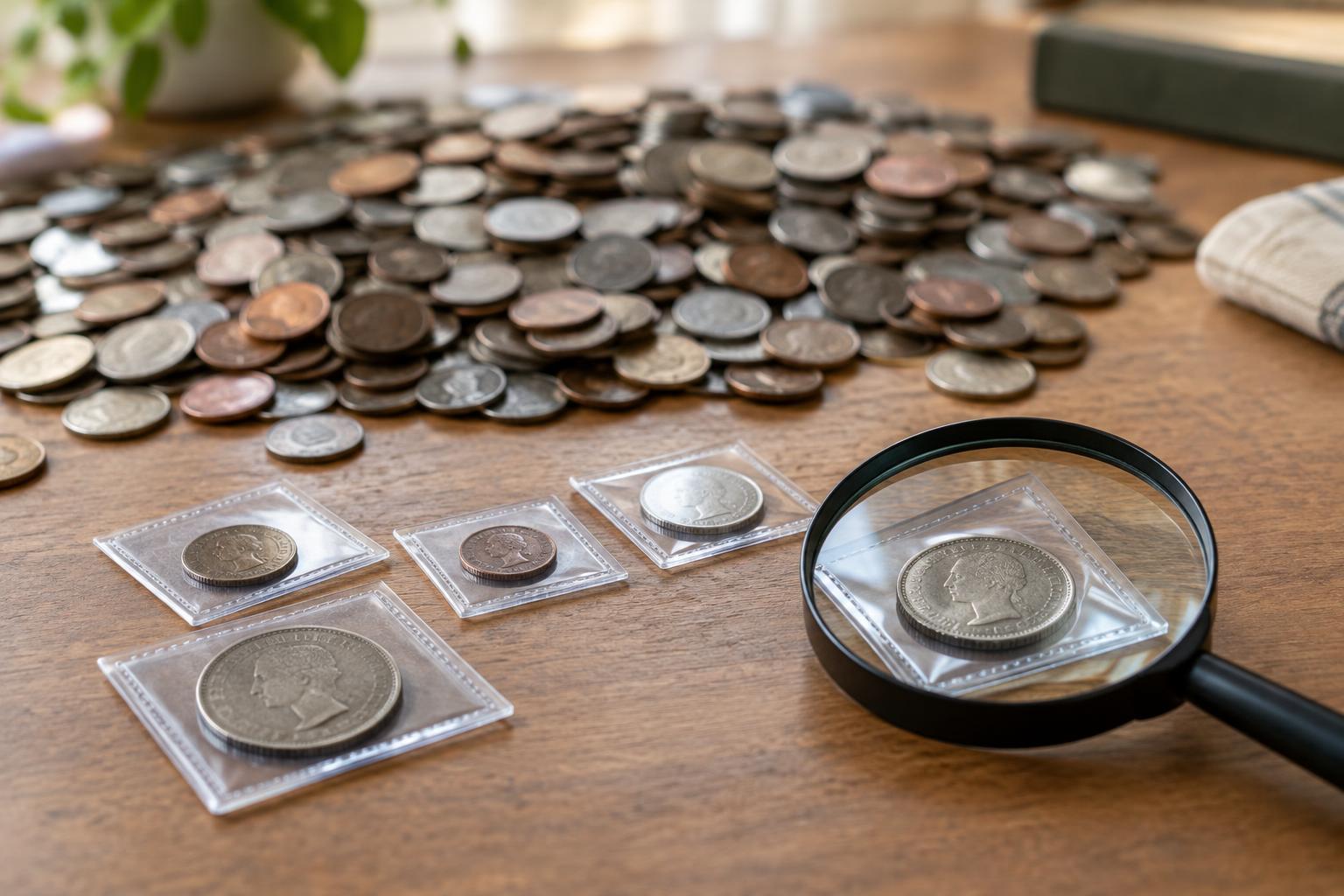
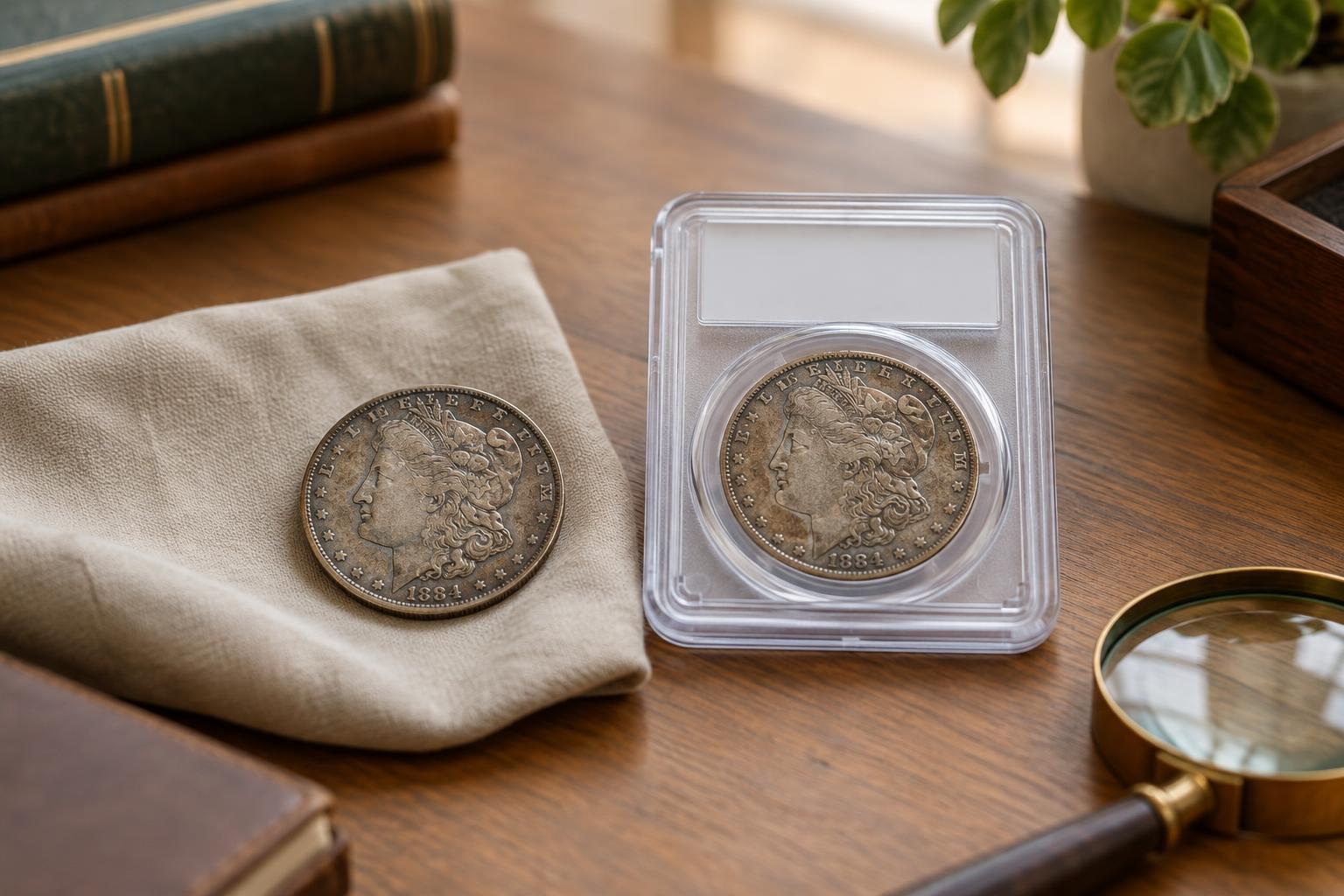
A raw coin is one that has not been encapsulated and labeled by a third-party grading service. It might be loose, in a paper holder, or in a plastic flip. “Raw” describes how the coin is presented, not whether it is genuine, valuable, or worth collecting. Many enjoyable collections consist mostly of raw coins.
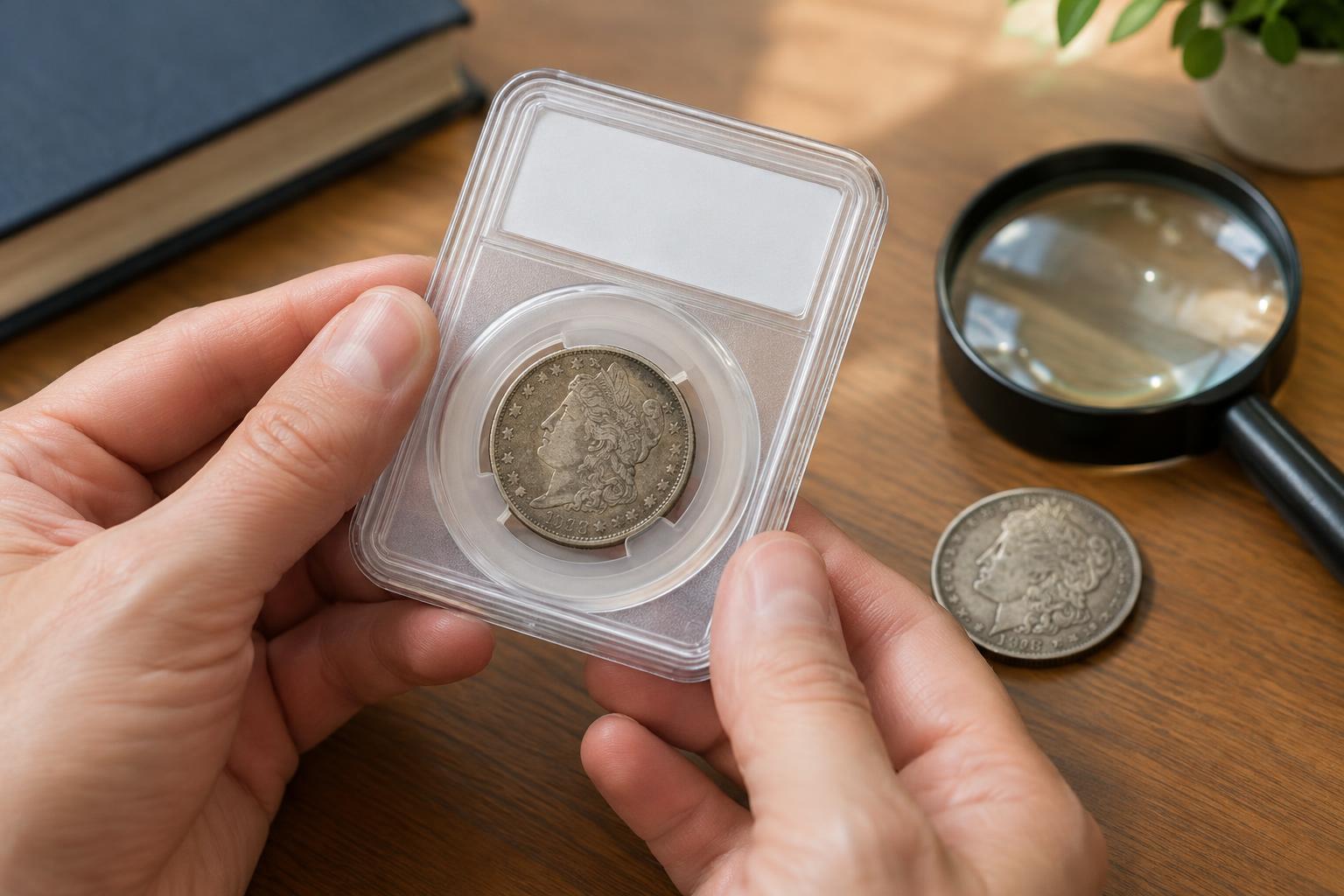
A certified coin has been examined by a grading service and, if accepted for encapsulation, sealed in a protective holder often called a slab. Its label typically identifies the coin and gives a grade or another assessment. The holder also carries a reference number that can help identify the service’s record for that particular coin. Certification adds an independent opinion, but it does not replace looking closely at the coin itself.
What a grade tells you
A coin’s grade is an assessment of its condition under a service’s grading standards. For circulated coins, wear is a major consideration. For uncirculated coins, graders also consider features such as surface marks, luster, and the quality of the strike. Labels may include abbreviations such as AU, for About Uncirculated, or MS, for Mint State. Learning what those terms describe makes the number or abbreviation on a label more useful.
Grading involves judgment. Two experienced people may see the same coin somewhat differently, particularly near a boundary between grades. A certified grade is therefore best understood as the service’s opinion at the time of examination, not a measurement as fixed as a coin’s diameter. It also cannot tell you whether you personally like the coin’s color, design, or overall appearance.
What certification does not guarantee
Certification can provide reassurance about a coin’s identification and authenticity, subject to the grading service’s policies and the limits of examination. It is not an all-purpose guarantee. A holder does not promise that a coin will remain unchanged, that every collector will agree with its grade, or that it will command a particular price. Prices vary with demand, availability, condition, and the characteristics of the individual coin.
Not every submitted coin receives a standard numerical grade. A service may instead note a problem such as cleaning, damage, or altered surfaces, depending on its procedures. That information can be valuable: a coin with a problem can still be interesting, but the problem may affect how collectors describe and compare it. Holders and labels can also be imitated, so a slab should not be treated as proof merely because it looks convincing. Check its details carefully when authenticity matters.
When raw coins make sense
Raw coins give you direct access to features that a holder can make harder to inspect, including the edge. They are convenient for learning basic identification, comparing designs, and assembling a collection by date or type. For an inexpensive coin, the cost and effort of submitting it for certification may be out of proportion to what you hope to learn from the result.
The trade-off is that you must rely more heavily on your own observations and on the information provided with the coin. Practice under good lighting, compare examples thoughtfully, and be cautious when a coin’s surface looks unusually bright or its details seem inconsistent with its apparent wear. Handle raw coins by their edges over a soft surface, and use storage materials intended for coins. Avoid cleaning a coin to make it look better; cleaning can permanently change its surface.
Choosing the right approach for your collection
Certification may be especially useful when a coin is difficult to authenticate, when a small difference in grade matters to your collecting goals, or when you want an independently labeled example for comparison. Before submitting a coin, consider the grading fee, shipping and insurance costs, the service’s terms, and the possibility of an unexpected assessment. Certification is a process with costs, not an automatic improvement to the coin.
You do not have to choose one approach for every coin. A beginner might keep common examples raw for hands-on study and use certified examples to learn how a grading service describes particular conditions. In either case, start with a clear identification, examine the surfaces, and record why you chose the coin. The most useful label is one you understand—and the most satisfying collection is built around coins you find worth studying.