What is a bracteate?
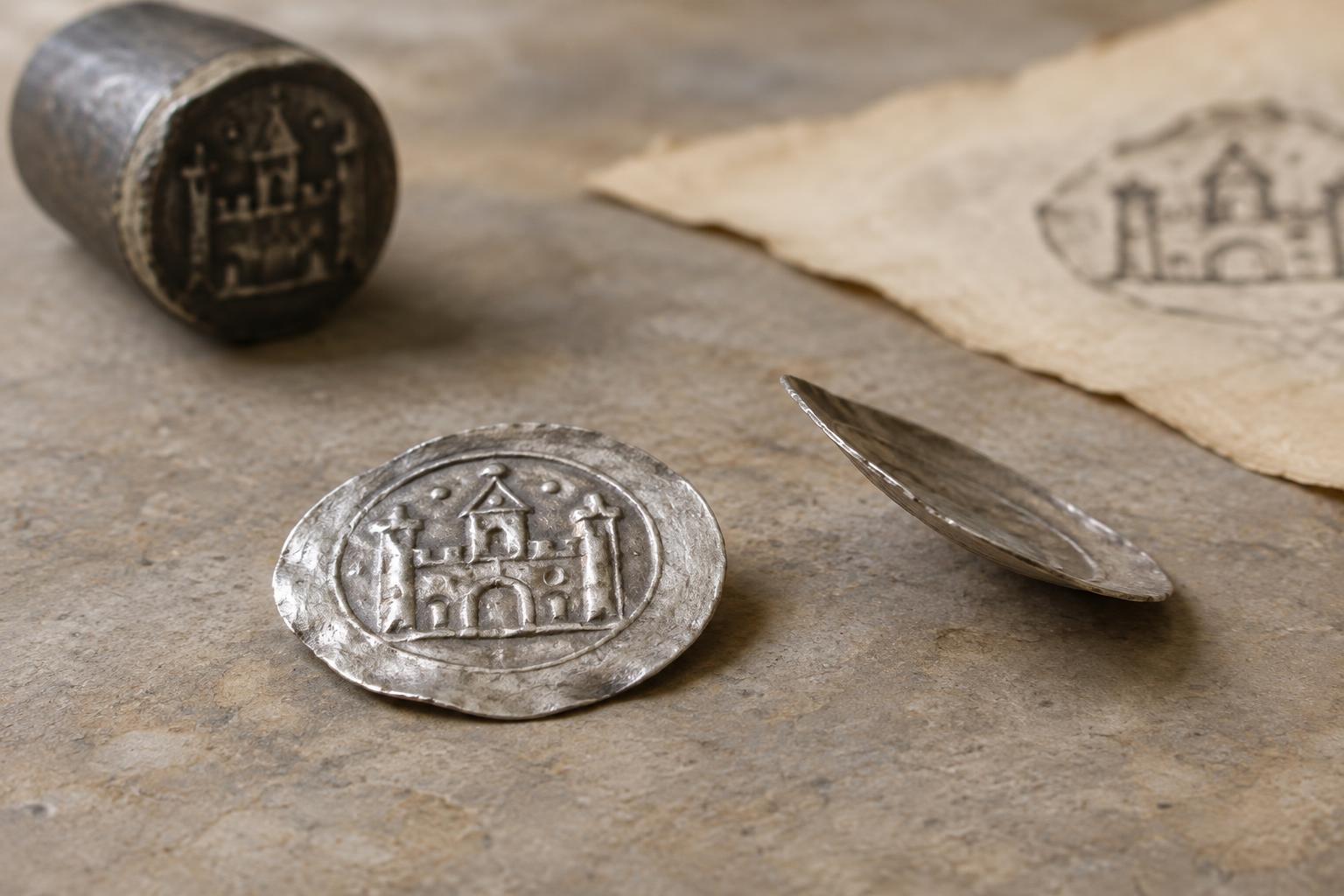
A bracteate is a thin coin struck with a design raised on one side and a corresponding hollow impression on the other. The word can describe more than one kind of historical object, but coin collectors commonly use it for certain medieval issues, especially silver coins made in parts of central and northern Europe. Their broad, delicate surfaces can look unlike the smaller, thicker coins that many people picture when they think of medieval money.
Bracteates were not merely decorative tokens. In the places and periods where they were issued, they served as coinage. Their designs might show a ruler, a religious figure, a building, an animal, or a symbol associated with an issuing authority. A collector can learn a great deal from those images, but identifying a particular issue may be difficult: similar designs could appear in different places, and some coins carry little or no readable lettering.
How did a one-sided coin get its shape?
To make a bracteate, a mint worker placed a very thin piece of metal over a die bearing the intended design. When struck against a yielding surface, the metal took on the die’s pattern. The resulting relief stood out on the front, while its reverse showed the sunken impression. This differs from the more familiar method of striking a coin between two engraved dies to put separate designs on both faces.
The thin metal made a relatively large design possible without requiring as much silver as a thicker coin of similar diameter. It also imposed limits. High points could flatten through handling, edges could bend, and lettering or fine details could become hard to read. Surviving bracteates therefore invite careful examination, not an assumption that every unclear feature was poorly made. Wear, damage, an uneven strike, and the original die can all affect what is visible.
Local money in a changing landscape
Medieval Europe did not have a single coinage system. Authorities in different territories could issue their own money, and the coins acceptable in one area were not necessarily convenient in another. Bracteates fit into this varied landscape. Their appearance, metal content, size, and issuing practices changed across regions and over time, so there is no single specification that defines every example.
In some areas, authorities periodically called in older coins and exchanged them for new issues. Such exchanges could give an issuer revenue, though the arrangements and their effects differed from place to place. Not every bracteate was subject to the same schedule, and it would be misleading to treat repeated exchange as the sole reason these coins existed. Their changing designs are better understood as part of local minting and monetary practices, rather than as a uniform system used throughout medieval Europe.
Reading and caring for a bracteate
For a beginner, the first useful question is whether the reverse is a hollow counterpart to the front design. Next, note the main image, any lettering, the coin’s approximate diameter, and visible damage. These observations can help distinguish a bracteate from a conventional two-sided coin, but they may not establish an exact mint or ruler. Attribution often depends on small design differences, and an uncertain identification is better than a confident guess.
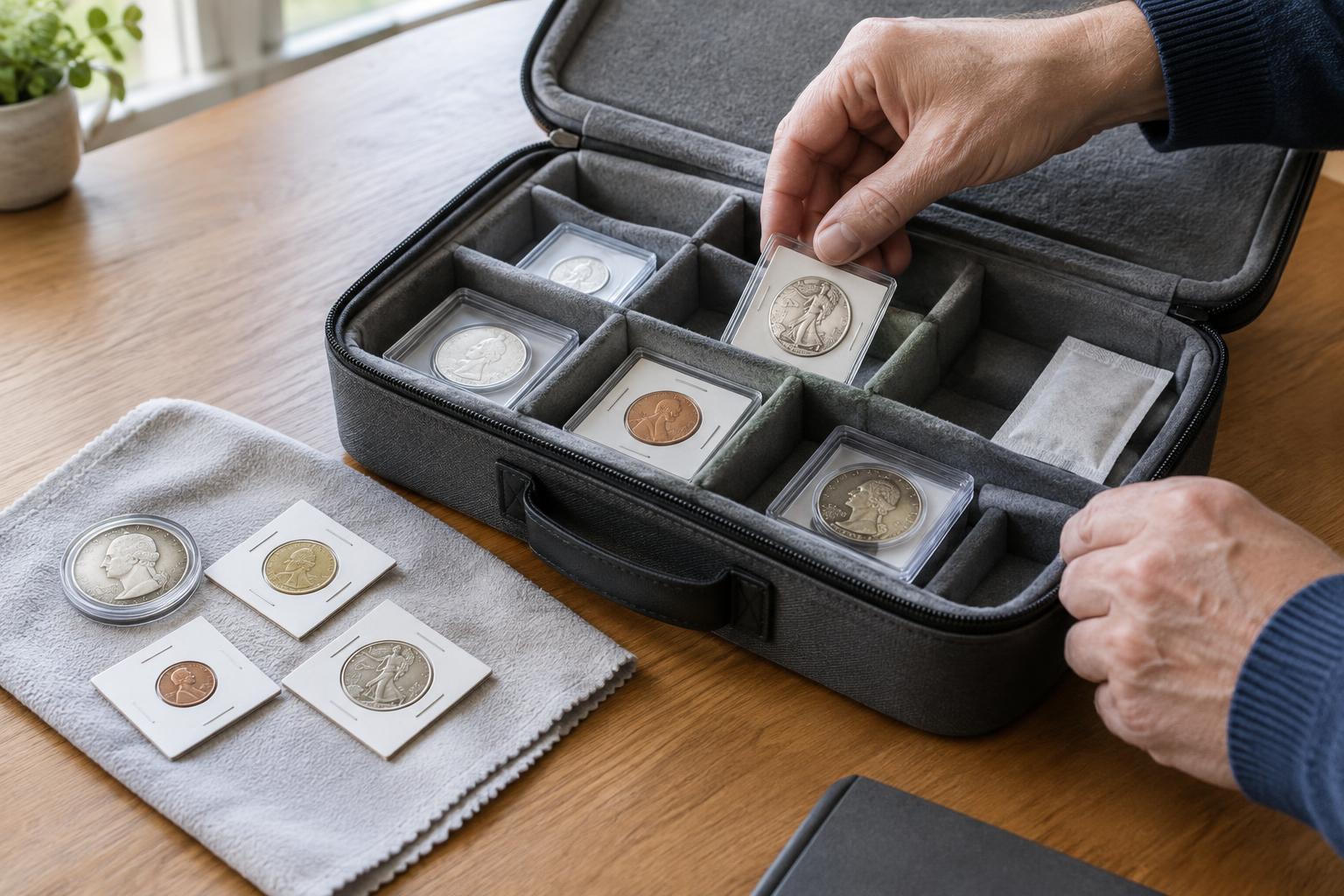
Because bracteates are thin, handle an example by its edges over a clear, padded surface. Do not try to flatten a bend or clean away dark toning: either action could damage fragile details. A stable holder that supports the coin without pressing on its raised design is a sensible choice for storage. Bracteates reward patient looking. Their one-sided construction tells a story about minting techniques, while their varied images offer a glimpse of the many authorities that made and used coinage in medieval Europe.