What a coin wrapper actually does
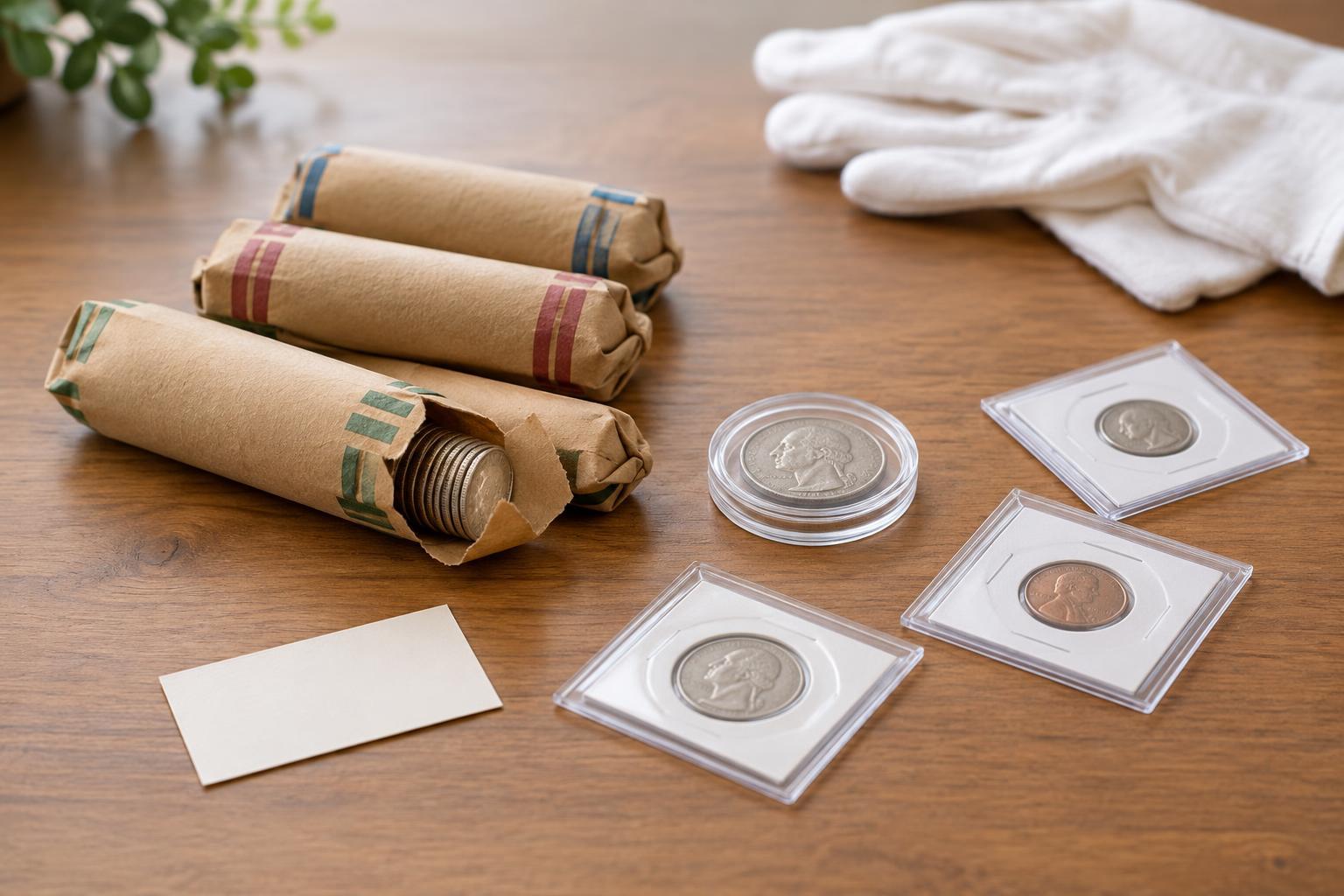
A paper coin wrapper holds a set number of coins of one denomination in a compact stack. That makes rolls convenient for counting, transporting and sorting everyday change. A label on the wrapper can also help you track a denomination, date range or source without opening every roll. For a collector working through a large jar of circulation coins, wrappers can keep the desk orderly.
A wrapper is not, however, a sealed protective holder. Air and moisture can reach the coins, and the paper itself remains in contact with the coins at the ends of the stack. The coins also touch one another. A roll can organize coins while doing little to protect their surfaces, so the right storage choice depends on what you hope to preserve.
When rolls are a practical choice
Rolls work well for common circulation coins that you plan to count, search or spend later. They take up less room than loose coins, and a clearly labeled wrapper can make it easier to find the batch you want. If you are saving examples from different trips or sorting coins by year, use a simple label that records what you know without guessing about anything you have not checked.
A roll may also be worth leaving intact while you decide whether to examine its contents. Some collectors enjoy searching rolls as part of the hobby. But a closed wrapper tells you little about the coins in the middle. Even if a roll appears old or neatly packed, that appearance alone cannot establish when it was assembled or whether every coin inside matches the visible end coins.
Where wrappers fall short
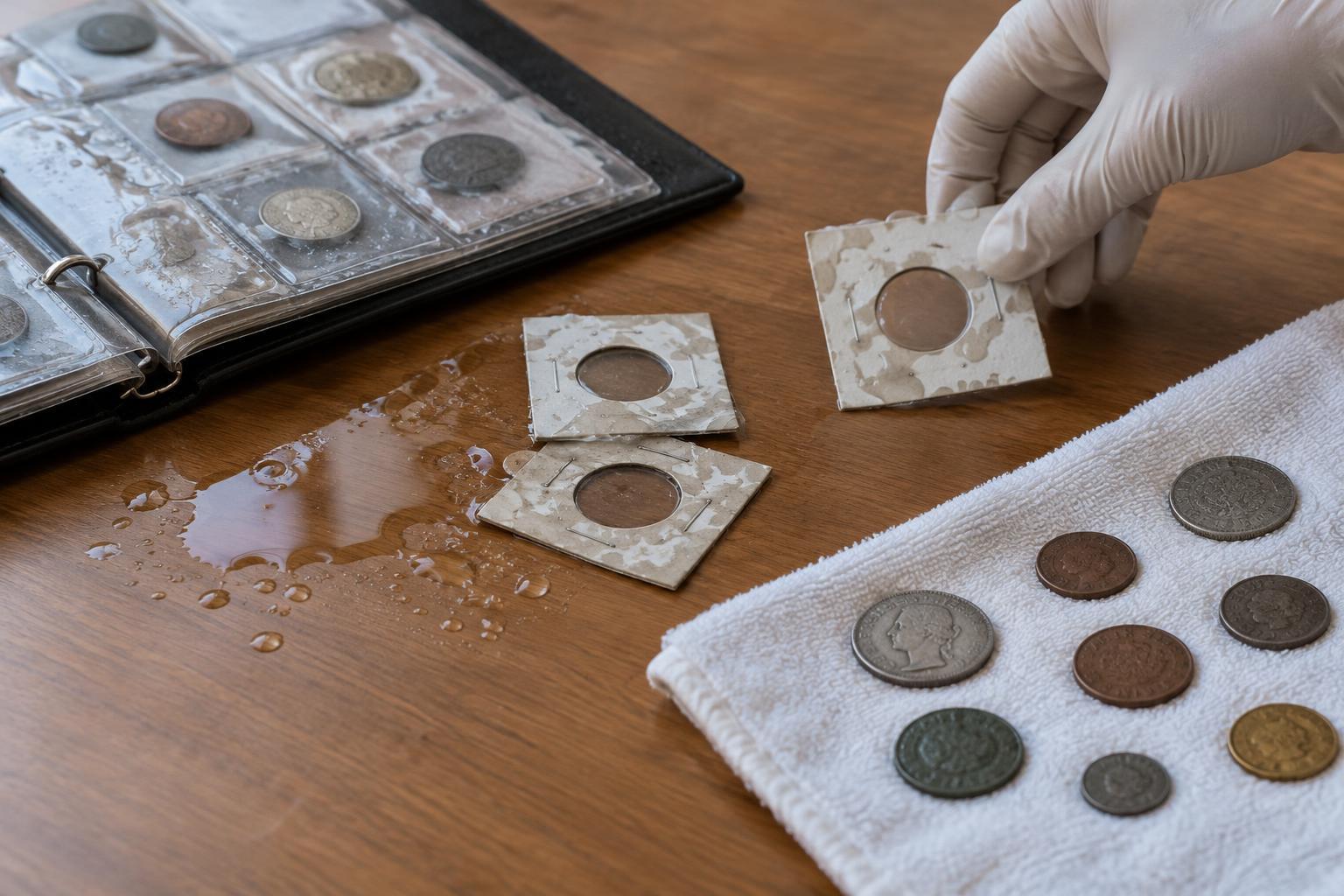
If surface condition is important, stacking coins creates avoidable risks. Coins can rub during handling or transport, and pressure from a tightly packed roll can make removal awkward. Paper wrappers offer limited protection from damp conditions. Depending on the wrapper and the storage environment, the paper or printing may also be unsuitable for prolonged contact with coins. A dry room helps, but it does not turn a wrapper into an airtight container.
Be especially cautious about keeping a potentially collectible coin in a roll simply because it was found there. If you want to examine and preserve an individual coin, a suitable individual holder lets you identify it without repeatedly sliding it against its neighbors. You do not need to unwrap every roll immediately; you can prioritize rolls you intend to study and leave ordinary change organized until you need it.
Better options for coins you want to keep
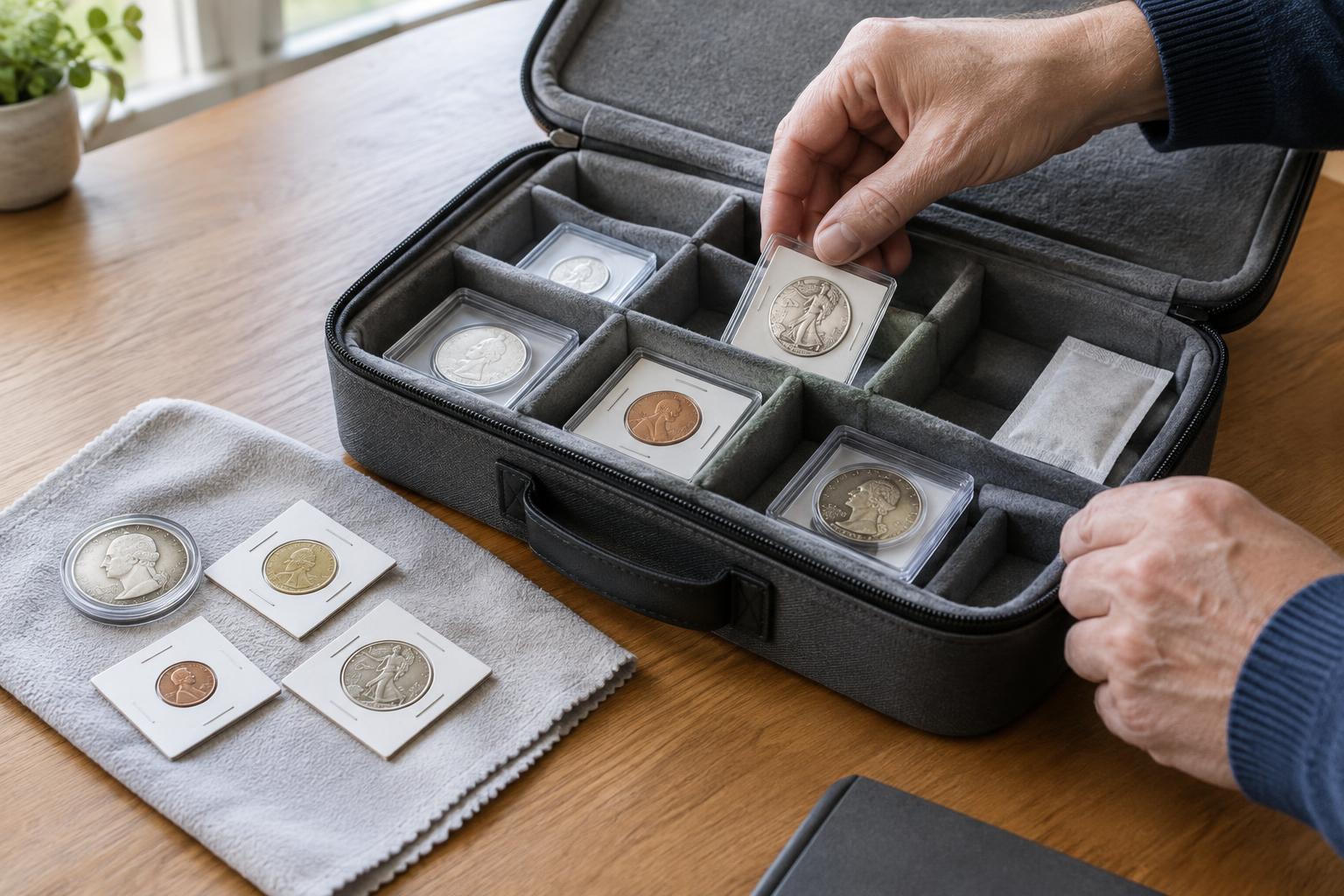
For coins whose surfaces you want to protect, choose holders made for coin storage and sized to fit the coin. Inert plastic tubes can keep groups of similar coins together, though the coins may still touch. Individual holders offer more separation and make it easier to label each coin. Avoid soft plastic holders containing PVC, which can cause problems during prolonged storage. When buying supplies, look for materials identified as suitable for long-term coin storage rather than assuming any clear plastic is safe.
Store holders in a clean, dry place with a reasonably stable temperature. Keep them away from leaks, damp basements and places subject to large temperature swings. A box or tray can protect holders from being knocked over and make them easier to retrieve. No holder removes every storage risk, so occasional checks are useful, particularly if you notice moisture, an unusual odor or a change in a coin’s surface.
Handling and labeling without making things worse
Before opening a roll, work over a clear, soft surface so a loose coin has somewhere safe to land. Open the paper gently rather than forcing coins through a tight end. Handle coins by their edges when practical, and avoid wiping or polishing them to make them look cleaner. Cleaning can alter a coin’s surface; if you are unsure whether a coin is worth setting aside, keeping it as found gives you more options.
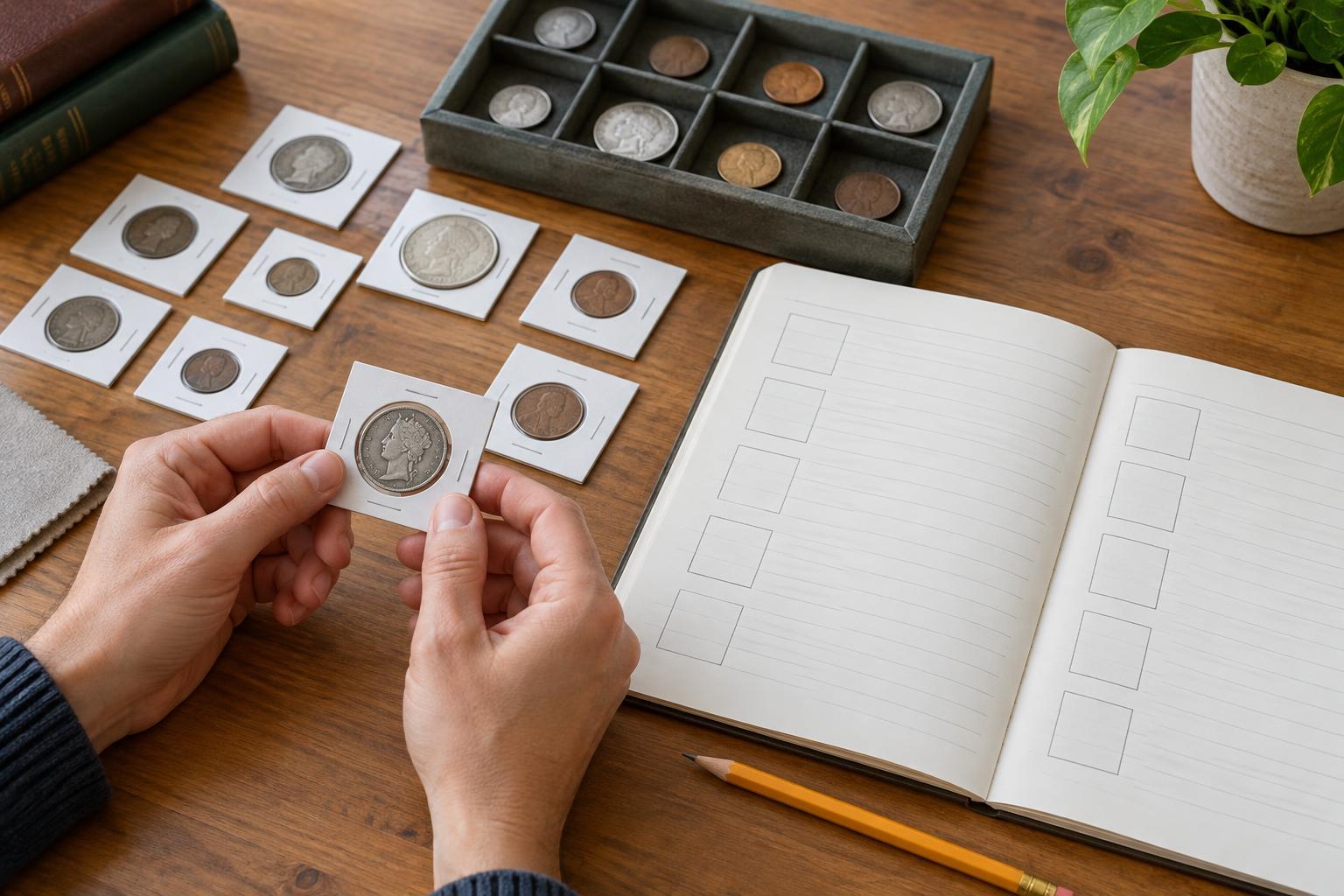
Whether you keep a roll intact or move its coins into holders, a modest record is useful. Note the denomination, the number of rolls or coins, and any dates or identifying details you have actually checked. Mark your own rolls so you can distinguish them from rolls you received already wrapped. Wrappers are excellent organizers for coins you expect to handle again; for coins you want to preserve individually, use storage that prioritizes protection over convenience.