Start by asking three separate questions
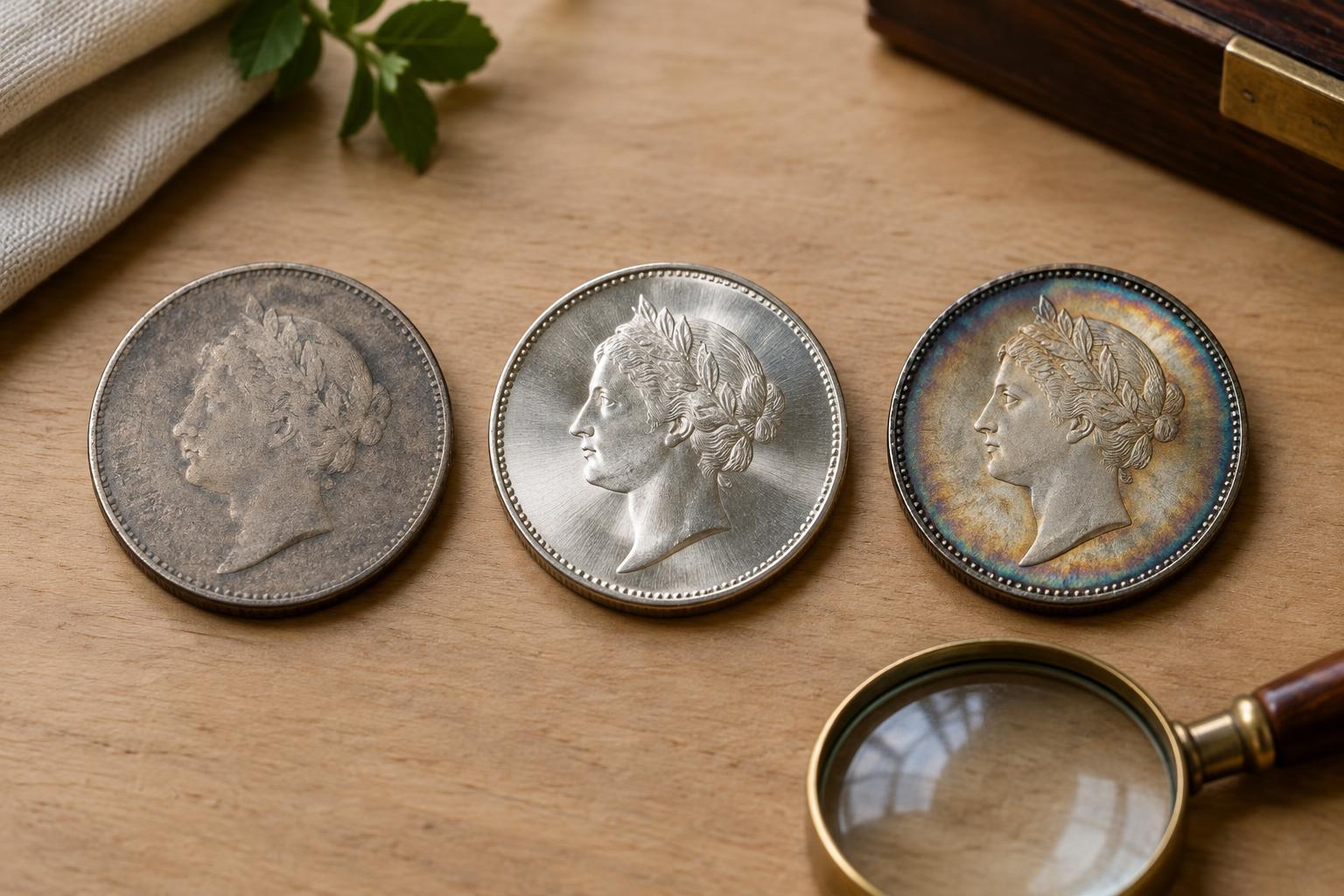
A coin can look bright, dark, smooth, colorful or dull, but one impression rarely tells the whole story. Wear, luster and toning describe different aspects of its surface. Wear concerns the loss or change of detail through handling and contact. Luster describes the way light reflects from a coin’s original minted surface. Toning is a change in surface color that develops through chemical reactions over time.
These features can appear together. A circulated coin may retain some luster in protected areas, while an unworn coin may have deep toning. A bright coin is not necessarily unworn, and a dark coin is not necessarily worn. Separating the three questions helps you describe a coin before trying to assign a grade or estimate what someone might pay for it.
Wear: look for changed detail, not just a dull surface
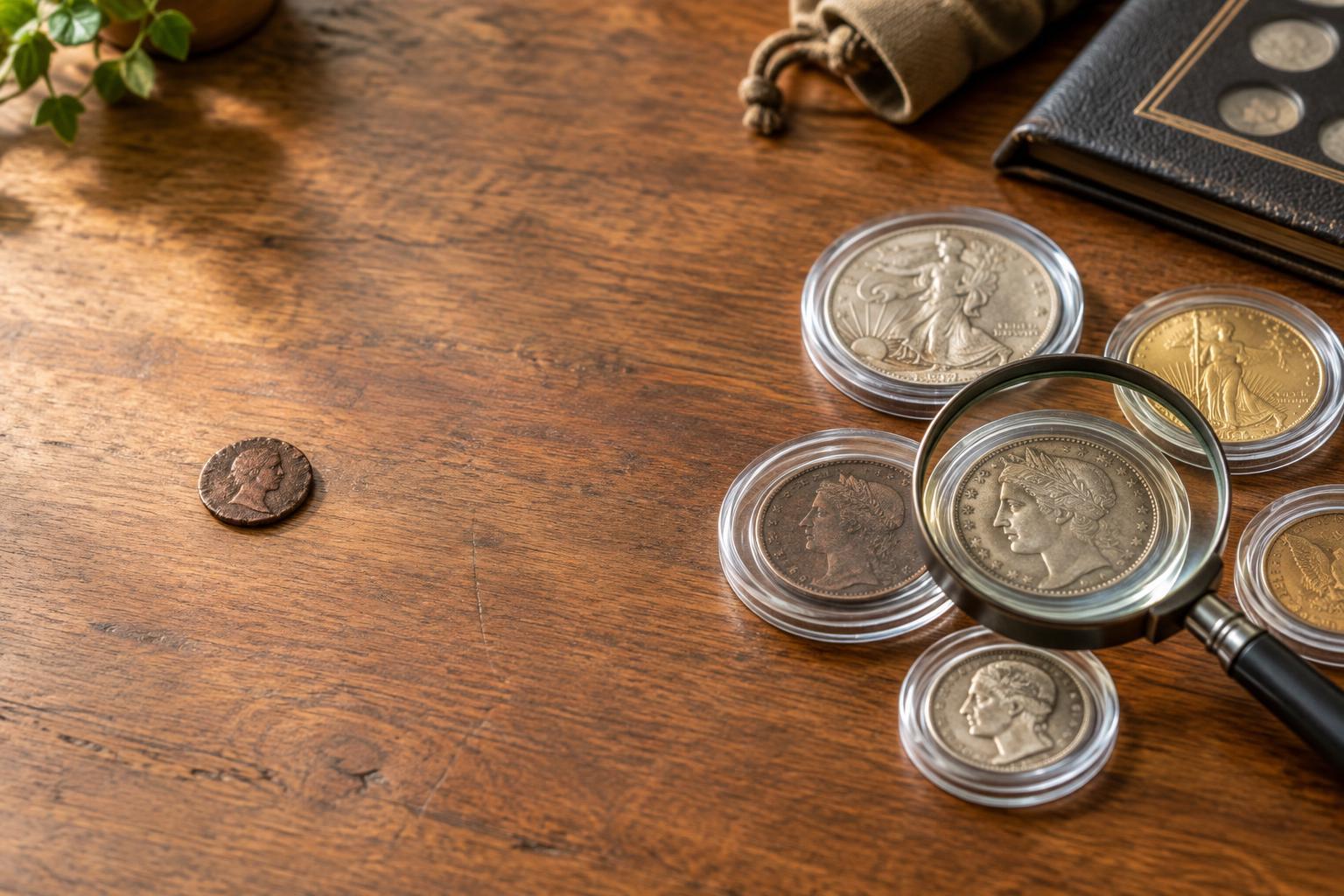
Wear often shows first on a design’s highest points, where contact is most likely. On a portrait coin, that might mean raised areas of hair or cheek; on another design, it could be a wing, shield or building detail. Compare those areas with lower, more sheltered parts of the design. You may notice that fine lines have softened, a raised area has become flatter, or the surface texture differs from nearby areas.
Not every soft-looking detail is wear. A coin may have been struck with less-than-sharp detail, and some parts of a design can look weak even when they have seen little handling. Scratches and dents are also different from wear, although they may occur on the same coin. Looking at several examples of the same type can help you learn which details were intended to be sharp and which often look indistinct.
When you are beginning, describe the specific change you see rather than forcing a precise grade. “Hair detail is flattened at the highest point” is more useful than “the coin looks old.”
Luster: watch how light moves
Mint luster comes from the coin’s struck surface and the way its tiny surface features reflect light. Under a steady lamp, gently tilt an uncirculated coin by its edges. On many coins, a band of reflected light appears to move across the fields and design. Collectors often call this a cartwheel effect. Its appearance varies with the coin’s metal, finish and method of manufacture, so it will not look identical on every issue.
Wear can disturb luster where contact has changed the surface, but a lack of obvious shine does not prove wear. Toning may make luster harder to see, and a weak light or an awkward viewing angle may hide it. Conversely, polishing can make a coin very shiny without restoring its original mint surface. An unusually uniform or harsh shine is a reason to look more carefully, not proof by itself that a coin has been cleaned.
Try moving the light or the coin before drawing conclusions. Viewing under one consistent light makes comparisons easier than judging one coin in daylight and another under a different lamp.
Toning: notice color without assuming quality
Toning is a surface color change that can develop as a coin interacts with its environment. Its appearance depends in part on the metal and on storage conditions. Silver coins may show gray, gold or other colors; copper coins can deepen toward brown. Color may spread evenly, follow the edge or appear in patches. Toning can sit over a surface that still has luster, and it can also make small details harder to examine.
Color alone cannot tell you exactly how a coin was stored or how long it has been toning. Some collectors enjoy vivid or even color, while others prefer a different appearance. A particular color is not a reliable shortcut to authenticity, grade or value. If you suspect an unnatural appearance, note what looks unusual and compare the coin with other examples rather than trying to remove the color. Cleaning can permanently alter a surface.
Build a simple viewing routine
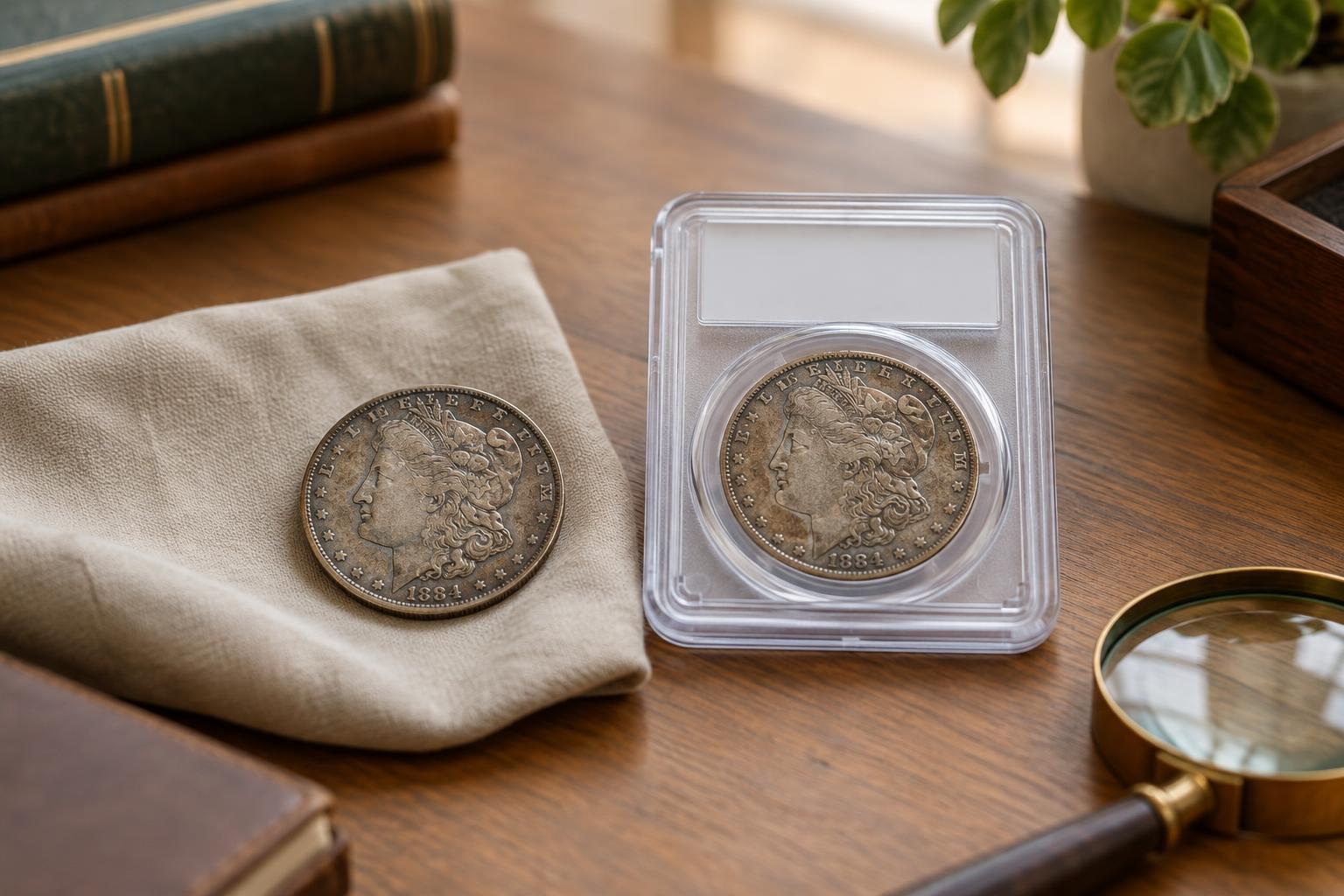
Handle a coin by its edges over a soft, clean surface, and examine both sides under a steady light. First, check the highest design points for flattened detail and compare them with protected areas. Next, tilt the coin to see whether light moves across the surface and whether that effect stops in particular places. Finally, describe the color: where it appears, whether it is even or patchy, and whether details remain visible beneath it.
Record observations separately: “slight flattening on the portrait,” “luster visible near the lettering,” and “brown color concentrated at the rim” each say more than a single label such as “good condition.” With practice, these notes make it easier to compare similar coins, ask informed questions and recognize when a feature needs a closer look.