The basic job of a mintmark
A mintmark is a letter or other small mark used to identify the mint facility associated with a coin’s production. On many United States coins, letters such as D or S distinguish coins struck at different facilities. Collectors use the mintmark together with the date and denomination to identify a coin more precisely. Two coins that look much alike at first glance may belong to different issues because their mintmarks differ.
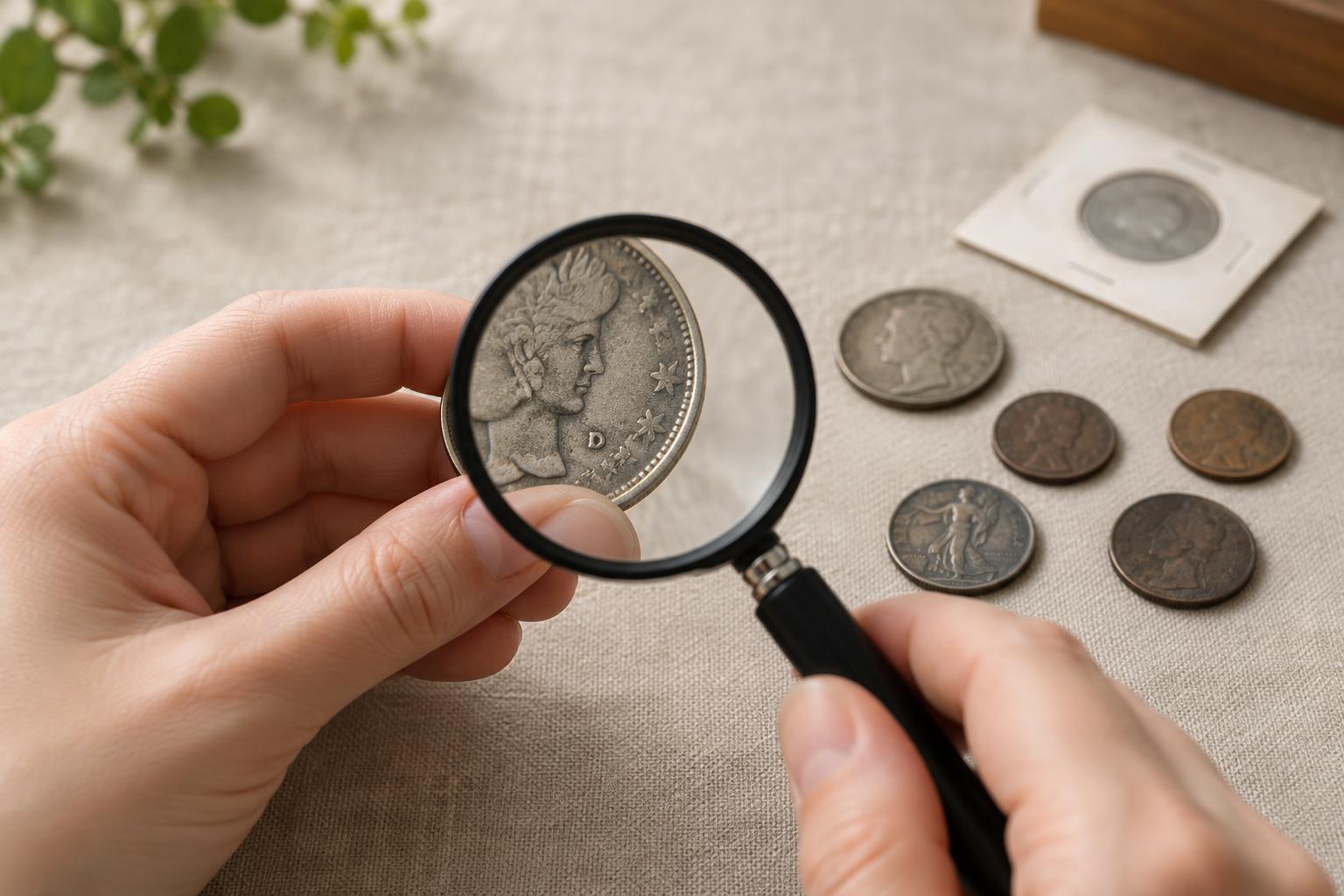
The mark is usually small, and its position depends on the coin’s series and design. It may appear on either side of a coin, near a portrait, date, or other design element. A reference for the particular coin series is more useful than a rule such as “look below the date.” Once you know where the mark should be, examine that area under good light, preferably with modest magnification.
Why a missing mintmark needs context
No visible mintmark does not automatically mean that a coin is an error or that its origin is unknown. Mintmark practices vary by country, series, year, and type of issue. In some United States series, coins from Philadelphia were routinely made without a mintmark. Other issues do carry a P. The correct interpretation depends on the coin you are examining, not on a universal rule about blank spaces.
Before deciding that a mark is absent, check the expected location for that exact date and design. Wear, a weak strike, dirt, or damage can make a small detail hard to see. Conversely, a stray spot, scratch, or design detail can resemble a letter. If the area remains unclear, record the mintmark as uncertain rather than assigning one from a faint shape.
What the mark cannot tell you by itself
A mintmark is an identification clue, not a built-in measure of rarity. A coin from one facility may be common for a particular date and scarce for another. The number originally made is only part of the picture: survival, collector demand, and the condition of surviving coins also matter. Finding a less familiar letter is a reason to investigate, not a reason to assume you have found a valuable coin.
The mark also does not grade the coin or prove that it is genuine. Surface wear, scratches, cleaning, and other changes must be assessed separately. On a coin that might be worth closer examination, an altered or added mintmark is one possibility to consider. Compare the mark’s shape and placement with reliable examples of the same issue, and avoid scraping or polishing the area to make it easier to read.
Reading a mintmark as part of the whole coin
Start with the denomination, country, date, and overall design. Then locate the mintmark, if one is expected. Those details together identify the issue far better than the letter alone. Some series also include design changes or varieties that require attention to features beyond the mintmark. A small symbol may instead be a designer’s initial, a privy mark, or part of the design, so confirm what you are looking at before using it as an identifier.
For a practical record, note the date and mintmark exactly as they appear, including an apparent lack of a mark. Add a brief condition description, such as heavy circulation wear or clear detail, without treating it as a formal grade. If you sort coins into holders or albums, label them only after checking the identification. This simple sequence helps prevent a guessed mintmark from becoming a permanent cataloging mistake.
A useful question, not a complete answer
Mintmarks make collecting more interesting because they reveal how a series was produced across different facilities. They can also give beginners a manageable way to compare similar coins: choose one denomination, learn where its mintmarks appear, and look for differences among dates. The goal is to build an accurate picture of the series, not to treat every unusual-looking mark as a discovery.
When a mintmark seems surprising, slow down. Check that the date is readable, confirm where the mark belongs, and compare the whole coin with descriptions of that issue. If the identification still matters and remains uncertain, a knowledgeable coin club or reputable authentication service may help. The mintmark is one useful piece of evidence; the rest of the coin supplies the context.