A normal strike, followed by an unusual pause
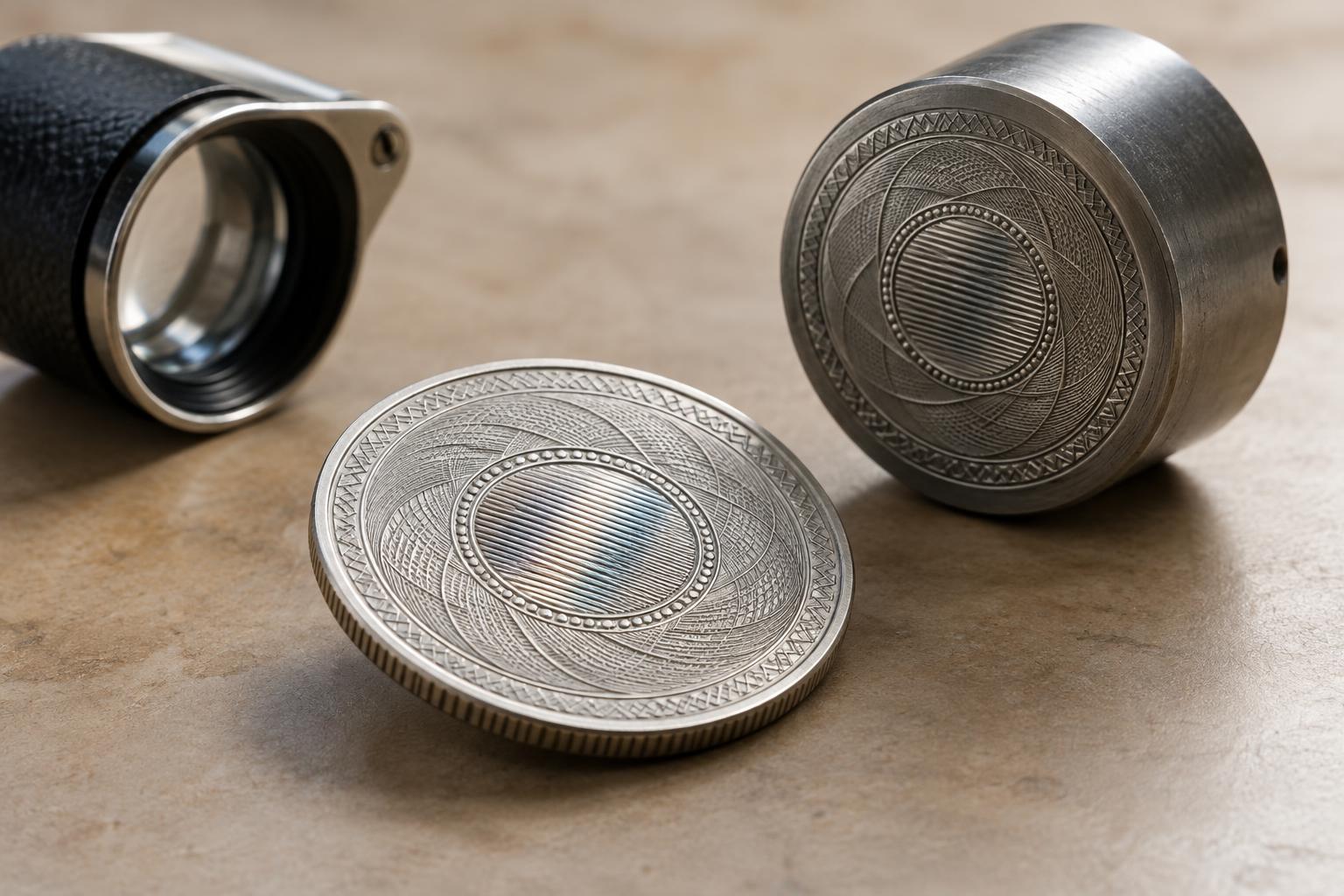
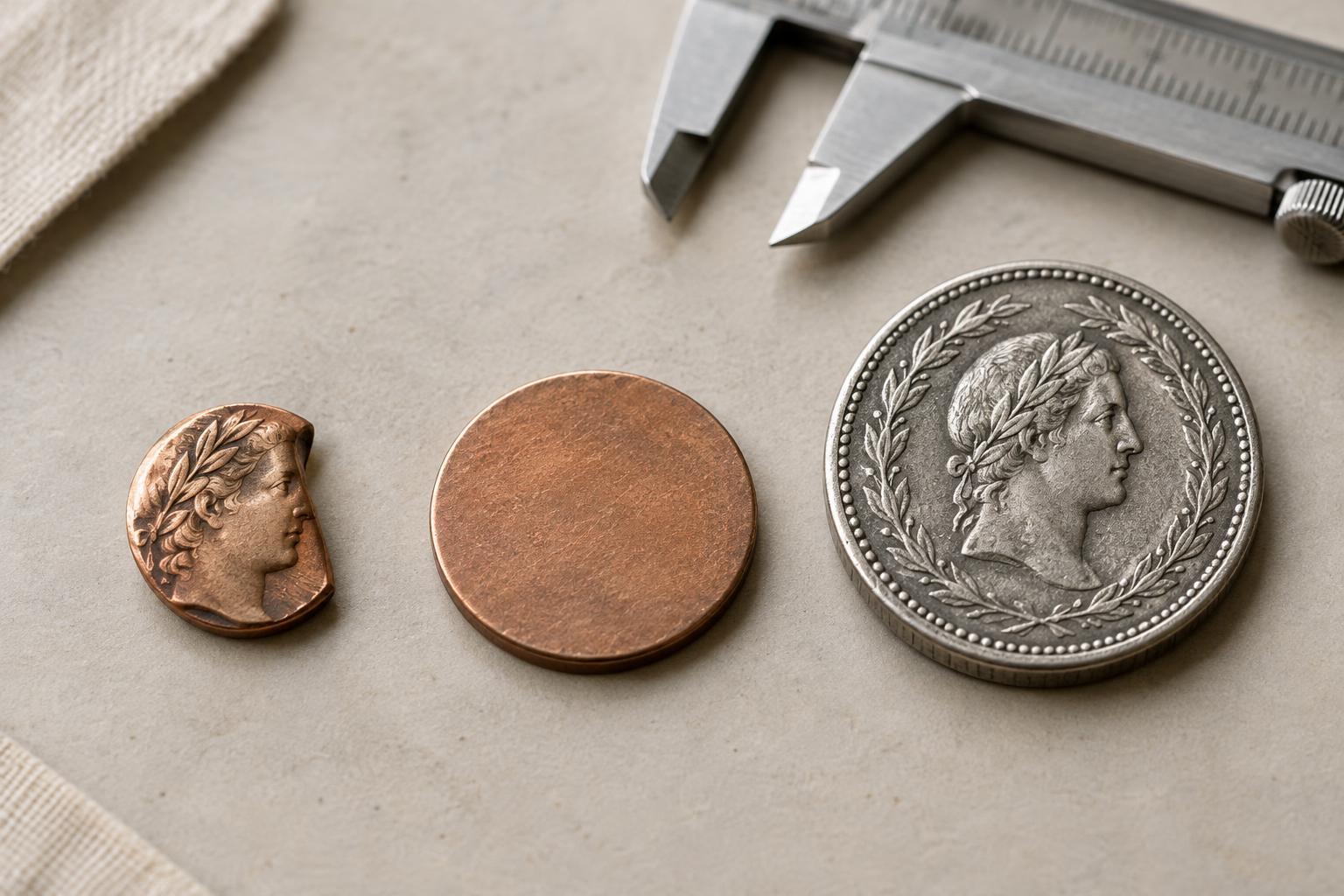
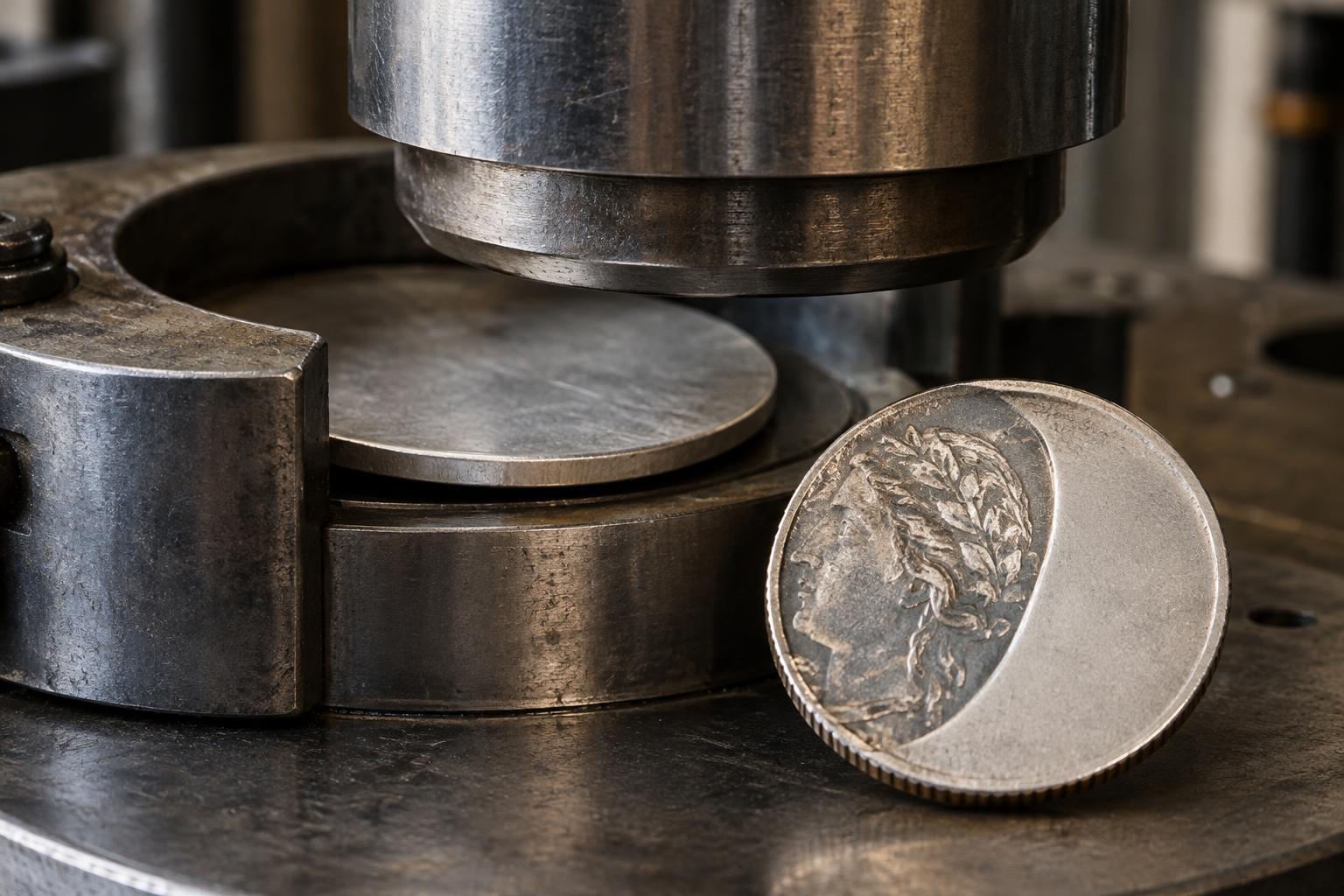
In a typical strike, a blank metal disc called a planchet sits between two dies. Each die carries a recessed design that appears raised on the finished coin. The press brings the dies together, often with a collar helping shape the edge, and the struck coin is then ejected so another planchet can take its place. When that sequence fails, a finished coin may still be in the striking area when the next planchet arrives.
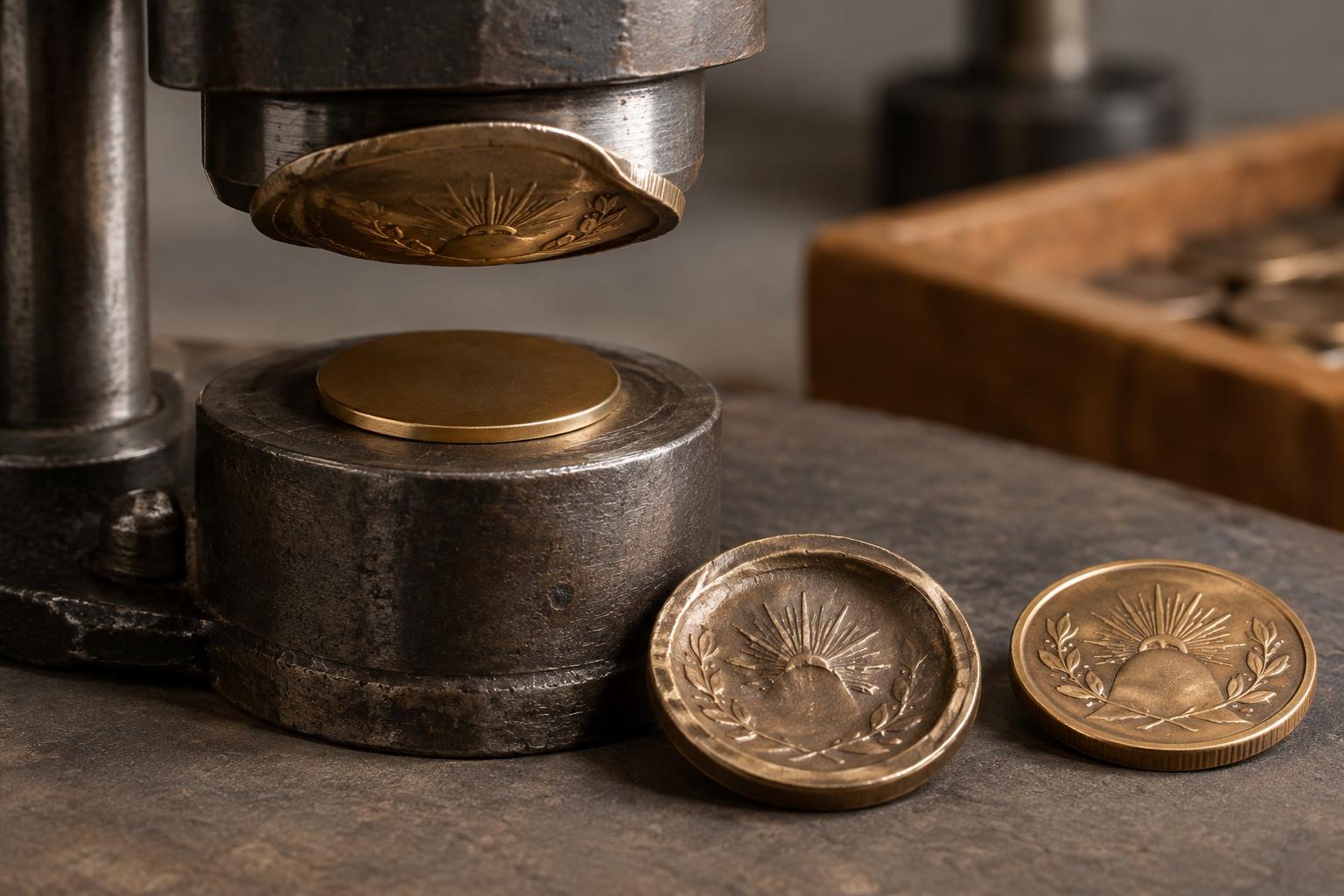
One possible result is a die cap: a struck coin that sticks to a die instead of being ejected. The press can strike it again while it remains attached. Repeated blows may spread its metal around the die’s face and sides, giving it a cupped or thimble-like shape. The trapped coin is now an unintended surface between the die and incoming planchets.
How a die cap makes a brockage
Imagine a coin stuck to the upper die. Its exposed face points toward the next planchet. When the press closes, that exposed face pushes into the new planchet while the lower die strikes the other side. Instead of receiving a design directly from the upper die, the new coin receives an impression from the stuck coin. That transferred impression is called a brockage.
A brockage design is incuse, meaning it is pressed below the surrounding surface, and it is reversed like an image seen in a mirror. The opposite side can show a normal raised design from the unobstructed die. Often, both sides depict the same coin design: one side is normally raised, while the other is mirrored and sunken. A die cap is the coin caught on the die; a brockage is a coin that receives an impression from that trapped coin. The two errors are related, but they are not interchangeable names for the same object.
Why examples do not all look alike
A cap can change as the press continues to operate. Early in the sequence, its exposed design may still be distinct enough to leave a fairly clear brockage. With further strikes, the cap can flatten, stretch or lose detail. Later planchets may receive weaker, distorted or incomplete impressions. The cap itself may develop a deeper cup shape, a widened rim or heavily altered design details.
Brockages also vary in how much of the design they show. If the stuck coin covers only part of a new planchet, the resulting incuse image may be partial rather than full. Position, pressure and the shape of the trapped coin all affect the result. For that reason, a brockage need not resemble a neat, centered mirror image to reflect the same basic striking problem.
What to examine on a suspected error
Start by comparing the two sides. On a suspected brockage, look for a normally raised design on one side and a sunken, reversed impression on the other. Check whether recognizable letters or design elements in the incuse impression correspond to the normal side. Rotation and distortion can make the comparison less obvious, so examine several features rather than relying on one letter.
For a suspected die cap, look at the coin’s overall form as well as its designs. A cupped shape or metal that has expanded around the edge can support the identification, particularly when the coin shows evidence of repeated striking. Not every damaged, bent or flattened coin is a mint error. Marks from later handling can imitate some unusual shapes, and a photograph may not reveal enough to settle a difficult case.
Collecting the story behind the strike
Die caps and brockages offer a way to see the minting process in reverse. A normal coin shows what the dies were intended to make; these errors show what can happen when ejection fails and a struck coin briefly acts like another die. Keeping the sequence in mind makes the terminology easier to remember: coin sticks, cap forms, and a later planchet may receive a brockage.
If you add one to a collection, record which features support its identification, including the raised and incuse designs, the extent of the impression and any unusual shape. Store it so protruding or cupped areas are not pressed against other coins. Appearance, condition and collector demand can affect value, but the most useful first step is understanding what the object shows about how it was made.