Where the planchet should be
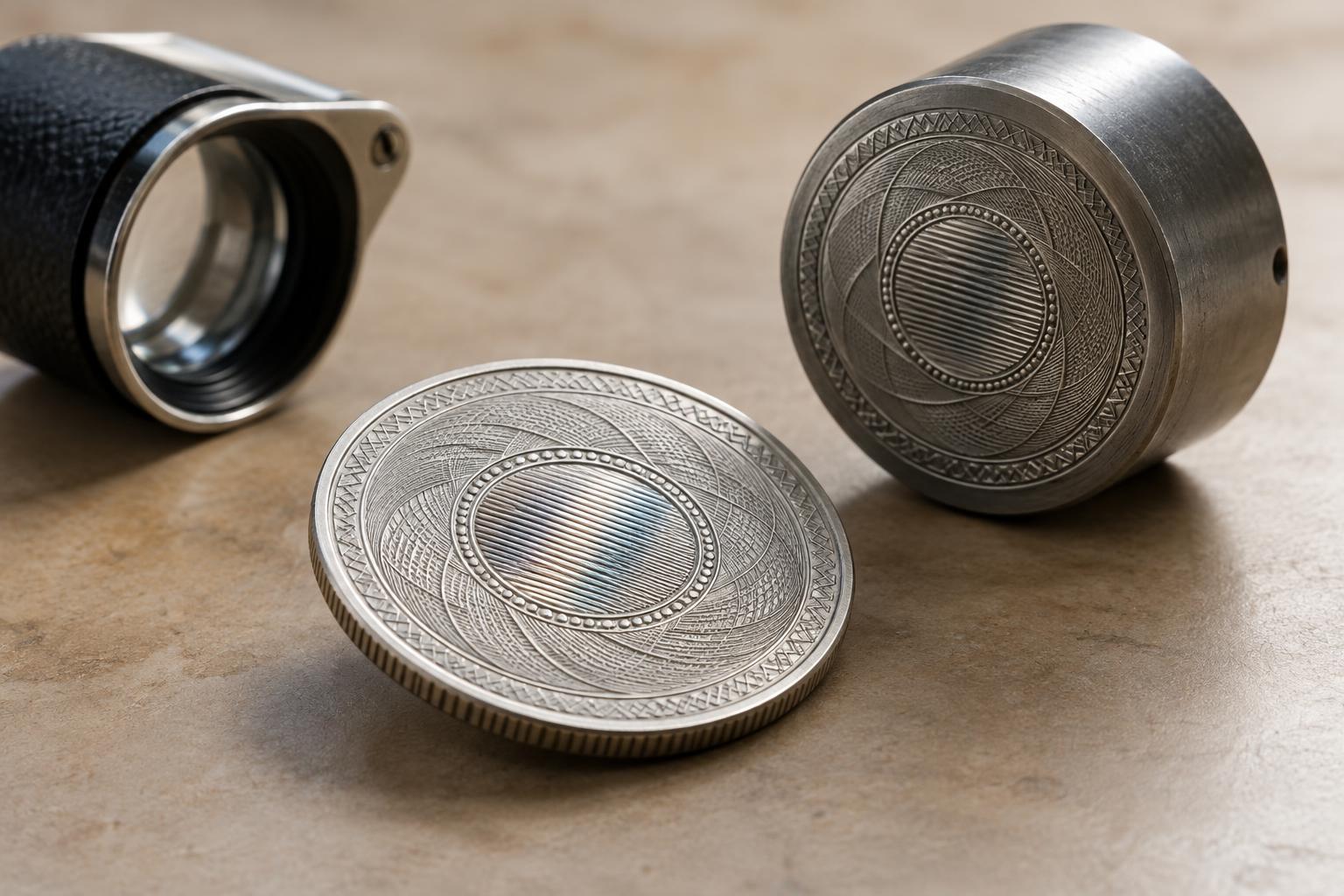
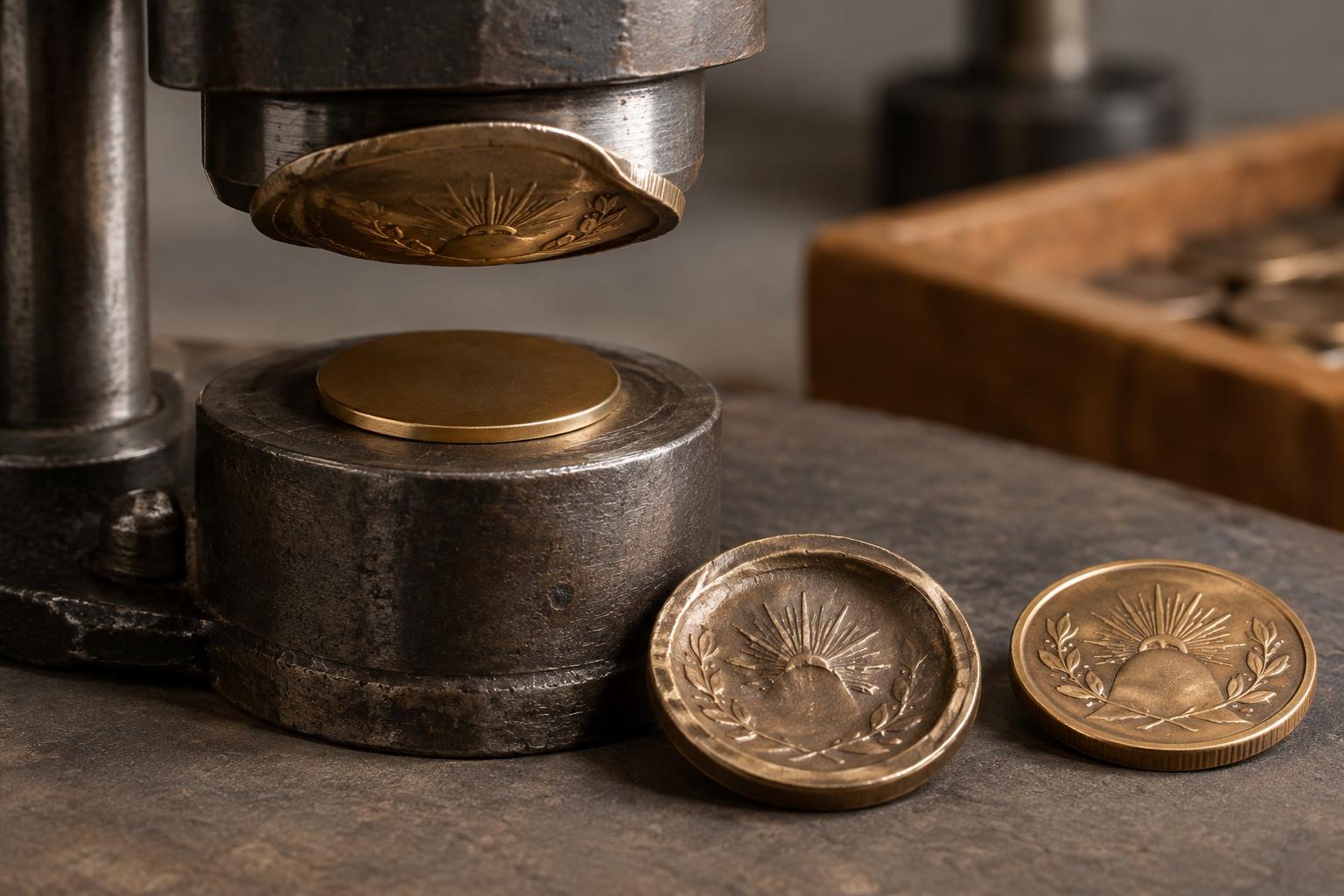
An off-center strike begins with a positioning problem. A coin press is meant to bring two dies together on a planchet, the prepared metal blank that will become a coin. A feeding mechanism places the planchet between the dies. When everything is properly aligned, the dies impress their designs across the intended area. A collar around the striking position helps keep the planchet in place and, depending on the coin, helps form its finished edge.
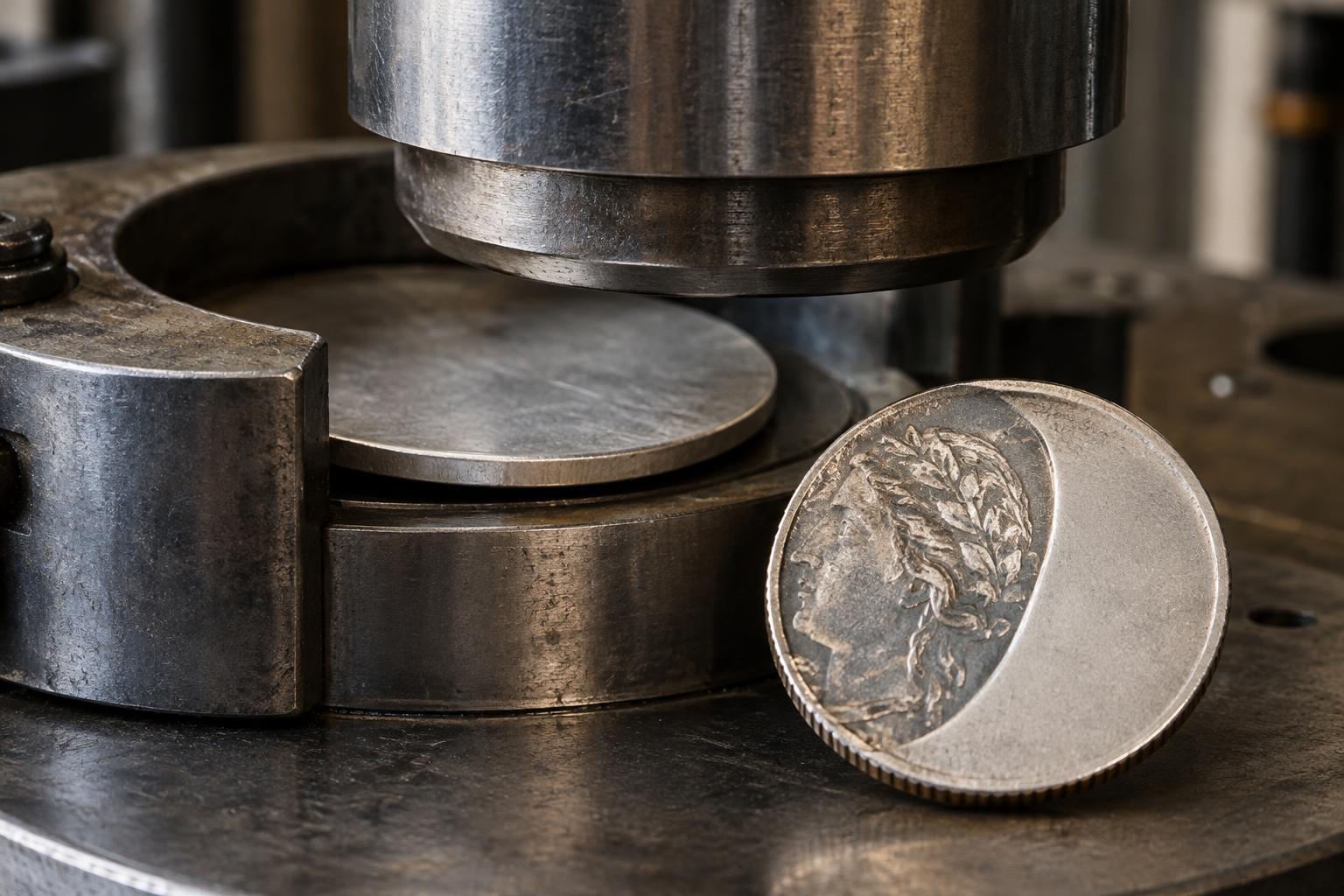
If a planchet is not fully seated when the dies come together, only part of it may lie between their striking surfaces. The dies impress the portion they reach, while the portion outside their reach receives no design. The result is an off-center strike: a coin with a partial design beside an unstruck area. This is an error made during striking, not a design choice or a type of normal wear.
What the press leaves behind
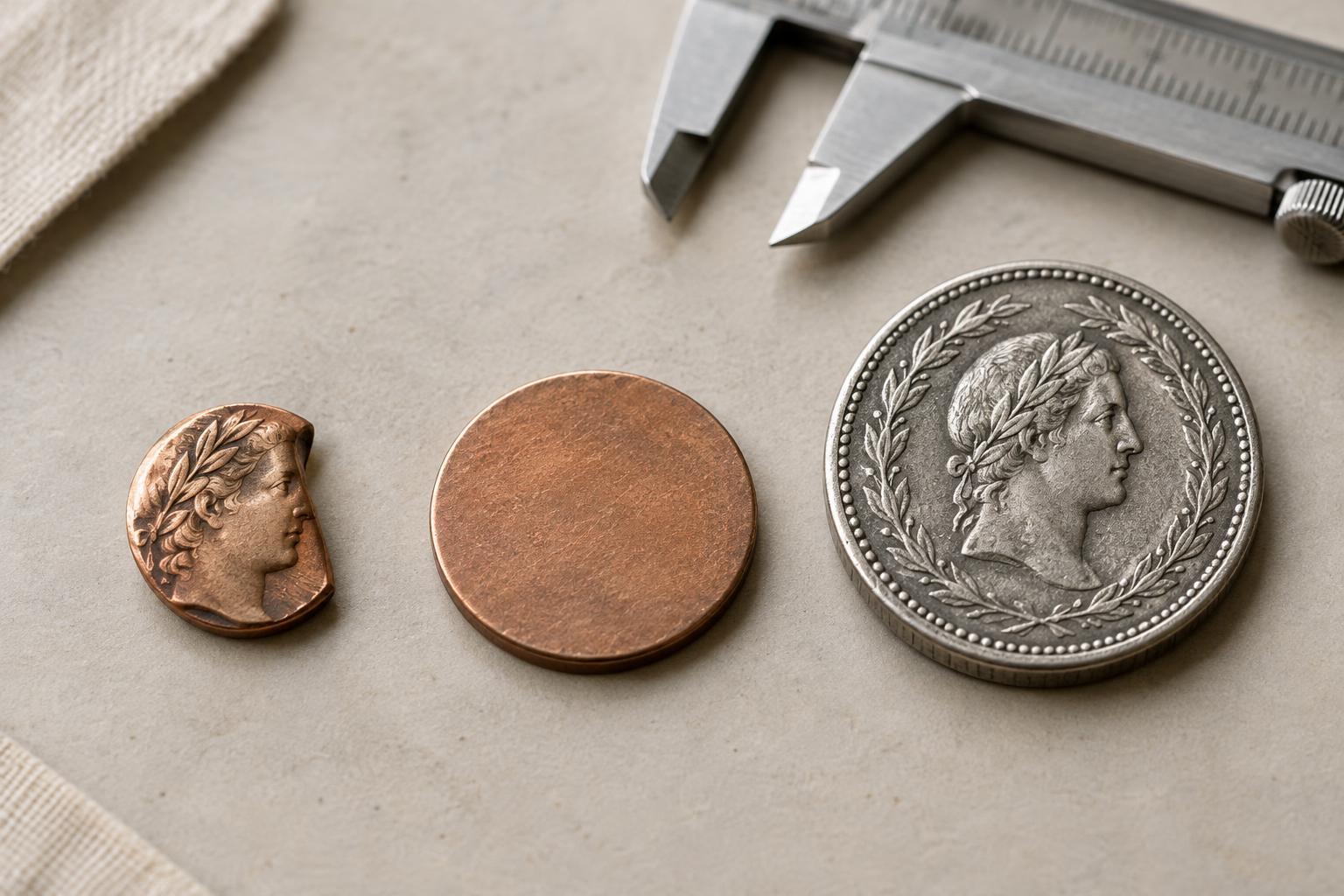
The most recognizable feature is the contrast between the struck portion and the blank portion of the same planchet. Because striking pressure acts unevenly, the coin may look stretched or irregular rather than perfectly round. The amount of missing design varies. A slight shift may cut off only a small area near the edge; a larger shift can leave much of the planchet unstruck.
Collectors often describe an off-center strike by estimating how far the design has shifted. Such percentages are approximate visual descriptions, not a measurement needed to recognize the error. Before focusing on a number, look at both faces: which parts of the design are present, where the unstruck metal begins, and whether the date remains visible. A visible date can make an example easier to identify, but its absence does not change how the error occurred.
Why the collar and dies matter
The feeding mechanism, collar, and dies have different jobs, and those differences help explain minting errors. The feeder moves a planchet into position; the collar helps contain it; the dies carry the designs. An off-center strike is chiefly about where the planchet sits relative to the dies at the moment of impact. Exactly how a particular planchet came to be out of position may not be apparent from the finished coin alone.
A broadstrike is a useful comparison. In a broadstrike, the coin is struck without effective confinement by the collar and can spread beyond its usual diameter, yet the design is generally complete. An off-center strike instead has a visibly unstruck portion because part of the planchet was outside the area reached by the dies. The two errors can look irregular in outline, so the presence or absence of complete design details matters more than roundness alone.
Similar-looking coins that need a closer look
Not every coin with a missing design area is an off-center strike. A clipped planchet, for example, starts with metal missing before the strike; it does not have an intact blank area extending beyond a partial design in the same way. A coin struck with a misaligned die can show a shifted impression on one face while the other face appears more normally centered. Examining both sides helps separate these possibilities.
Damage after a coin leaves the mint can also remove or flatten details. Cutting, grinding, or heavy impact may leave tool marks, disturbed surfaces, or an edge that does not look consistent with the rest of the coin. A photograph may not show enough to settle a difficult case. If identification matters, careful in-hand examination or an opinion from a knowledgeable coin specialist is more useful than relying on one unusual feature.
Collecting and storing an example
For a beginner, an off-center strike is a practical lesson in how coins are made. Compare it with a normal coin of the same type. Notice which design elements the dies reached and which portion of the planchet escaped the strike. Record visible details, including the date if present, and describe what you can observe rather than guessing at a precise cause within the press.
Handle an error coin by its edges and store it in a suitable holder that does not press on an irregular outline. Avoid cleaning the blank area: its original surface is part of the evidence. Interest in off-center strikes can vary with the coin type, the degree of displacement, condition, and whether identifying details remain visible. Those factors may affect collectibility, but no single off-center strike guarantees a particular value.