Start with the exact coin, not its story
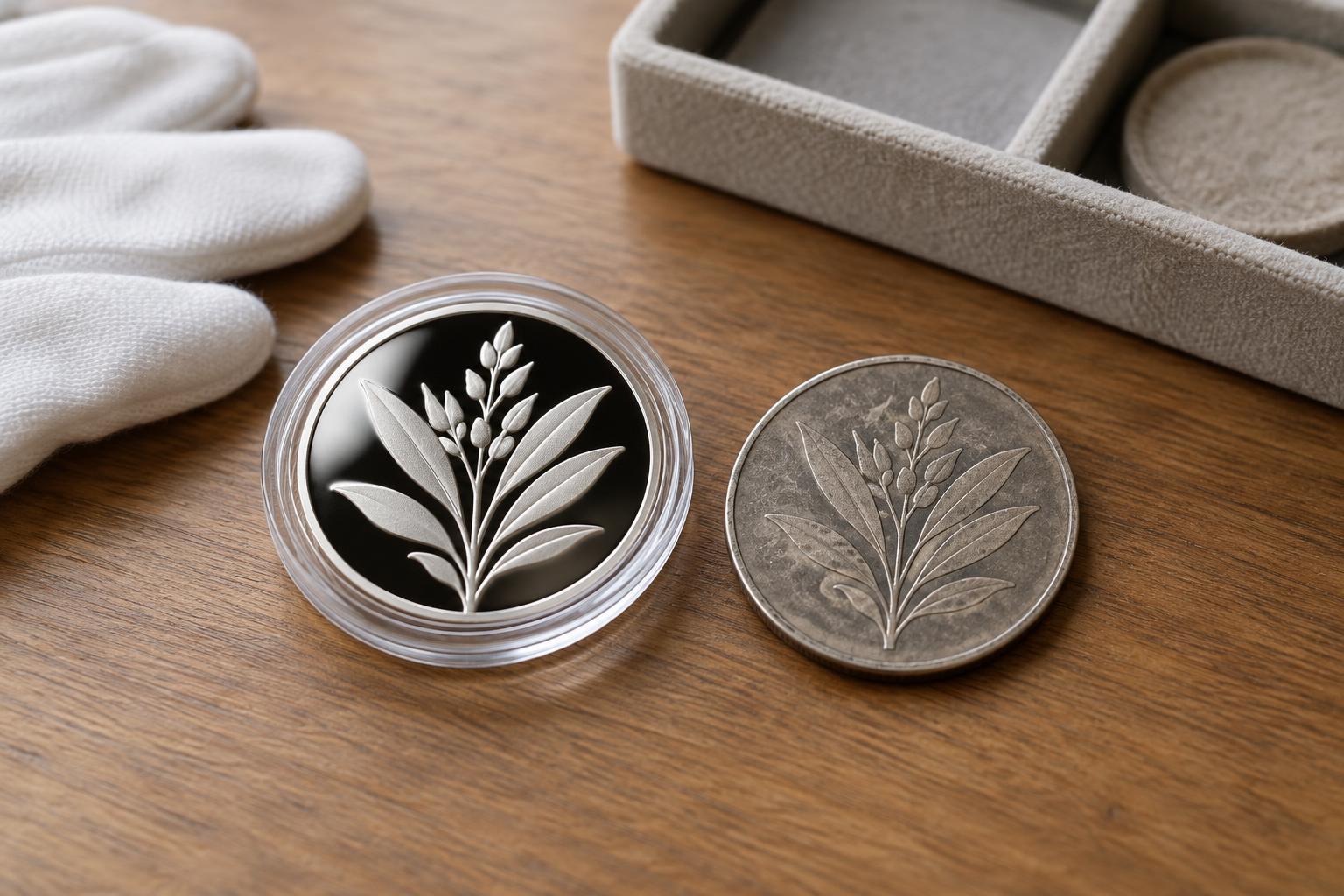
An appealing story can make a coin seem convincing, but authenticity begins with identifying what the coin is supposed to be. Record its date, denomination, issuing authority, mint mark if present, and the specific design variety being offered. A reference for the exact issue gives you something concrete to compare against: lettering, portrait details, spacing, edge style, diameter, weight, and intended metal. Small differences can matter, but so can normal variation from wear or the way a coin was struck.
Keep authenticity separate from condition and price. A genuine coin may have been cleaned, damaged, or altered in a way that affects its desirability. A coin with an attractive surface may still be counterfeit. Before you commit to an expensive addition, decide which questions need answers: Is the coin genuine? Is its date or mint mark original? Has it been repaired or otherwise changed? Does its condition match the description? Answering one does not automatically answer the others.
Examine the coin methodically
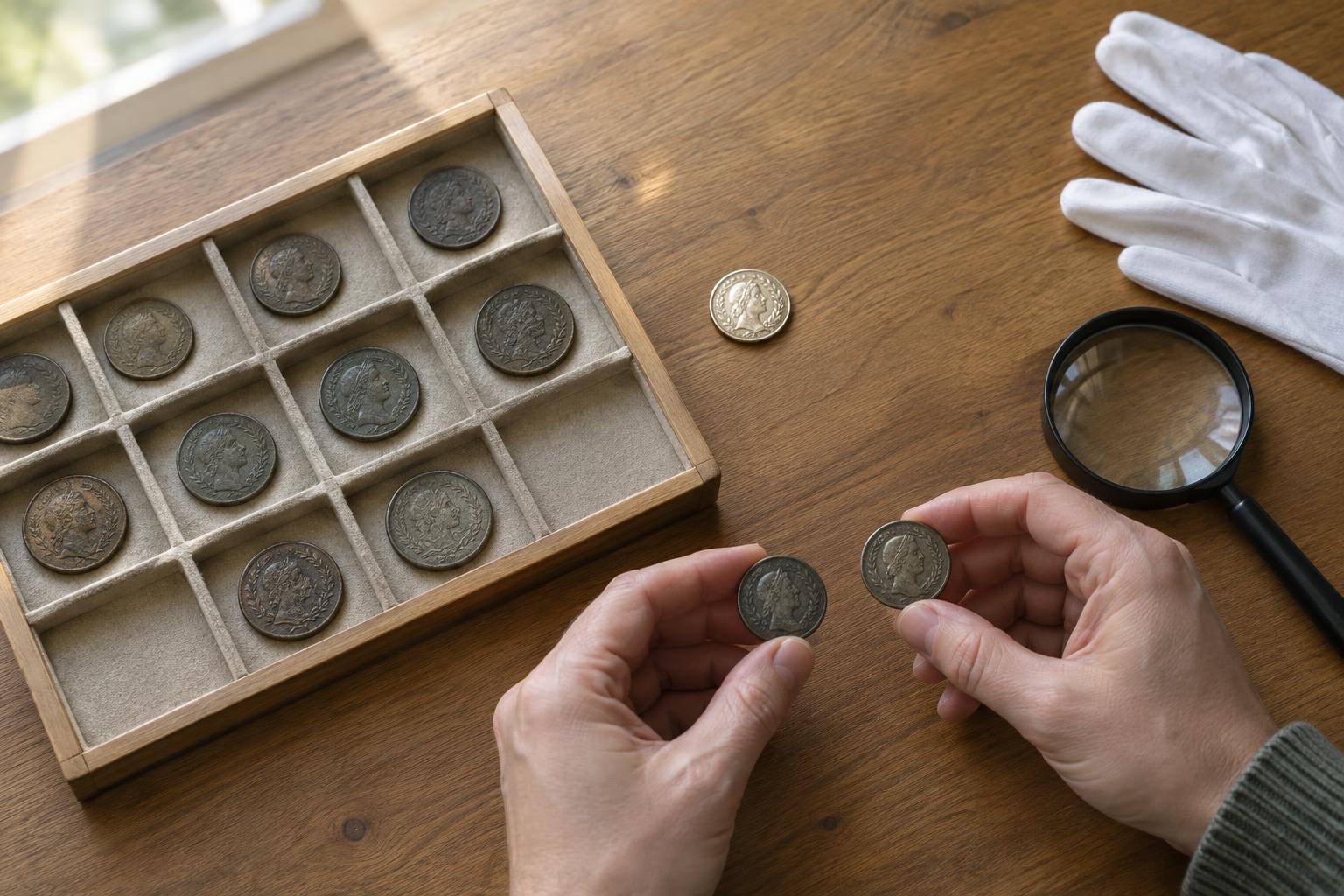
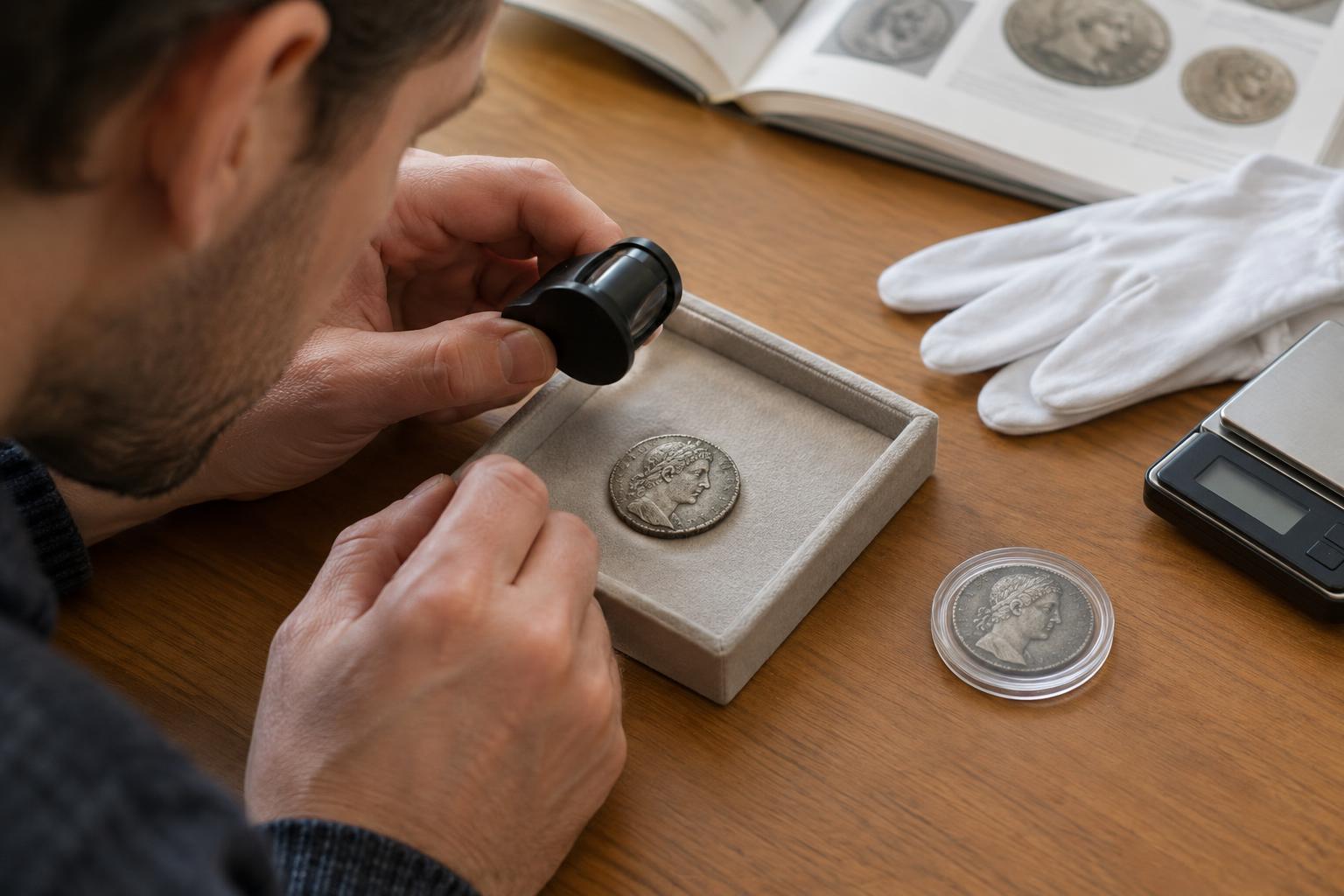
Ask for clear images of both sides and the entire edge, taken straight on and at an angle under good light. Look for design elements that do not match a dependable reference, lettering that appears uneven in the wrong places, or details that seem unusually soft beside sharper surrounding areas. Inspect the date and mint mark closely for signs of tooling or an added element. On some counterfeits, repeated marks or tiny raised bumps can point to a copied surface, though photographs alone may not settle what caused them.
Physical measurements can add useful evidence when you can examine the coin in person. A suitable scale and calipers let you compare weight and diameter with the specifications for that issue. Check the edge as well: reeding, lettering, seams, and the transition between edge and faces may reveal inconsistencies. None of these checks is conclusive by itself. Wear, damage, production differences, and measurement error can affect what you observe, so treat a mismatch as a reason to investigate rather than as an instant verdict.
Avoid tests that could damage the coin
It can be tempting to scrape a surface, apply a chemical, or drop a coin to judge its sound. These tests may damage a genuine coin, and an imitation may still pass a crude test. Magnetic behavior can be informative for some issues, but it is not a universal authenticity test; you need to know what materials the original coin should contain and whether the test itself is appropriate.
Handle a coin by its edges over a soft, clean surface if it is safe to remove from its holder. Do not clean it to make details easier to see. If the coin is sealed, avoid breaking the holder merely to perform your own tests. Better photographs or an experienced examination may tell you more without exposing the coin to unnecessary risk.
Evaluate documentation and the seller’s terms
An ownership history, old collection label, or grading-service holder may help you assess a coin, but each has limits. Paperwork should clearly connect to the specific coin being offered. If a coin is encapsulated, check that the holder’s stated details match what you can see, and consider whether the holder itself raises any concerns. Encapsulation offers useful information, not a substitute for looking at the coin. A confident-sounding description or certificate with no clear link to the piece deserves questions rather than automatic trust.
Before paying, confirm what is included in the sale and what happens if an independent examiner questions authenticity. Ask whether there is a return period, whether an authenticity guarantee is offered, and what conditions apply. Keep copies of the listing, photographs, correspondence, and receipt. These records help you remember what was represented and make later discussions more precise. If a seller will not allow reasonable scrutiny of a costly coin, you can choose to wait for another example.
Know when to seek another opinion
Some coins are difficult to assess even with good references and careful measurements. Counterfeiters may copy genuine pieces, while genuine coins can show unusual strike characteristics or years of wear. If a purchase would be significant for your collection, an opinion from a knowledgeable dealer, experienced specialist, or established authentication service may be worth considering before you buy. Ask what the examination covers and what limits remain, especially if it will be based only on photographs.
Give yourself permission to leave a question unresolved. Make a short checklist of the evidence you have, the differences you can explain, and the points you cannot. A coin does not have to be proven false for you to decline it. Building a collection is a long process; choosing a piece you can identify and understand is often more satisfying than rushing to secure one that leaves you guessing.