Start with a stable environment
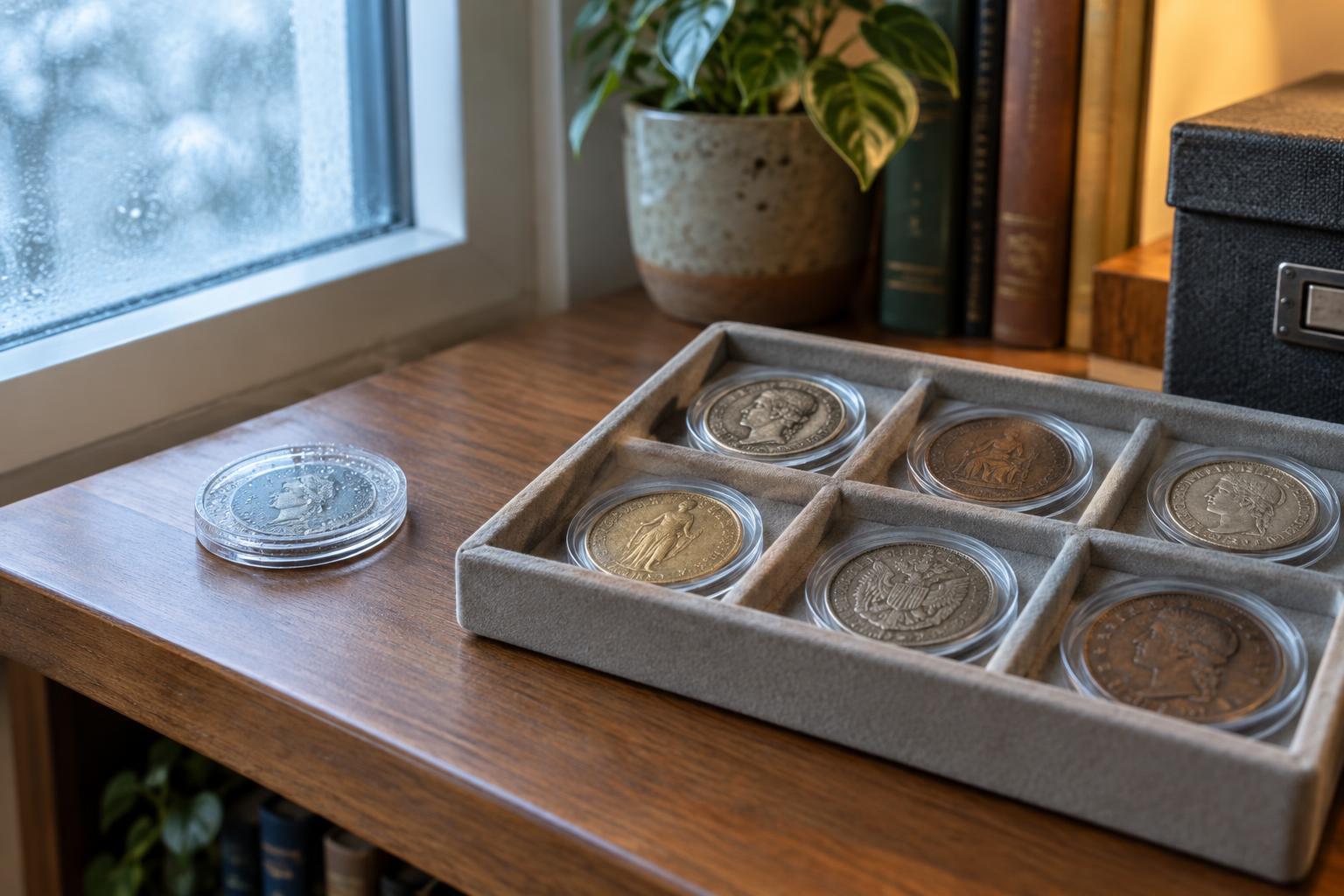
The best place for a coin collection is usually a clean, dry indoor area where conditions change slowly. A bedroom closet or interior cabinet may be more suitable than an attic, garage or basement. Attics can become hot, garages often follow outdoor temperature swings, and basements may be prone to dampness. Your home may have different conditions, so judge the actual space rather than relying on the room’s name.
Keep coins away from windows, radiators, heating vents and places where condensation appears. Moisture can encourage spotting or corrosion, while repeated temperature changes can contribute to condensation inside poorly sealed containers. If a closet smells musty or stored paper feels damp, find another location and address the moisture problem before putting coins there.
Give each coin a suitable holder
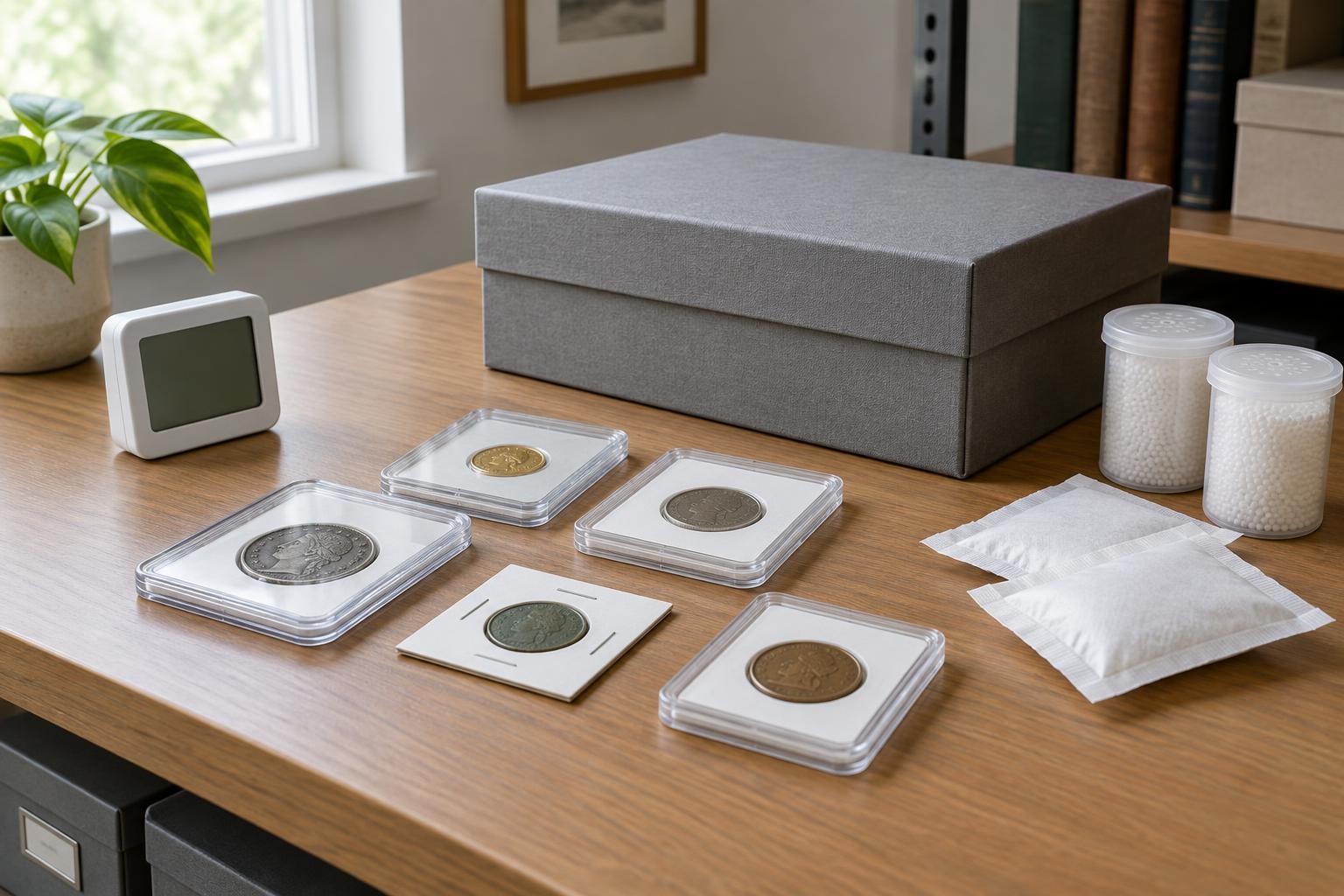
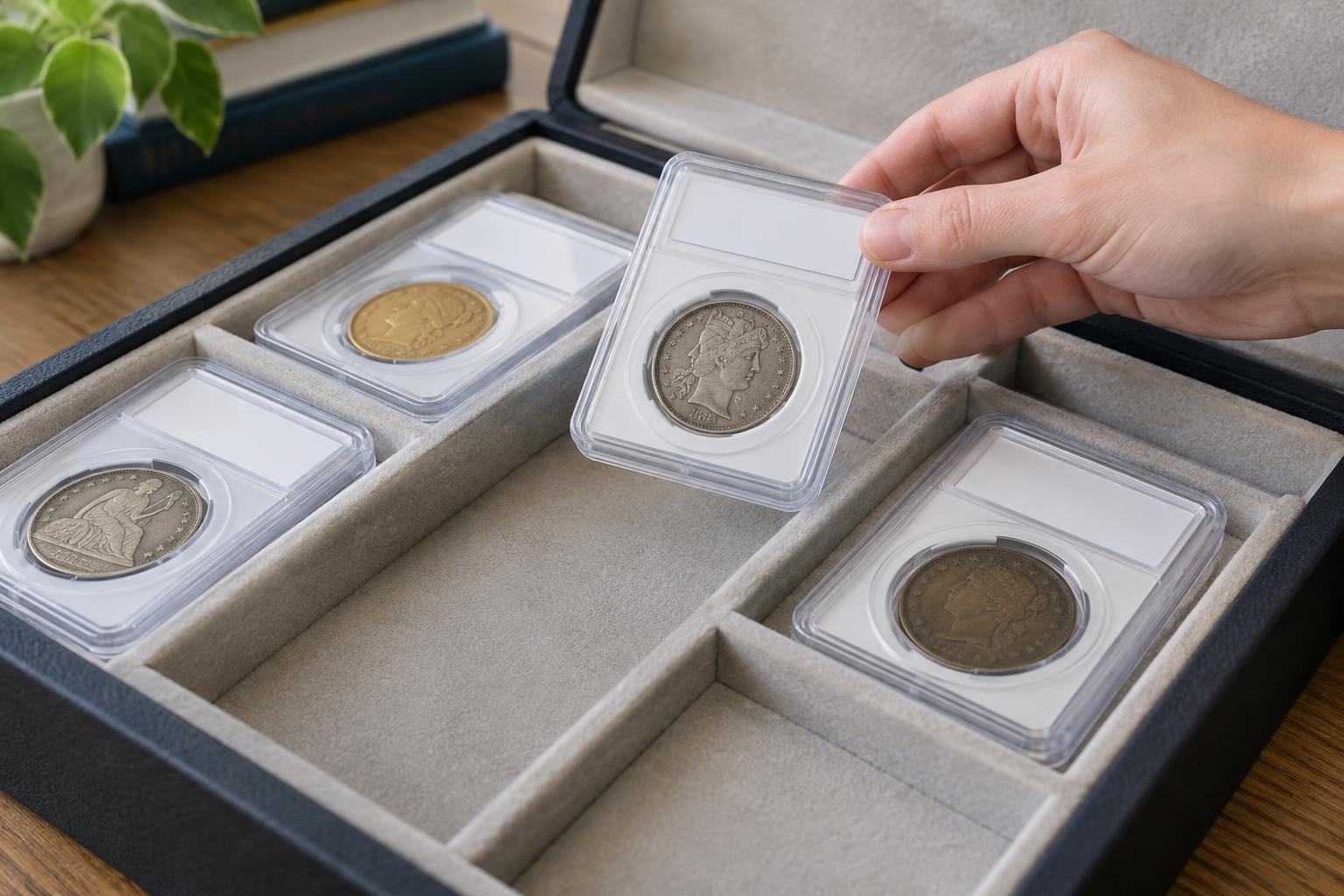
Location is only part of storage. A coin left loose in a drawer can rub against other objects or be touched every time the drawer opens. Individual holders make it easier to protect surfaces and identify pieces without handling them. Options include inert plastic capsules, archival-quality flips and paper holders made for coins. Choose a holder that fits the coin without forcing it into place.
Avoid assuming that every clear plastic sleeve is safe for long-term storage. Some soft plastics containing PVC can break down and leave residue that may damage coins. If a holder has an unknown composition, especially if it feels unusually soft or develops a sticky film, replace it with one identified as appropriate for coins. An album or storage box can then keep the individual holders together, provided its materials are also suitable and it does not press on the coins.
Before placing a coin in a holder, make sure both are dry and free of loose grit. Hold the coin by its edges over a soft, clean surface. Do not clean a coin simply because it looks dark or worn: cleaning can alter its surfaces and may reduce its appeal to collectors.
Choose a spot that limits accidents and unwanted access
Think about what happens around a proposed storage spot during an ordinary week. A high-traffic desk invites spills and casual handling; a cabinet near cleaning supplies risks leaks or fumes. Choose a place where boxes will remain upright, will not be crushed by heavier items and can be reached without moving a precarious stack. Keep coins away from children or pets who might open a container, damage a holder or mistake a small coin for an everyday object.
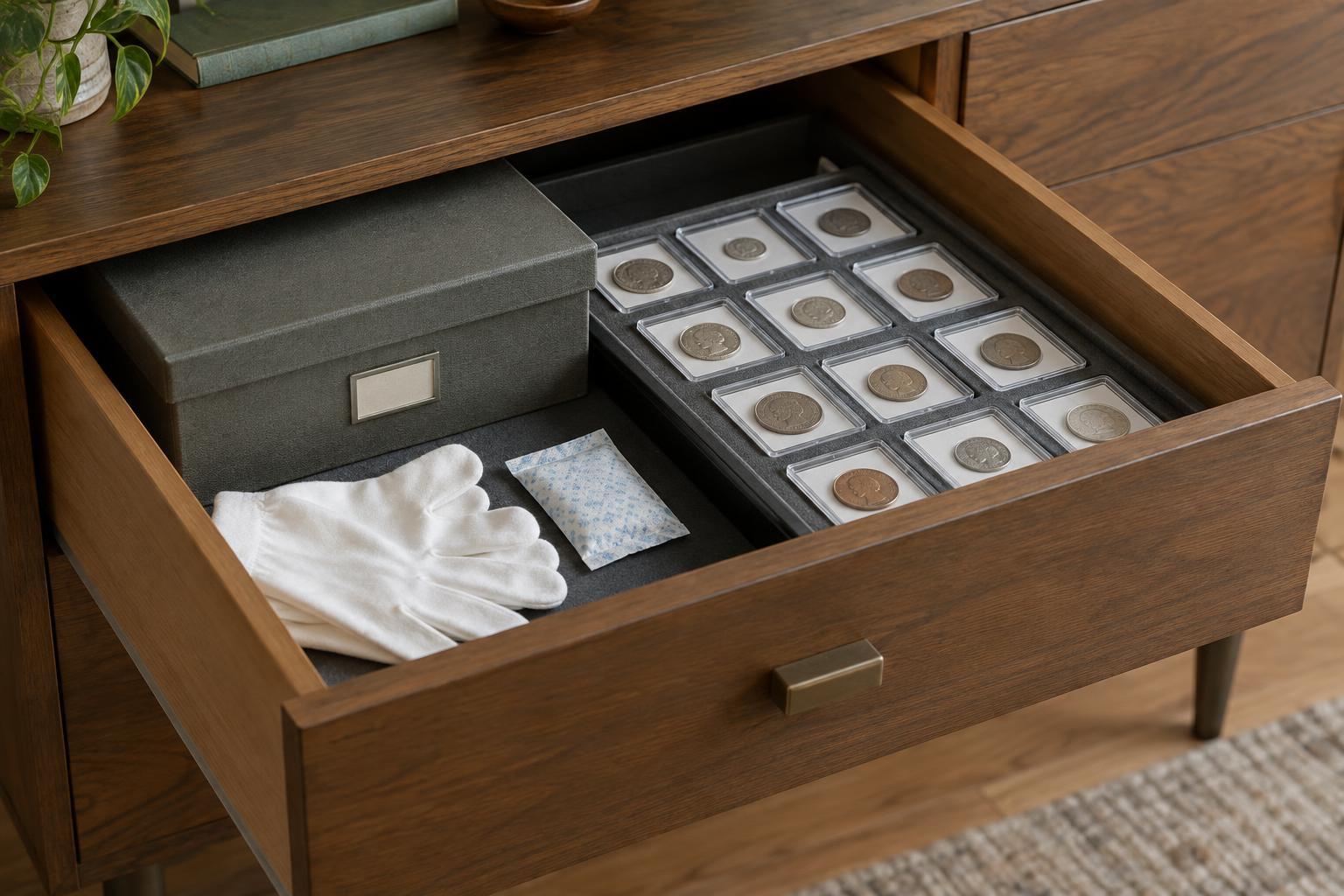
For a collection you would be concerned about losing, consider a lockable cabinet or home safe appropriate to your circumstances. A lock can limit casual access, but no home location guarantees protection against theft, fire or flooding. If using a safe, check its interior periodically: a closed compartment can still retain moisture. Store holders inside an organized box rather than letting coins slide around in the safe.
Plan for water and other household hazards
Water is a practical concern even in an otherwise dry room. Avoid storing a collection directly on the floor, beneath plumbing or beside a water heater. A raised shelf offers some protection from minor leaks, though it cannot prevent every kind of damage. If you use a lidded container, choose one that accommodates the holders without squeezing them, and do not seal damp materials inside it.
Small packets of desiccant may help manage moisture within a container, but they are not a substitute for fixing a damp room and may need replacement or reconditioning according to their instructions. Keep them separate from the coins. Check the storage area from time to time for signs of leaks, musty odors or changes in holders; an arrangement that worked when you set it up may need adjusting later.
Make the collection easy to check without disturbing it
A safe location should also support orderly collecting. Label boxes or album sections, and keep a simple inventory that notes what each holder contains and where it is stored. You can record basic details such as denomination, date and mintmark without assigning a permanent value; coin values can vary with condition, demand and other factors. Keep any inventory in a place you can access if the collection itself is temporarily unavailable.
When adding a new coin, put it into a suitable holder and return the collection to its chosen spot rather than leaving it out for later. Occasional checks let you catch a damaged holder or moisture problem early. The aim is not to create a perfect storage system all at once, but to give each coin a stable, protected place that remains practical for you to use.