Why humidity matters to a coin collection
Coins often spend far more time in storage than on display. During that time, damp air can encourage unwanted changes to their surfaces. The effects depend on a coin’s metal, condition, and surroundings: copper, silver, and other metals do not all react in the same way. Moisture can also affect paper envelopes, cardboard holders, and labels, making them less reliable over time.
The goal is not to make a storage area perfectly dry. It is to keep coins away from condensation, leaks, and repeated swings between damp and dry conditions. A holder offers useful protection from handling and dust, but most holders do not make a coin immune to the environment around it. Humidity control therefore begins with the room or cabinet, not just the coin’s packaging.
Choose a stable place before adding equipment
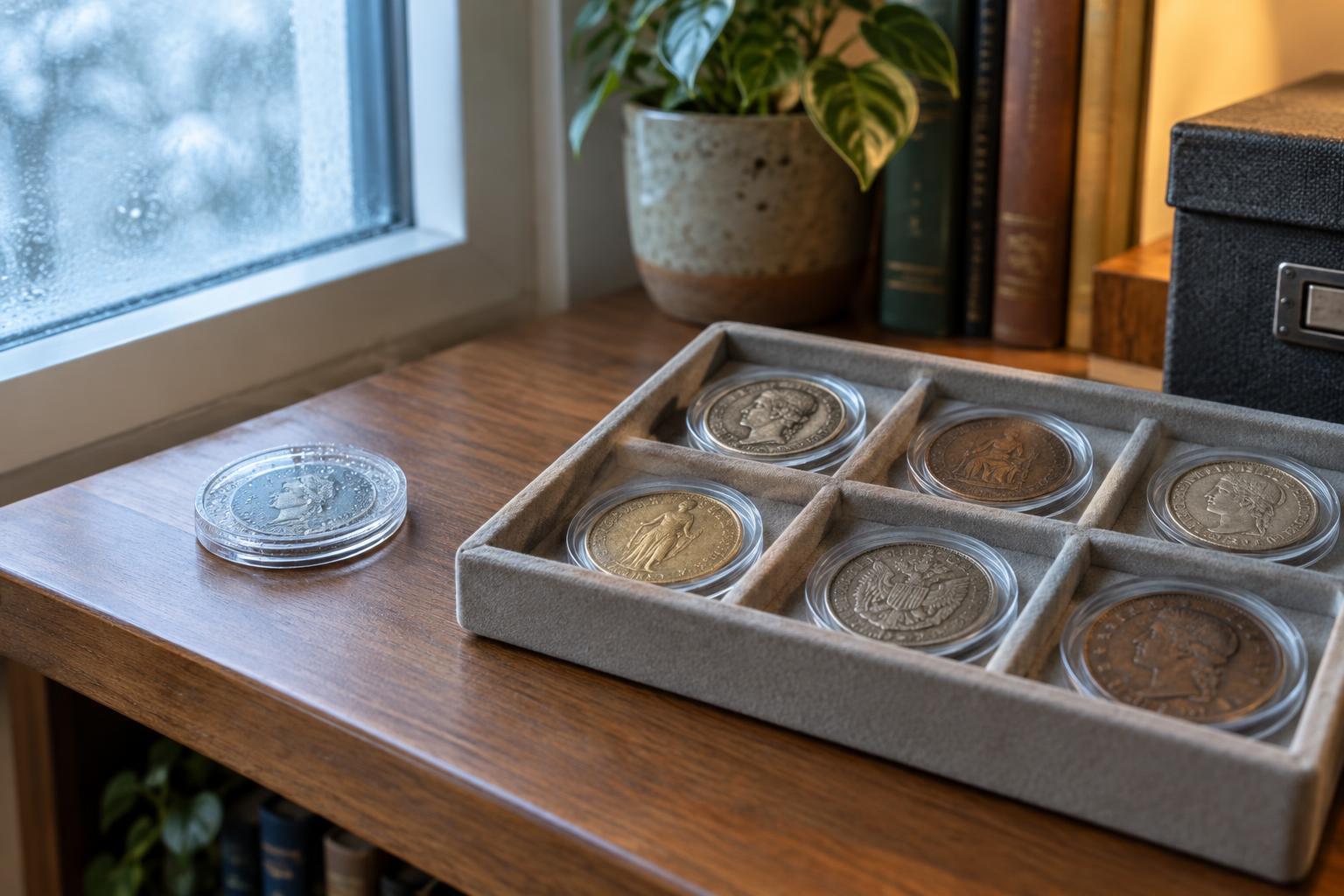
Look for an indoor location that stays reasonably comfortable throughout the year. A closet or cabinet in a regularly used room may be easier to manage than a basement, attic, garage, or shed. Avoid placing a collection beside plumbing, exterior doors, windows that collect condensation, heating vents, or appliances that release moisture. Keep boxes off floors where a small leak might go unnoticed.
Air movement helps prevent damp pockets, but coins do not need a fan blowing directly on them. Leave some space around storage boxes rather than packing them tightly against a cold wall. Check nearby surfaces for signs of moisture before settling on a location. A persistent musty smell, visible condensation, or water staining is a reason to address the space itself, not merely to add more protection inside a box.
Measure conditions and respond to patterns
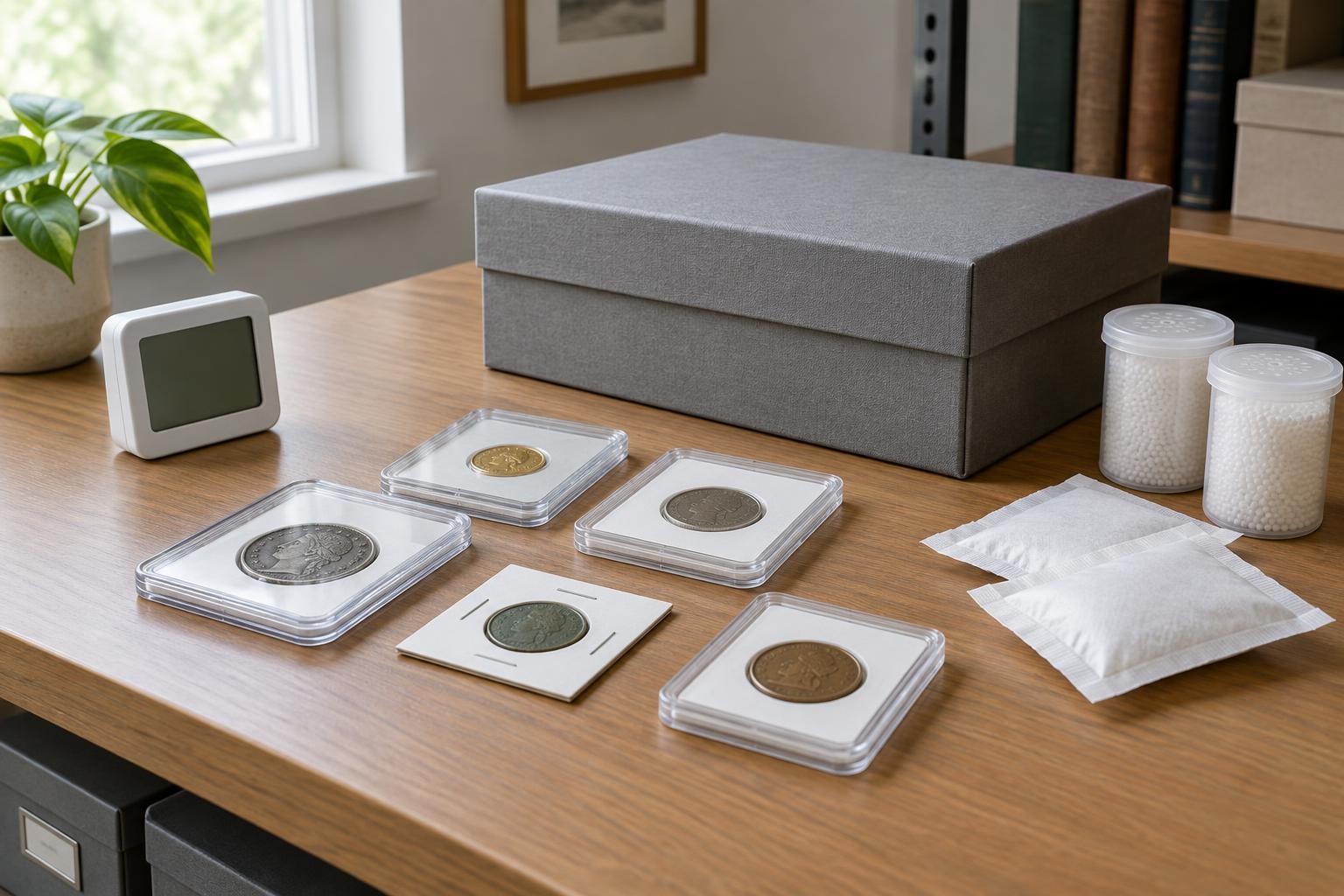
A small hygrometer can show the relative humidity near your collection. Place it where the coins are stored, rather than relying on a reading from another room. Check it at different times and through seasonal changes. A single reading is less useful than a pattern: steadily damp conditions or sharp fluctuations deserve attention, especially if you also see condensation or damage to storage materials.
If the room is often damp, a dehumidifier may help, provided it is sized and maintained according to its instructions. Empty or drain it as directed, and make sure it does not create a spill risk near the collection. Fix leaks and other sources of water first; equipment cannot reliably compensate for an unresolved moisture problem. In a very dry space, avoid assuming that more drying is always better. Aim for a stable, moderate environment rather than chasing an exact number.
Use holders and desiccants thoughtfully
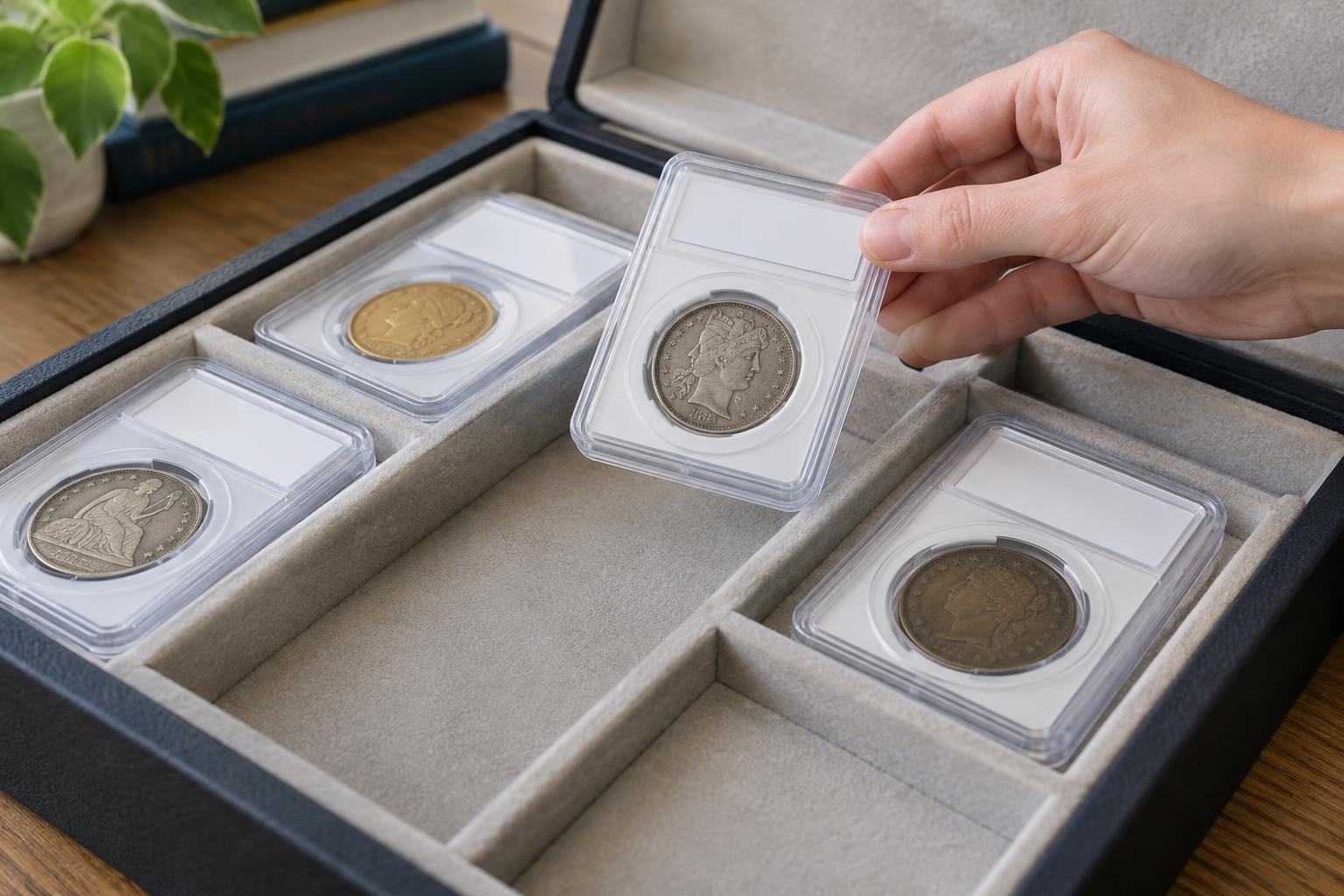
Store coins in holders made for long-term coin storage, such as suitable inert plastic flips, capsules, or archival-quality holders. Be cautious with soft plastic containing PVC, which can leave damaging residue. Holders should be clean and dry before a coin goes in. Closing a damp coin or damp paper insert inside a container can trap the very moisture you are trying to avoid.
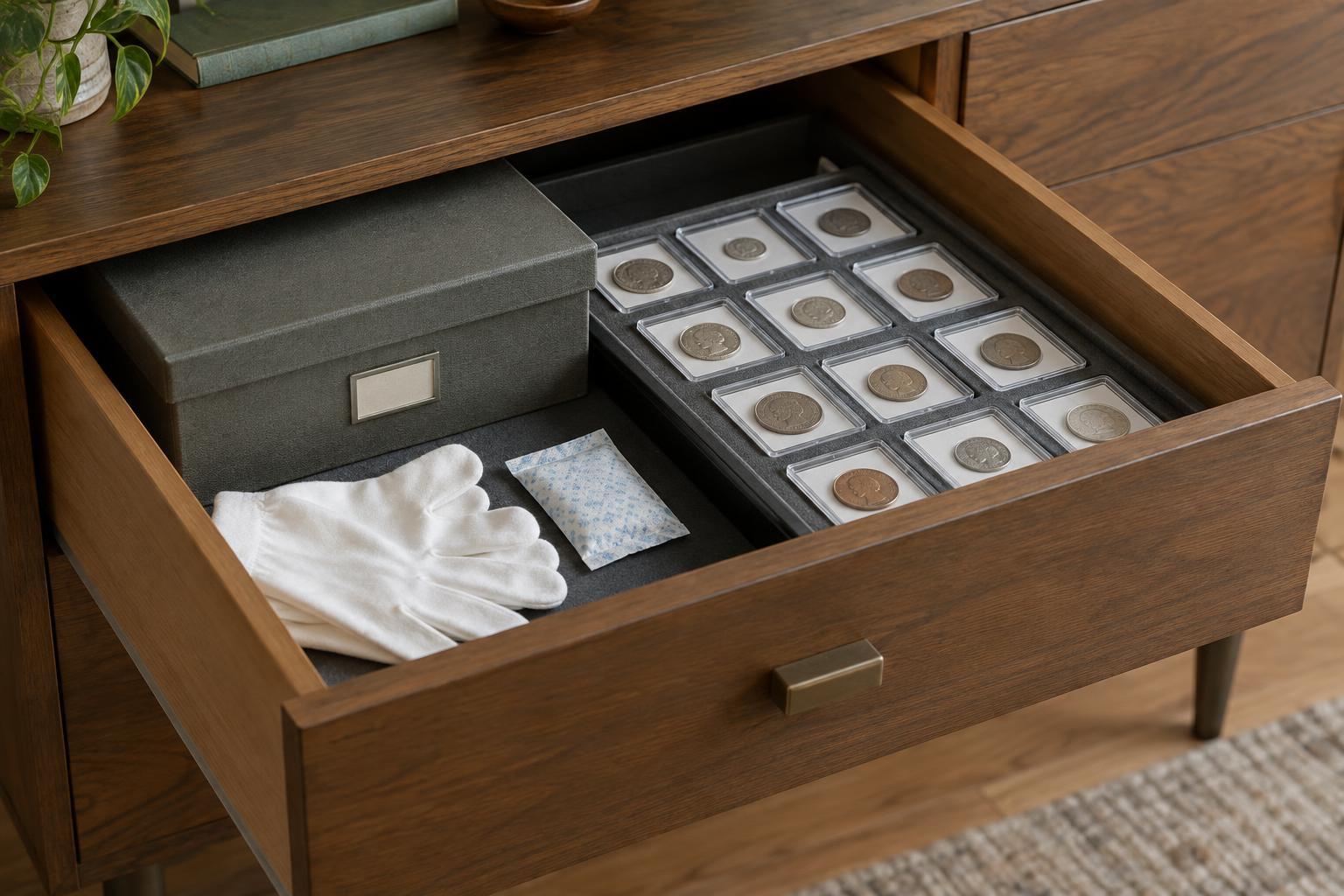
Silica gel packets or other desiccants can help manage moisture inside a closed cabinet or storage container, but they have limited capacity. Follow the product’s directions for placement, replacement, or reactivation, and keep loose material from contacting coins. Desiccants are a supplement to a sound storage location, not a cure for a wet room. Avoid storing coins alongside household chemicals, cleaning products, or materials with strong odors; vapors can be another source of surface trouble.
Inspect without overhandling
Set a simple routine to check the storage area, holders, and coins for changes. Look for damp packaging, unexpected spots, or residue, and note which coins need closer attention. Handle coins by their edges over a soft, clean surface when inspection is necessary. Frequent removal from holders can add fingerprints or accidental scratches without improving preservation.
Do not try to rub away a new spot or polish a coin to restore its appearance. Cleaning can permanently change the surface, and not every color change signals active damage. If a coin appears to be developing corrosion or has been exposed to water, separate it from damp materials and seek advice from a qualified coin conservation professional before attempting treatment. Regular checks, careful packaging, and a stable location are more useful than a last-minute rescue.