What the holder protects—and what it does not
A certified coin is typically enclosed in a rigid plastic holder, often called a slab. The holder lets you view the coin while limiting direct handling, and its label records identifying information. It is useful protection, but it is not an excuse to ignore storage conditions. The outside can be scratched or cracked, labels can become difficult to read, and a damaged holder may no longer give you confidence that its seal is intact.
Think of the holder and the coin as two things worth protecting. A scuffed case can make a coin less enjoyable to examine even if the coin itself has not changed. Storage should therefore prevent holders from rubbing together, keep them away from heavy objects, and place them in a reasonably stable environment.
Choose storage that fits the holders
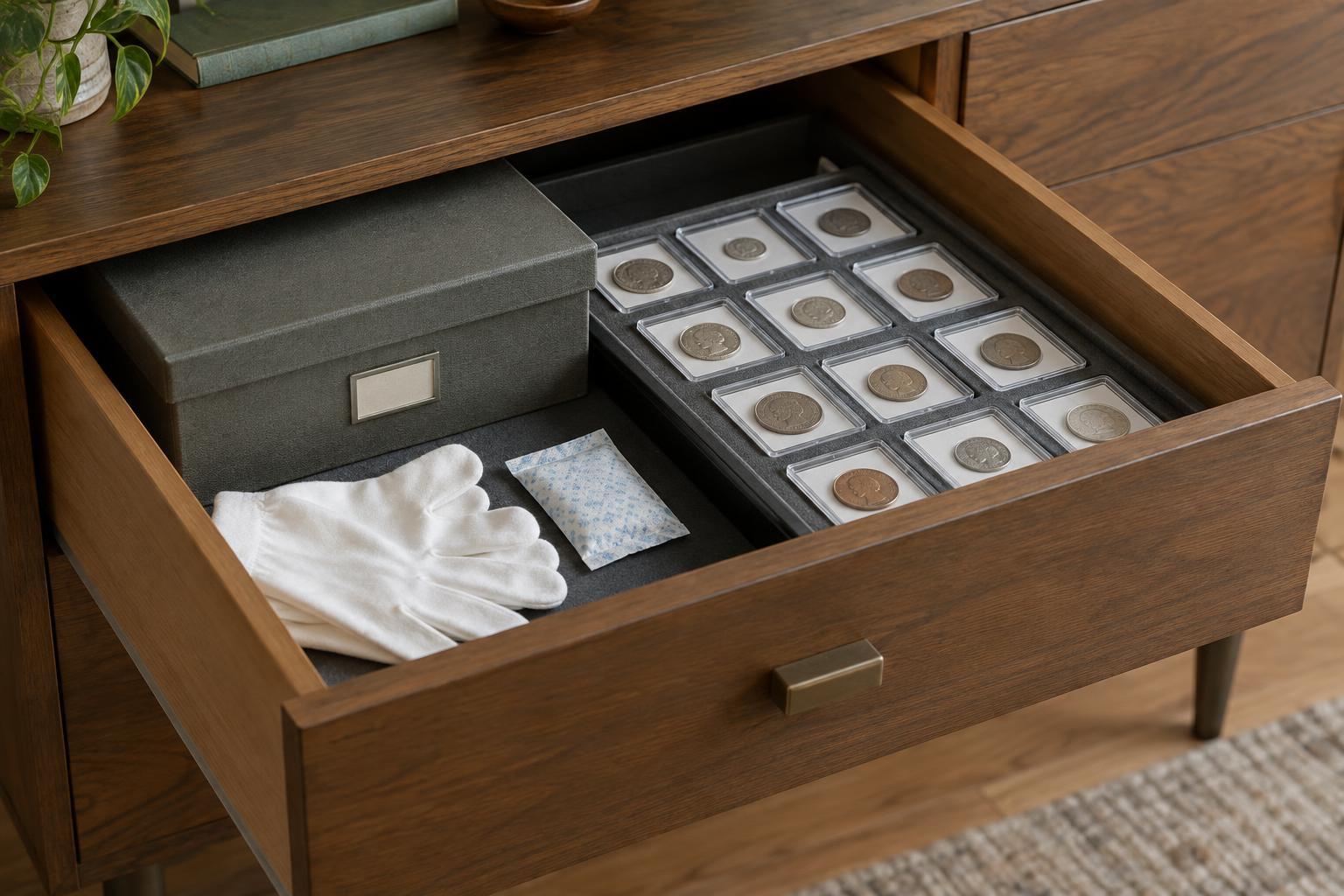
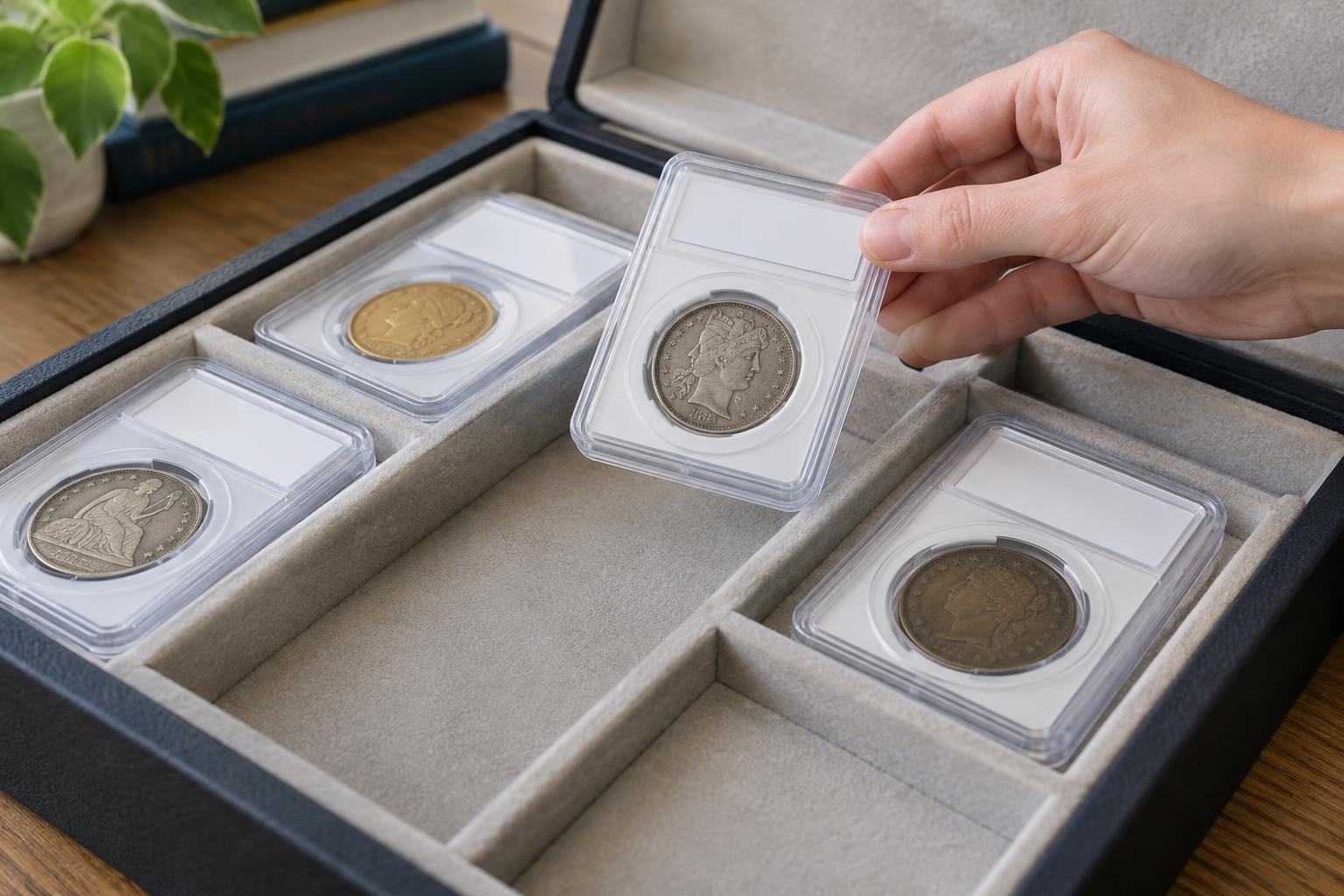
Start with a box or tray designed to accommodate certified coin holders. Sizes and shapes vary, so check that each slab fits without being forced into a tight slot or rattling around in an oversized compartment. Dividers or individual slots help stop neighboring holders from striking one another when the container is moved. If you store slabs upright, make sure the box supports them evenly so they do not lean under pressure.
Avoid overfilling a box to squeeze in one more coin. Pressure against the edges or face of a holder may leave marks or make retrieval awkward. Likewise, loose piles invite sliding and scratches. If you use an outer sleeve or bag as an extra barrier against scuffs, choose one intended for archival coin storage and check that it does not cling to the holder or obscure the label. The outer packaging should be easy to remove without tugging on the slab.
Keep the storage space steady and dry
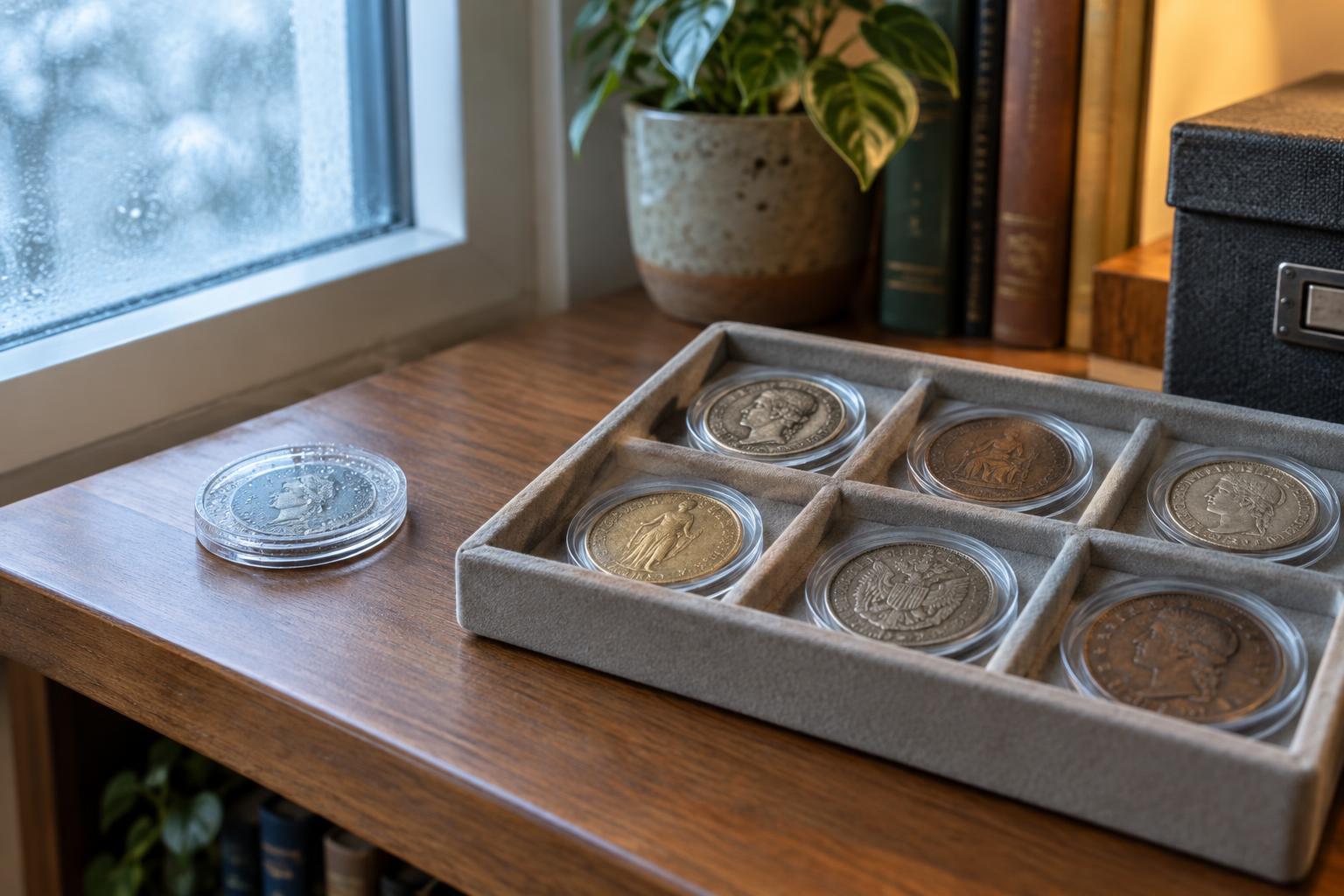
A cabinet, closet, or other indoor area with relatively steady conditions is generally preferable to a place subject to large swings in temperature or moisture. Avoid damp basements, hot attics, windowsills, and spots near heaters. Extended exposure to strong light can also affect some printed labels or packaging materials. A sealed coin holder should not be assumed to be completely airtight or immune to its surroundings.
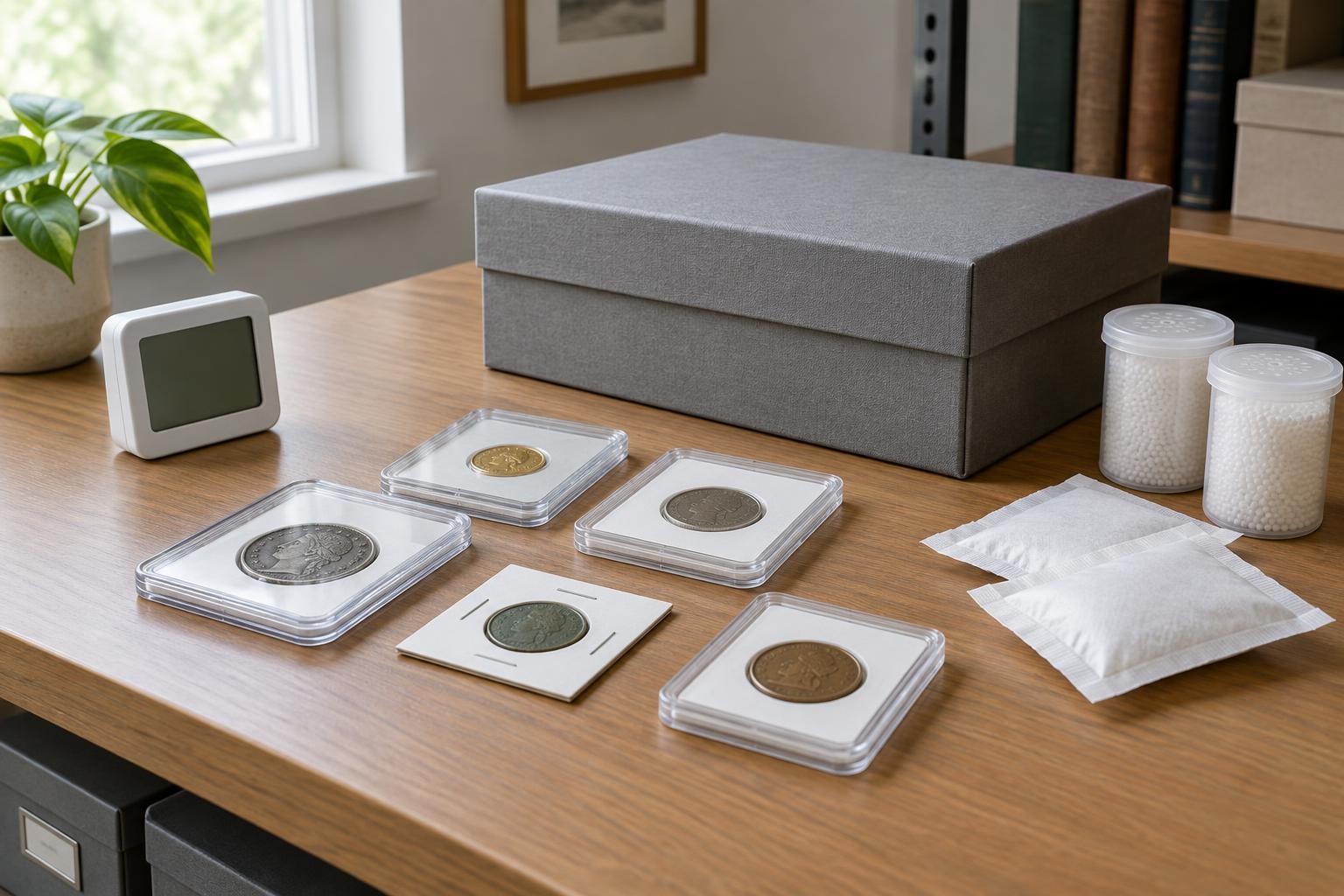
Keep storage boxes off floors where leaks or minor flooding could reach them. If you use a desiccant in a storage cabinet or container, follow its directions and replace or recharge it when needed; it is not a substitute for fixing a persistent moisture problem. Inspect the storage area occasionally for condensation, musty smells, or damaged packaging. Moving coins to a better location early is easier than dealing with water-damaged boxes and labels later.
Handle the case as carefully as the coin
Before taking out a certified coin, clear a clean, dry surface and make room to set it down. Hold the slab by its edges with clean, dry hands. Keep keys, jewelry, and other hard objects away from the viewing area, since they can scratch the plastic. When comparing several coins, lay holders separately rather than stacking them face to face or sliding one across another.
For transport, place each slab in a fitted slot or protective sleeve before putting it into a larger box. Fill empty space so holders cannot bounce around, but do not pack them so tightly that the cases flex or become difficult to remove. If you keep an inventory, record the label details separately. That lets you locate a coin without repeatedly pulling every holder out of storage.
Inspect gently and know when to stop
Periodic checks help you notice cracked edges, a loose seal, unreadable labels, or new marks on the plastic. Light dust on the outside of a holder can often be removed with a clean, soft microfiber cloth and gentle pressure. Avoid abrasive cloths, household polishes, solvents, and attempts to buff out deep scratches: a cosmetic fix can create a larger cloudy patch or damage printing. Never try to clean the coin through an opening or pry the holder apart.
If a holder is badly damaged, a replacement holder through the certifying service may be an option; check that service’s procedures before sending anything. Until then, keep the coin protected and avoid unnecessary handling. Good storage is mostly a matter of simple habits: give each slab its own space, keep the environment stable, and handle the case only when you need to.