What changes when storage warms and cools
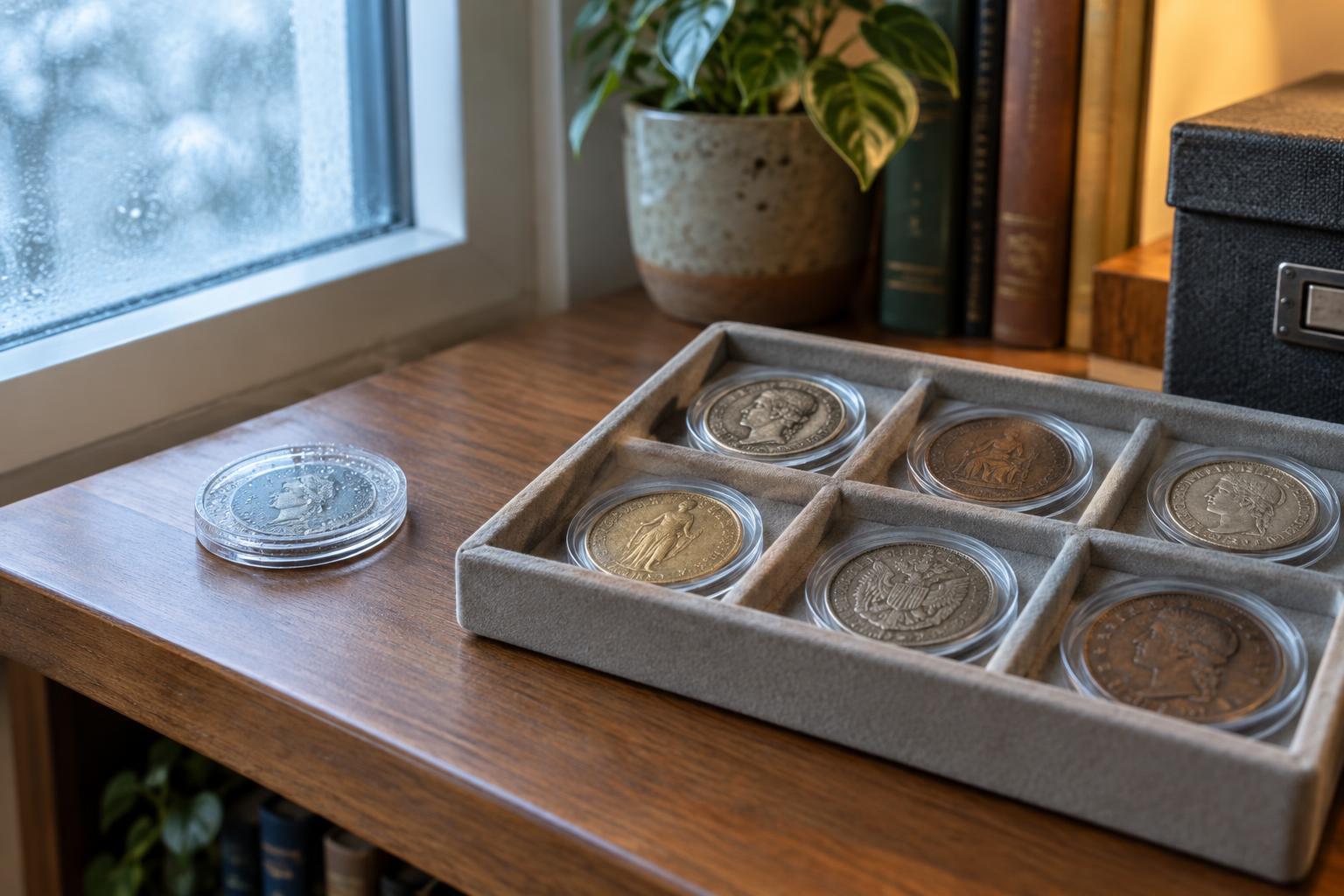
Temperature alone is not the whole story for stored coins. The concern is what happens to moisture as the air around a collection warms and cools. Warm air can hold more water vapor than cool air. When humid air meets a surface that has become cooler, moisture may collect on that surface. A coin or its holder can be one of those surfaces, particularly after a collection is moved from a cold place into a warm room.
A visible drop of water is an obvious warning, but moisture is not always easy to spot. Temperature changes can also shift the relative humidity inside a storage space. That matters because a coin’s surface and the materials touching it may remain in close contact for years. A single move between rooms is not necessarily harmful; repeated swings and persistently damp conditions are the greater concern.
Why moisture matters to coins
Coins are made from different metals and alloys, so they do not all respond to their surroundings in the same way. Moisture can contribute to unwanted changes on susceptible surfaces, especially when other substances, such as residues or pollutants, are present. Collectors may notice new spotting, uneven discoloration, or corrosion. Not every color change signals damage: some toning develops gradually, and its appearance alone does not reveal exactly how a coin was stored.
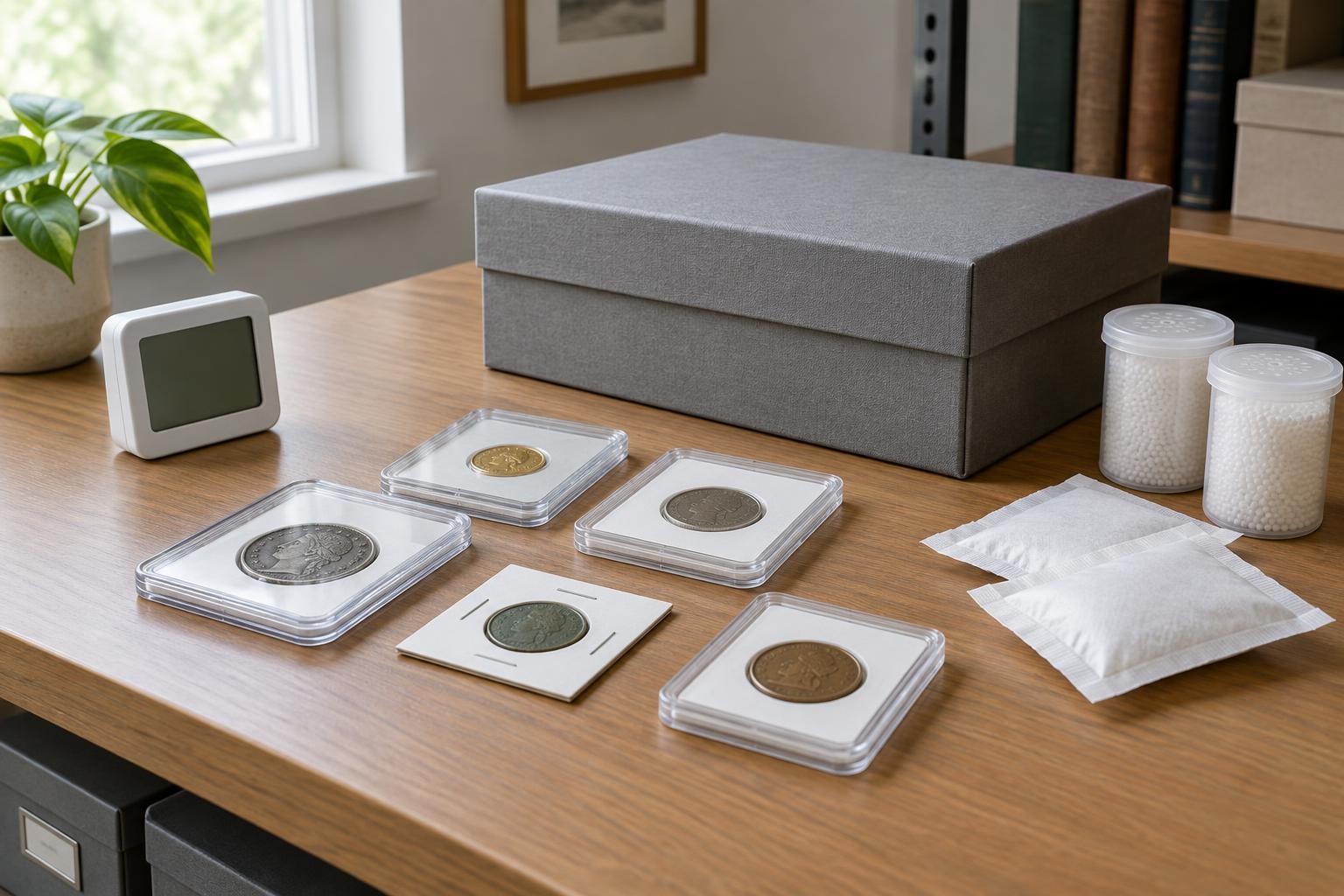
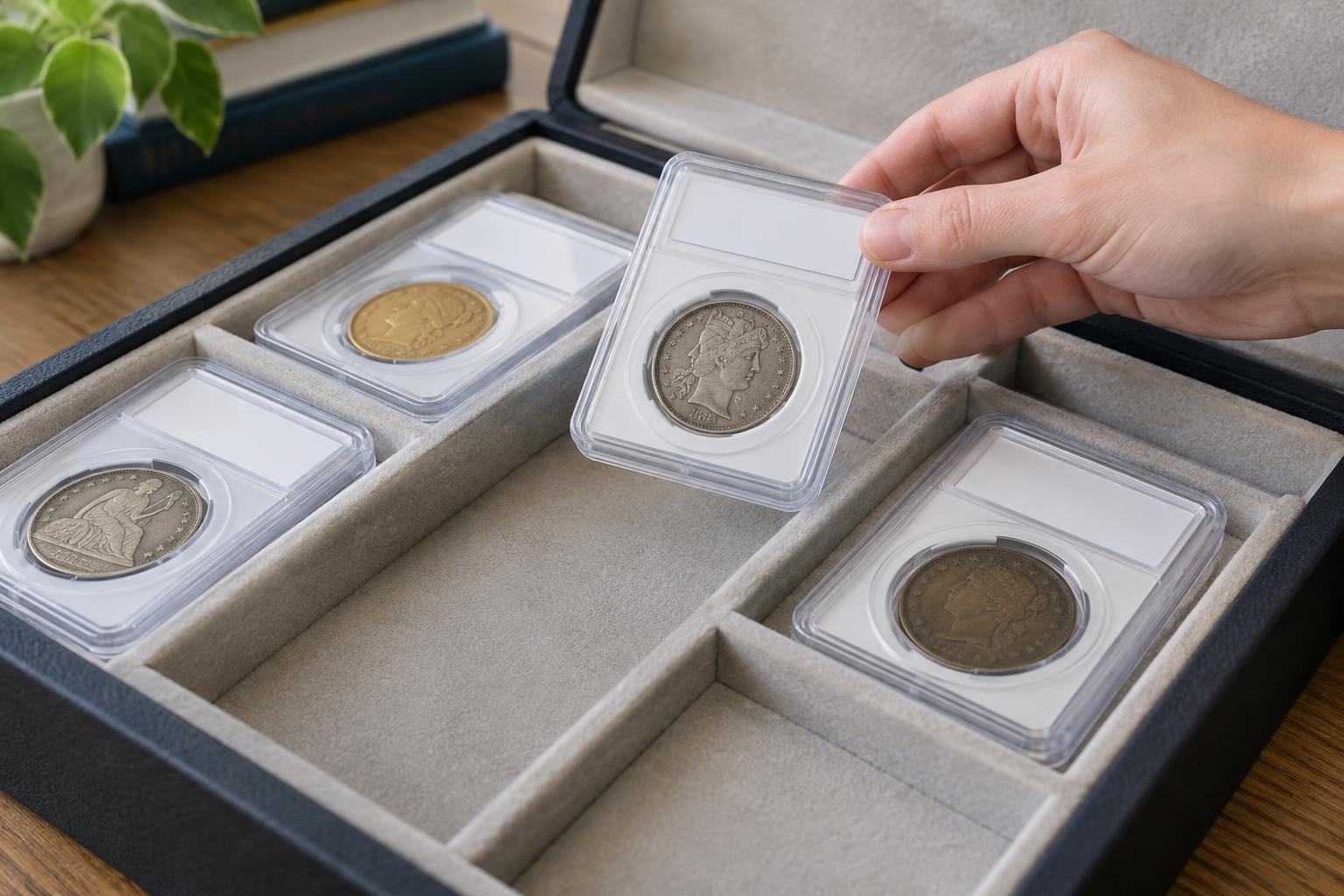
A holder can influence what happens, too. Paper and cardboard can take up moisture from humid air and release it as conditions change. They may also keep a damp area close to a coin. Plastic holders vary in composition and quality, so it is worth choosing materials intended for long-term coin storage rather than assuming any plastic sleeve will do. Good holders help protect coins from handling, but they cannot make an unsuitable storage location harmless.
Places where swings are easy to overlook
Attics, garages, sheds, and rooms with large windows often follow outdoor temperature changes more closely than the main living area of a home. Basements may feel cool and steady yet still be damp. A shelf near a radiator, heating vent, or exterior wall can also expose a collection to repeated changes. The best choice is usually an interior location that stays reasonably comfortable and dry through ordinary day-to-day use.
Think about the full path a collection takes, not just where it rests most of the year. Carrying cold coins into a warm, humid room and immediately opening their holders may expose cool surfaces to moist air. If a closed storage box has been in a colder location, allowing it to come gradually to room temperature before opening it is a sensible precaution. Keep it closed during that transition so the coins are not suddenly exposed to warmer air.
Building a steadier storage setup
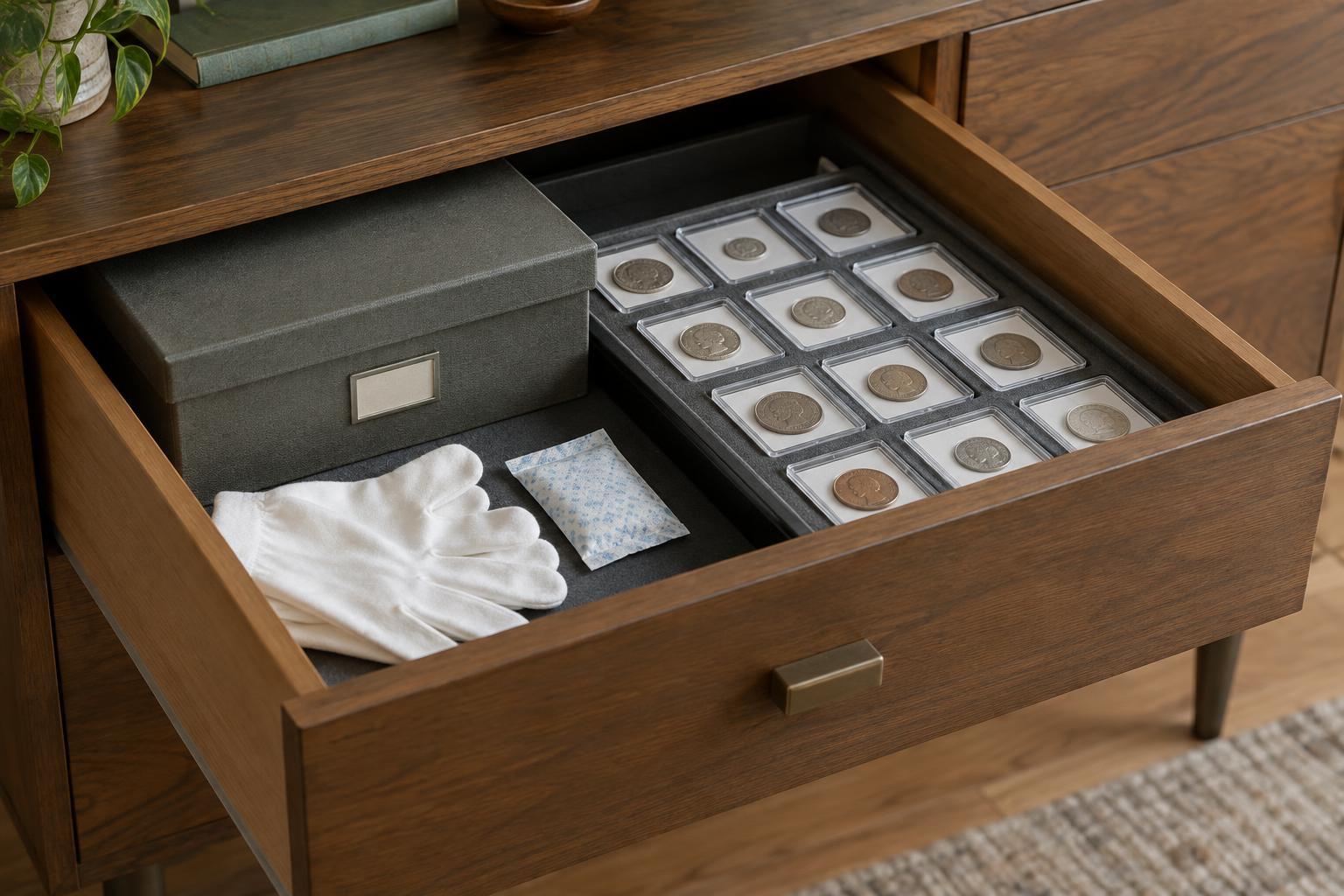
Start with location, then choose protective materials. Store coins in suitable individual holders and place those holders in a clean box or cabinet away from heat sources, direct sunlight, and areas prone to leaks. Handle coins by their edges when necessary, and avoid touching the faces. For a collection in a changeable space, moving it to a more stable room is generally more useful than repeatedly adjusting its packaging while leaving it in the same spot.
A small humidity indicator can help you notice whether a storage area tends to be damp, though a reading at one moment will not describe every season. Some collectors use desiccant in a closed storage container to help manage moisture; it needs to be checked and replaced or refreshed according to its instructions. Do not seal coins into a container with moisture already inside. Whatever method you choose, inspect the storage area and holders occasionally for dampness, odors, or visible changes.
If you find condensation or a changed surface
Resist the urge to rub, polish, or wash a coin that looks spotted. Cleaning can alter its surface, and a mark caused by moisture may not be removable without further harm. First address the storage conditions: look for a leak or a damp location, and move the collection to a dry, stable place if needed. If a holder is wet or damaged, consider replacing it with an appropriate dry holder while minimizing contact with the coin.
For a coin whose surface is important to you, advice from a reputable numismatic conservation specialist may be preferable to experimenting at home. Prevention is simpler: keep coins in suitable holders, give them a stable place to live, and pay attention when moving them between cold and warm environments. Temperature swings matter because they can bring moisture into the picture, not because every change in temperature will damage a coin.