Three ways to combine metals
A coin that looks silver-colored on the outside may contain a different metal beneath its surface. Another coin may have a center and outer ring in contrasting colors. These designs are often grouped together as “multimetal” coins, but their metals are combined in different ways. The useful distinction is where the metals sit: in bonded layers, in a thin surface coating, or in separate pieces joined into one coin.
Knowing the construction can help you understand a coin’s edge, color and wear. It can also keep you from mistaking an ordinary feature for damage or an unusual find. Designs vary by country and issue, so identifying a particular coin still calls for checking its stated specifications.
Clad coins: bonded layers through the blank
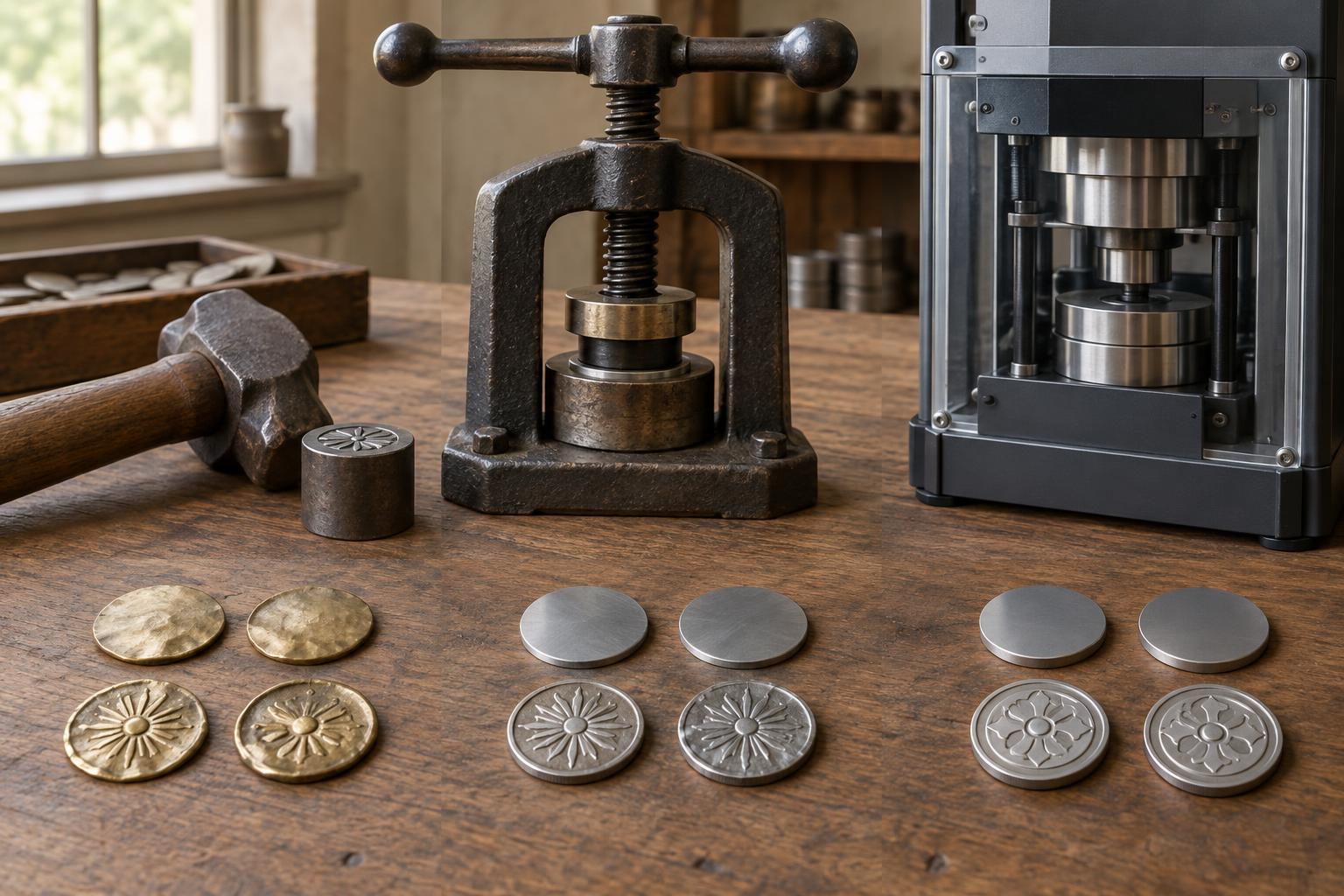
A clad coin begins with a strip made from layers of metal bonded together. A common arrangement places one metal in the middle and another on both outer faces, like a sandwich. The bonded strip is rolled to the required thickness, and round blanks are cut from it. After preparation, the blanks are struck with the coin’s design.
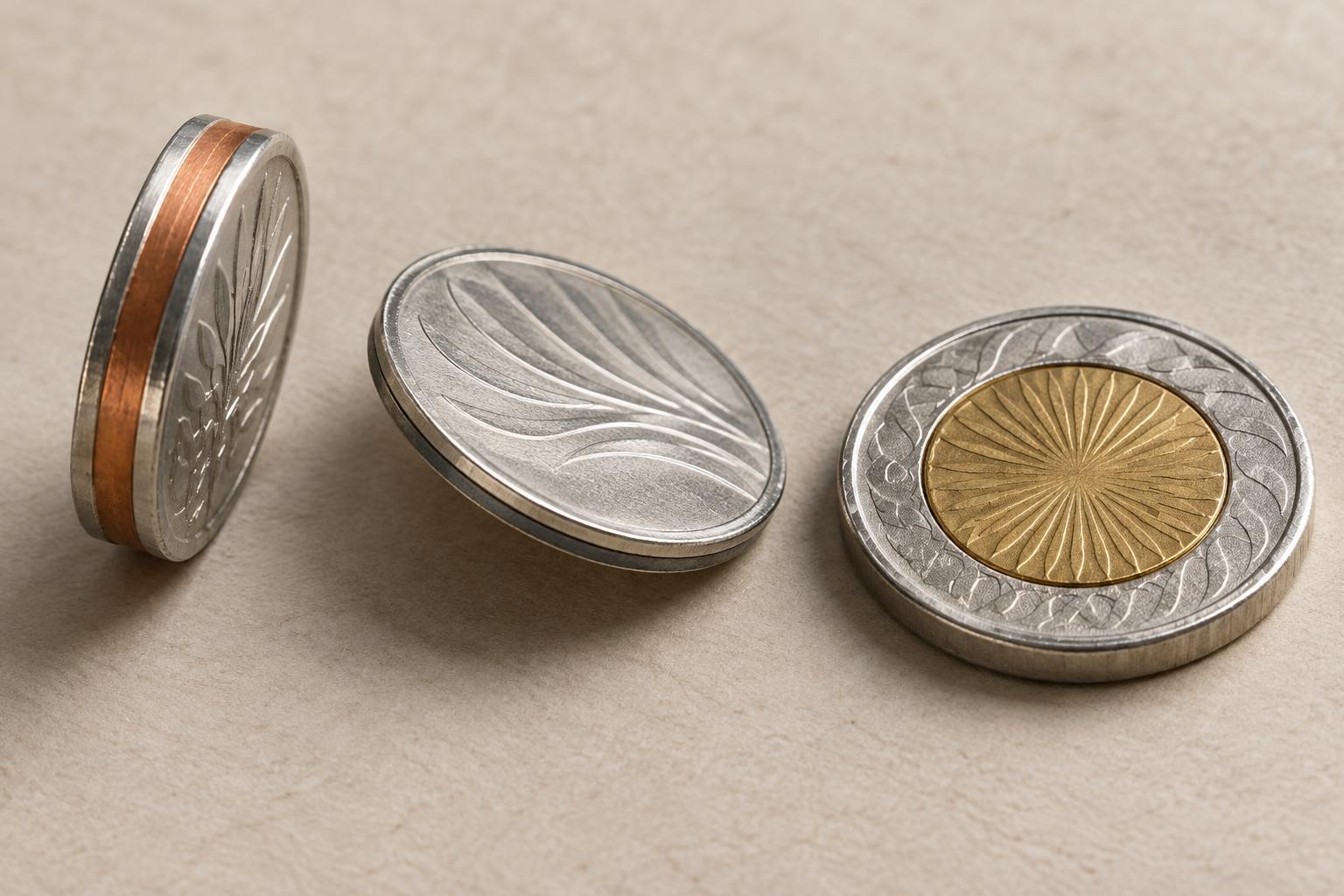
Because the inner layer extends through the blank, an exposed edge can reveal the construction. On some coins, a differently colored stripe around the edge is simply the core showing between the outer layers. The faces may look uniform because they are covered by the outer metal, while the edge gives a view across the layers.
Not every clad coin has an obvious edge stripe. The metals may be similar in color, or the edge may be treated in a way that makes the layers harder to see. “Clad” describes how the material is built, not a particular color or metal recipe.
Plated coins: a coating over a base
A plated coin has a base material covered by a comparatively thin layer of another metal. Electroplating is one way to apply that layer: an electric current helps deposit metal onto the surface. Depending on the manufacturing process, plating may be applied to blanks before striking. The resulting coin can look as though it is made entirely from its surface metal, even though most of its thickness is the base.
Plating differs from cladding because it coats the surface rather than forming substantial layers throughout a bonded strip. If plating is worn or damaged, the underlying material may become visible as a patch. A normal edge need not show a continuous core stripe, since the coating can cover the edge as well as the faces.
Color alone is not a reliable test. Tarnish, lighting, wear and deliberate finishes can change what you see. If a coin seems to have exposed base metal, first compare it with an undamaged example of the same issue before deciding whether the appearance is unusual.
Bimetallic coins: a center and an outer ring
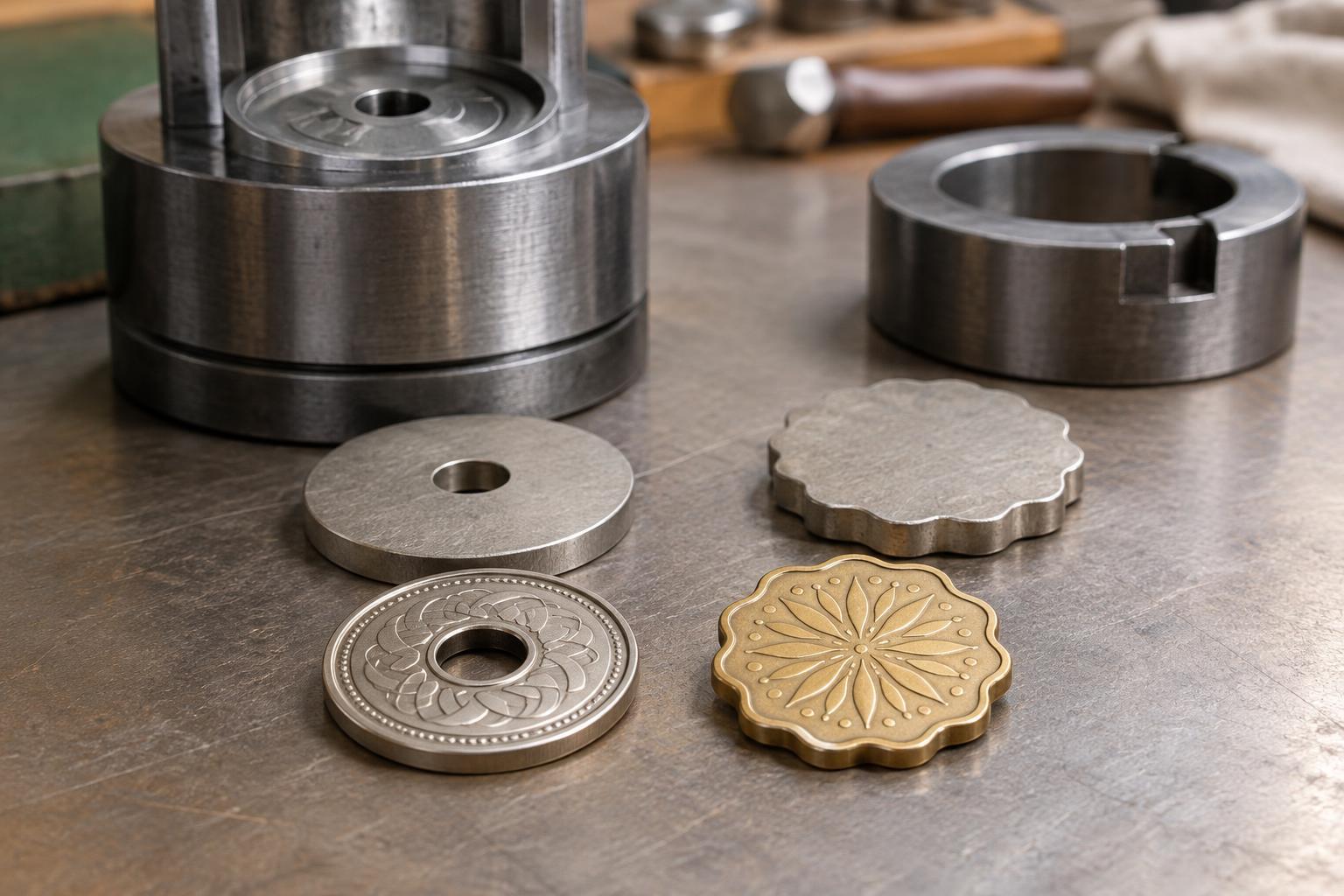
A bimetallic coin is typically assembled from two distinct parts: an inner piece and an outer ring. The parts are fitted together and secured during manufacture, commonly as they are struck. Their contrasting metals or alloys can make the construction easy to recognize from either face. Unlike the stacked layers of a clad coin, the two main regions sit side by side across the coin’s face.
The boundary between center and ring is part of the design and construction, not automatically a crack. On an ordinary coin, the pieces should be held firmly together. A loose center or a visibly displaced fit could result from damage or a manufacturing problem, but appearance alone may not settle which. Avoid pressing, twisting or trying to separate the parts to find out.
Reading a coin without harming it
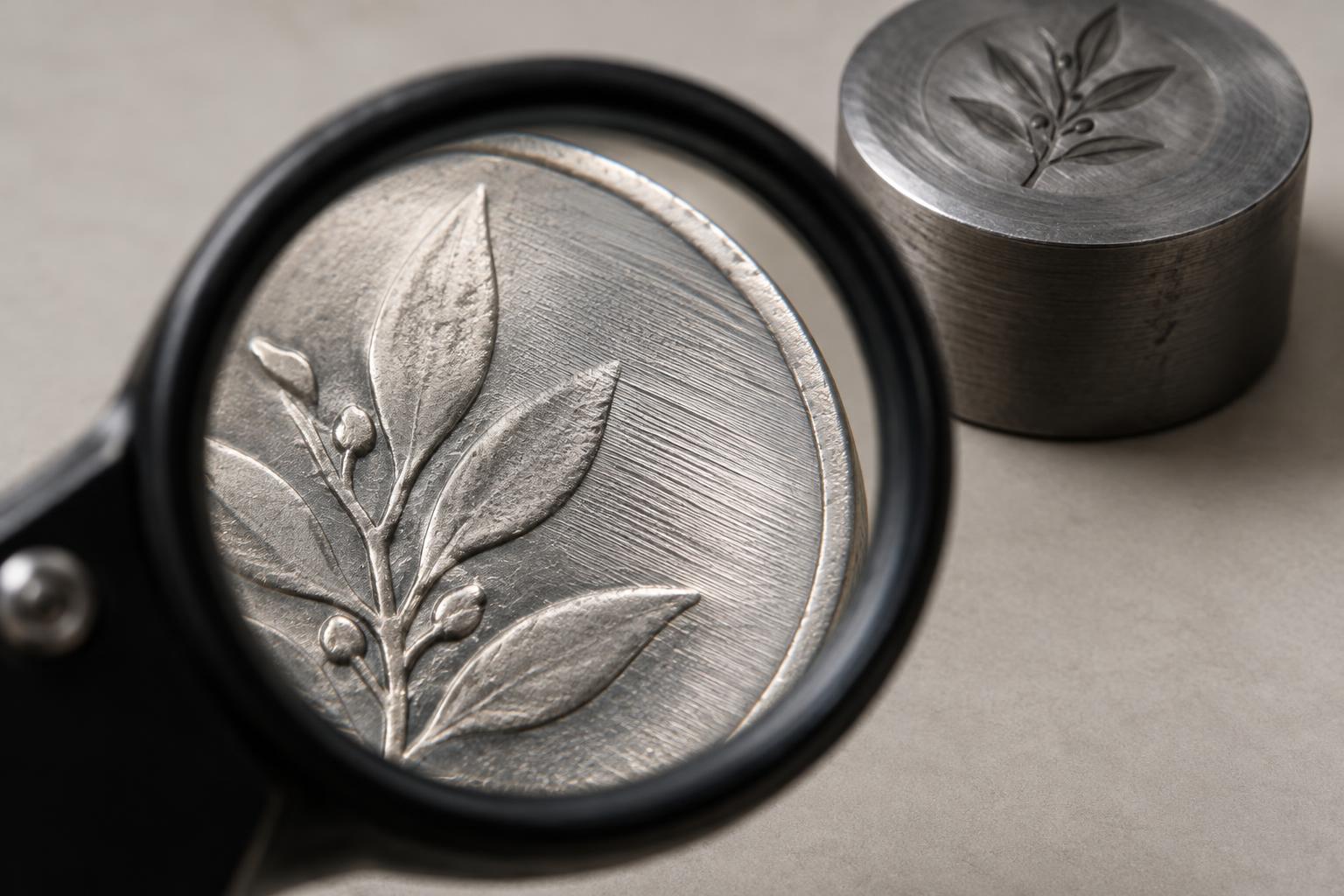
Start with features you can see safely. Look at both faces for a center-and-ring boundary, then view the edge under good light for a possible clad core. Check for patches where a surface coating may have worn away. A magnifier can help, but you do not need to scrape the edge or use chemicals to identify a coin’s construction. Such tests can permanently alter its surface.
Next, match your observations to the specifications for the exact coin, including its country, denomination and issue. Two coins of similar color can have different constructions, and a single country may change materials over time. Basic terms are a starting point, not a substitute for identifying the issue.
Handle coins by their edges when practical and store them in materials intended for coins. If you are uncertain whether a mark shows ordinary construction, wear or damage, leave the coin as it is while you compare examples. Preserving the surface is more useful to a collector than forcing a quick answer.