Why make a coin that is not round?
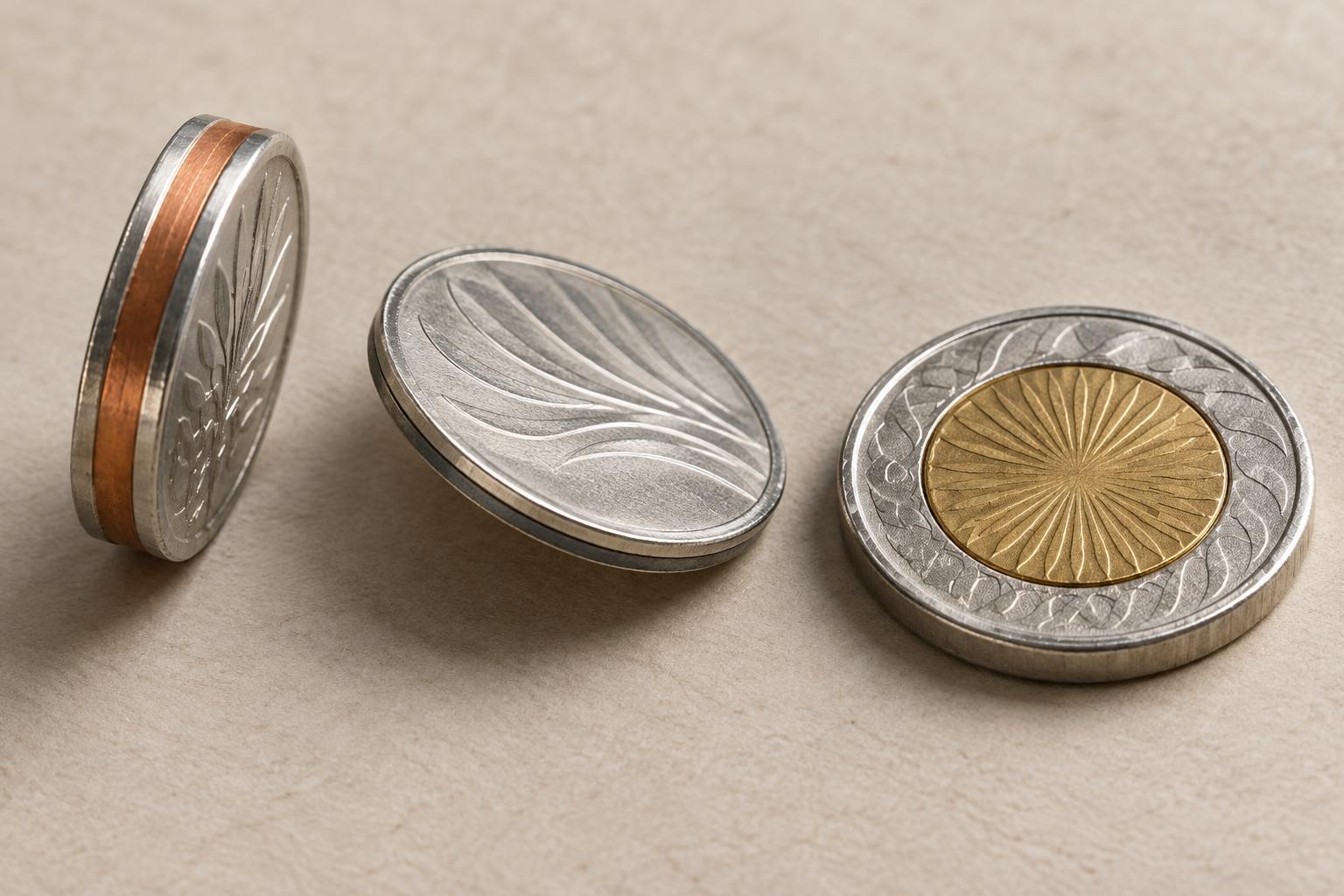
A coin does not have to be a solid circle. Mints have issued coins with central holes and outlines with several straight or curved sides. Such features can make denominations easier to distinguish by touch or sight, give a series a recognizable appearance, or serve a design tradition. The reasons differ from one issue to another; the shape alone does not reveal why it was chosen.
For a collector, the key distinction is between a feature made at the mint and an alteration made later. A central opening that belongs to the design must fit the coin’s planned dimensions and leave room for the devices, lettering, and rim. An unusual outline likewise has to work with the equipment that forms and strikes the coin. These are production choices, not simply details added after an ordinary coin is finished.
Preparing a blank with a hole
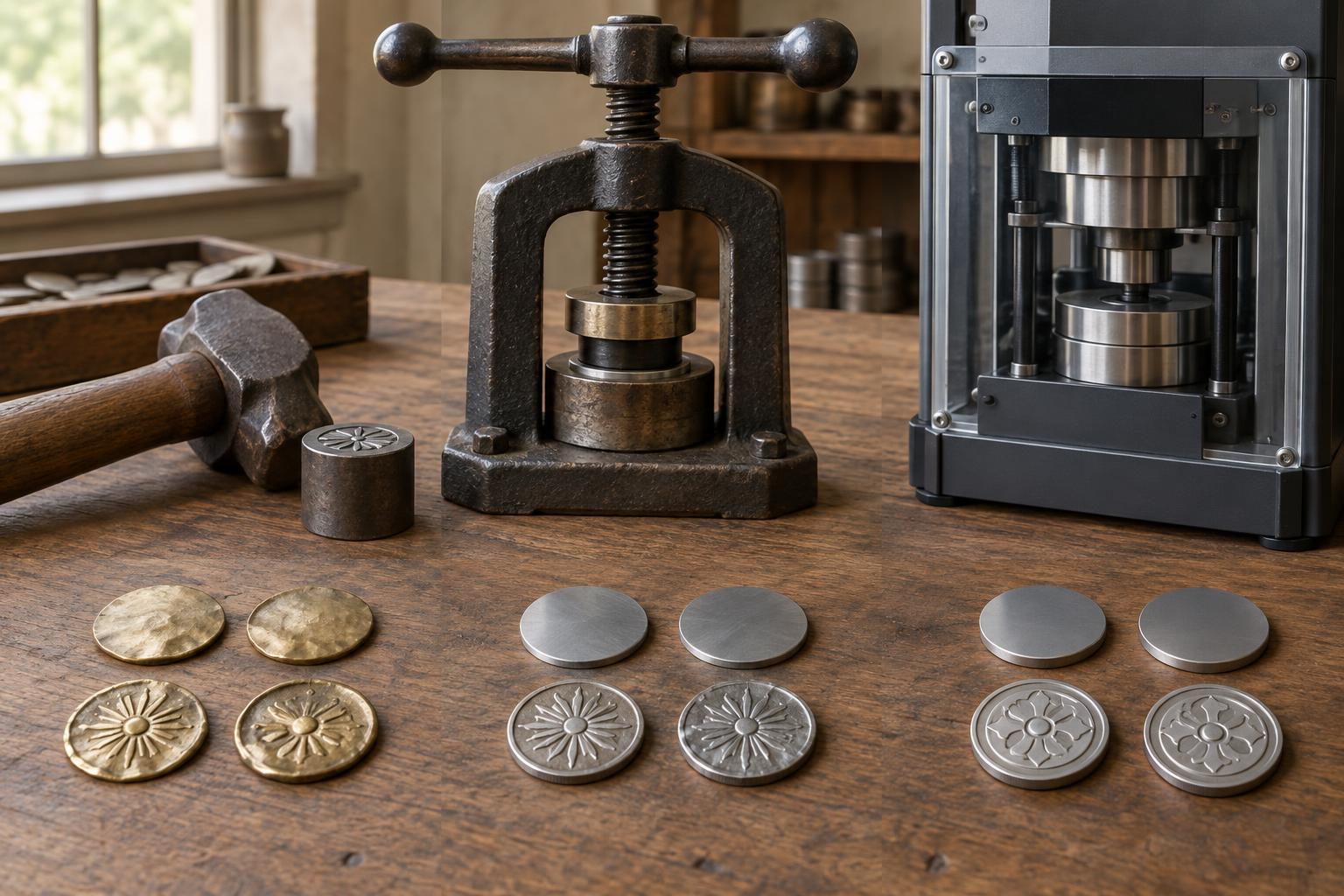
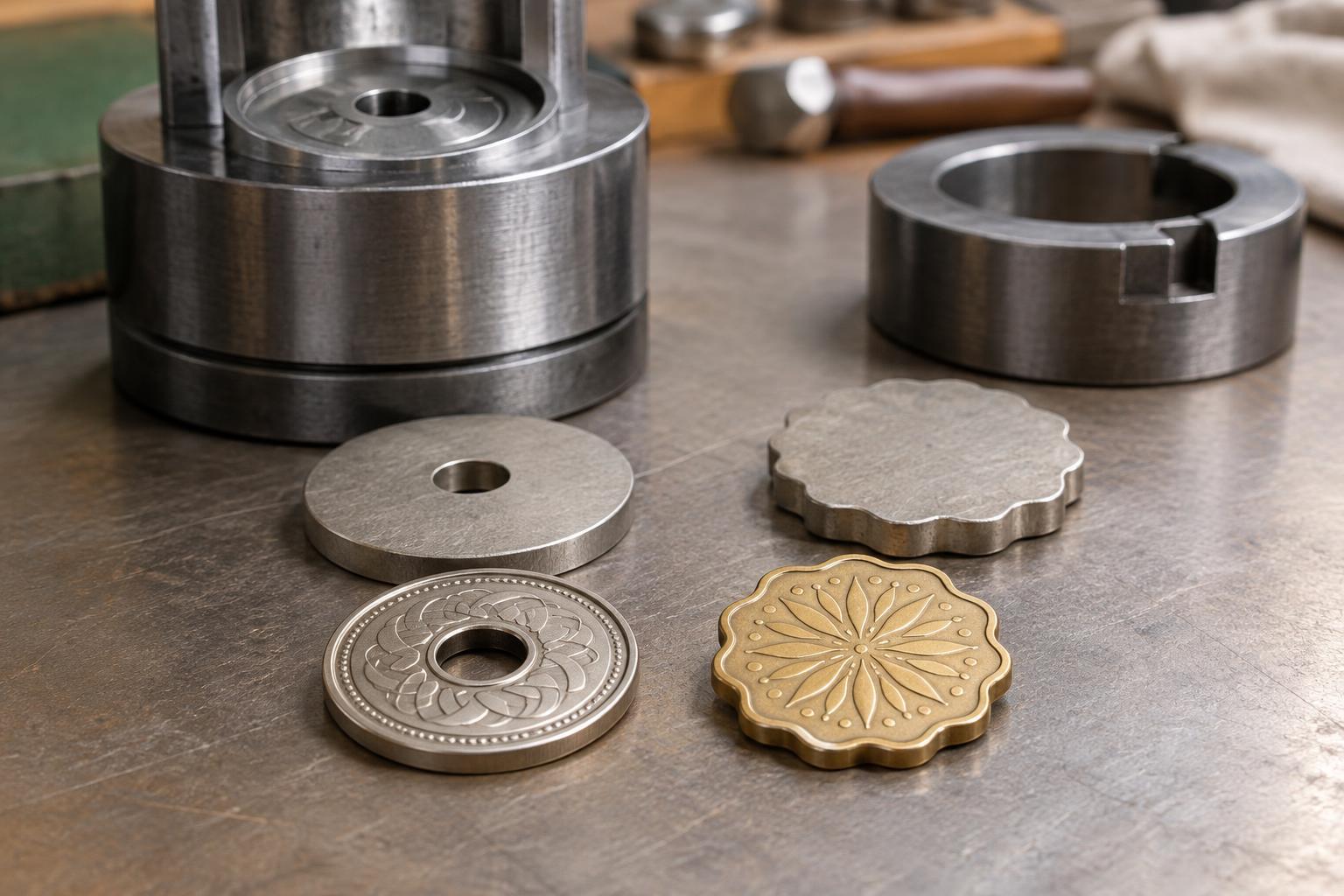
Coin production generally begins with metal stock from which blanks are cut. For a holed coin, the mint must prepare both the outside edge and the opening. Depending on the equipment and coin design, the hole may be punched as part of blank preparation or in a separate operation before striking. The removed center is a piece of scrap metal; it is not the finished coin’s hole being drilled through an already struck design.
A prepared blank may be heated and cooled under controlled conditions, a step called annealing, to make it better suited to striking. Blanks are also cleaned and may pass through an upsetting machine that raises metal around their edges. A holed blank has two edges to consider: the outer boundary and the inner boundary around the opening. Their final appearance depends on the blank-making and striking methods used for that issue.
The opening must be placed accurately. If it is off-center, it may crowd a design element or leave an uneven band of metal around the hole. Quality checks help mints separate blanks that do not meet their specifications, although no manufacturing process is perfect.
Giving a coin an unusual outline
A mint can cut blanks to a chosen outline rather than the familiar round shape. This may be a polygon or a shape with gently curved sides. The outline has to be consistent enough for the blanks to move through handling and striking equipment. It must also leave adequate space for the intended design and allow finished coins to meet the issue’s specifications.
The collar is an important part of striking. It surrounds the blank as the dies press the design into the metal and helps control the coin’s outside edge. For an unusually shaped coin, the collar and other tooling must suit that outline. The striking process can then bring up the design while maintaining the intended shape. A collar may also contribute to edge features, depending on how the particular coin is made.
Shape and design have to be planned together. Lettering placed too close to a corner or a narrow section could be difficult to strike clearly. Designers and production staff therefore account for how metal will move under pressure, not just how the artwork looks on a flat drawing.
What happens during striking?
In the striking press, dies bearing the coin’s designs press against the prepared blank. The metal moves into recessed areas of the dies, producing raised details on the coin. On a holed coin, those details must be positioned around the opening. The hole is not normally created by the designs on the dies: it is already present in the prepared blank.
Alignment matters for both holed and shaped coins. A blank needs to arrive in the right position between the dies, particularly if its outline must line up with design elements. The finished coin is then ejected and can be inspected or counted before release. Exact machinery and sequences vary among mints and issues, so there is no single production recipe for every unusual coin.
Looking closely at a coin in your collection
If you find a coin with a hole or an unexpected outline, first compare it with a reliable description of that specific issue. Is the feature supposed to be there? On an intentionally holed coin, the design is normally arranged to accommodate the opening. On an intentionally shaped coin, the outline should be consistent with the issue’s known design.
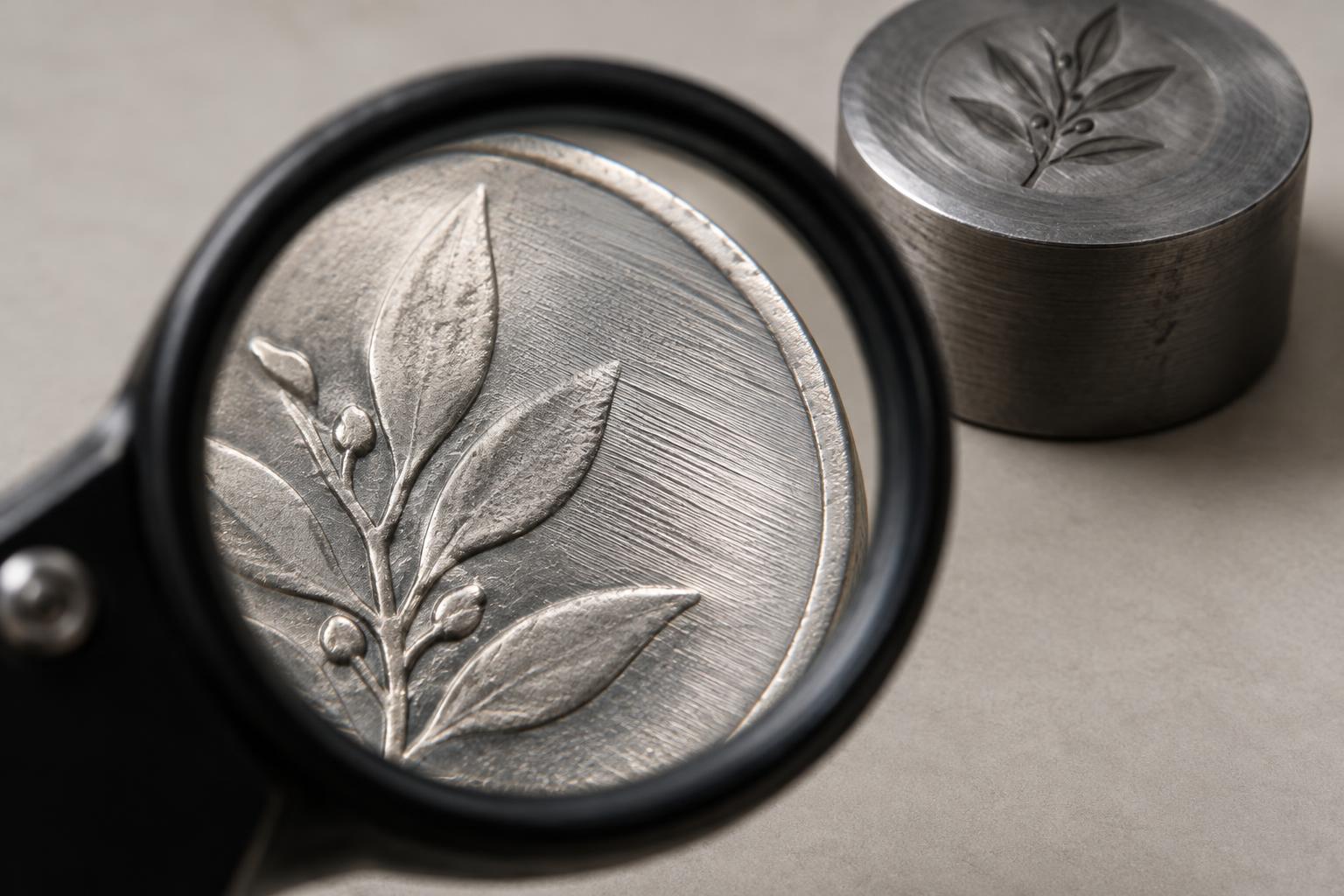
A later-added hole may cut through lettering, leave rough or raised edges, or interrupt a completed design. A changed outline may remove parts of the rim or design. These are useful clues, but wear, damage, and minting errors can complicate an examination; one clue by itself is not proof of how a coin was made. Avoid filing, cleaning, or enlarging an opening to investigate it, since that can remove evidence.
Treat an unusual feature as a question to investigate rather than an automatic sign of rarity. Identifying the coin and its intended specifications is the best starting point. The same feature that makes one coin an ordinary example of its type might be unexpected on another.