Start with the die, not just the coin
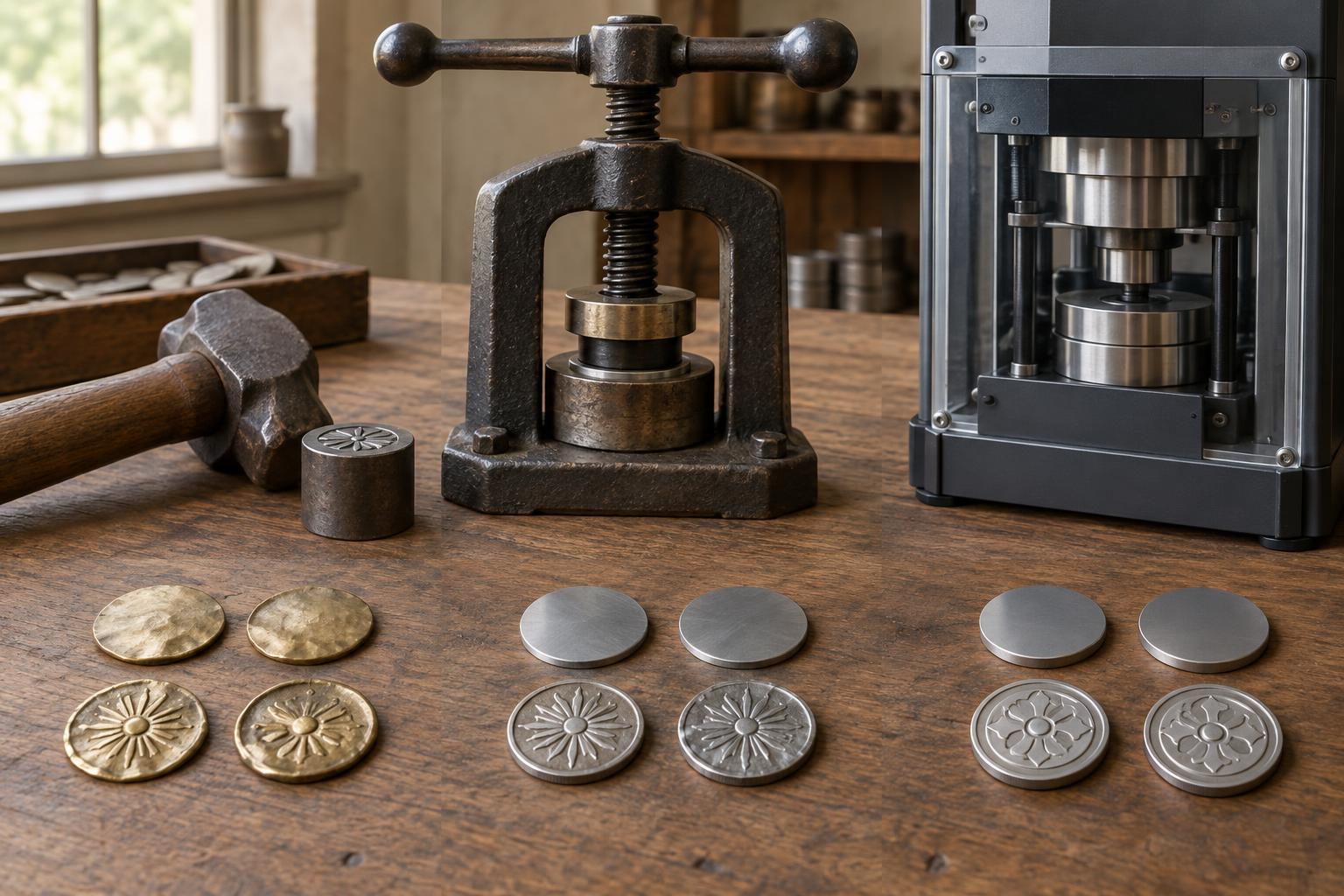
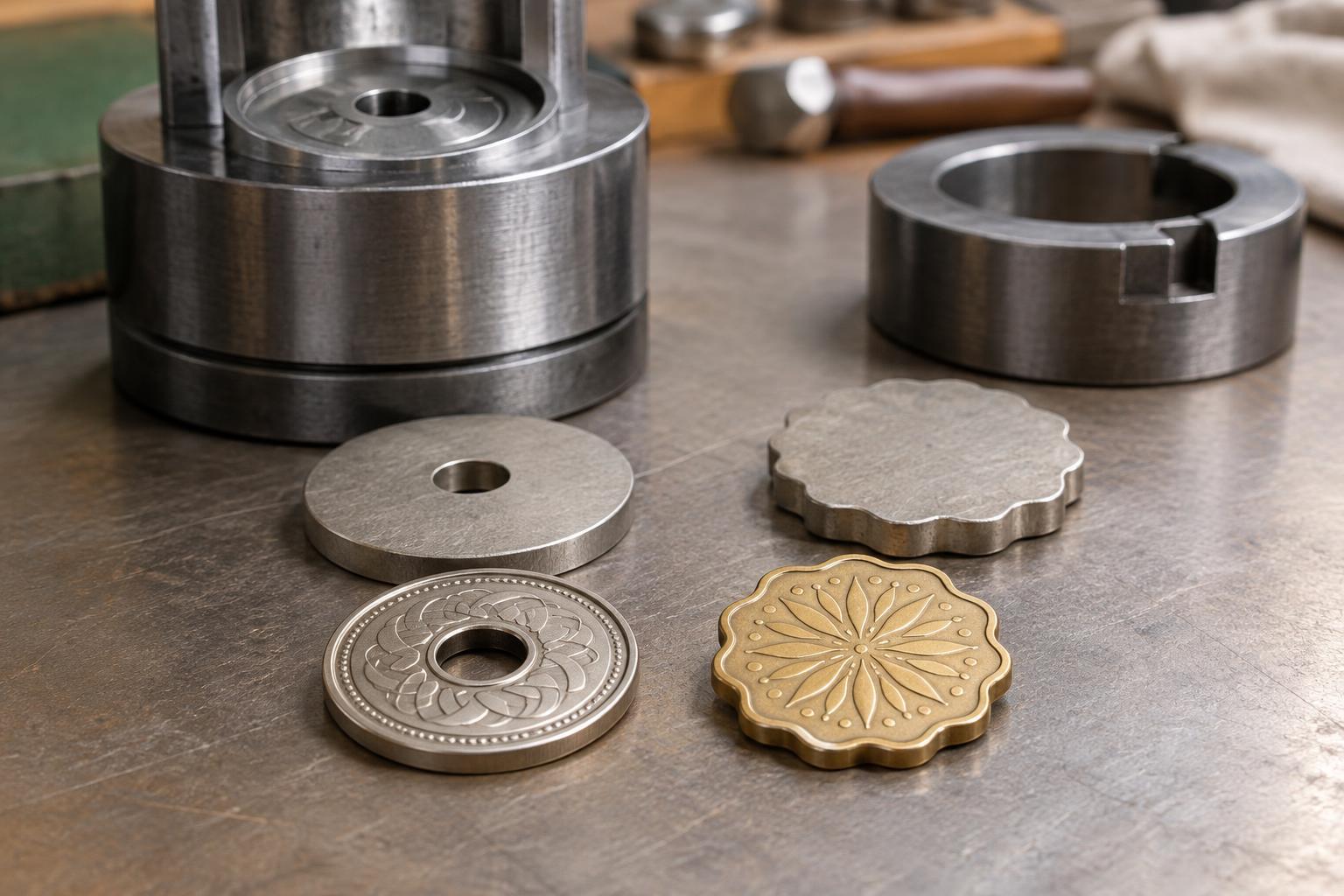
A coin is struck when metal is pressed between dies bearing its design. The recessed parts of a die produce raised features on the coin, while raised parts of the die produce recessed features. Because a die strikes many pieces, its surface may change over time. Two coins made from the same design can therefore look different even if neither was altered after leaving the mint.
Die wear and die polishing are two reasons for those differences. Wear develops through repeated use: fine parts of the die can lose definition, and its surface can become less smooth. Polishing is a deliberate attempt to improve a die’s surface, often by removing marks or preparing it for further use. Both can leave visible clues on the coins struck afterward. They describe what happened to a tool, not how carefully an owner handled a finished coin.
What a worn die can leave behind
As a die wears, small or delicate design elements may become less distinct. Hair strands, lettering edges or fine lines in a building can appear soft or blurred on the resulting coin. The flat background areas, called fields, may also show a different texture. On some coins, worn dies contribute to a grainy or flowing appearance near the outer design, although the exact look depends on the coin and how it was struck.
Soft detail is not proof of die wear by itself. A weak strike can also leave parts of a design incomplete, especially where the metal did not fully fill the die. Circulation wear, by contrast, happens after striking and tends to affect exposed high points that meet other surfaces. When examining a coin, ask whether the soft area is consistent with how the design was made, or whether raised features appear flattened from later contact. You may not be able to settle the question from one feature alone.
The signs of die polishing
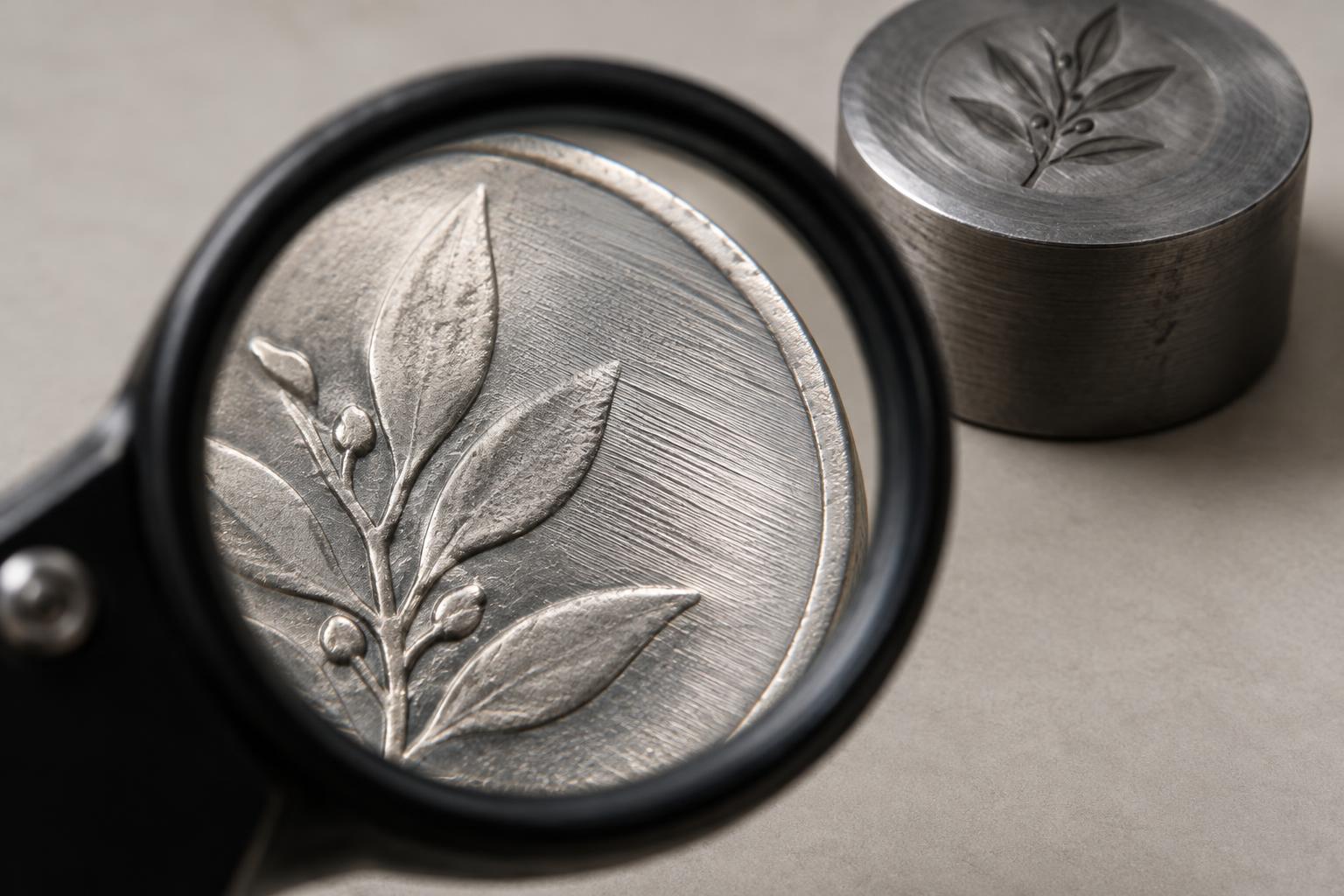
Mint workers may polish a die to reduce unwanted marks or restore a working surface. Polishing can leave fine grooves in the die’s fields. Because those grooves are recessed in the die, they can appear as fine raised lines on coins struck from it. Often called die polish lines, they may run in a shared direction or appear in a particular area of the design. Tilting a coin under a single light can make them easier to see.
Polishing can also affect design elements. If it removes enough material from a die, shallow features may appear reduced or missing on later coins. The result can look surprising: a small line, letter detail or part of an image seems to have vanished, yet the surrounding surface may show no sign of damage to the coin. Not every missing detail is caused by polishing, however. Strike quality and die wear are other possible explanations.
Die lines versus scratches on a finished coin
The difference between a raised line and an incuse, or sunken, scratch is an especially useful starting point. Die polish lines are generally raised on the coin because they were formed by grooves in the die. Scratches from cleaning or handling cut into the coin’s surface. Under angled light and magnification, a scratch may interrupt nearby texture or cross raised design features in a way that shows it was made after striking.
This distinction takes practice. Very fine lines can be hard to judge from a photograph, and lighting can make raised and sunken features look similar. Compare how a line behaves as it enters a letter, crosses a field or reaches the rim. If you can examine another coin struck from the same die, a matching pattern in the same location is strong evidence that the lines came from the die. Avoid rubbing a coin to test a feature; that can create the very marks you are trying to identify.
A careful way to study the differences
Begin with the whole coin, then move to individual details. Use steady, angled light and modest magnification, and rotate the coin rather than relying on one view. Note whether softness appears in fine design features, whether lines sit above or below the surface, and whether the fields have an unusual texture. Comparing similar coins of the same design can help reveal what varies, though differences in strike and condition must also be considered.
Die wear and polishing are part of a coin’s manufacturing history. They do not automatically make a coin an error or make it more valuable; interest in a particular variety depends on its identification, condition and collector demand. For a beginner, the best payoff is a more accurate description. Instead of calling every faint feature “worn” or every line “cleaning,” you can look for clues about when—and on which surface—the change occurred.