What coin alignment describes
A coin has two designs, but those designs also have a relationship to each other. Hold a coin upright by its edges and turn it over from left to right, as though turning a page. The direction in which the second design appears is its alignment. This is sometimes called the coin’s die axis because the relationship comes from the orientation of the dies that struck its two sides.
Two common conventions are coin alignment and medal alignment. With coin alignment, a coin held upright appears upside down after a left-to-right turn. With medal alignment, both sides appear upright after that turn. Neither convention is inherently correct for every coin. Mints have used different standards, so an unusual-looking orientation matters only when compared with the expected alignment for that particular issue.
Why the dies’ positions matter
Most struck coins are made between two dies, each carrying a design. Their positions determine how the finished designs line up. If one die is installed or settles at a different angle from its intended position relative to the other, coins struck while it remains that way may show a rotated-die error. The designs can look normal individually; the difference becomes apparent only when the coin is turned over.
A rotated die is different from a design that is off-center on one face. Rotation concerns the angle between the two sides, not whether a design sits in the middle of the coin. It is also different from a loose coin turning inside a holder. Before describing an error, take the coin out of any holder that allows it to move, if doing so is safe for the coin.
A simple way to check a coin
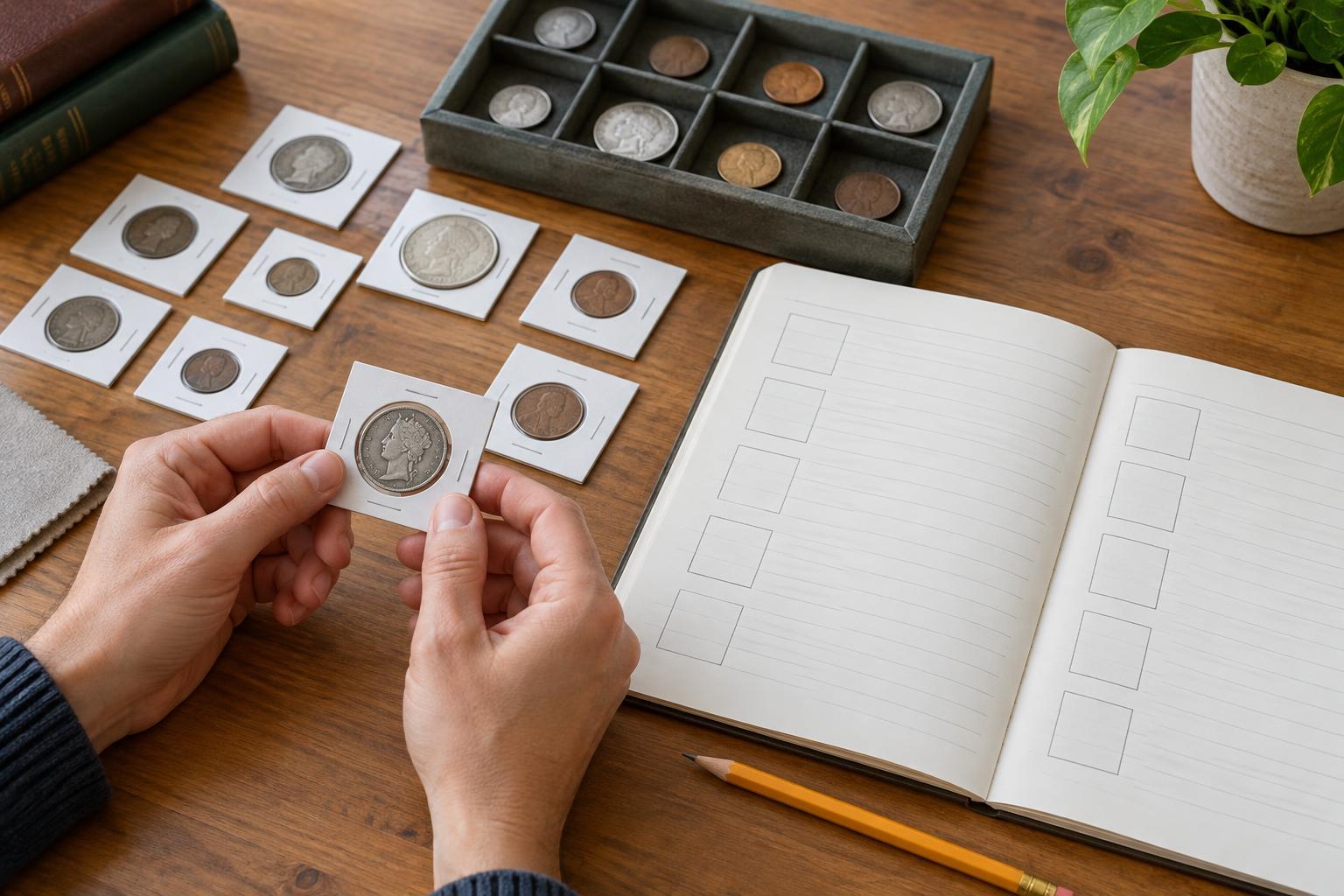
First, identify which side is meant to be upright. A portrait, date or lettering can help, though some designs have no obvious top. Hold the coin gently at its edges with that side upright. Without twisting it within your fingers, turn it from left to right around a vertical axis. Observe where the top of the second design points. Repeat the motion to make sure your hand has not accidentally rolled the coin.
Next, find the expected alignment for the same coin type. A familiar coin from the same issue can be a useful comparison, provided you are confident it is correctly identified. You can describe a possible rotation by how far the second side appears turned from its expected position: a small tilt, a quarter-turn or nearly a half-turn, for example. An exact angle is less important than a clear, repeatable observation.
Photographs can help you record what you see, but two separate face-on pictures do not demonstrate alignment by themselves. Unless you know how the coin was turned between shots, one image may have been rotated. A short, steady sequence showing the coin being flipped can make the relationship easier to understand without touching or marking its surfaces.
Interpreting what you find
An unexpected orientation is a reason to investigate, not proof of a valuable error. Check the issue’s usual alignment, confirm that you are flipping the coin the same way each time, and look for signs that a holder or photograph created the impression of rotation. Designs with circular lettering or nearly symmetrical images can make small differences especially difficult to judge.
If the rotation remains clear, record the coin’s identifying details and the observed direction of the turn. Avoid cleaning it to make the designs easier to see: cleaning can alter its surface without resolving the alignment question. Collector interest and value vary with the coin, the degree and clarity of the rotation, its condition and demand; no particular angle guarantees a premium.
Coin alignment is a useful reminder that a coin’s design is more than the image on either face. The relationship between the faces preserves a small clue about striking. If your collecting notes become part of a website, you may also enjoy browsing DNS Security · Mini DNS Guide for a separate topic in site infrastructure and Email DNS · Mini DNS Guide for another; neither is needed to check a coin’s alignment.