Start with the two faces
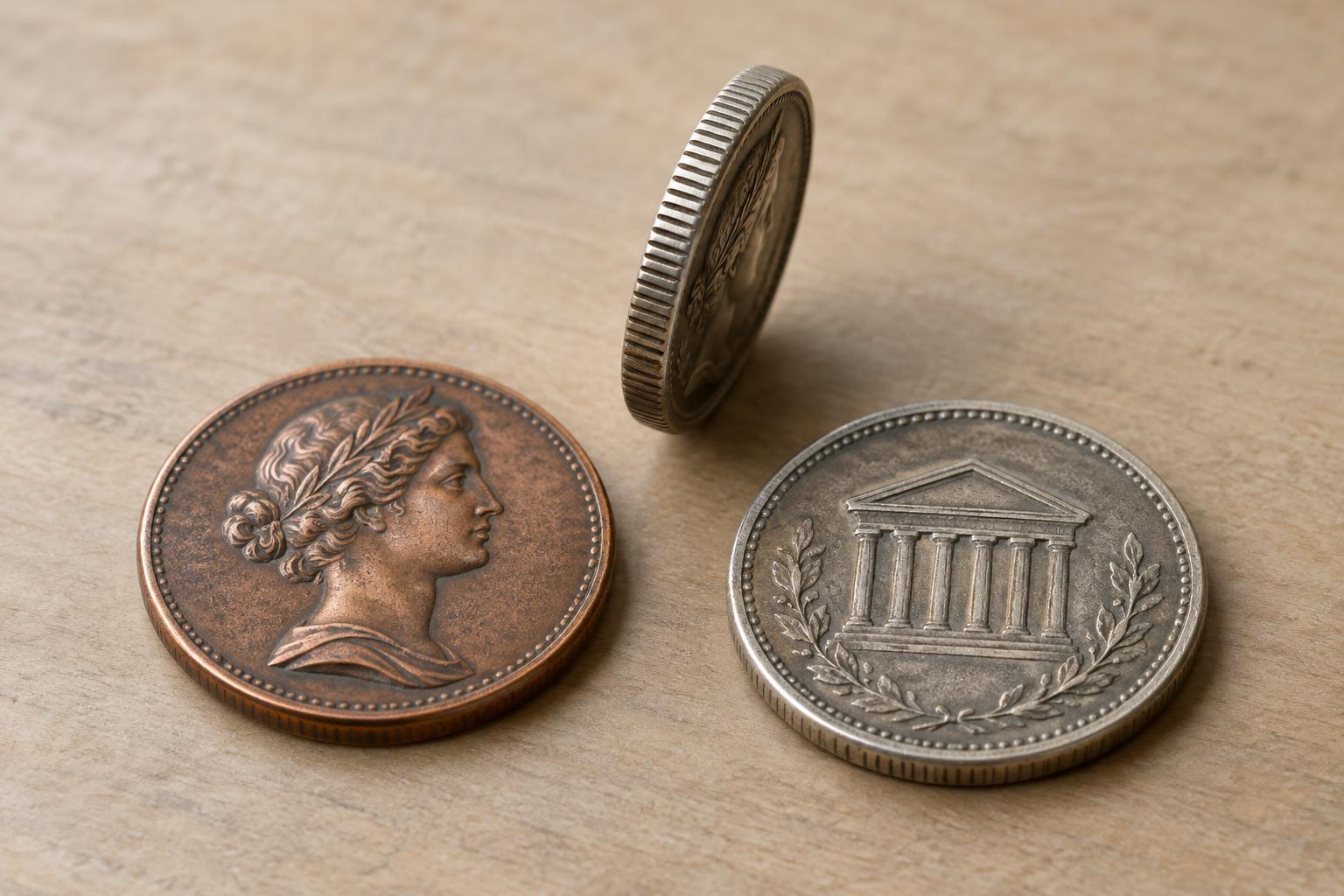
Pick up a coin and you will usually see a design on each of its broad, flat sides. Collectors call one side the obverse and the other the reverse. The obverse is often treated as the front: on many coins, it carries a portrait or another principal symbol of the issuing authority. The reverse is the opposite side and may show a denomination, emblem, building, animal or commemorative design.
These are useful conventions, not a rule you can apply by looking for a face. Some coins have no portrait, and a prominent illustration may appear on the reverse. If you are unsure which side is which, identify the coin first, then compare its sides with a reliable description of that issue. Calling a side “heads” or “tails” can work in casual conversation, but obverse and reverse are more useful when a portrait is absent.
Read the design without losing your place
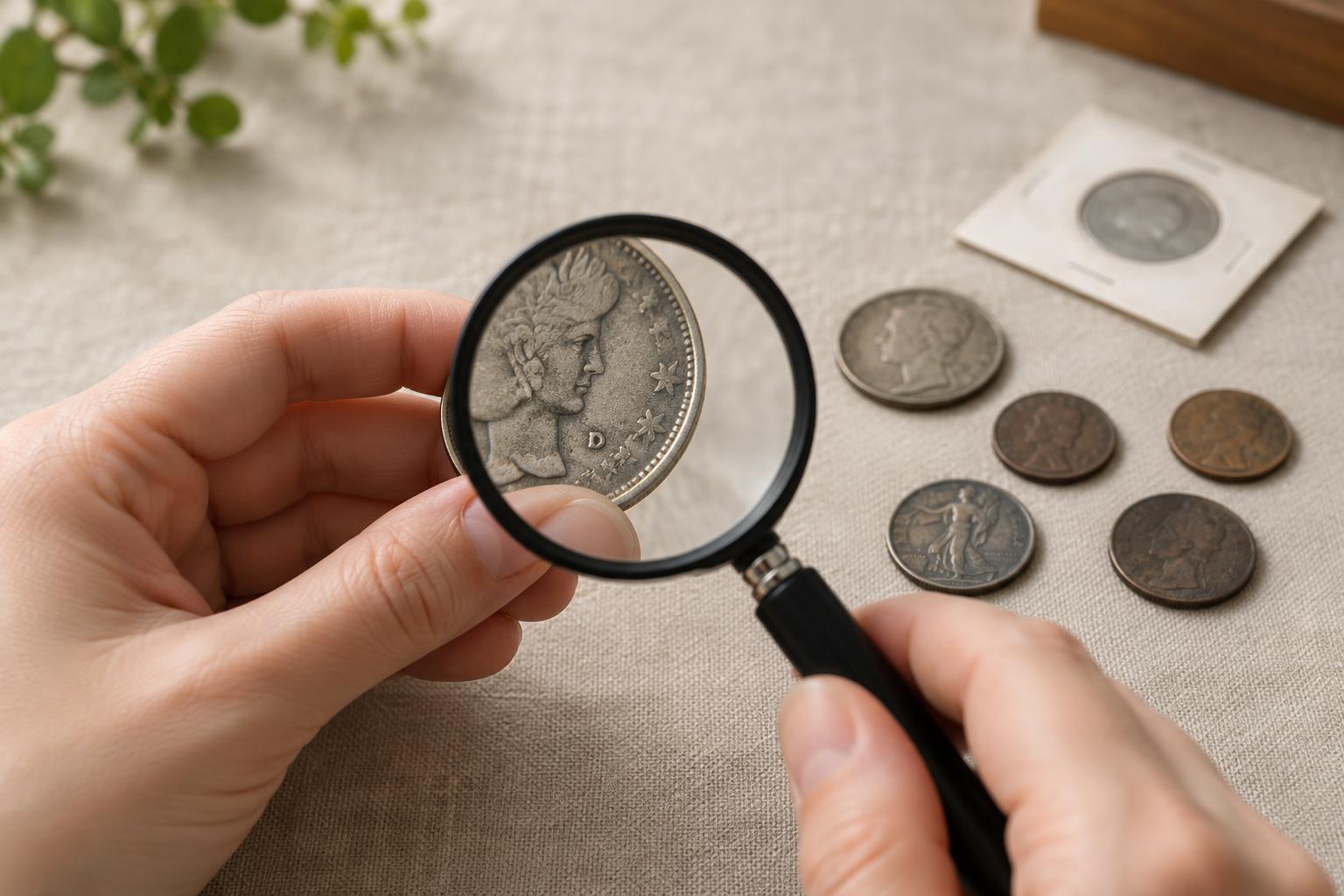
The main image on a coin is called a device. Words and letters, such as a country name, motto or denomination, are often called legends or inscriptions. The relatively open background around the design is the field. A coin may also carry a date and a mintmark, a small letter or symbol used on some issues to identify where it was made. Not every coin has a mintmark, and its position can vary.
These terms help you describe a coin clearly. Instead of saying “there is a mark near the picture,” you might say “there is a small mark in the field beside the reverse device.” For a beginner, that precision is most helpful when comparing similar coins. Check both sides before reaching a conclusion: a denomination or date may be easier to find on one side than the other.
The rim is not the edge
The rim is the border that runs around the outer part of a coin’s face. On many coins it is slightly raised above the field and design. Rims vary by issue, so they are worth observing rather than assuming they will all look alike. When a coin lies flat on a table, the rim is part of what you can see from above.
The edge is the narrow surface around the coin’s circumference, between its two faces. To see it, look at the coin from the side. A simple memory aid is that the rim frames a face, while the edge connects the faces. Confusing the two can make a description hard to follow: a dent on the edge is in a different location from a dent on the rim.
An edge may be plain, reeded with a series of grooves, lettered or given another pattern. Edge features can be part of a coin’s intended design, not signs of wear. Take care when checking them, since edge lettering can be faint or interrupted by normal handling and wear.
Use anatomy to examine a coin
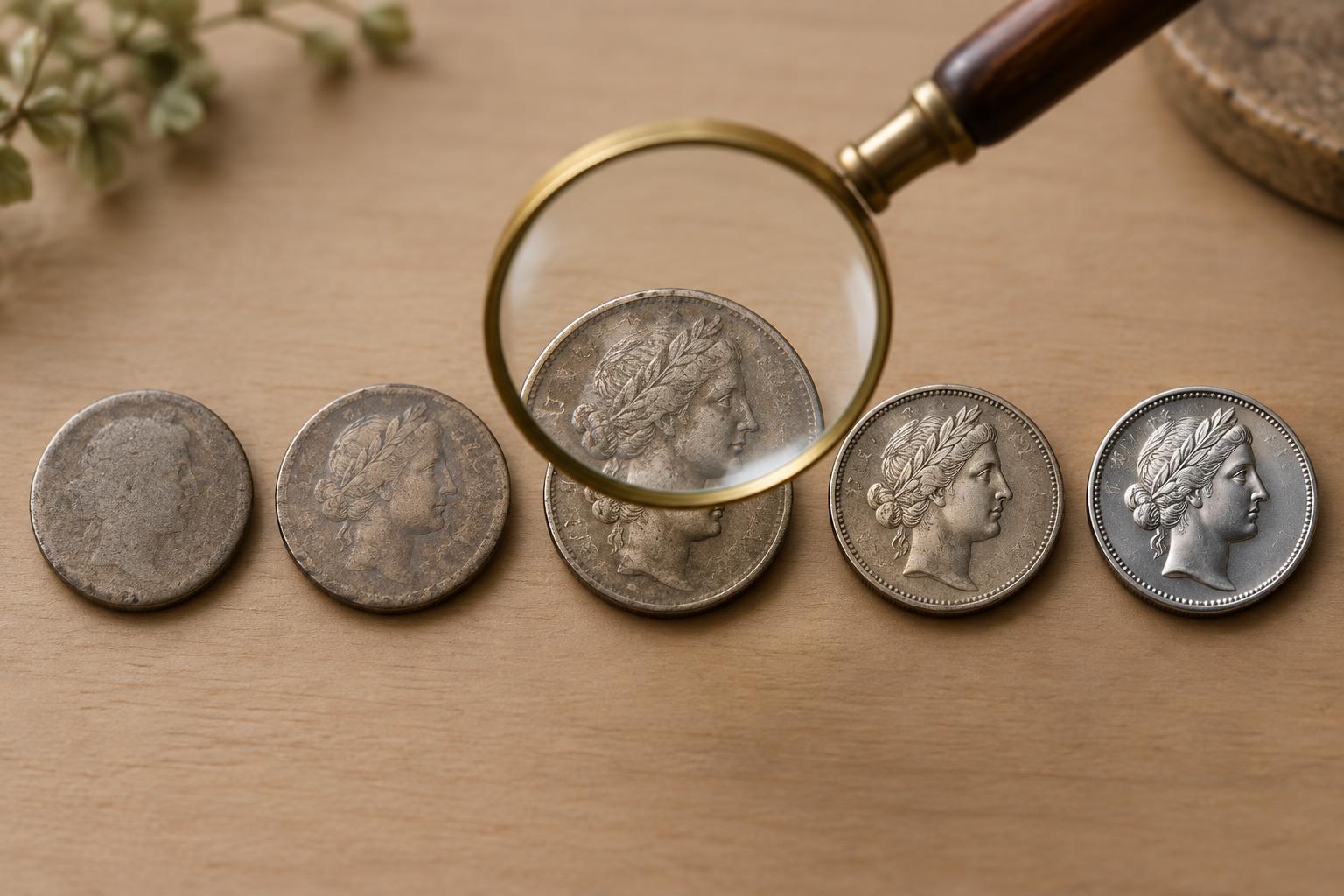
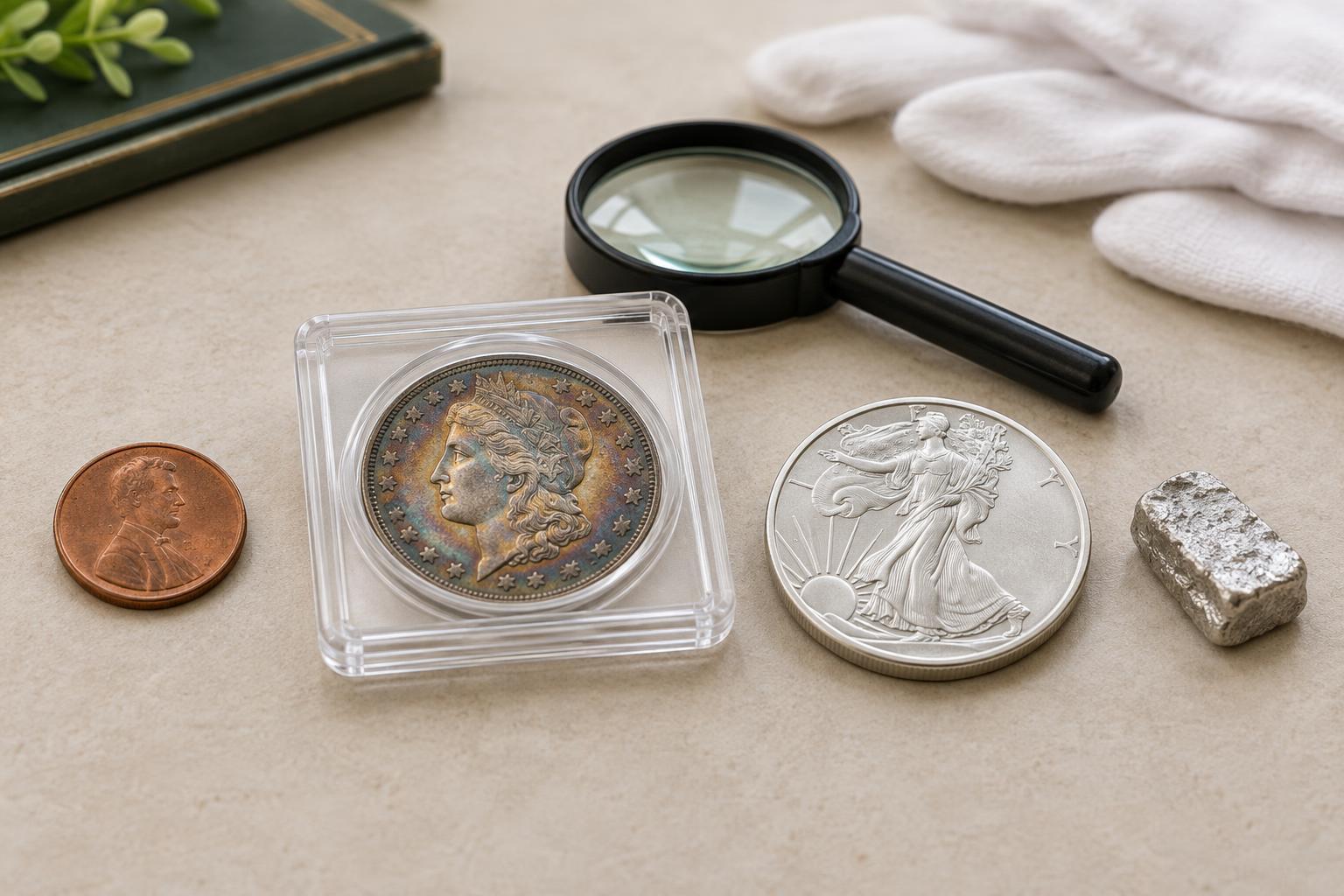
A consistent viewing routine helps you notice details. Look at the obverse, then the reverse, then turn the coin to inspect its edge. On each face, note the main device, legends, date, any visible mintmark and the condition of the rim. Good, even lighting and a simple magnifier can help with small details. Hold a coin by its edge when practical to avoid leaving fingerprints on its faces.
If you are recording a coin in a notebook, write down what you can actually see before interpreting it. For example, note that the reverse rim looks flattened in one area rather than immediately deciding why. Wear, damage and manufacturing features do not always look obvious at first glance. A careful description gives you something useful to compare with other examples or reference images later.
A small vocabulary with a big payoff
Learning coin anatomy will not identify every coin on its own, but it gives you a dependable starting point. Obverse and reverse tell you which face you mean; rim and edge pinpoint where a feature appears. Device, field and legend help you describe what is on each face. Together, these terms make it easier to organize a collection, ask a clear question or follow a coin description.
Try practicing with a few coins you already have. Describe each one aloud or in writing without relying on “front,” “back” or “around the side.” If you cannot confidently identify the obverse, leave that question open until you check the specific issue. Careful observation matters more than guessing, and it is one of the most useful habits a new collector can build.