What a coin grade describes
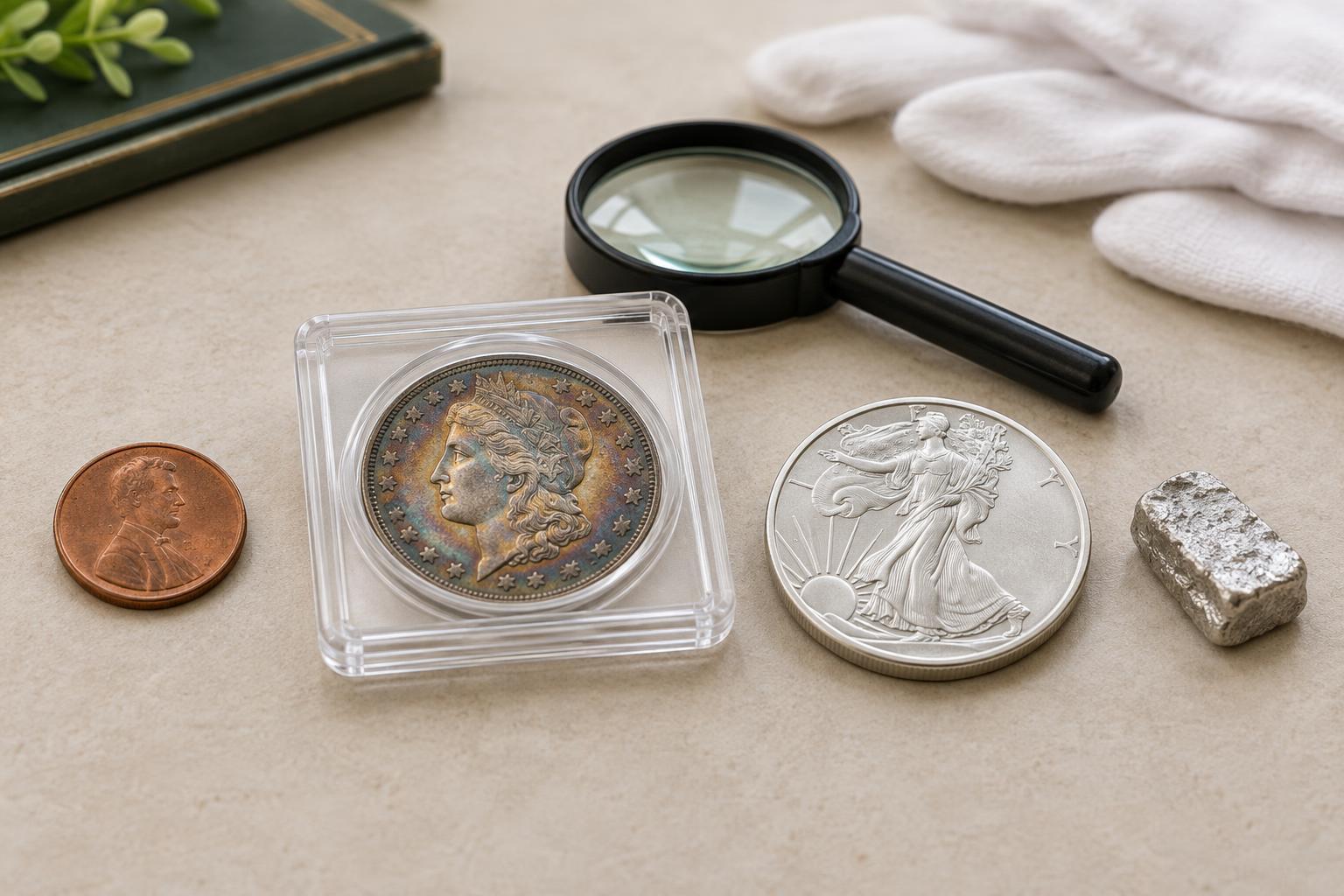
A coin grade is a shorthand description of a coin’s state of preservation. Collectors commonly use a numerical scale from 1 to 70, alongside terms such as Good, Fine, About Uncirculated, and Mint State. A higher number generally means less wear or, for an unworn coin, fewer distracting marks and stronger overall visual quality. Grading helps people describe coins consistently, but it is not a measurement that can be made with a ruler.
The scale is most useful when you compare coins of the same type. A worn coin with a bold, simple design may look quite different from a coin of the same grade whose design has many fine lines. Grading also involves judgment: two careful observers may disagree, especially near the boundary between grades. A grade describes preservation, not rarity, authenticity, or value. Those are separate questions.
The circulated grades: Good through Extremely Fine
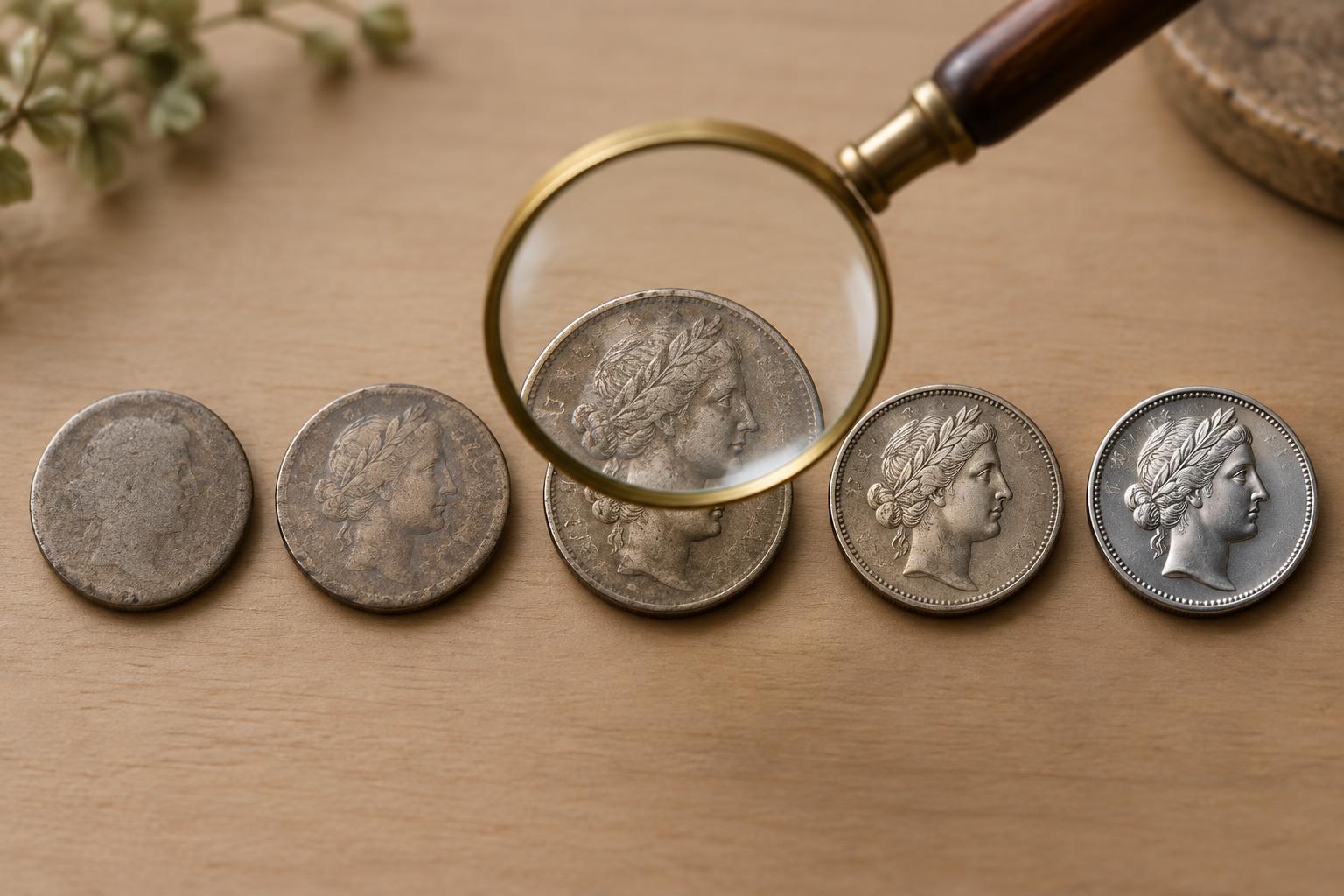
Coins that have been used in commerce are called circulated coins. At the lower end of the scale, Poor (P-1), Fair (FR-2), and About Good (AG-3) describe heavily worn pieces. In Good (G-4 or G-6), the main design is usually recognizable, though many smaller details have worn away. Very Good (VG-8 or VG-10) shows a little more definition. Whether a date or lettering remains fully clear depends on the coin and how it has worn.
Fine (F-12 or F-15) coins retain more of the major design elements, while Very Fine (VF-20 through VF-35) coins show moderate wear with more detail still visible. Extremely Fine, often abbreviated EF or XF (typically 40 or 45), describes a coin with light wear, generally concentrated on the design’s high points. These descriptions are guides rather than a checklist that fits every series. When possible, compare the specific parts of the design that are expected to remain visible at each grade for the coin you hold.
About Uncirculated and Mint State
About Uncirculated (AU-50 through AU-58) means a coin has only slight wear. That wear may be easiest to see on the highest parts of a portrait, lettering, or other raised features. Some original surface shine, called luster, may remain. An AU coin can look remarkably fresh at first glance, so check its high points rather than assuming that a bright coin has never circulated.
Mint State (MS-60 through MS-70) means no wear from circulation is apparent. It does not mean the coin is flawless. Coins can acquire contact marks from touching other coins during production and handling, and their luster, strike, and eye appeal can vary. An MS-60 coin is unworn but may have noticeable marks or a less pleasing appearance; higher Mint State grades generally reflect cleaner, more attractive surfaces. MS-70 denotes a coin judged to have no visible post-production imperfections under the grading standard being used. Proof coins are made using a different production method and are commonly identified with PR or PF grades rather than MS.
Why wear is not the whole story
A grade is not simply a count of scratches. A weak strike can leave a newly made coin with soft-looking detail that resembles wear. Wear tends to affect exposed high points and may interrupt the original surface texture there; a weakly struck area may lack sharp detail without showing the same signs of use. Comparing several examples of the same design can help you learn which features commonly look soft.
Damage matters too. Cleaning, deep scratches, corrosion, holes, and other problems can make an otherwise sharp coin less desirable. A coin may therefore be described with a details grade, such as “VF details,” plus a note about the problem, rather than receiving an ordinary numerical grade. Brightness alone is not proof of excellent condition: cleaning can make a coin look shiny while altering its surface.
A practical way to assess a coin
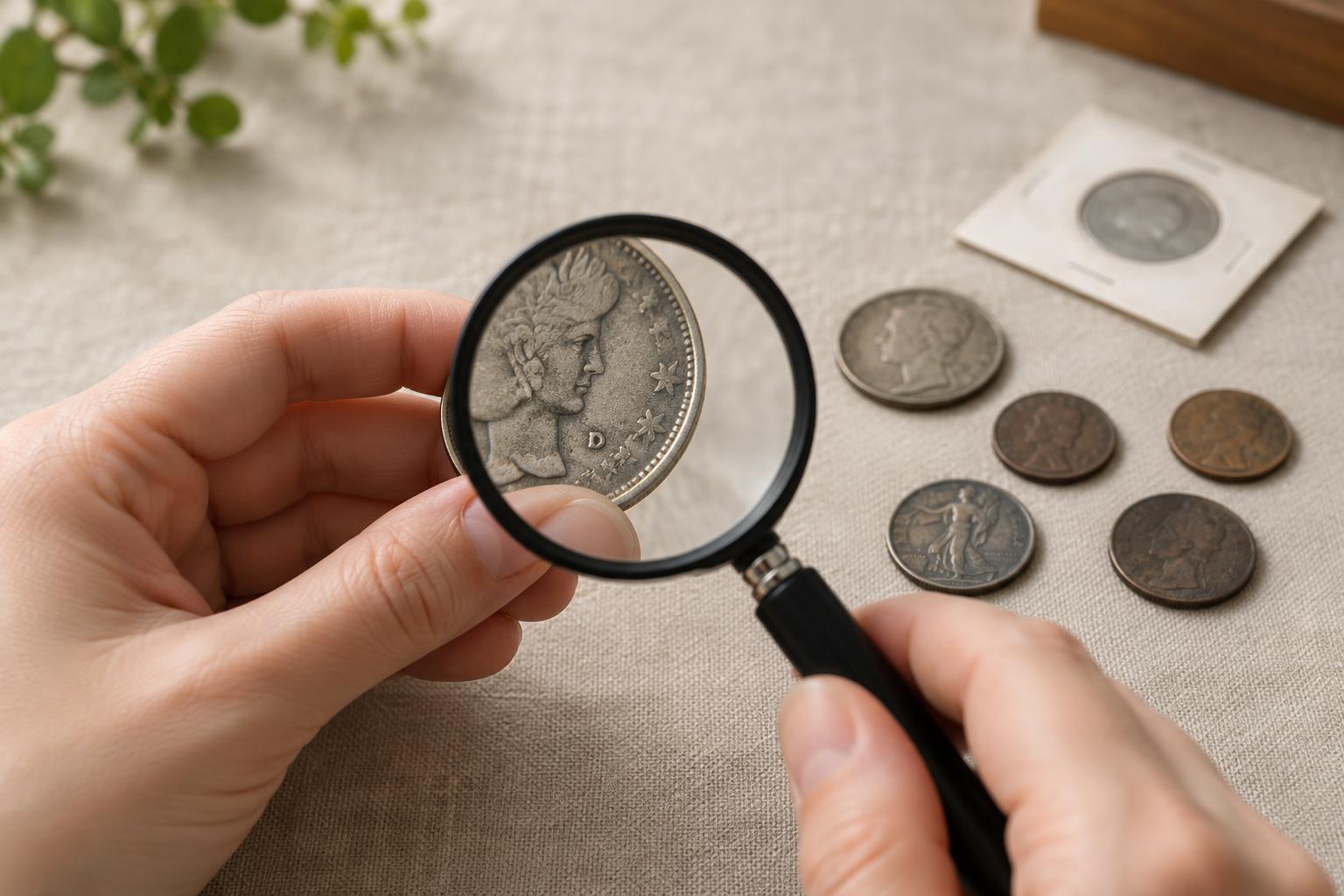
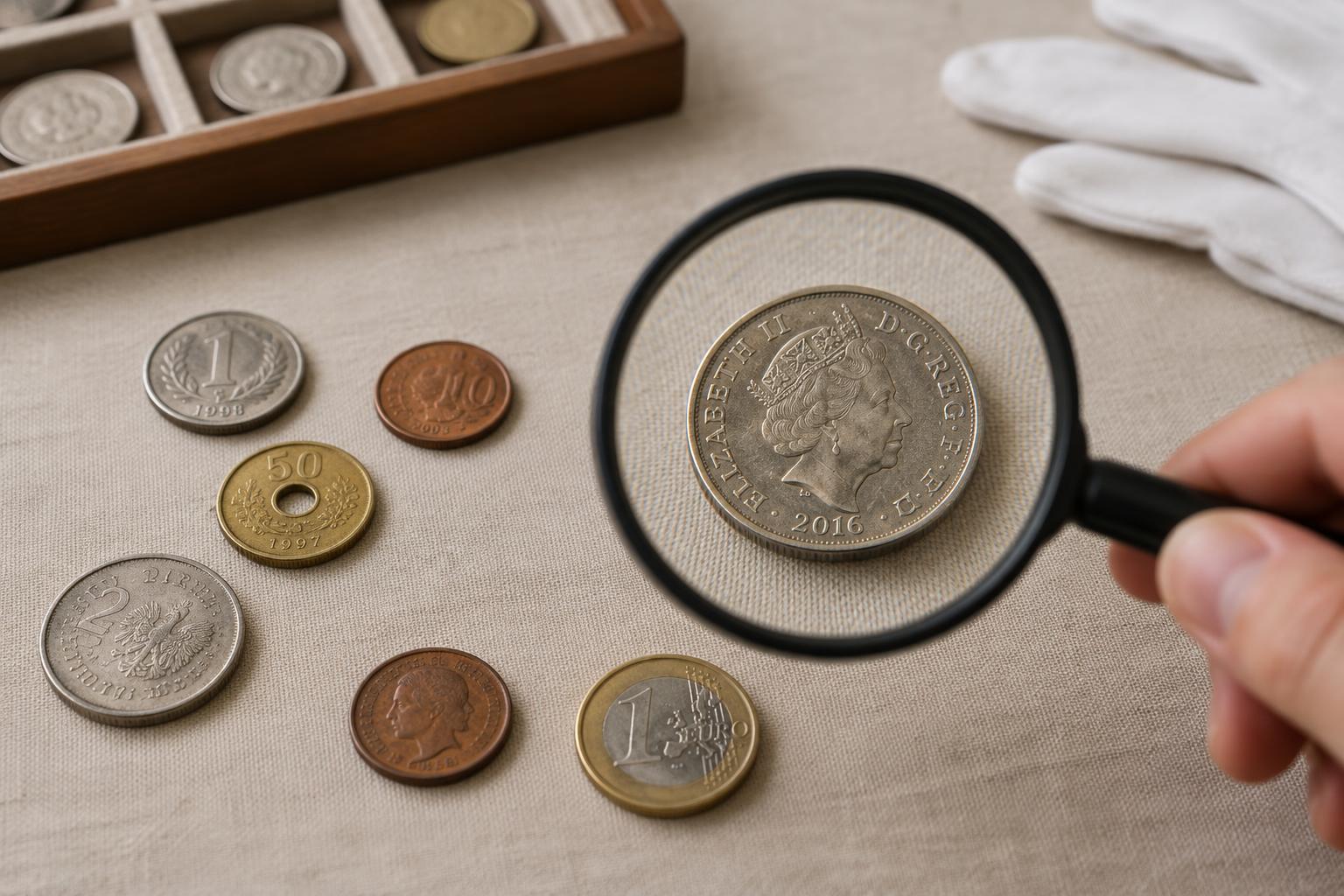
Begin under steady, neutral light. Hold the coin by its edges and tilt it gently to look for changes in surface texture, luster, and wear on the high points. Examine both sides, then note the strongest and weakest areas. If you use magnification, start with an unaided view; a powerful lens can make minor marks seem more important than they are to the coin’s overall appearance.
Next, compare your observations with examples and grading descriptions for that particular coin type. Record a range if you are uncertain—for instance, “VF to XF”—and note any possible damage separately. Do not rub a coin to see its details more clearly; even gentle cleaning can change the surface. With practice, grading becomes a way to describe what you see more precisely, not a reason to force every coin into an exact number on the first try.