A coinage shaped by a changing republic
The Roman Republic lasted for centuries, and its coinage did not follow one unchanging plan. Earlier issues included heavy cast bronze; later, struck silver coins became familiar across much of the Roman world. The denarius, introduced during the Republic, is especially useful to collectors because its designs changed substantially over time. A coin can therefore offer clues about both the period in which it was made and the people who had a hand in issuing it.
Coins served an everyday purpose: people used them to make payments. Their images also occupied valuable public space. A design could refer to a deity, a Roman tradition, a military success or the achievements of a particular family. Those references are not always obvious to a modern viewer. Learning to distinguish what is visible on a coin from what scholars infer about its intended meaning makes Republican coinage more rewarding to study.
Who put names on the coins?
Many Republican coins name a moneyer, an official involved in producing coinage. Collectors often encounter the term tresviri monetales for the board of three moneyers associated with the late Republic. The name on a coin is an important starting point, but it does not mean that its bearer personally engraved the dies or struck each piece. Other workers carried out the practical stages of manufacture.
The moneyer’s identity can help explain a design. Roman political life placed great weight on ancestry, and prominent families preserved stories about relatives who had held office or served the state. A moneyer might choose imagery that pointed to those connections. Even then, a name is not a complete explanation: designs could draw on familiar religious and civic symbols as well as family traditions. For a beginner, the useful question is not simply “Whose coin is this?” but “What connections might this official have wanted viewers to notice?”
From shared symbols to family memory
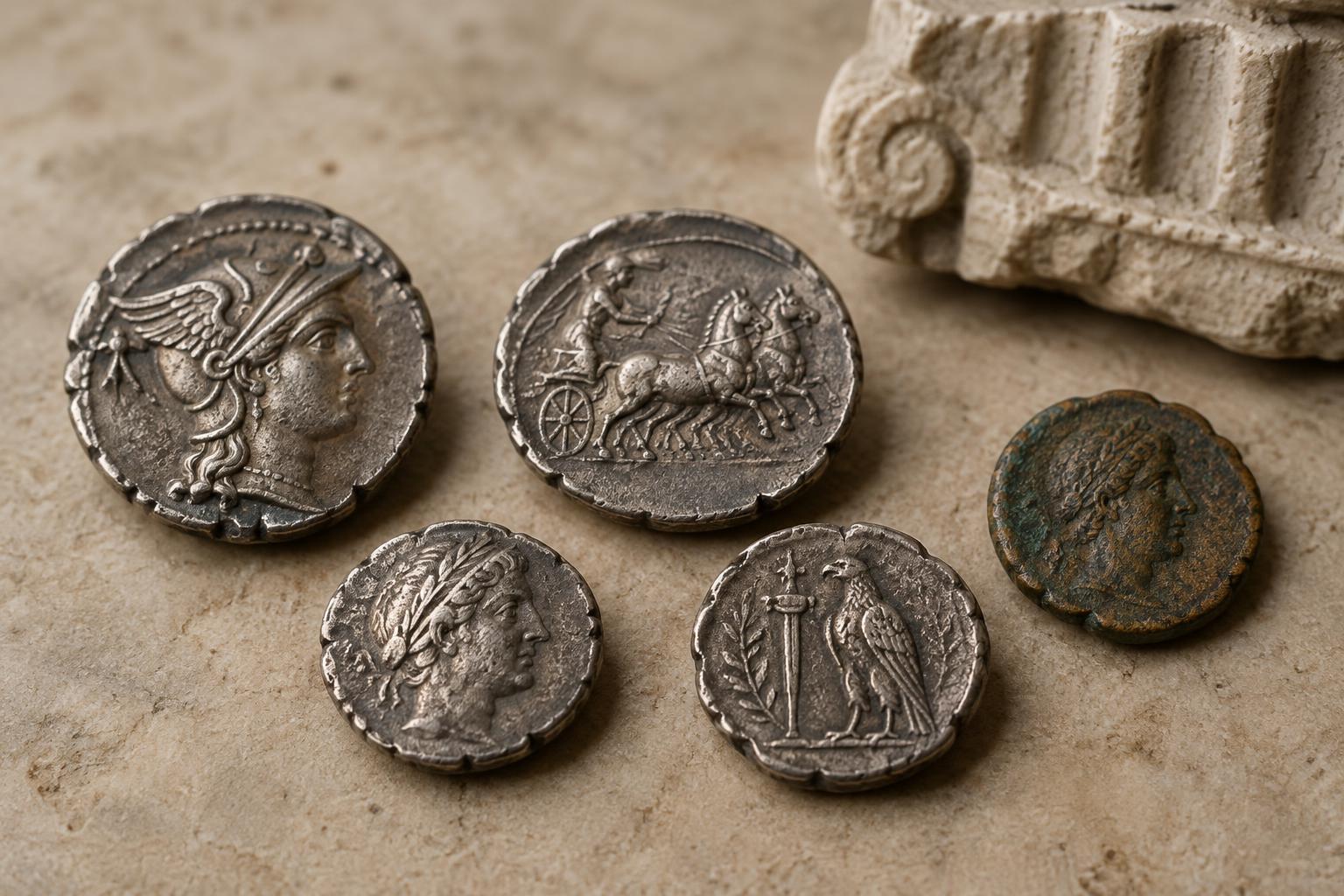
On many earlier denarii, the helmeted head of Roma appears on one side and the Dioscuri, the divine twins Castor and Pollux, on the other. Such recurring types gave viewers recognizable symbols associated with Rome. Over time, Republican silver coins displayed a wider range of subjects. Portraits, monuments, ceremonies and figures from legend could all invite viewers to think about the past.
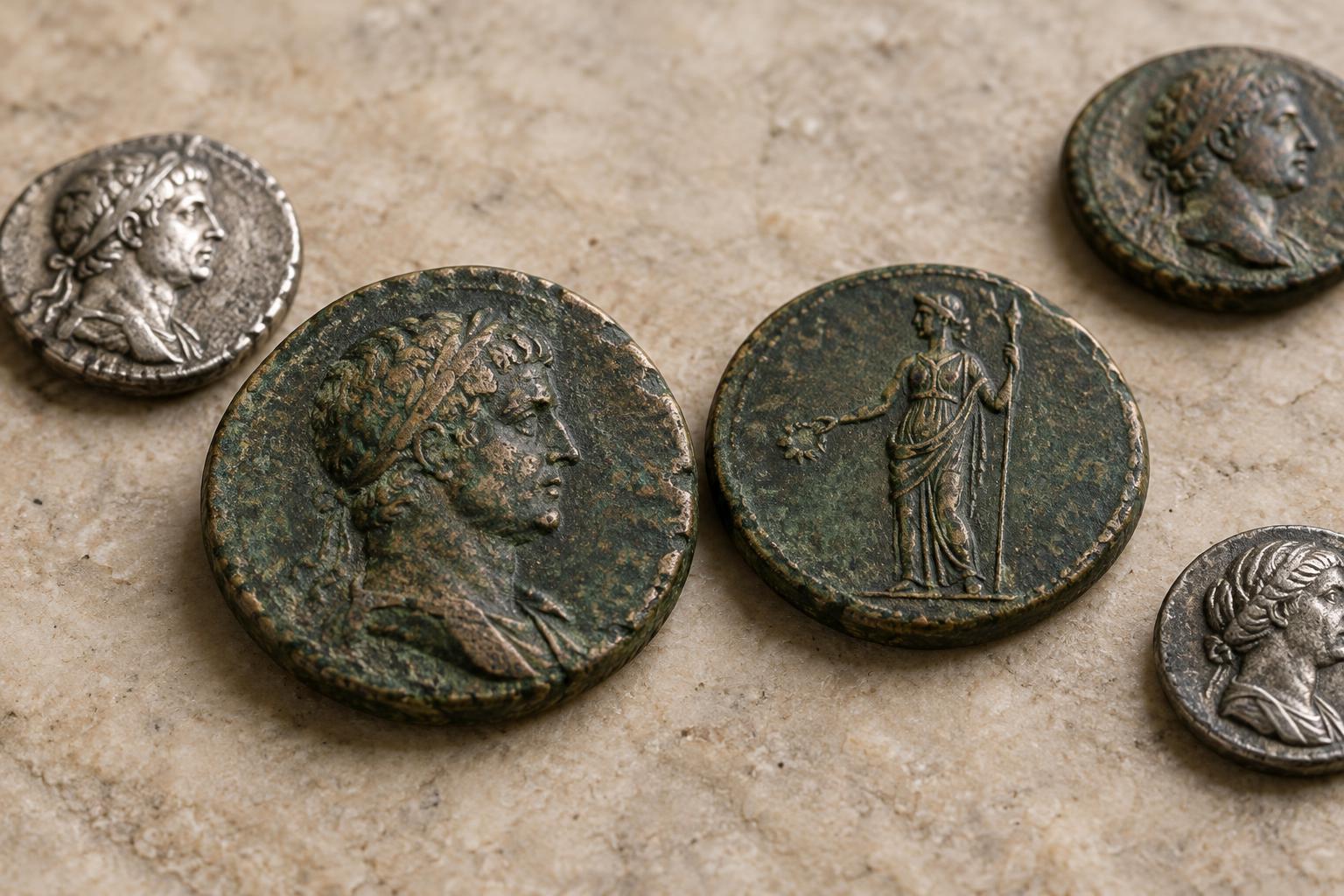
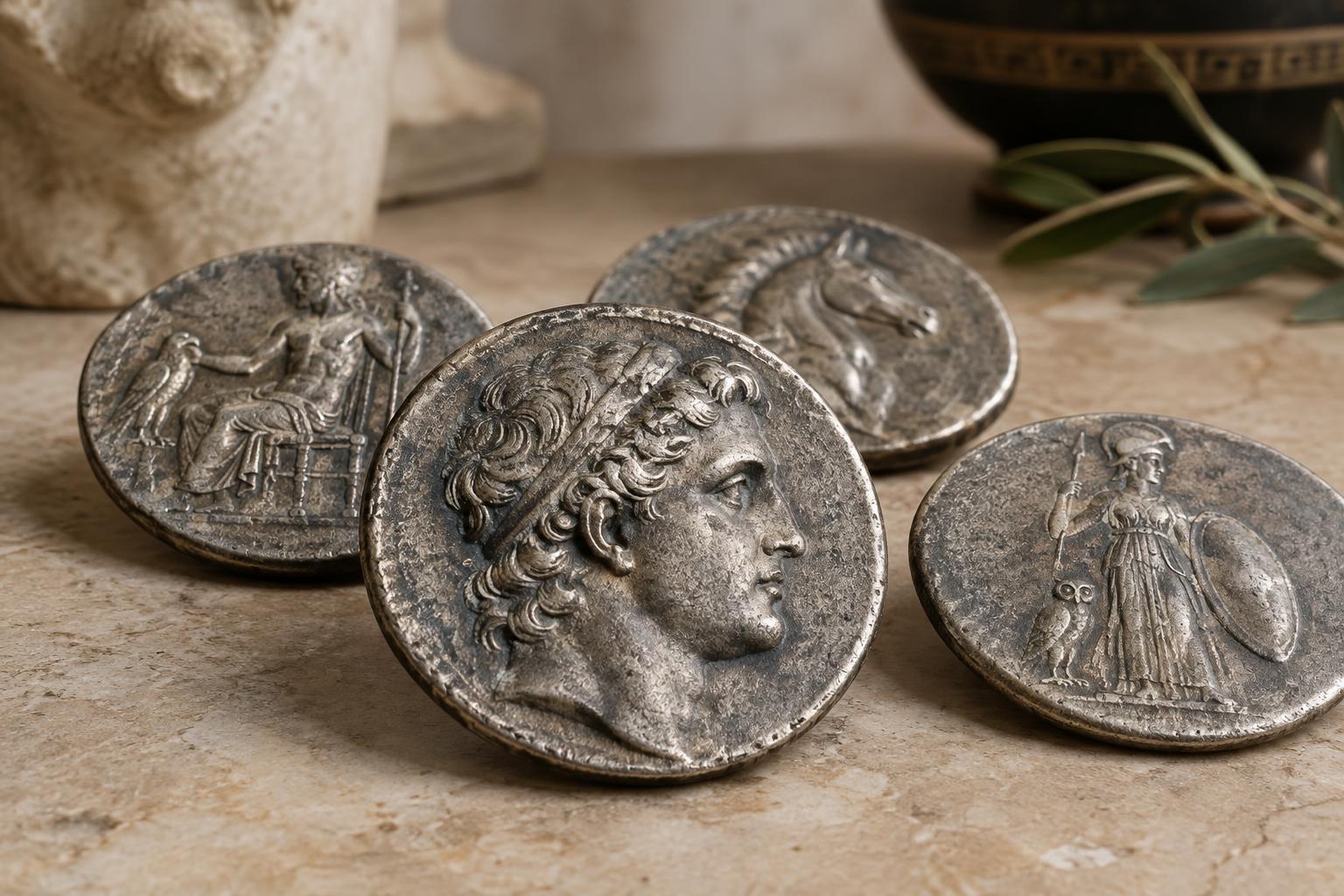
A family reference might celebrate an ancestor’s public service or connect a moneyer to a respected story. Identifying that reference takes care. A figure holding a distinctive object, for example, may be easier to interpret when paired with a written name; without one, similar images can support more than one reading. It helps to examine both sides of a coin together. The front, commonly called the obverse, and the back, or reverse, may form a related message, but they need not tell a tidy, single story.
Public messages without a simple script
As competition among leading Romans intensified, coin types could make achievements and claims to distinction widely visible. An image of a victory or a famous forebear might reinforce a family’s standing, while a familiar deity could evoke qualities valued by the wider community. Coin designs thus offer evidence of how Romans presented authority and remembered the past.
That does not make every coin an advertisement with a message understood identically by everyone. The people handling a coin may have noticed different details, or none at all. Modern collectors also see surviving examples without the full context of their original use. It is safer to say that a design presented an association than to assume it persuaded its audience. This distinction is especially useful when reading about the Republic’s final decades, when political interpretations of coin imagery can be tempting but not always certain.
How to examine a Republican coin
Start with the details you can describe directly: metal, visible letters, figures, objects and the arrangement of each side. Transcribe a name or abbreviation only where it remains legible, and note worn or missing areas rather than filling them in from memory. Then look for a reliable catalogue identification that matches both sides, not just one striking image. Small differences in a legend or a symbol can separate related types.
For a focused collection, try comparing coins that share a motif, such as Roma, or coins issued by moneyers from one family. Record why you chose each identification and which parts remain uncertain. Condition affects how much detail can be read, while rarity, demand, authenticity and preservation can all affect value; no design guarantees a particular price. Whether you own a coin or study photographs, the most useful habit is the same: let the object’s visible evidence lead, and treat its possible message as a question worth exploring.