A small object with a public identity
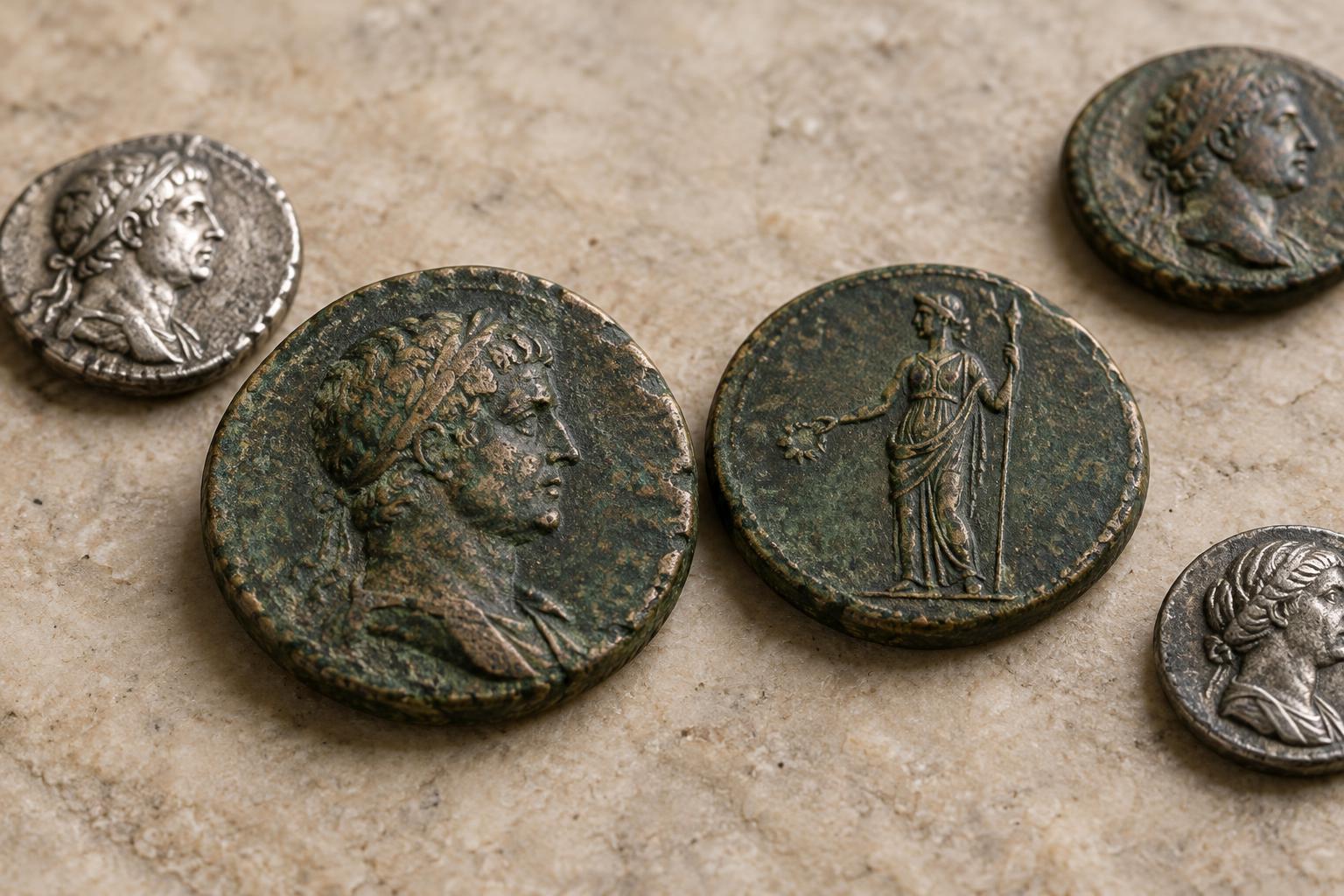
In the ancient Greek world, many city-states issued coins bearing images associated with their communities. A coin had a practical job: it provided a recognizable form of money for exchange and payments. Its design also identified the authority behind it. Unlike a modern banknote, an ancient coin had little room for words, so a familiar figure could do much of the work.
These images were not logos in the modern sense. They might refer to a city’s patron deity, a local myth, a place or an established coin type. Their meanings could overlap. A person handling a coin might recognize where it came from without interpreting every detail of its design. For collectors today, that distinction is useful: a symbol can be evidence of civic identity without being a complete statement of what every resident believed.
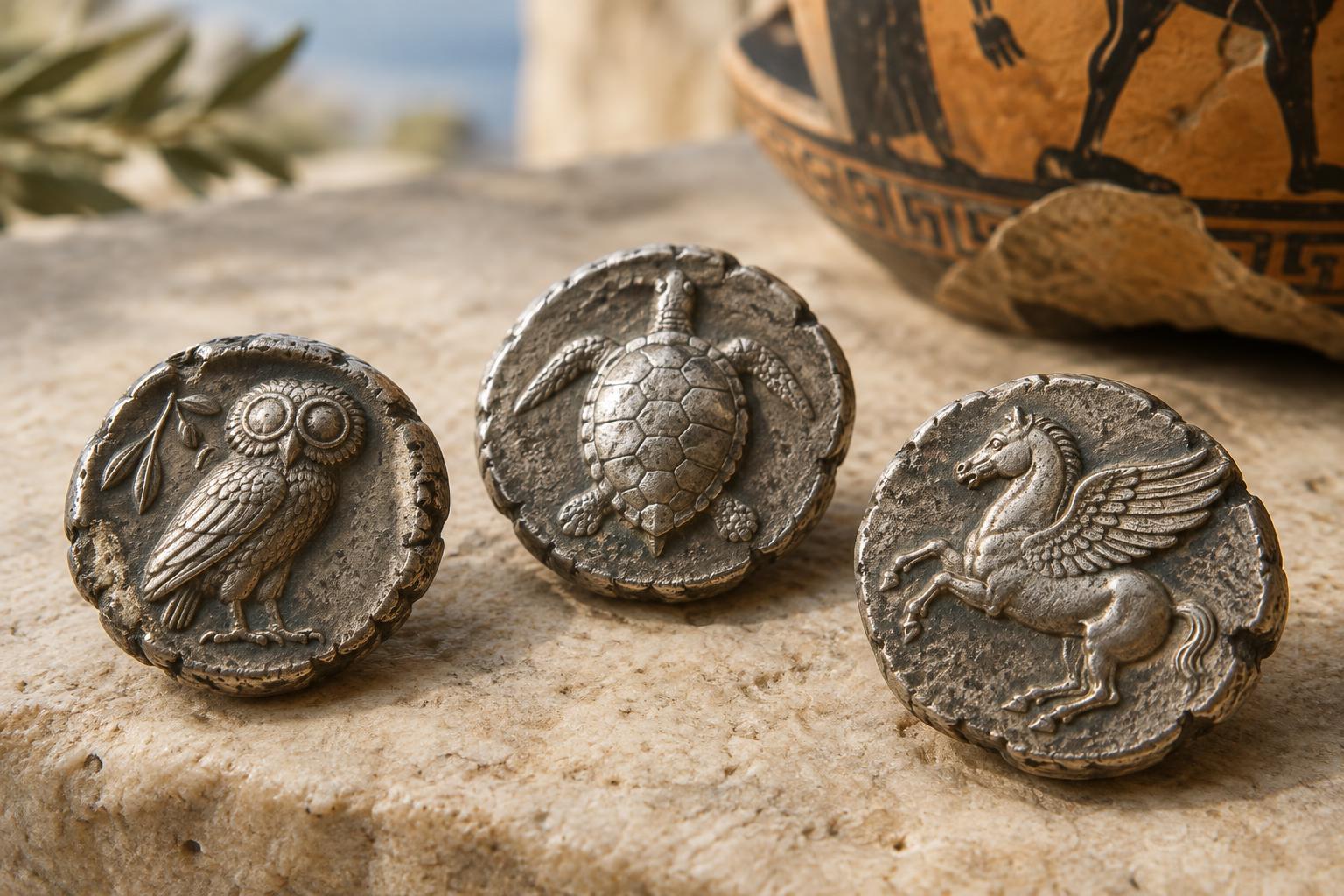
Owls, turtles and winged horses
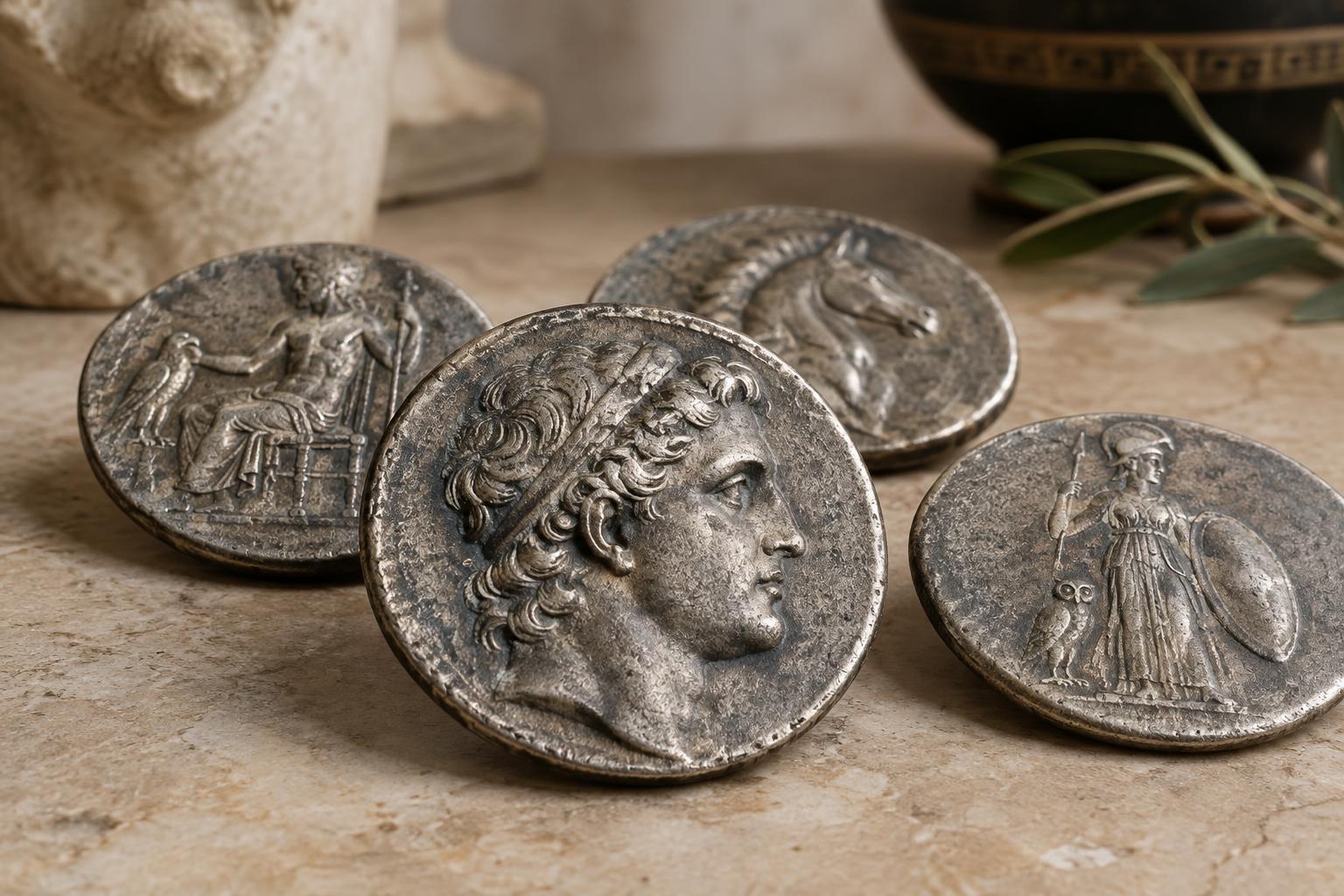
Athens offers one of the best-known examples. Many Athenian silver coins show the head of Athena on one side and an owl on the other. Athena was closely associated with the city, and the owl was associated with her. An olive sprig and letters identifying the Athenians also appear on familiar versions of the design. Together, those elements made the issuing city easier to recognize, even when the coin traveled far from Athens.
The island of Aegina used a turtle on its early silver coinage. The image is distinctive, but it is worth being cautious about turning it into a single, certain explanation of the island’s character. Corinth, meanwhile, used Pegasus, the winged horse linked to Greek myth, on many of its coins. These examples show different ways a striking image could become an enduring coin type. Once people knew a design, keeping it could help a new issue look familiar.
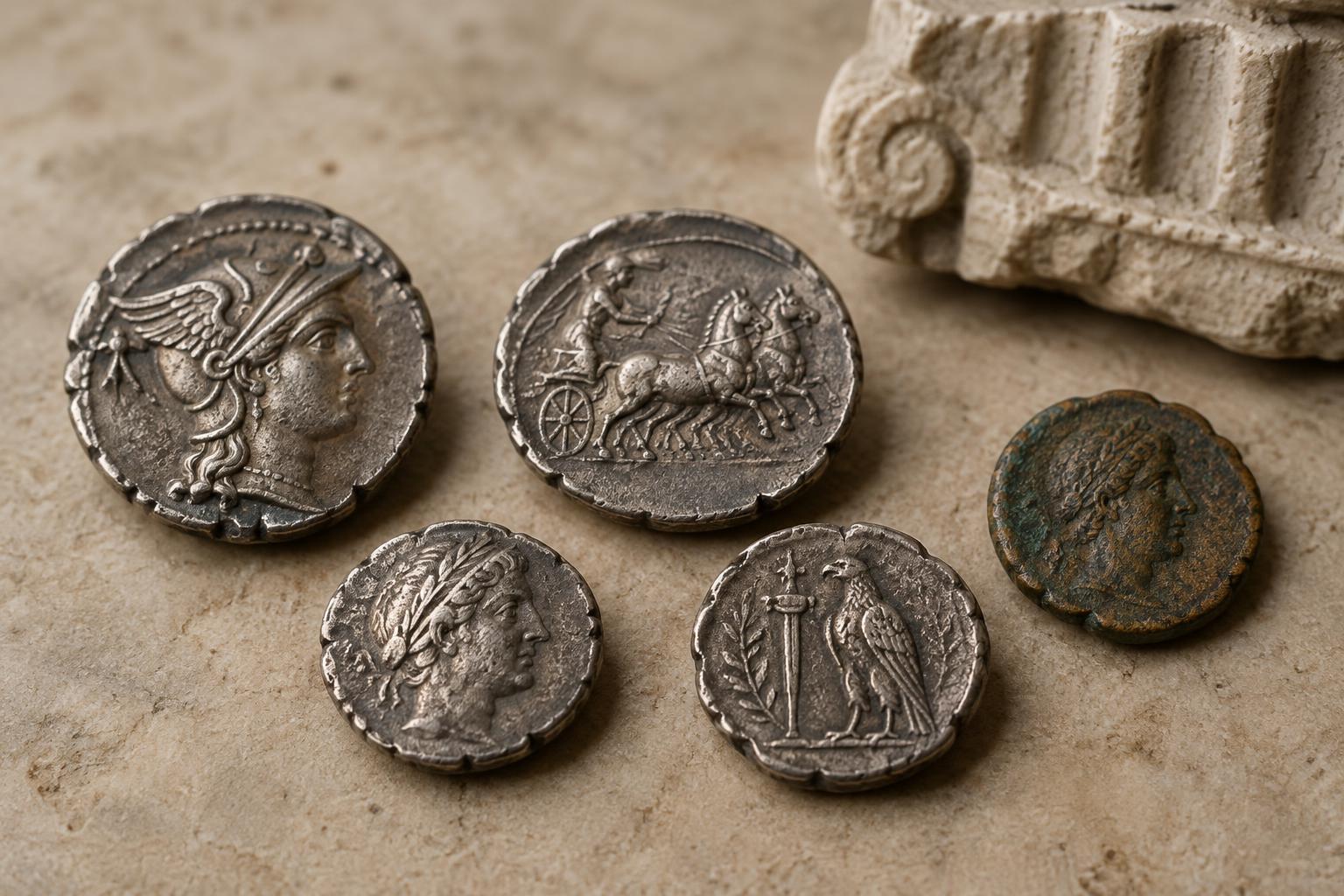
Not every Greek coin carried an animal. Deities, heroes, plants and scenes of local importance also appeared. Syracuse, a Greek city in Sicily, issued coins featuring the head of Arethusa and, on some types, a chariot scene. Such designs remind us that the Greek-speaking world extended well beyond mainland Greece, and that each issuing community drew from its own traditions.
How the design got onto the coin
Ancient Greek coins were generally struck rather than cast into their final detailed form. A worker placed a prepared piece of metal, called a blank or flan, between engraved dies and struck the upper die. The designs in the dies left impressions on the metal. The two sides of a coin are called the obverse and reverse, although deciding which design deserves pride of place is not always as simple as it seems.
Hand-striking helps explain why surviving examples of the same type can look different. A design might sit off-center, a letter might be missing from the edge, or a die might show signs of wear. Changes in style may also reflect different engravers, dies or periods of issue. For a beginner, these variations are part of reading an ancient coin, not automatically signs that something is wrong with it.
What symbols can—and cannot—tell us
A civic image can be a starting point for learning about a city’s religious associations, stories and public authority. It does not, by itself, tell us exactly why officials chose that image or how every viewer understood it. Coin designs could persist for generations while political circumstances changed. Cities could also issue multiple types, and similar subjects appeared in more than one place.
To interpret a coin, look at its details together rather than relying on the main picture alone. Letters may name an issuing community or an official. Metal, size and weight can help place a coin within a denomination or series, though wear can affect measurements. Style and the arrangement of smaller symbols may help distinguish related issues. These clues are most useful when compared with well-described examples, rather than judged from one feature in isolation.
A simple way to explore Greek coin types
Choose one city and compare several of its coin designs. Start by recording what you can see: the main image on each side, any letters, small marks and visible differences between examples. Then ask which features remain consistent. Does the familiar civic symbol stay in place while other details change? Does a later design introduce a different figure? This approach turns a collection or a set of images into a question about continuity and change.
Keep identification separate from value. Two coins with similar symbols may differ in metal, condition, rarity or attribution, and prices can vary. The more lasting reward of this exercise is learning to treat each coin as both a made object and a public message. An owl or a turtle is easy to notice; understanding what surrounds it is where the history begins.