A ruler you could recognize
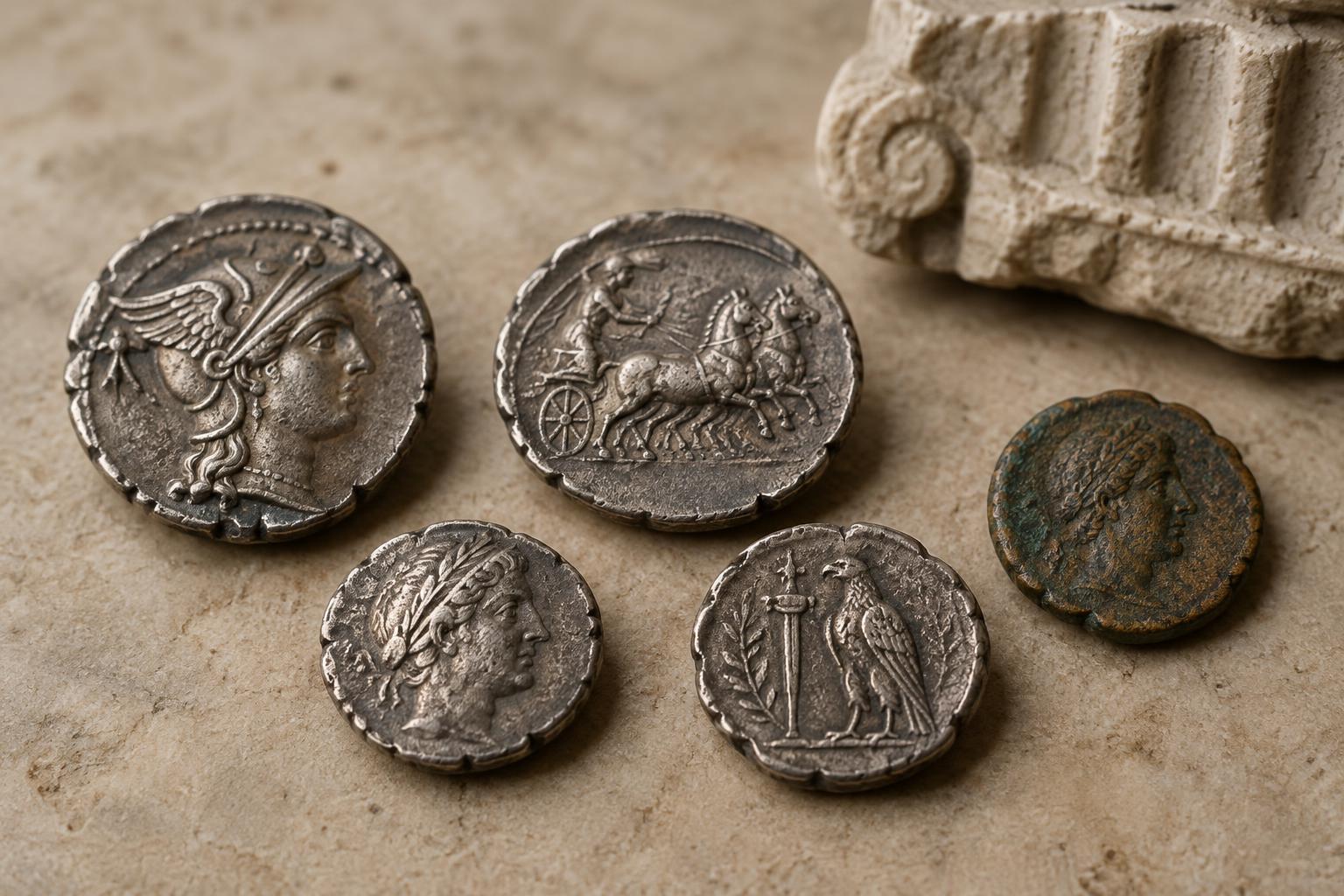
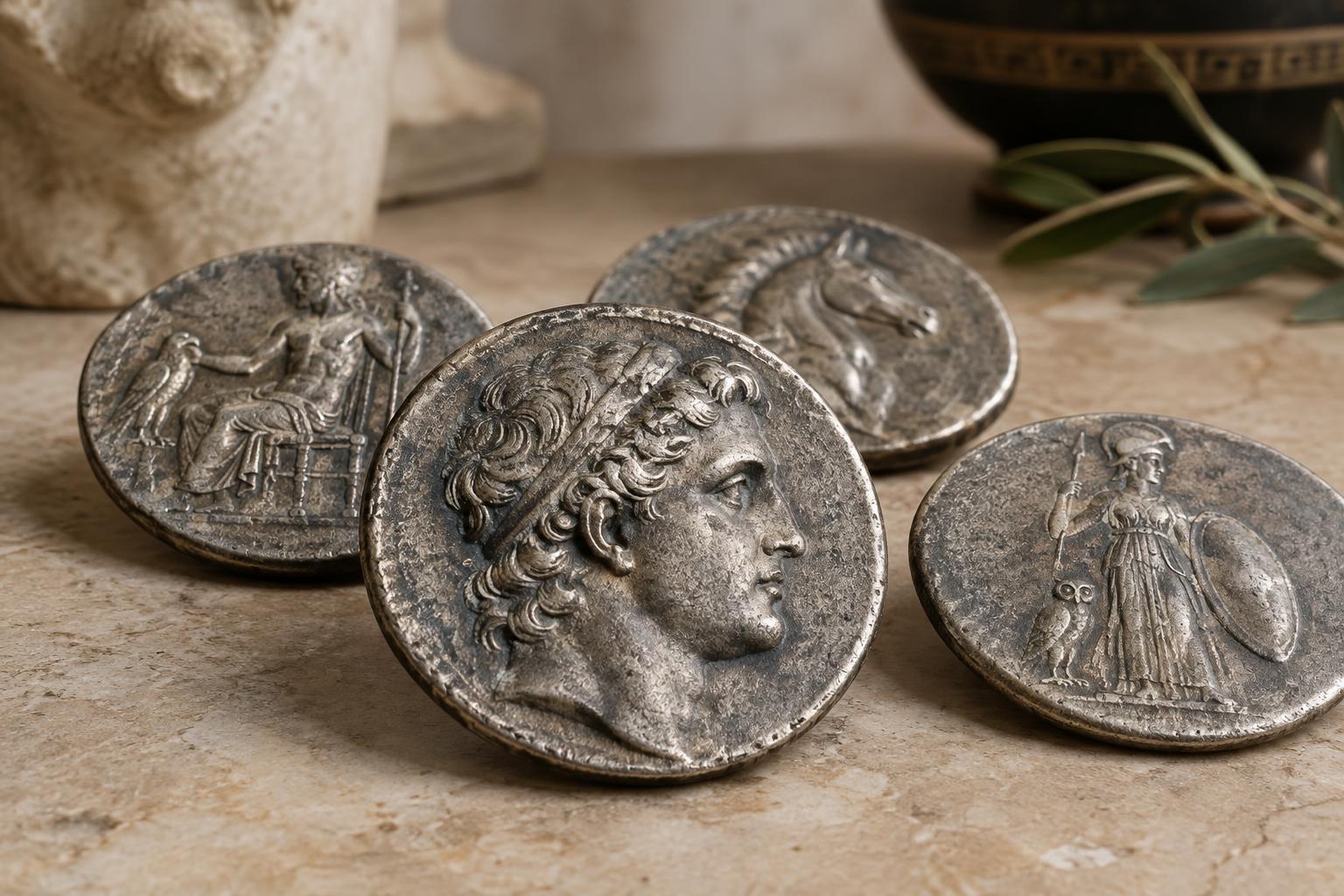
In the Roman Empire, a coin was a practical object with a public face. Many imperial coins placed the emperor’s portrait on the obverse, or front, alongside an inscription called a legend. A person handling the coin could encounter the ruler’s image and name during an ordinary exchange. That did not mean every coin carried a detailed message, but the repeated pairing of portrait and legend made imperial authority familiar.
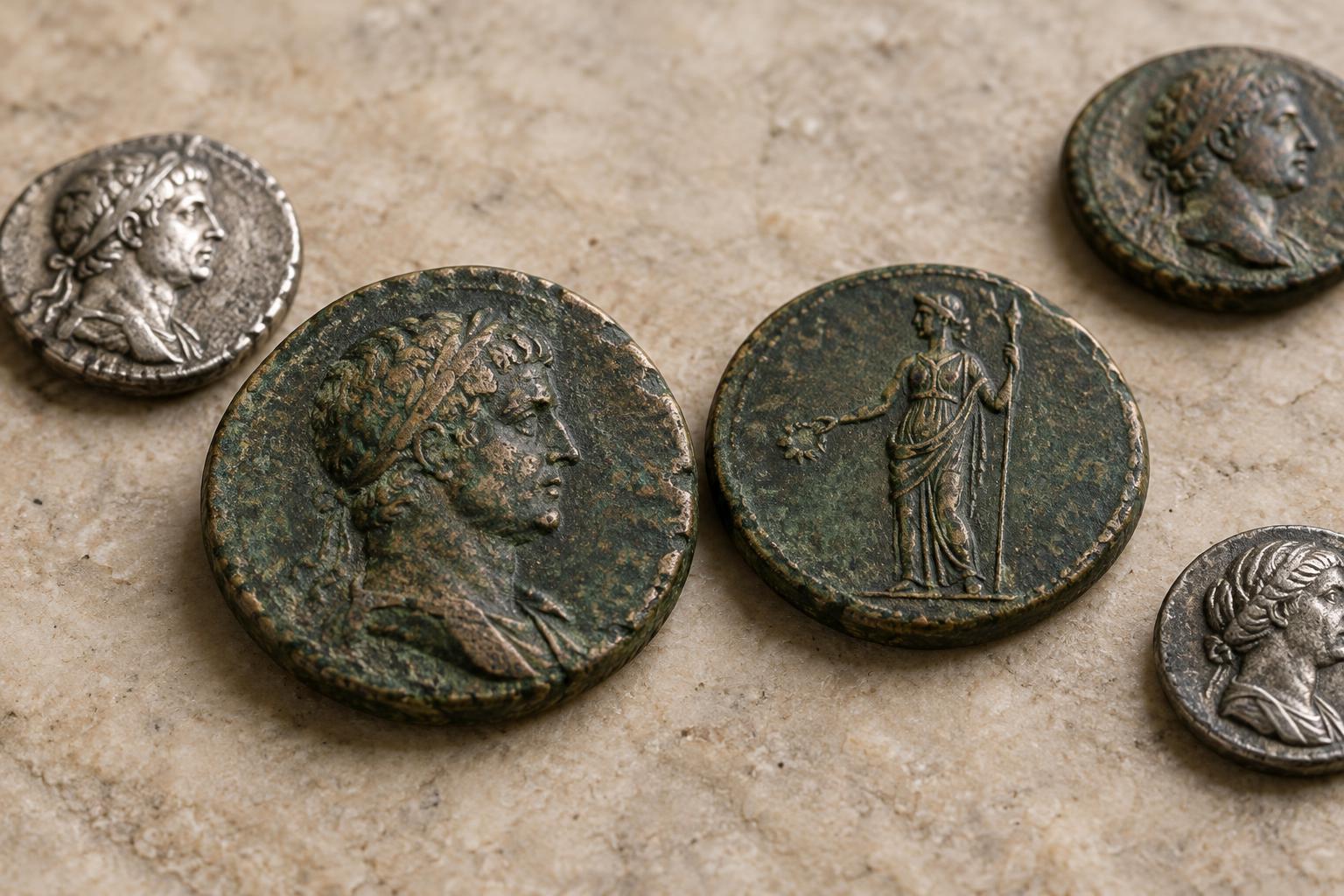
Roman coin portraits can be distinctive, yet they are not photographs. Hairstyle, facial hair, clothing and headgear can help identify a ruler, while also presenting an image suited to his position. A laurel wreath, for example, might emphasize victory or honor. Portrait styles changed over time, and coins from different mints could render the same emperor differently. For a beginner, the portrait is a useful clue, not proof of identity on its own.
Why the legend is full of titles
The letters around an imperial portrait often combine a personal name with titles and offices. Space was limited, so engravers used abbreviations. IMP commonly stands for imperator, a title associated with military command; CAES abbreviates Caesar; and AVG abbreviates Augustus. These words were not interchangeable with a modern first name and surname. Over the imperial period, they formed part of a changing vocabulary of rank and legitimacy.
Other abbreviations may refer to particular roles. P M can stand for pontifex maximus, the chief priestly office. TR P refers to tribunician power, while COS indicates the consulship. P P can mean pater patriae, or “father of the fatherland.” Not every title appears on every coin, and the same ruler’s legend may change during his reign. Reading the letters as a series of claims and offices is more helpful than expecting one fixed formula.
Images on the reverse
Turn an imperial coin over and you may find a deity, a personification, a building or a scene involving the ruler. The reverse—the side opposite the main portrait—could complement the obverse by associating the emperor with a desirable quality or an achievement. Figures such as Victory, Pax, representing peace, and Concordia, representing harmony, gave abstract ideas recognizable forms. A reverse legend might name the figure or add another title.
It is tempting to read every reverse as a report of a specific event. Sometimes a design does refer to a campaign, a public work or a dynastic occasion, but a general figure such as Victory need not identify one particular battle. Design and inscription work best when considered together. Even then, a coin shows how authority was presented, not necessarily how everyone who used the coin understood it.
A message that changed with the empire
Imperial coinage was not uniform across all places and periods. Portrait conventions, titles and reverse subjects shifted as rulers and political circumstances changed. Members of an imperial family, including empresses and intended successors, could appear on coins too. Their inclusion might draw attention to family connections or continuity, giving collectors another reason to look beyond the emperor’s portrait.
Coins issued in cities of the Roman provinces can require a different approach from those bearing Latin imperial legends. Some have Greek inscriptions and local imagery alongside an imperial portrait. This variety is part of what makes Roman coin history rewarding: a familiar-looking head does not guarantee a familiar legend, and two coins of the same ruler may have been made for different settings.
How to read a coin without guessing
Start with what you can actually see. Note the portrait, then copy the surviving obverse letters in order, leaving gaps where the coin is worn. Look for recognizable title groups such as IMP, AVG or COS, but do not force damaged letters to fit an expected name. Next, examine the reverse image and legend. A clear title or named figure may narrow the possibilities more reliably than a worn portrait.
Finally, remember that a coin is a small, often damaged piece of evidence. Abbreviations can be crowded, designs can resemble one another, and a ruler may have used several versions of a title. Identifying a coin may take comparison with a reliable numismatic reference, and some pieces will remain uncertain. Even without a complete identification, noticing how portrait, titles and reverse design work together reveals how Roman coins presented power.