From civic symbols to royal faces
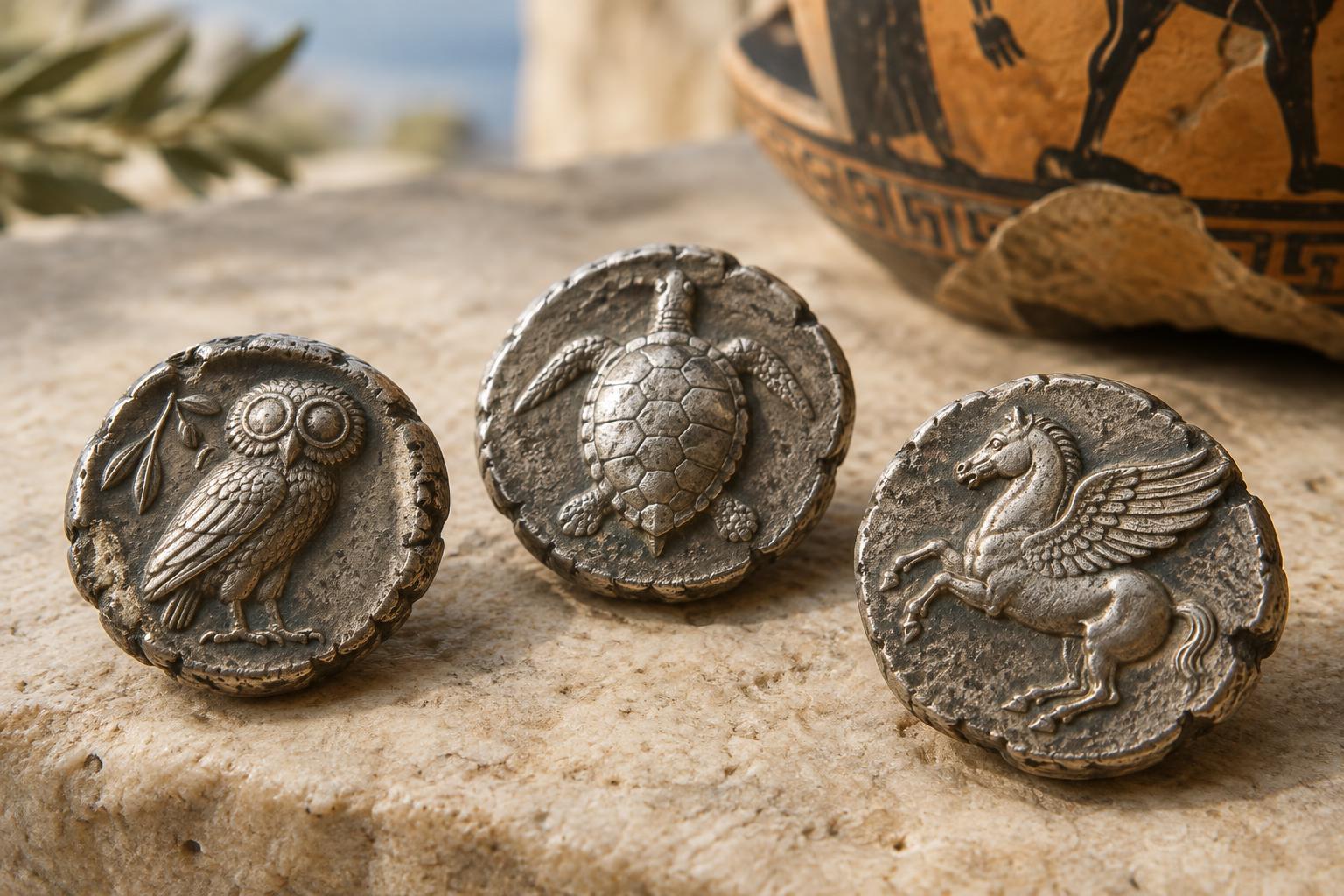
Before the Hellenistic period, many Greek coins identified their issuing cities through gods, animals, or other familiar emblems. Athens, for example, used the head of Athena and an owl. A coin did not need a ruler’s face to tell its users who stood behind it: a recognizable design could serve that purpose.
The conquests of Alexander the Great and the kingdoms that emerged after his death changed the setting in which many coins were made. Kings governed territories containing multiple cities and peoples, and their coins could travel far beyond the place where they were struck. A portrait offered another way to identify royal authority. The shift was not immediate or universal, however. Traditional gods and symbols remained important on Hellenistic coins, often appearing alongside new royal imagery.
Alexander as a model—and a distinction
Alexander’s fame is central to this story, but a common identification needs care. The youthful head on many coins issued in his name is generally understood as Heracles wearing a lion-skin headdress, not as a straightforward portrait of Alexander. The resemblance could still invite an association between the king and the hero. After Alexander’s death, his successors had strong reasons to make that association more explicit.
Some early Hellenistic coin designs portrayed Alexander with distinctive attributes, including an elephant-skin headdress. Such images helped a successor claim a connection to the conqueror whose empire had broken apart. That claim was political as well as visual: the portrait suggested continuity of leadership at a time when several rulers sought recognition. Coins also kept Alexander’s name or established designs in use, so the history of portraiture cannot be told as a simple replacement of old types with new ones.
Making a dynasty recognizable
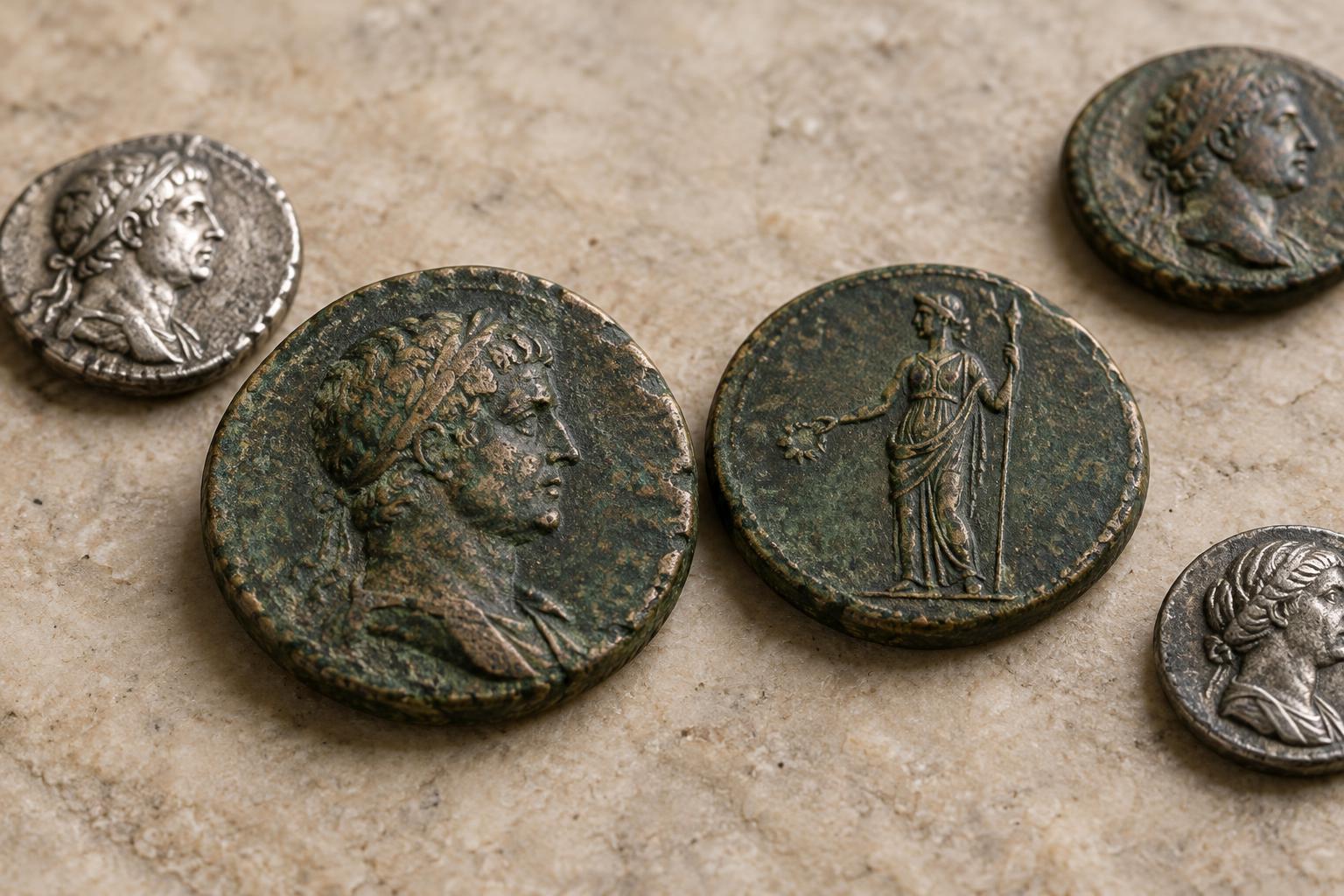
As successor kingdoms became more established, portraits of reigning kings and members of their families appeared more prominently on some coinages. A royal face could make a dynasty visible in an ordinary transaction. Paired with a name or title, it presented the ruler as an identifiable source of authority rather than a distant figure represented only by a god or civic badge.
Portraits also created a useful visual link between generations. A successor could adopt familiar elements of an earlier ruler’s coinage while introducing his own likeness. This mattered in kingdoms where succession and legitimacy could be contested. The image did not guarantee anyone’s loyalty, but it gave the government a repeated, portable statement of who claimed to rule.
These portraits were not necessarily neutral records of appearance. Engravers could emphasize a strong profile, a particular hairstyle, a diadem, or another recognizable feature. A collector can appreciate the individuality of a face while remembering that a coin portrait was a carefully chosen public image, not the ancient equivalent of an unposed photograph.
Why coins were an effective medium
Coins passed through markets, pay chests, and households. Their small size limited how much they could say in words, but a repeated portrait could be recognized quickly. Producing the same basic image across many coins also made royal identity visible wherever that coinage circulated. Different mints might interpret a portrait in different ways, yet the general type could remain familiar.
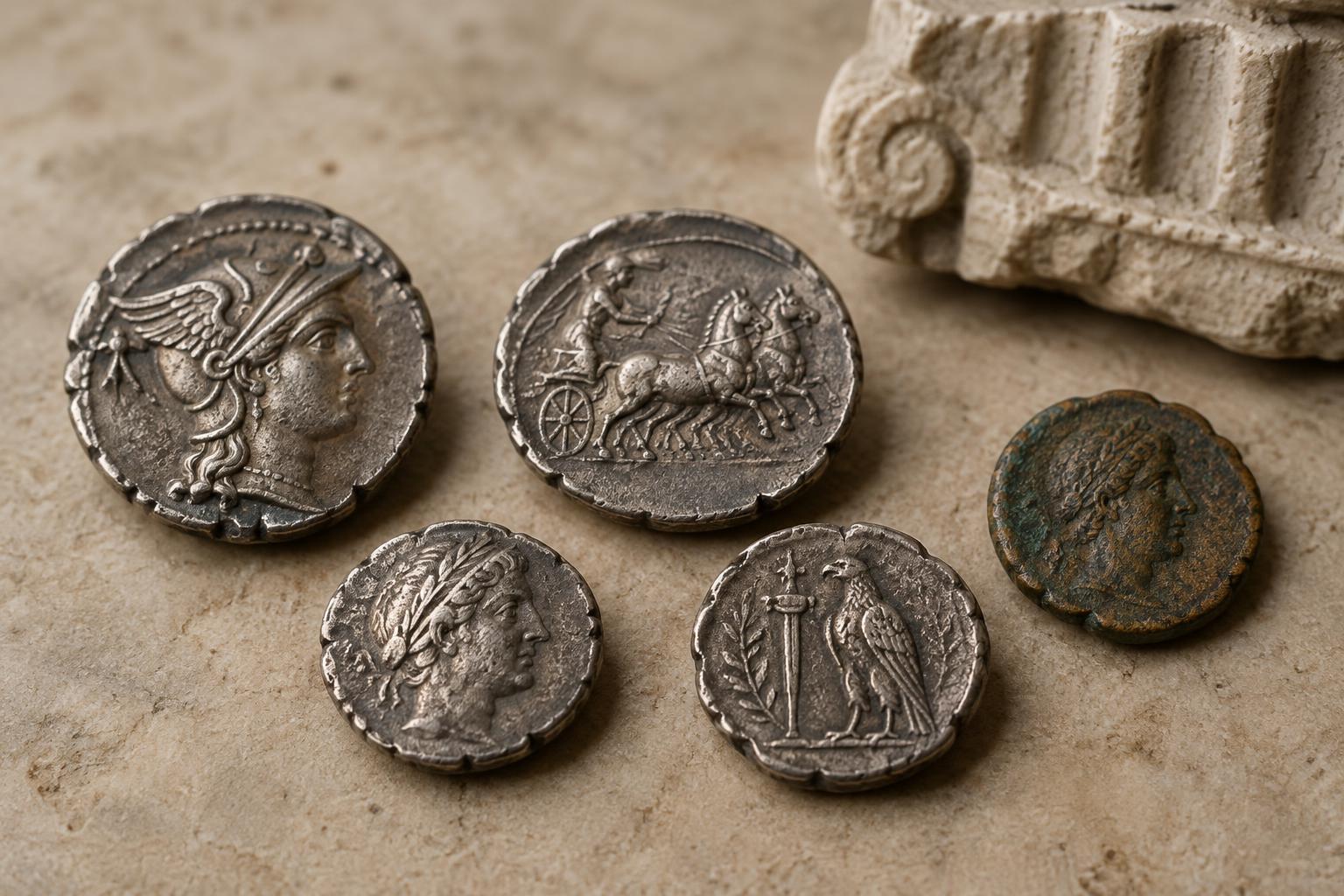
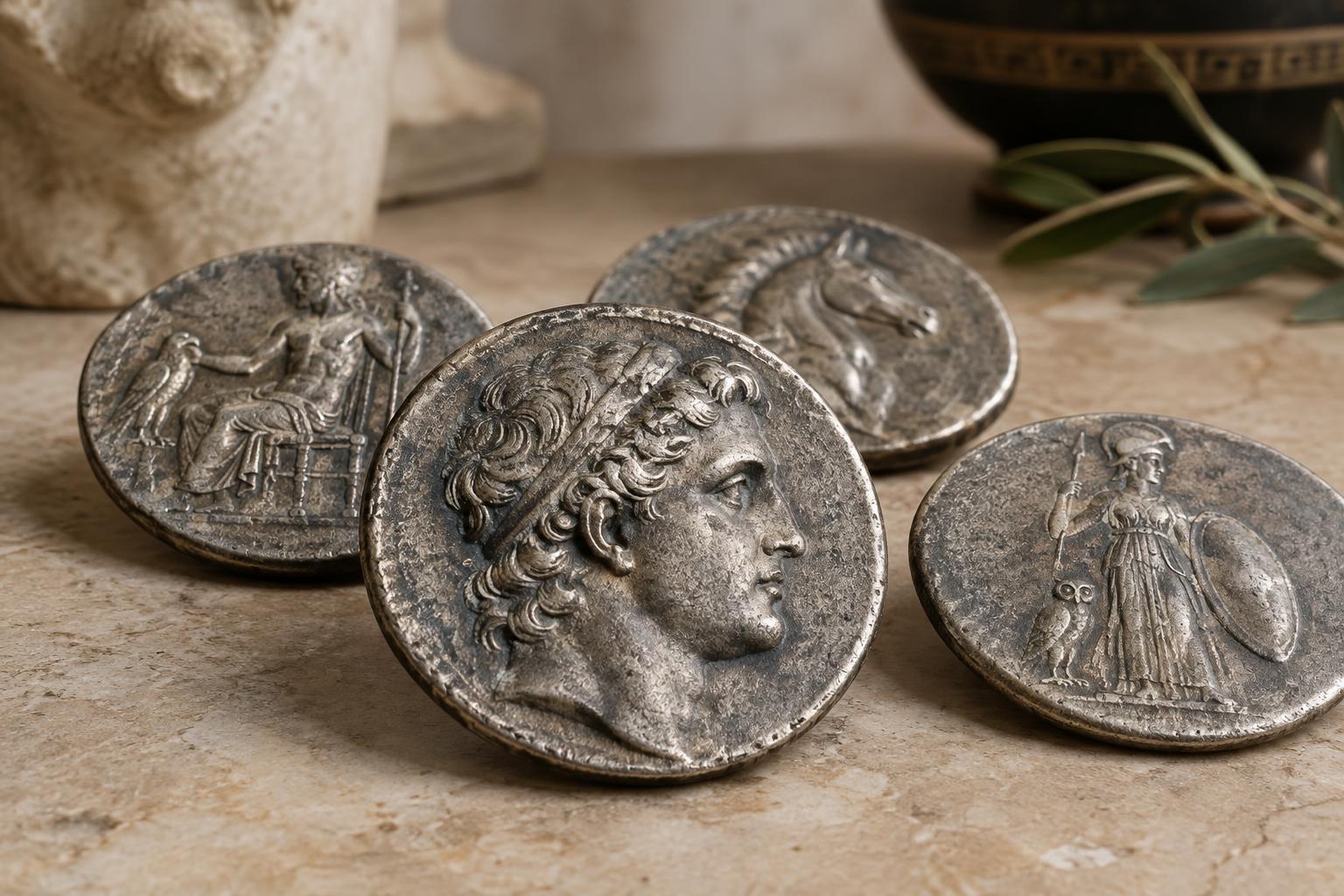
The other side of a coin supplied further context. A deity, royal emblem, inscription, or mint mark could reinforce the message of the portrait or help identify the issuing authority. None of these features should be read alone. A crowned or idealized head, for instance, might depict a god, a deceased ruler, or a living monarch, depending on the coin. Looking at both sides and the inscription is safer than identifying a coin from its face alone.
Reading a Hellenistic portrait coin
Start with what you can observe: the direction the head faces, its headgear, the inscription, and the design on the reverse. A diadem—a band associated with kingship—is worth noting, as are divine attributes such as horns or an unusual headdress. Then consider whether the inscription names the person shown or instead names the authority that issued the coin. Those are not always the same thing.
Finally, leave room for uncertainty. Designs were copied, worn coins can obscure details, and rulers used familiar images to express more than one idea at once. The growing prominence of portraits reflects a broad Hellenistic concern with royal identity and legitimacy, but each coin still has its own context. For a collector, that is part of the appeal: a small object can show how a ruler wanted to be seen, while inviting a closer look at the symbols surrounding the face.