Start with the coin’s identity
A coin listing often compresses the basic description into a line such as “date, mint mark, denomination, grade.” Knowing which abbreviation answers which question makes that line easier to read. The date identifies the year shown on the coin, while a mint mark identifies the facility that made it. A listing may put them together as “date/mm,” with “mm” standing for mint mark. Letters used as mint marks depend on the country, series, and period, so do not assume one letter has the same meaning on every coin.
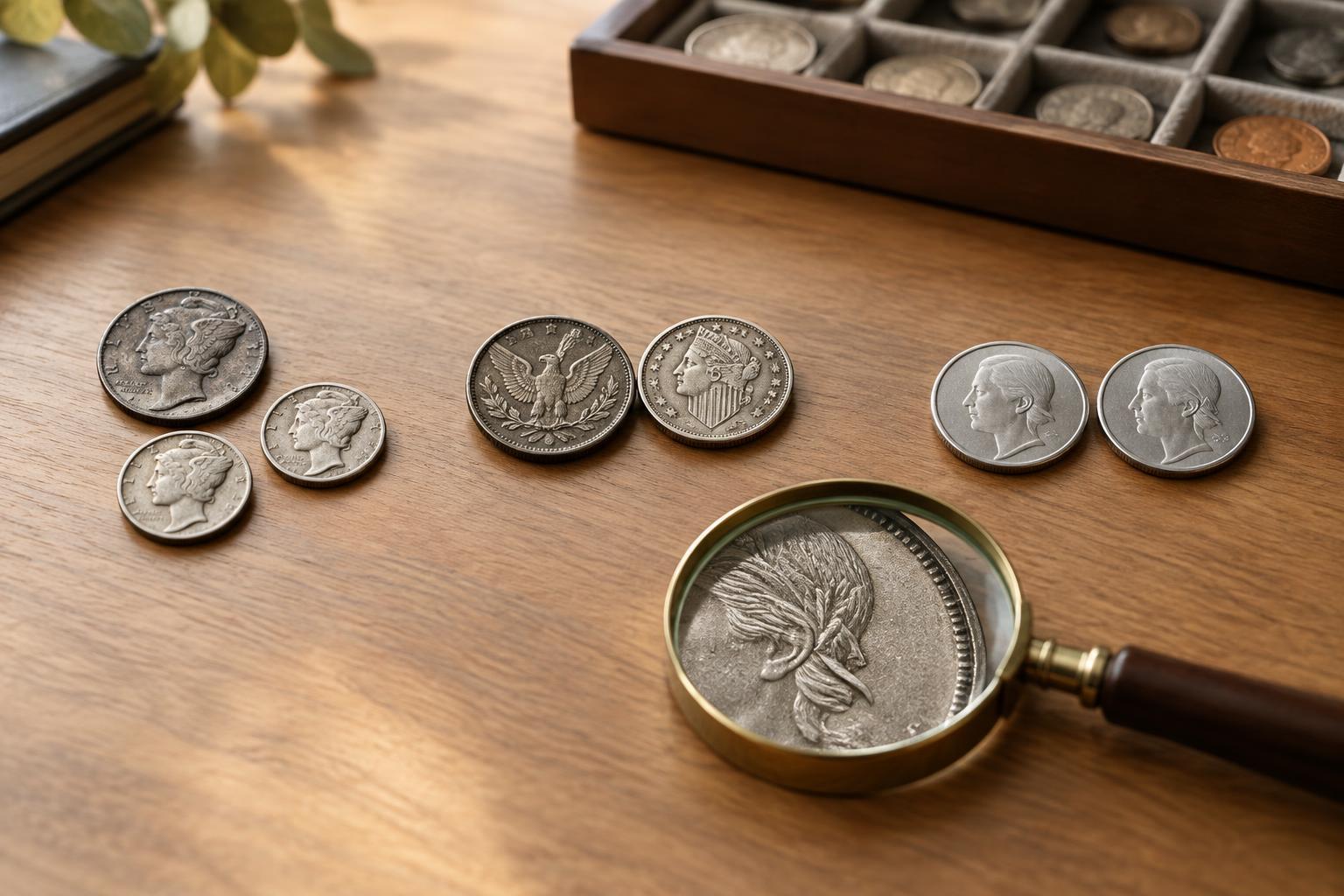
You may also see “obv.” for obverse and “rev.” for reverse. The obverse is usually the principal side of a coin, often bearing a portrait or main emblem; the reverse is the other side. Collectors use these terms to locate a feature or flaw: “mark on obv.” is more precise than “mark on front.” If a listing mentions a “type” or “var.,” it is pointing to a design type or variety. A variety is a recognizable difference within a coin issue, but its significance depends on the specific series and the evidence visible on the coin.
Read grade abbreviations as condition shorthand
Grade describes a coin’s condition, not its age or rarity. Common circulated-grade abbreviations include G (Good), VG (Very Good), F (Fine), VF (Very Fine), and XF or EF (Extremely Fine). AU usually means About Uncirculated: the coin shows little wear, but it is not graded as fully uncirculated. These labels cover broad ranges, and two people may disagree about where a coin falls within one of them.
For uncirculated coins, listings often use MS, meaning Mint State, followed by a number such as MS-63. The commonly used numerical grading scale runs from 1 to 70, with higher numbers generally indicating better-preserved examples. “Unc.” means uncirculated, while “BU” commonly means Brilliant Uncirculated. BU is a descriptive sales term rather than a precise numerical grade, so photographs and a fuller condition description still matter. “Circ.” simply means circulated.
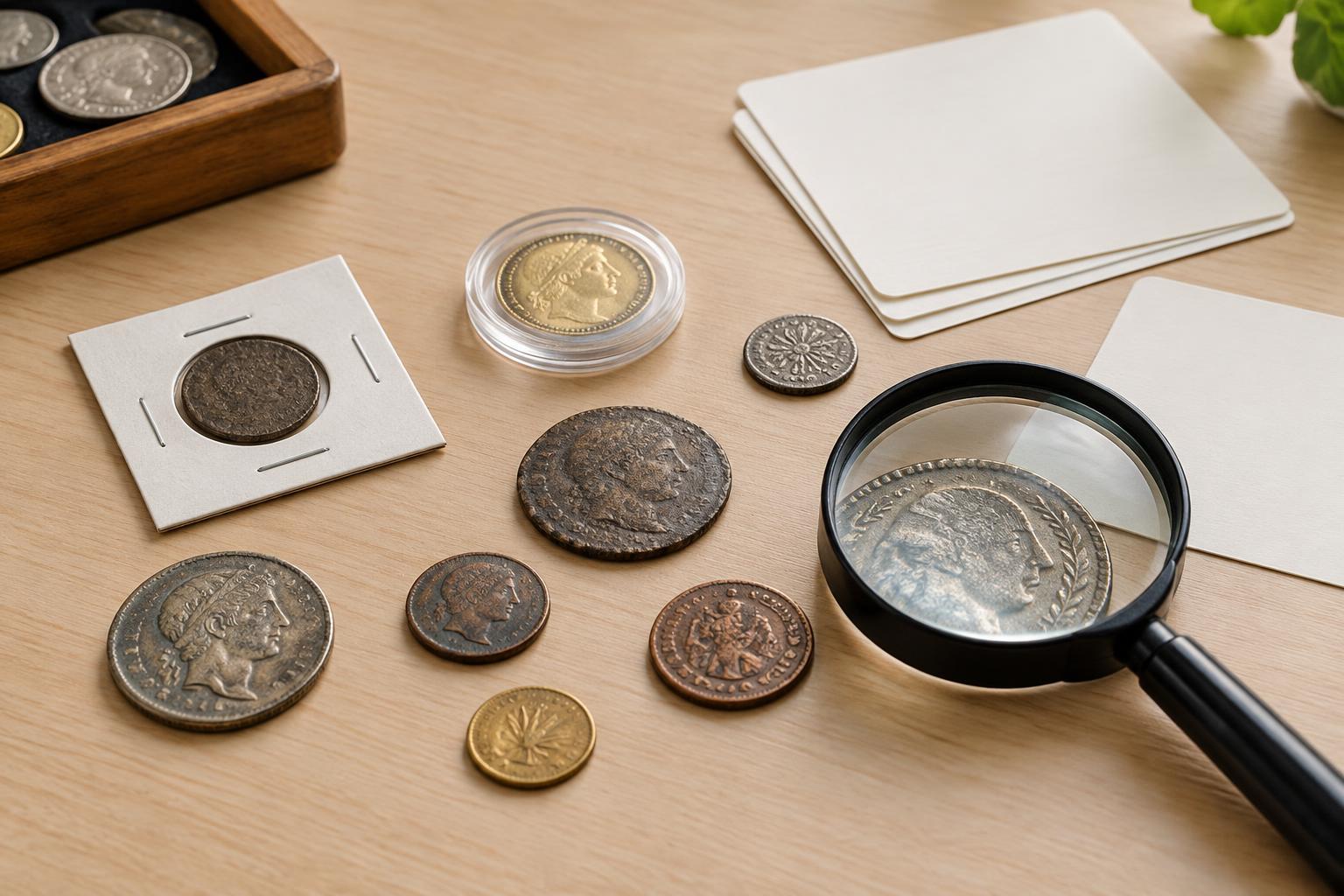
A number and a letter grade are only as useful as the grading behind them. “Raw” means the coin is not sealed in a holder bearing a grading service’s assessment. “Slabbed” generally means it is in such a holder; “TPG” refers to a third-party grading service. A holder can clarify whose opinion is being presented, but it does not replace examining the coin and checking that the listing matches the holder’s label.
Separate manufacture from condition
“Proof,” often abbreviated PR or PF in grades, describes a method of manufacture and presentation rather than a promise that a coin is flawless. A proof coin may still have marks or other condition issues. Proof grades can therefore appear with numbers, just as Mint State grades do. Likewise, a coin described as “uncirculated” was not necessarily made with a special proof finish.
“DMPL” and “PL” may appear in listings for certain coins to describe strongly mirrored or prooflike surfaces. Their usage and grading criteria can vary by series and by the organization applying the term. If a finish is important to your collection, look for clear photographs that show how the surfaces reflect light rather than relying on the abbreviation alone.
Check what comes with the coin
Some abbreviations describe the package, not the coin itself. “OGP” usually means original government packaging, such as a box or holder issued with a coin. “COA” means certificate of authenticity. A listing may say “OGP/COA” to indicate both are included, but it is sensible to confirm exactly which pieces are present and their condition. Neither a box nor a certificate, by itself, establishes the coin’s grade.
Listings may also use “FV” for face value, the denomination printed on the coin, and “mintage” for the number made. A mintage figure is different from the number surviving today or the number graded by a particular service. If a listing gives a “pop.” figure, it usually refers to a grading service’s reported population at a stated grade. Such figures need context: submissions and reporting can change, and a population count is not automatically a count of distinct surviving coins.
Translate the shorthand into questions
Before deciding whether a listing meets your collecting goals, rewrite its shorthand in plain language: Which coin is it? Which mint made it? Is the stated condition a seller’s description or a third-party grade? Is it a circulation strike or a proof? What packaging is actually included? Those questions turn a string of initials into details you can verify.
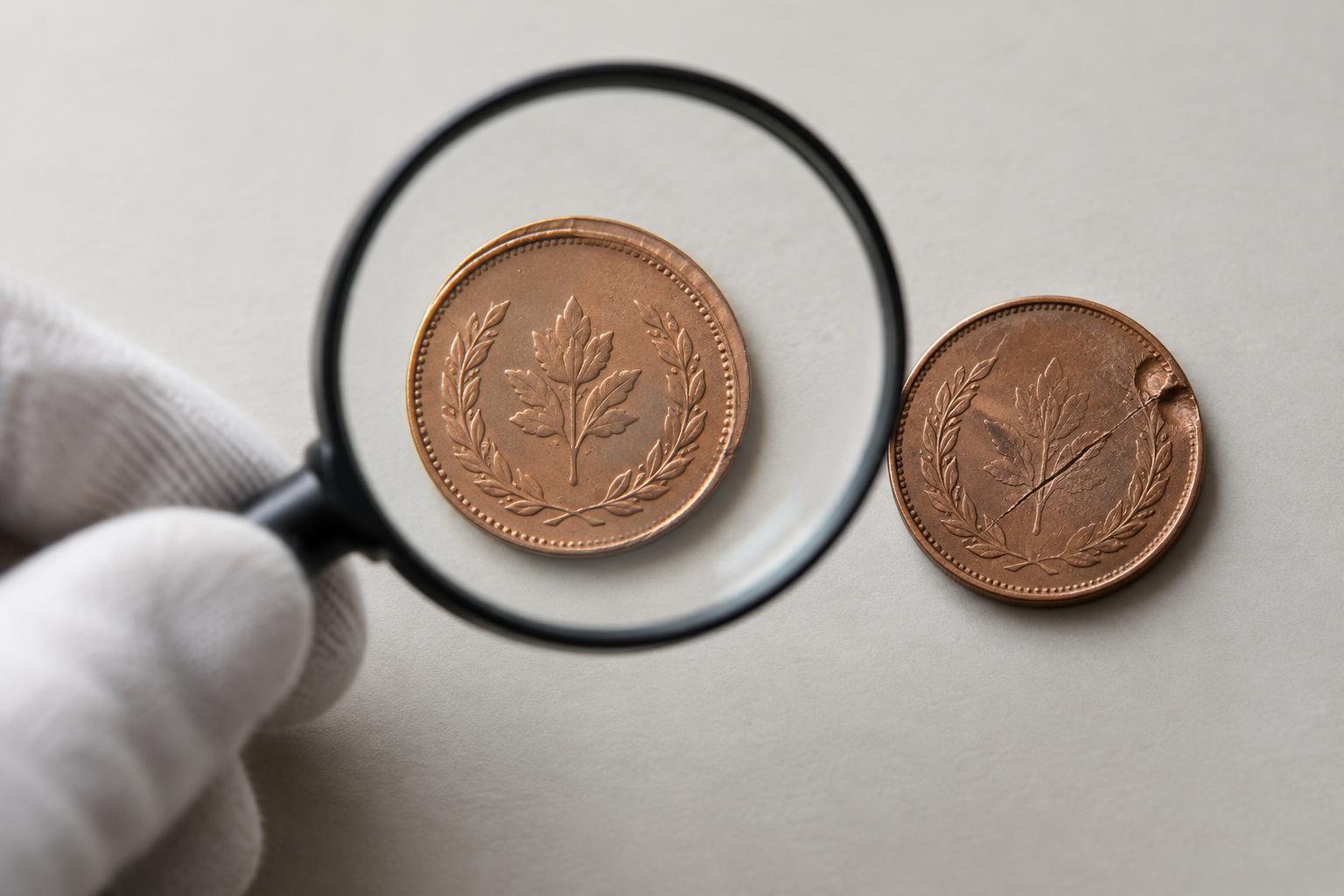
Finally, read beyond the headline. Notes such as “cleaned,” “details,” “scratched,” or “damaged” can matter more than an attractive grade abbreviation. Photos should show both sides clearly enough to assess visible wear and marks. Abbreviations are useful space-savers, but the coin, its condition, and the complete description should carry the decision.