Why a doubled-looking coin needs a closer look
A second outline beside a date, letter, or design element can be exciting to find. But “doubling” describes an appearance, not necessarily its cause. Two common explanations are a doubled die and machine doubling. They arise at different stages of production: one is built into the die that strikes the coin, while the other occurs as the coin is being struck.
Knowing the difference helps collectors describe what they see more accurately. It also prevents a common mistake: assuming that any visible doubling is a collectible die variety. Neither type should be identified from a blurry photograph or a single feature if other details are available to examine.
How a doubled die forms
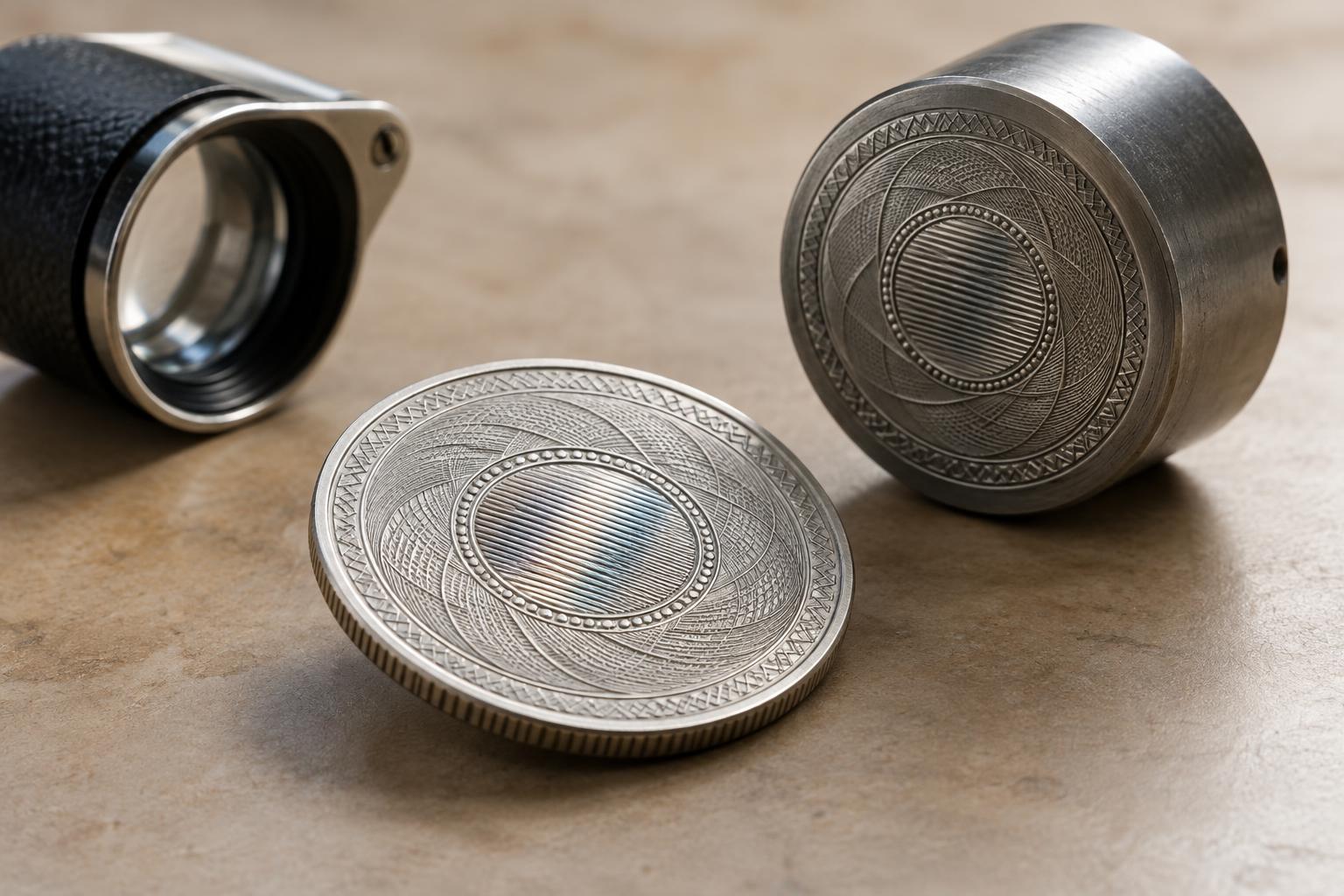
A die carries the design that will be pressed into coins. A doubled die develops while that design is being transferred to a working die. If parts of the design are recorded in slightly different positions during die preparation, the finished die can carry overlapping versions of those parts. Every coin struck by that die may then show the same doubled features, though wear, strike quality, or later die damage can affect how clearly they appear.
The exact way a doubled die develops depends on the die-making method. Older methods could involve repeated impressions from a hub; differences in alignment between impressions could leave doubled design details. Newer methods do not make doubled dies impossible, but their formation should not be reduced to the same simple repeated-hubbing story in every case.
Look for distinct, rounded portions of raised design, such as separate curves on letters or a second contour within a numeral. Some doubled dies show clear separation; others are subtle. The effect may be confined to certain parts of the design rather than appearing across the entire coin. A doubled die is a feature of the die, not evidence that an individual coin was struck twice.
How machine doubling happens
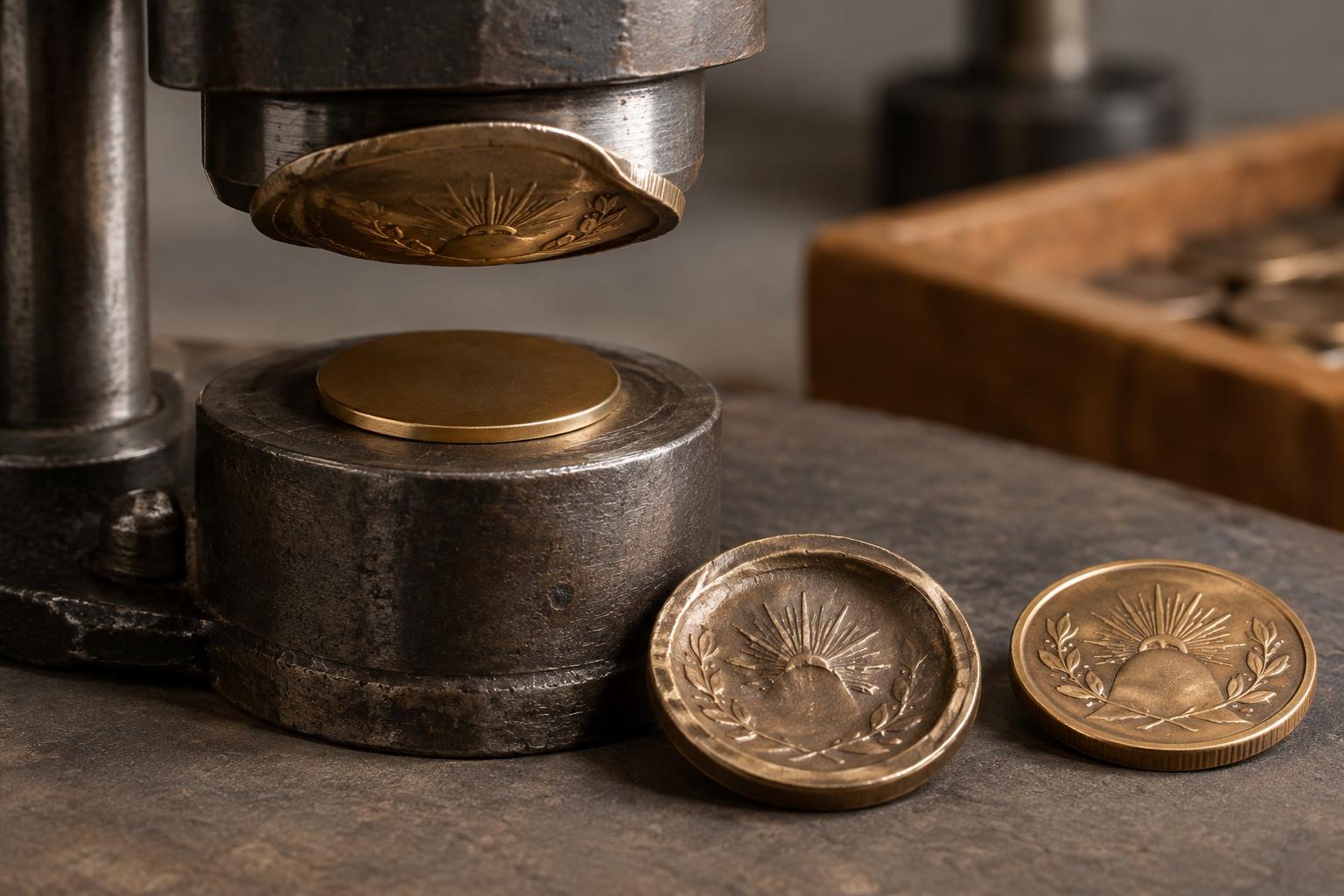
Machine doubling, often called mechanical or strike doubling, occurs during the striking process. As the dies and coin separate, movement between them can disturb the edge of a newly formed design element. The result may look like a second image beside a letter, date, or device, even though the die itself does not carry a doubled design.
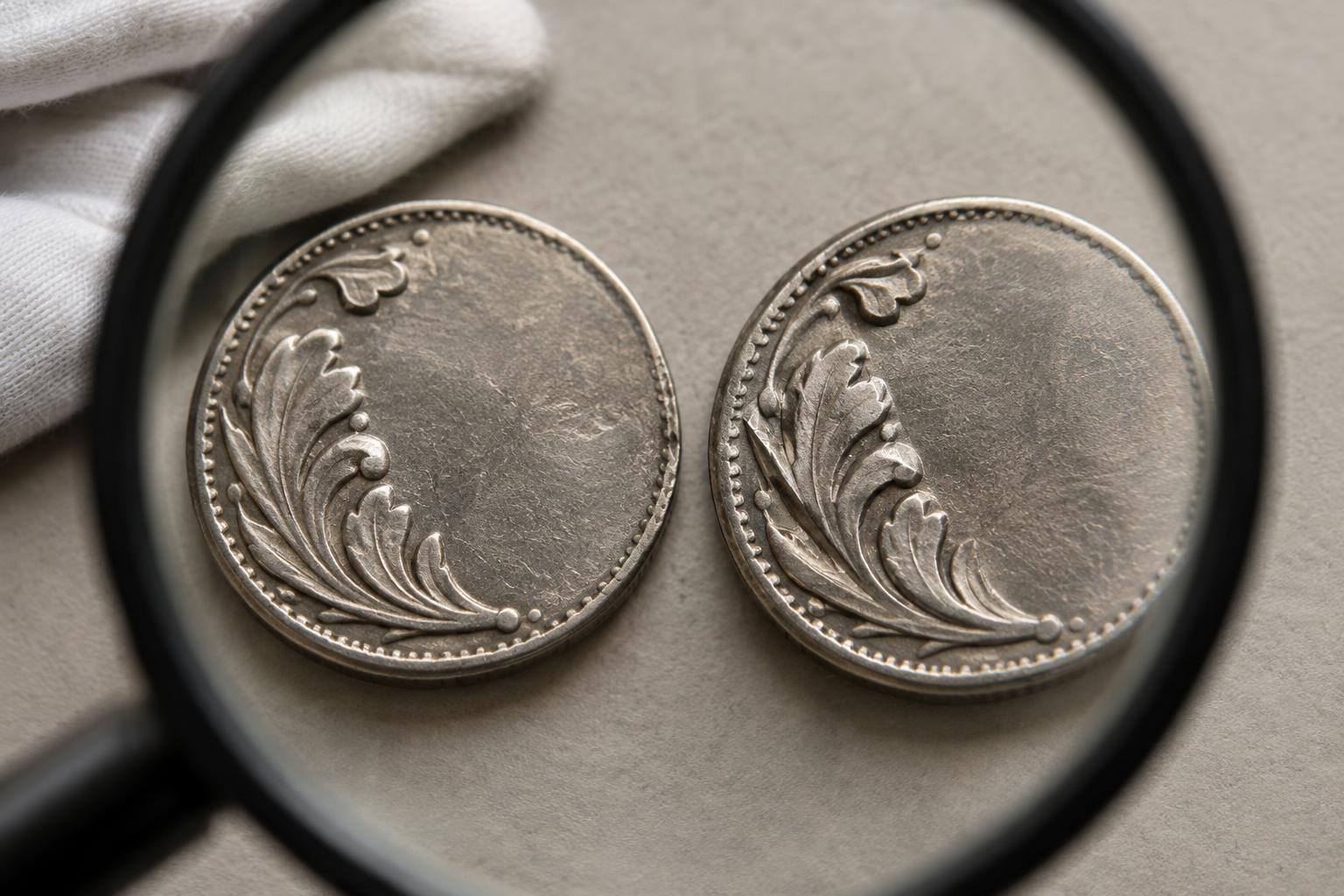
A common appearance is a flat, shelf-like extension beside the normal raised detail. It may seem to cut into the side of a letter or reduce its apparent width. By contrast, a doubled die more often preserves the rounded shape of distinct design contours. This is a useful comparison, not an absolute test: lighting, wear, and the shape of the affected element can make either effect difficult to judge.
Because machine doubling happens at the strike rather than being part of the die’s design, its appearance can vary from coin to coin. A dramatic-looking shelf does not, by itself, establish a doubled-die variety.
A practical way to examine the details
Begin with steady light and modest magnification. Tilt the coin so light crosses the raised features from different directions. Examine several letters or numerals, not just the most obvious spot. Ask whether the apparent second image has its own rounded contour or looks like a lower, flattened step beside the main design.
Then check whether the pattern makes sense across nearby features. On a suspected doubled die, corresponding parts of the design may show a consistent relationship. Machine doubling may instead follow the exposed edges of raised elements as a flattened displacement. Do not require every letter to look alike; the design geometry and visibility of the effect can differ from place to place.
If you are trying to identify a named doubled-die variety, compare the coin with clear images and descriptions of that specific variety. Check the location and shape of the doubling, along with any documented die markers where applicable. A die marker can support an identification, but a scratch, spot, or isolated mark is not proof on its own. If the evidence is inconclusive, “apparent doubling” is a more careful description than a firm attribution.
Keep the coin’s condition intact
Avoid cleaning or rubbing a coin to make the doubling easier to see. Altered surfaces can obscure fine details and make examination harder. Handle the coin by its edges, use a clean viewing area, and store it in a holder appropriate for coins if you want to revisit it later.
Finally, separate identification from value. A confirmed doubled die is a die variety, but its collector interest depends on the particular variety and the coin’s condition, among other factors. Machine doubling can still be an interesting example of the minting process. For a beginner, the most useful find is often a coin that teaches you to distinguish a raised, die-made design from an effect created during the strike.