Start with curiosity, not a price tag
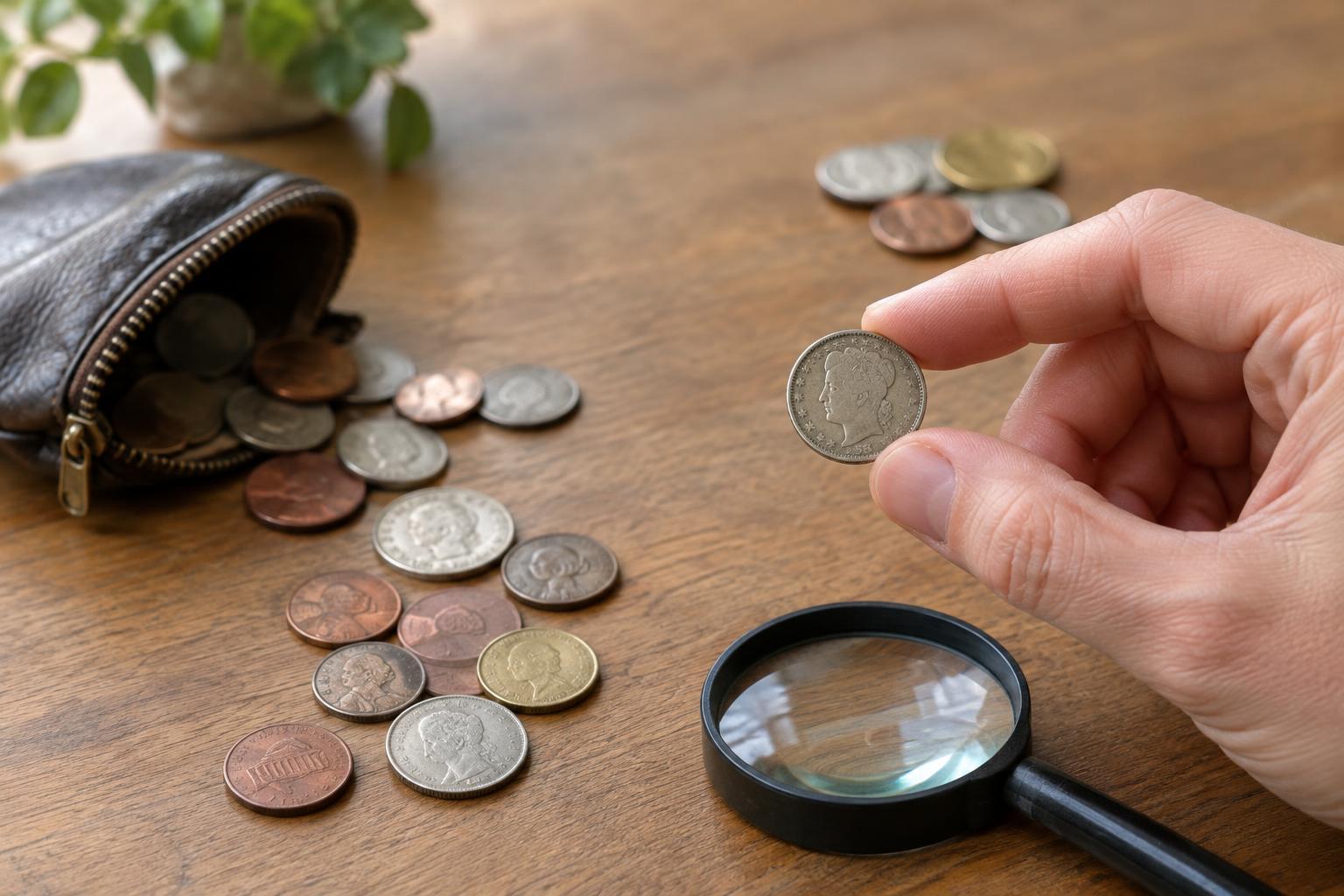
The coins in a pocket, purse, or change jar offer a simple way to begin collecting. Most will be ordinary spending money, but that does not make the search pointless. A different design, an unfamiliar date, or a coin from another country can give you something to identify and learn about. You can build a collection around what interests you without buying coins or expecting to find a valuable rarity.
Before you search, choose a manageable approach. You might examine the change you receive during a week, sort an existing jar, or set aside one denomination to study. Check coins under a bright light and use a magnifier if you have one. Work over a clear surface so small coins do not get lost, and return coins you decide not to keep to your spending change.
Know what to look for
Begin with the date, denomination, and main design on each side. Look for coins that differ from others of the same denomination: a new reverse design, an older portrait, unusual lettering, or a mint mark. A mint mark, when present, identifies the facility that made the coin. Its position and meaning depend on the coin and country, so use a reliable identification guide rather than guessing from a single letter.
Condition matters, but it is easy to mistake wear or damage for something unusual. A coin with sharp details and little wear may be appealing to collect, while scratches, stains, and dents usually result from circulation. If a coin looks oddly shaped or has a design feature that seems misplaced, set it aside for closer comparison. Minting errors exist, but ordinary damage can resemble them. Compare your find with a normal example before deciding what you have.
Give your finds a collecting goal
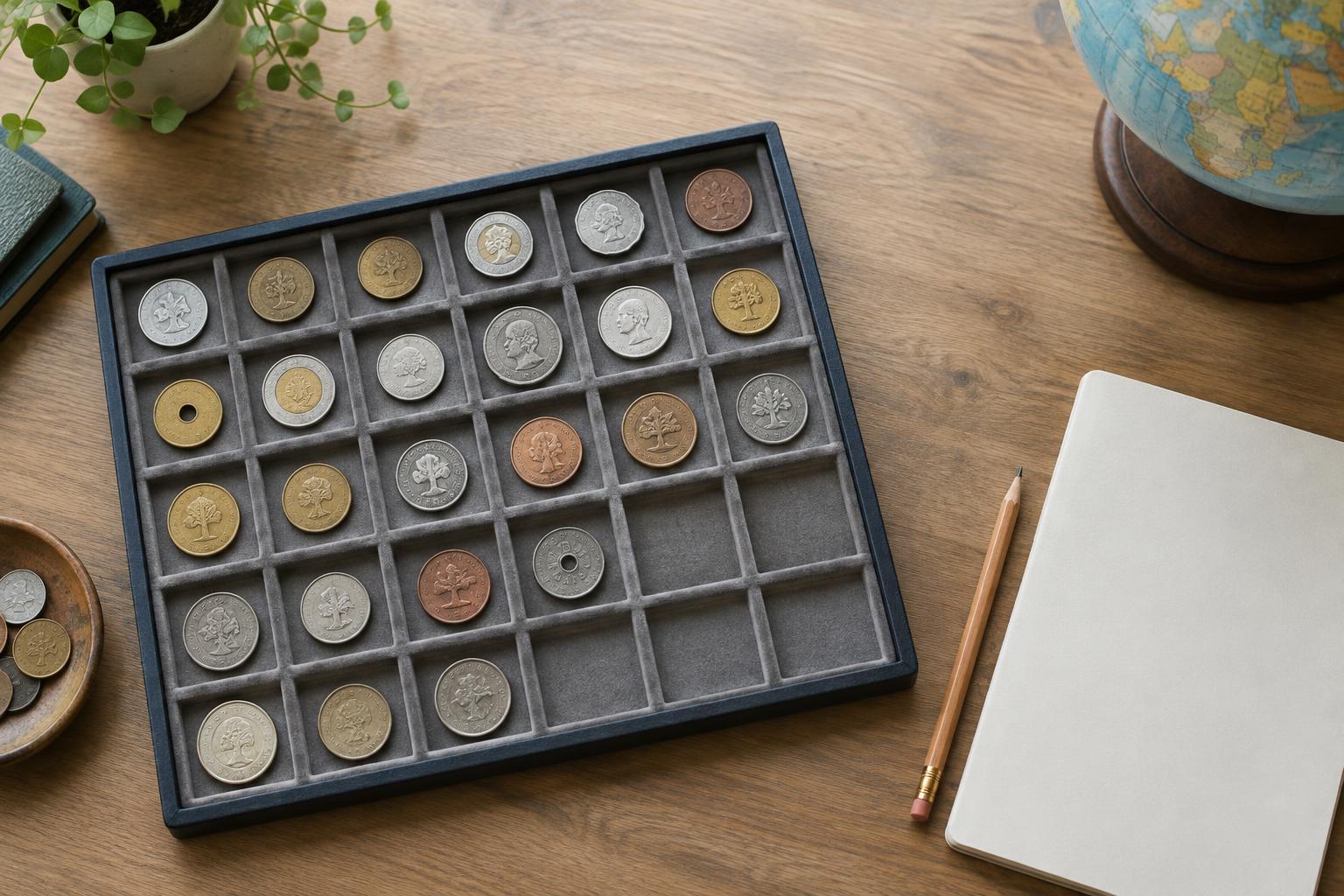
A goal turns a pile of interesting coins into a collection. One beginner-friendly project is a date set: keep one coin from each year for a chosen denomination. You could instead collect different designs, mint marks, or coins from countries you have encountered. The goal need not be complete to be worthwhile; it simply gives you a reason to notice details and decide which duplicates to keep.
Start small enough that you can organize your finds. A single denomination is easier to compare than an unsorted mix, and it helps you learn what a normal example looks like. As your collection grows, you may discover that certain dates or designs are hard to find in your own change. That observation can guide your search, but it does not by itself establish that a coin is rare or valuable.
Check and record what you find
When a coin catches your eye, write down its denomination, date, mint mark if visible, and the feature that interested you. If you are uncertain about an identification, note the question rather than filling in an answer from memory. A photograph of both sides can help you compare details later. Coin catalogs, museum resources, and established collecting guides can help explain designs and terminology; match the exact coin and variety before drawing conclusions.
Keep value separate from interest. Asking prices, estimated values, and actual sale prices are different things, and a coin’s condition can make a substantial difference. A familiar-looking coin is not necessarily common in every version, just as an unusual-looking coin is not necessarily scarce. If you want to learn about value, first identify the coin accurately, then compare examples in similar condition. It is fine to keep a coin simply because you enjoy its design or the story behind it.
Handle and store coins with care
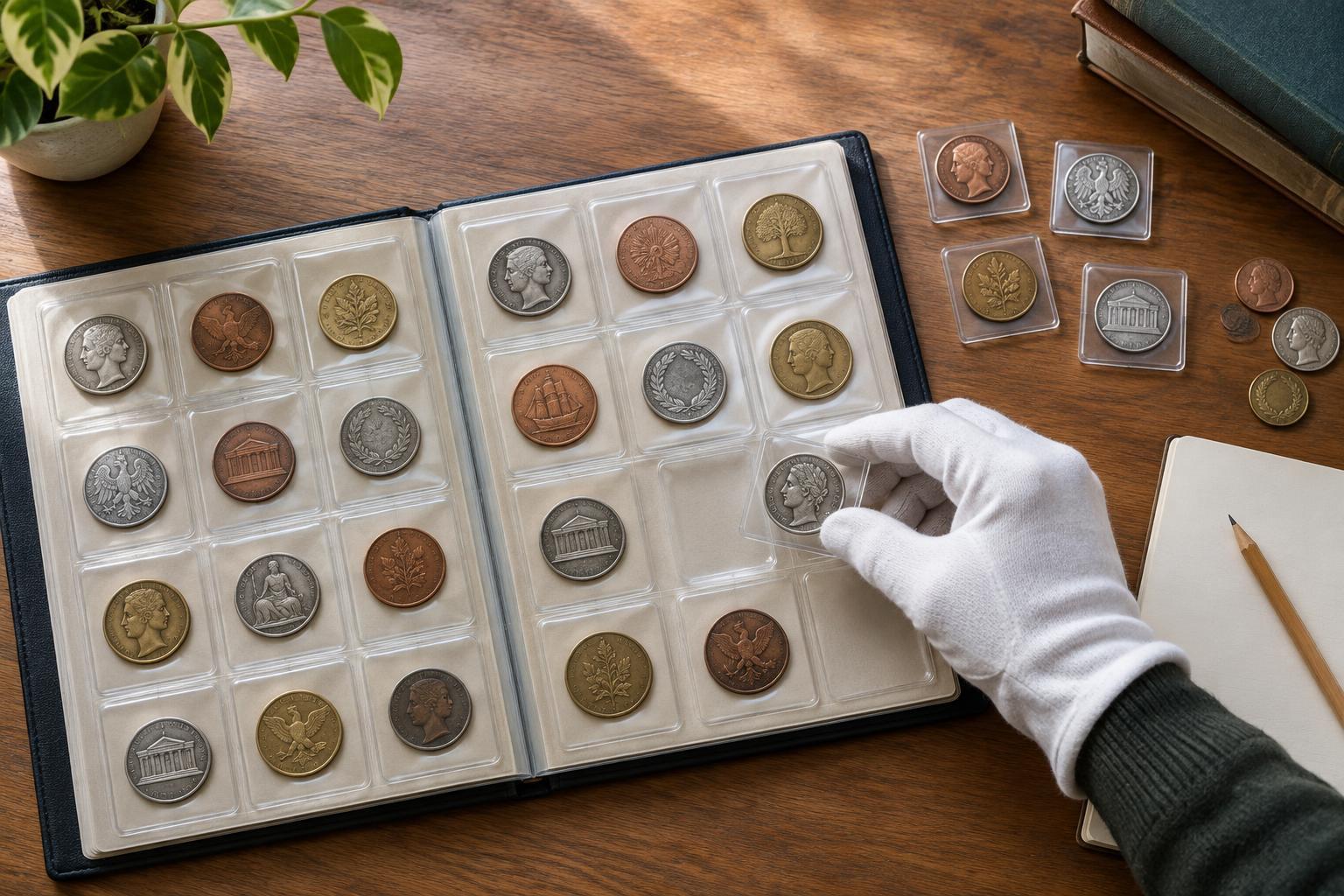
Hold a coin by its edges when practical, with clean, dry hands. Avoid rubbing its surfaces, and do not polish or clean a find to make it look newer. Cleaning can alter the surface and remove details that help collectors judge a coin. If a coin is dirty, leave it as it is while you identify it and learn more about appropriate care.
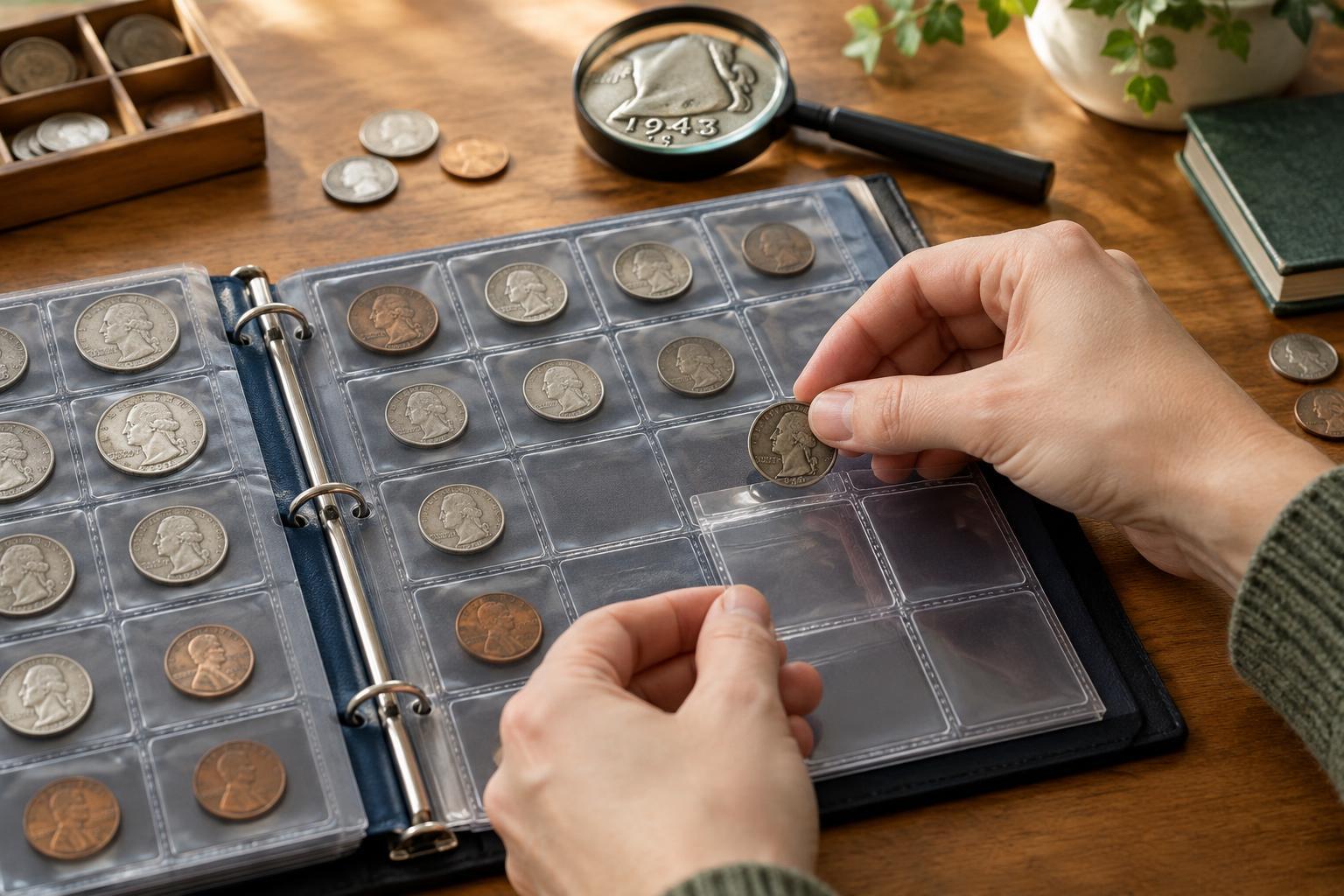
Store keepers apart from loose change so they are not repeatedly knocked against other coins. Labeled envelopes or coin holders made for long-term storage can help you track your finds; avoid materials that may react with metal over time. Include your identification notes with each coin or in a separate list. The habit matters more than an elaborate setup: search carefully, keep what fits your goal, and let ordinary change teach you how to look.