Start with a clear boundary
A date-and-mintmark set aims to include one coin for each date and mint combination within a defined group. Two coins with the same year can fill different spaces if they were made at different mints. That simple idea gives a collection structure, but the first decision is where the set begins and ends.
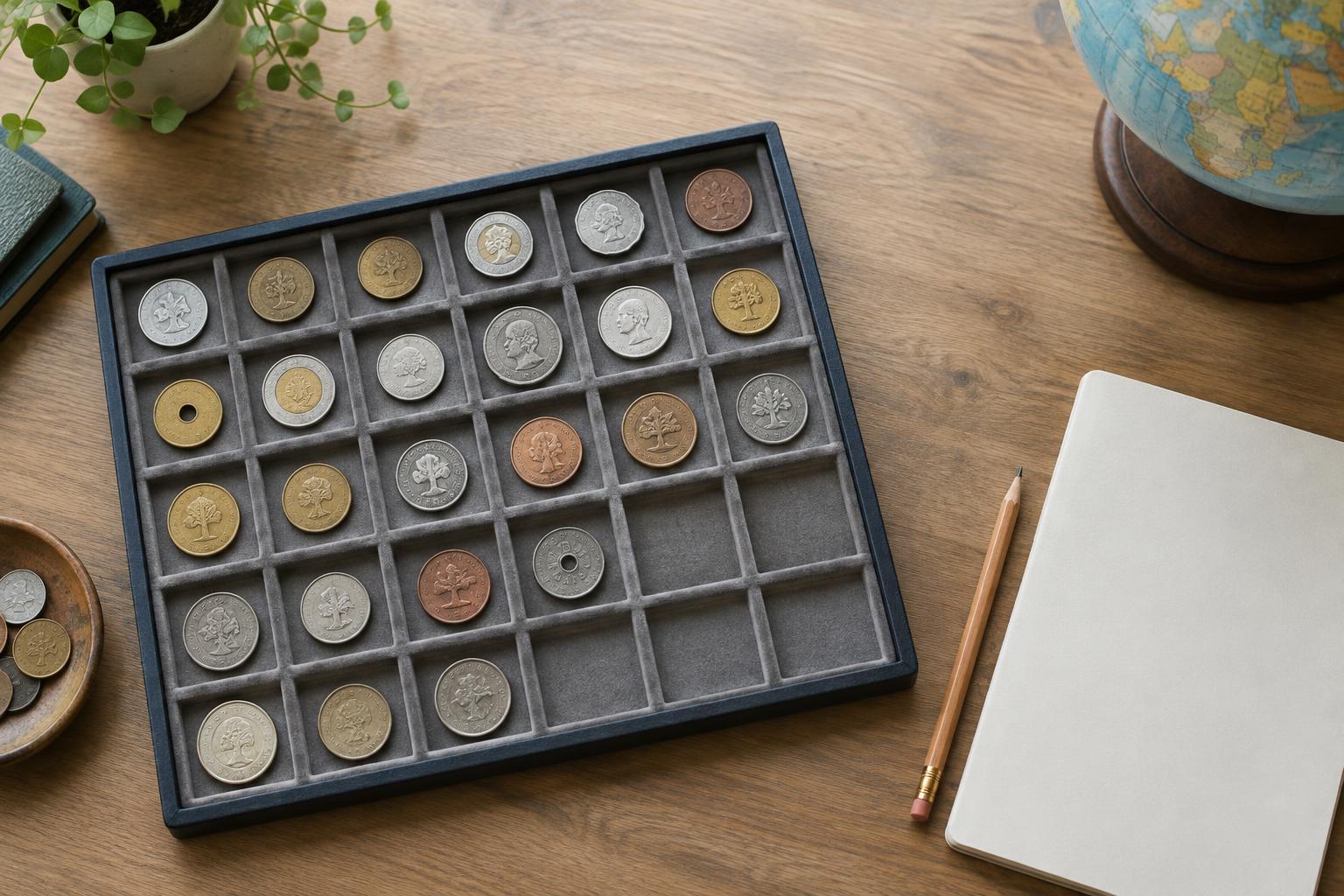
Choose one coin series, a country and denomination, and a range of years. A short run may be more satisfying for a first project than an entire long-lived series. Decide whether you want only coins made for circulation or whether proofs and other collector issues belong in your set. These choices affect the number of spaces you need and make it easier to recognize a finished project.
Write your scope in a sentence before acquiring coins. For example: “One regular-issue example of every date and mint in this series for these years.” If you later expand the collection, you can revise that rule without treating the original plan as a mistake.
Make a checklist that reflects the coins
A date-and-mintmark checklist is more useful than a row of years. Give each confirmed combination its own line, with room to note the coin’s condition, where you found it, and whether you want to replace it someday. A simple spreadsheet, notebook, or labeled album can work; the best system is one you will keep using.
Check the mintmark conventions for the specific series before labeling spaces. A coin with no mintmark is not automatically missing a mark through wear or error; for some issues, no mark is the normal form. Likewise, a letter’s meaning and location can vary by series and period. Some years may not have an issue from every mint. Leave out combinations that were not issued rather than assuming every year needs the same set of letters.
Keep varieties separate from your main checklist unless they are part of your goal. A design change, altered lettering, or other recognized variety can be interesting, but adding every variation midway through a project may make the finish line hard to see. You can maintain a second list for discoveries you might explore later.
Choose a standard for the coins you collect
A complete set does not have to be a set of flawless coins. Before filling spaces, decide what level of wear you are comfortable with. Some collectors enjoy finding readable, circulated examples; others prefer coins with stronger detail. Either approach can produce a coherent collection if you apply the standard consistently.
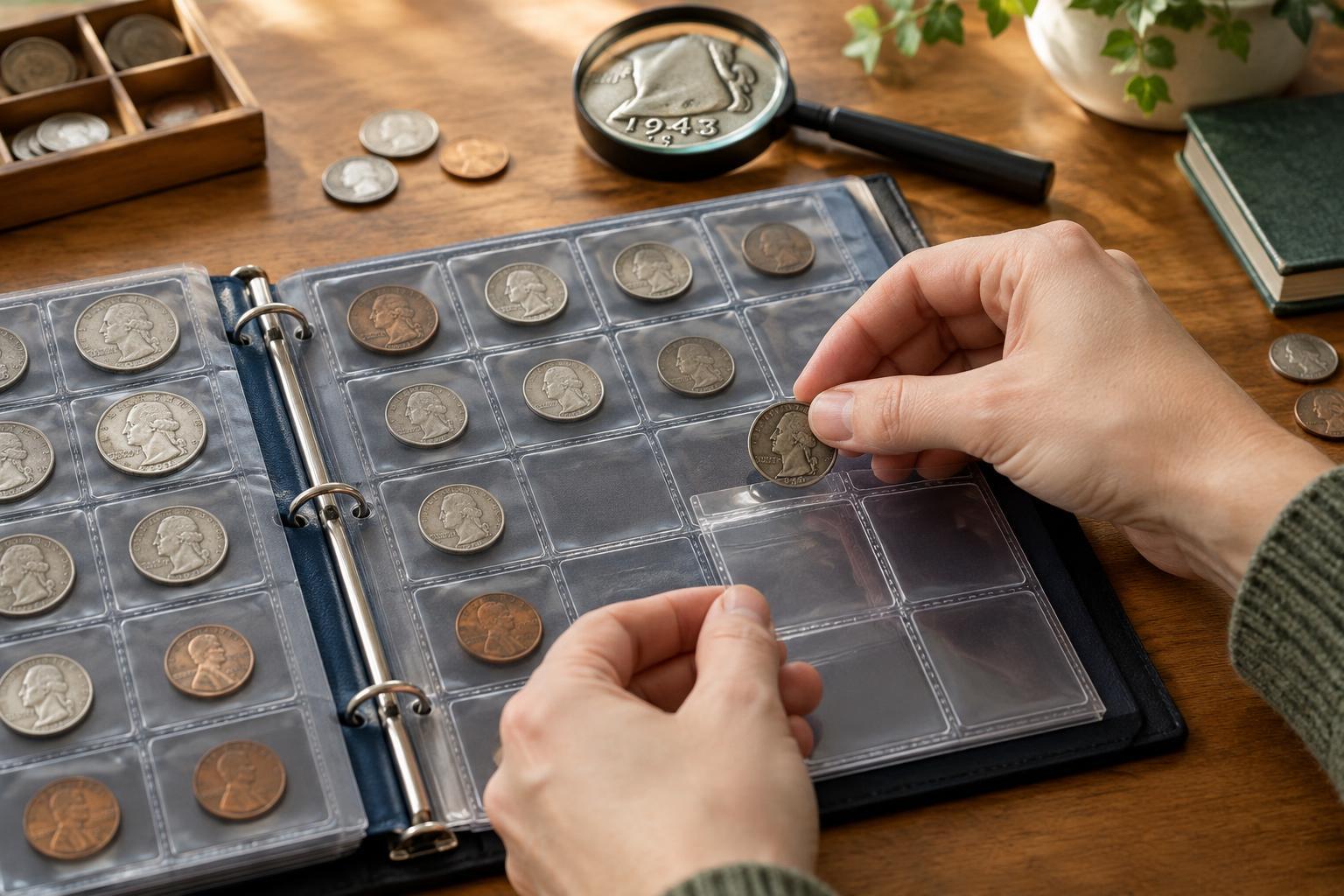
Condition can be difficult to judge from a brief description or a flattering photograph. Look for enough detail to identify the date and mintmark confidently, and distinguish wear from scratches, corrosion, or other damage. If a coin is uncertain, mark the checklist entry as unconfirmed until you can examine it more closely. This matters especially when a faint digit or mintmark could change which space the coin fills.
It is reasonable to leave a difficult space empty while you learn more. Prices and availability can vary with the issue, condition, and circumstances of a sale. Setting a personal spending limit for each purchase and allowing for later upgrades can keep the project focused without making it a race to fill every space.
Fill spaces methodically
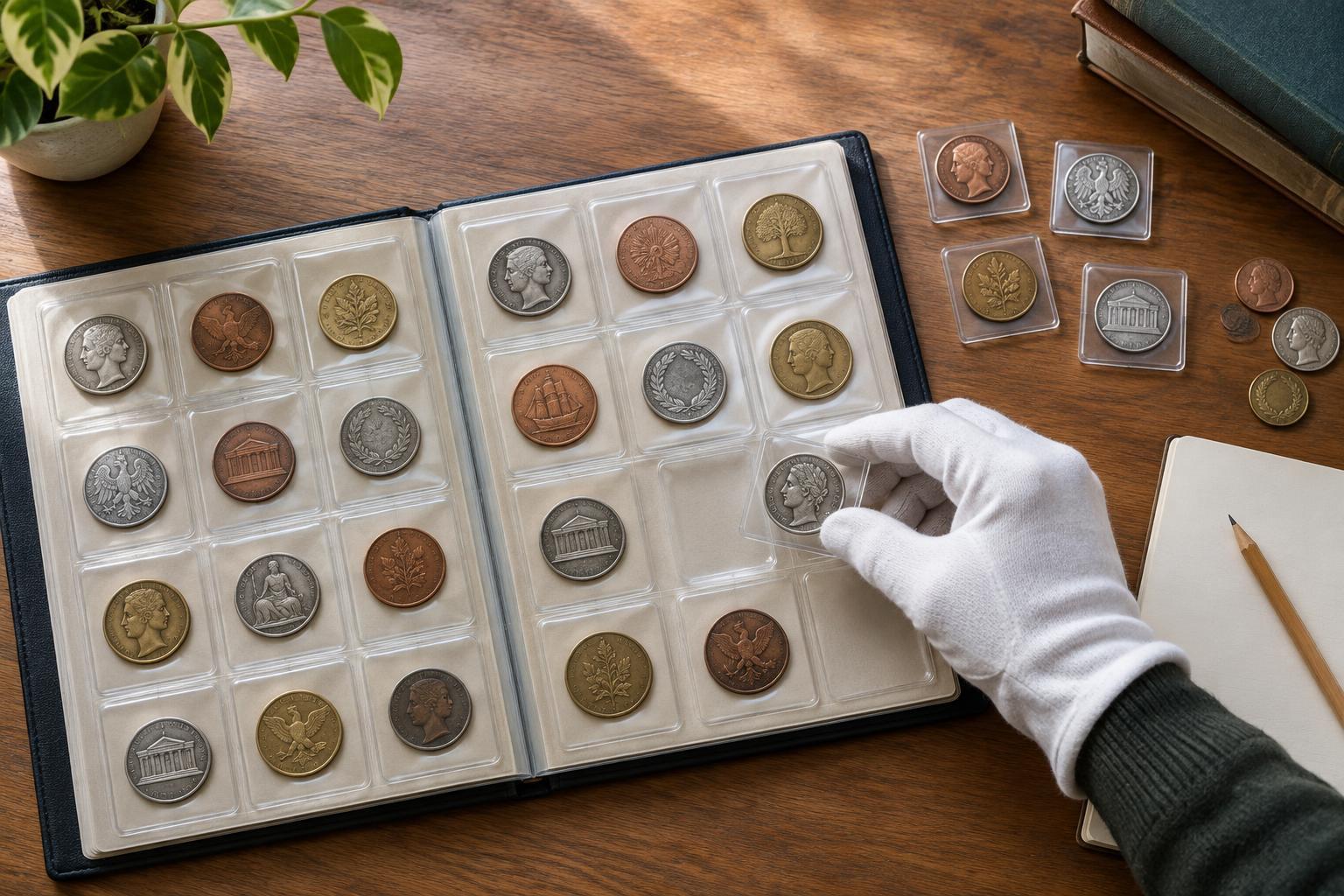
Begin by sorting coins you already have against your checklist. Handle them by the edges, work over a clear surface, and set aside possible matches for closer inspection. For new additions, compare each coin with the exact checklist entry before recording it. Check the denomination, design, full date, and mintmark rather than relying on a label alone.
When considering a purchase or trade, look at the surfaces as well as the listed identity. Ask for clear views of both sides if you cannot examine the coin in person. Keep the information supplied with the coin, but record your own observations too. Avoid cleaning a coin to make its details easier to see: cleaning can change its surfaces and make later assessment harder.
Review the checklist occasionally for duplicates, uncertain identifications, and gaps. Duplicates can be useful for comparing condition, but they do not need to stay in the main set. A short note explaining why you chose one example over another will be more helpful later than a simple check mark.
Protect the set and enjoy its progress
Store coins in holders or albums intended for coins, with enough labeling to connect each piece to your checklist. Keep them in a stable, dry environment and avoid materials that may leave residue or trap moisture. Separate an uncertain or damaged coin from the main display if you need more time to assess it.
A date-and-mintmark set is also a way to notice patterns. As spaces fill, compare designs, mintmark placement, and changes in production across the years you chose. Record questions that arise instead of feeling obliged to answer them immediately. Even an incomplete set can tell a clear story when its boundaries and entries are well documented.