A new way to use precious metal
Before coins, people could exchange precious metal by weighing it and judging its quality. A coin added something important: a piece of metal made to an expected weight and marked so that others could recognize it. The electrum pieces associated with Lydia, a kingdom in western Anatolia, are among the earliest known examples of this approach. They are generally placed around the late seventh and early sixth centuries BCE.
Calling them “Lydian coins” is convenient, but it can hide a question. Early electrum coinage also appeared in neighboring parts of western Anatolia, and specialists do not agree that every early piece was made by the Lydian state. For a beginning collector, that uncertainty is part of the story. A design or findspot may suggest where a coin belongs without settling who authorized it or exactly where it was struck.
Why electrum mattered
Electrum is an alloy of gold and silver. It occurs naturally, although the mixture in early coins was not necessarily the same from piece to piece; some electrum may also have been deliberately adjusted. Its appearance can range from pale yellow to a richer gold tone. To someone accepting a payment, that variation posed a problem: two pieces of equal weight might not contain equal amounts of gold.
Stamped electrum may have helped people use the metal without testing each piece in every transaction. A familiar mark could signal that a piece belonged to a recognized series, while its weight connected it to other pieces in that series. We should not assume every user trusted every stamp, or that a mark guaranteed a fixed metal content in the modern sense. The coins show an emerging convention, not a complete solution to the difficulty of measuring value.
Reading a small, uneven coin
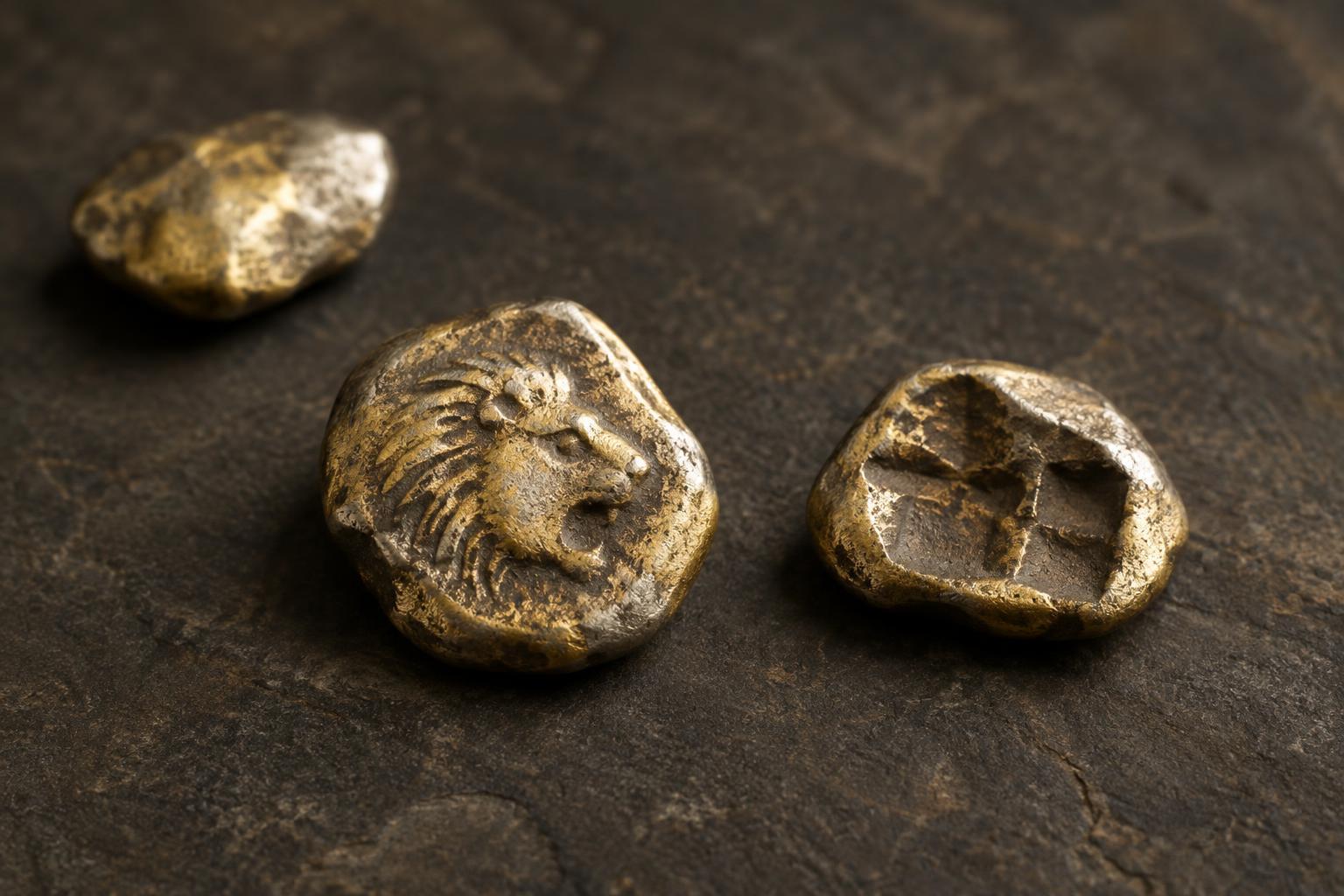
Many early electrum coins are unlike the round, flat coins in a pocket today. Their metal blanks, called flans, can look lumpy or oval, with designs that do not fill a neat circle. A common method of manufacture was to place a blank between a marked die and a punch, then strike it. The force impressed a design on one side and left a recessed punch mark on the other. Those depressions are a feature of manufacture, not damage that occurred later.
Some early pieces carry simple patterns; others show animals or parts of animals. A lion is especially associated with Lydian coinage, though a lion image alone is not proof of a precise issuer. Look at the whole object: the main image, any punch marks, the flan shape and the way the design sits on the metal. Details can vary because each blank was prepared and struck individually. Wear and imperfect strikes can obscure features, so an unclear image does not always mean an unfamiliar type.
Standards made small pieces useful
Early electrum coinage included pieces of different sizes made according to weight standards. Smaller pieces could represent fractions of a larger unit. This suggests a more flexible system than simply cutting precious metal into convenient lumps: a person could recognize a piece as one of a series and relate it to other denominations. Different authorities and regions, however, could use different standards, so the apparent size of a coin is not enough to identify its denomination.
Later Lydian coinage is traditionally associated with Croesus and with separate gold and silver issues rather than the earlier reliance on electrum. That change makes a useful comparison. Where electrum combined two precious metals in proportions that could vary, separate gold and silver coins made the metal in each issue easier to identify. It was an important development in the history of coinage, but it did not make earlier coins obsolete everywhere at once.
What an early coin can—and cannot—tell us
An early electrum coin is evidence of decisions about metal, weight, marking and manufacture. It also raises questions that its design cannot answer by itself. Who received the first issues? Were they intended for particular payments, wider exchange or several uses? A surviving coin cannot tell us how often it changed hands. Historians and numismatists interpret such objects alongside other coins and archaeological context, and some conclusions remain open.
If you encounter an example in a collection or catalogue, begin with observation rather than a dramatic “first coin” label. Note the stated attribution, weight, design and punch arrangement, and distinguish visible features from an interpretation of their meaning. The lesson of Lydian electrum is not that coinage appeared fully formed in one moment. It is that a modest stamped piece of metal can reveal an early effort to make exchange more recognizable and repeatable.