A coin begins before the press
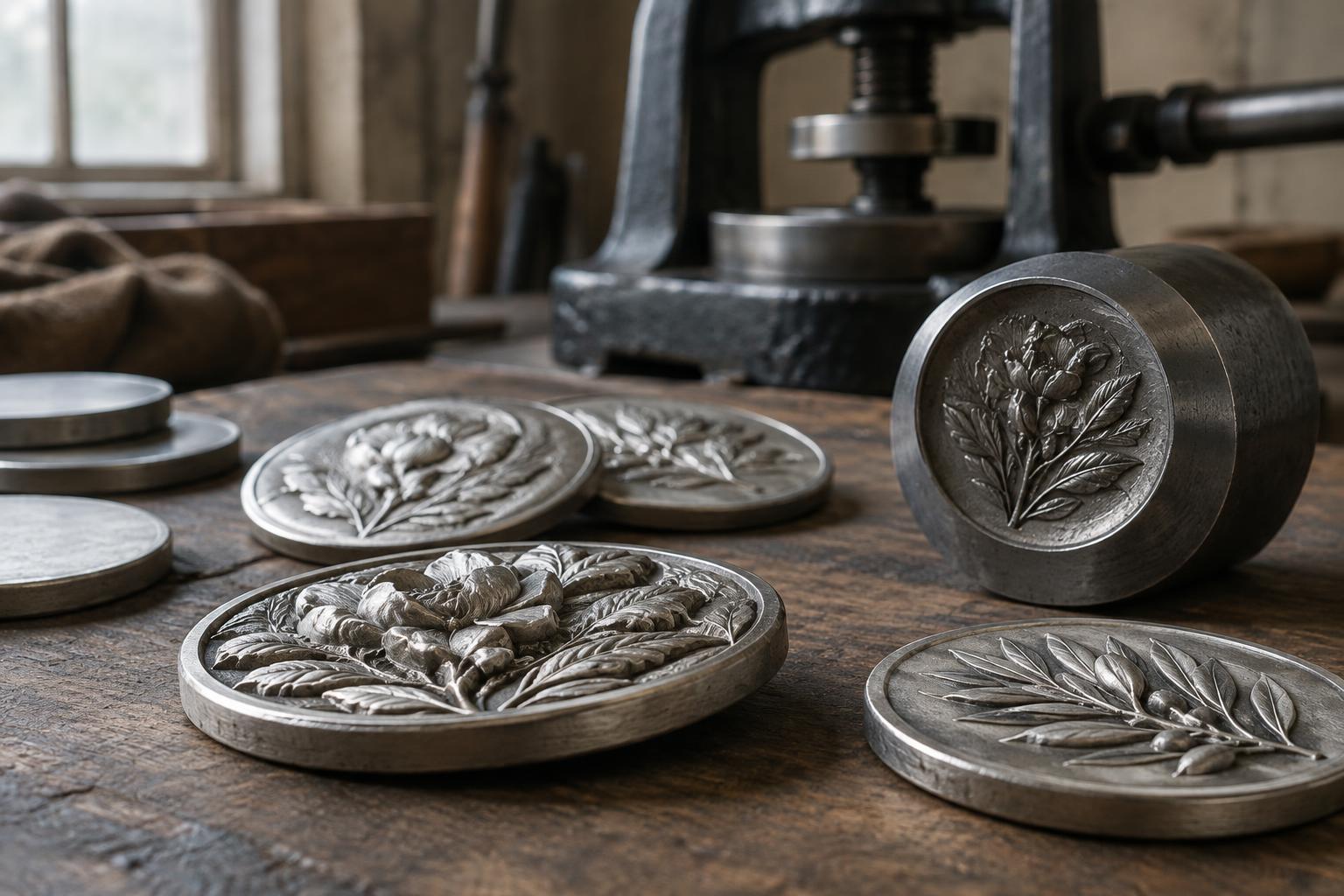
The portraits, lettering and other details on a coin are made when dies strike a prepared piece of metal. That piece is called a planchet. Getting it ready matters: its size, thickness, surface and edge all affect how the finished coin looks.
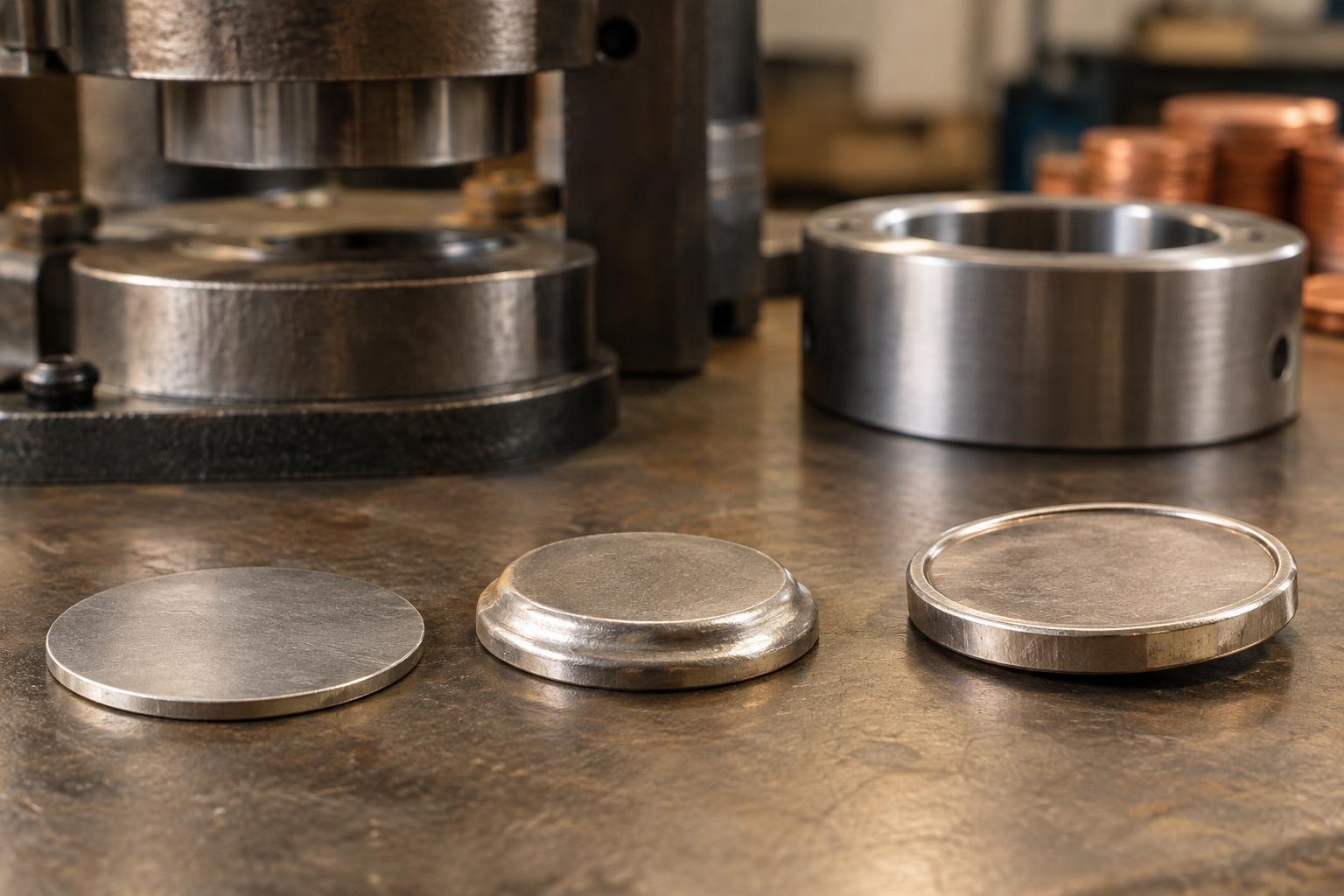
You may see both “blank” and “planchet” used for the metal disc before it is struck. A useful distinction is that a blank is the disc just after cutting, while a planchet has gone through further preparation and is ready for the press. Terminology can vary, so the stage of production is often more informative than the label alone.
Making a strip of the right metal and thickness
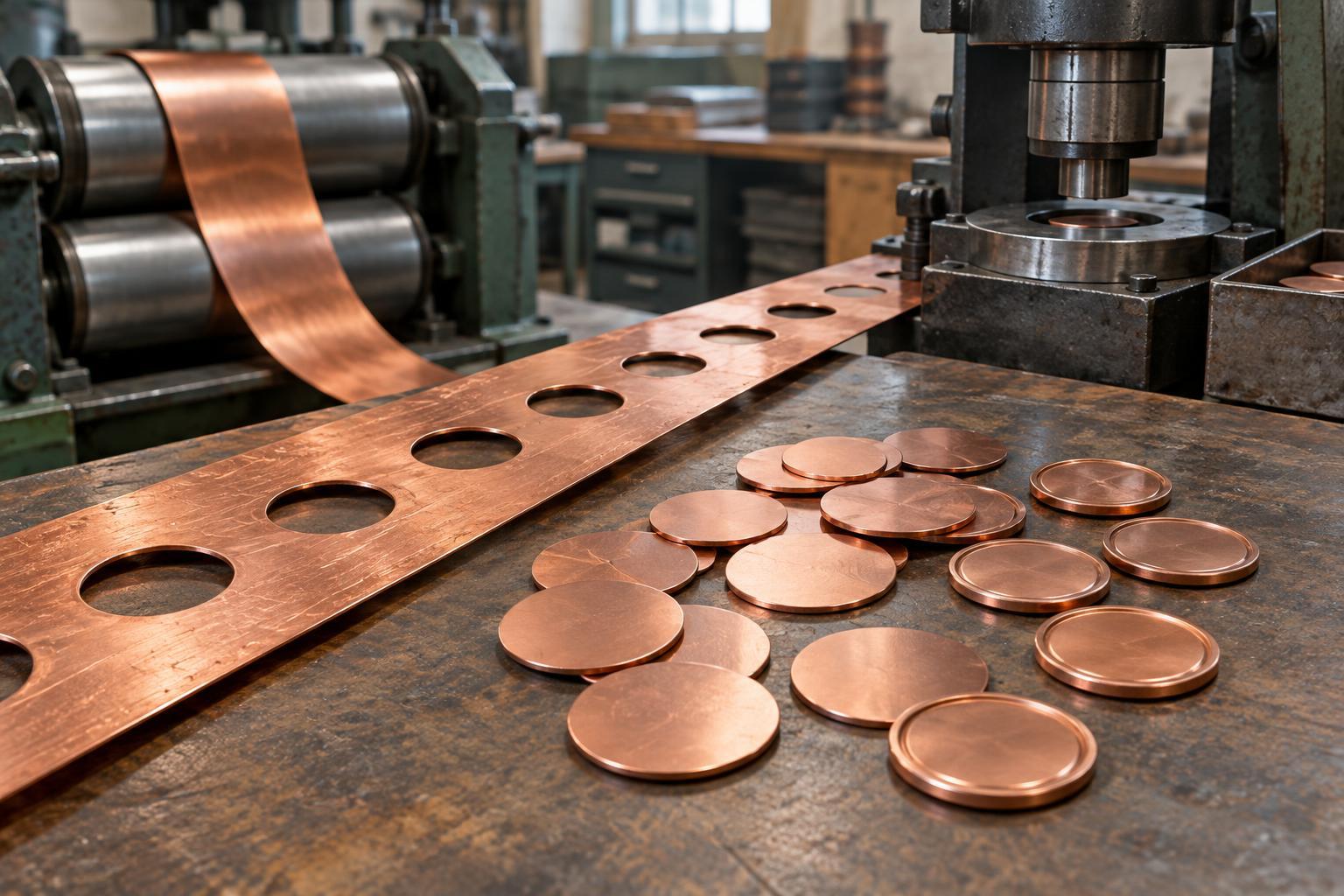
Production starts with metal chosen for the coin’s specifications. Depending on the coin, this may be a single alloy or a layered material with a core and outer cladding. The metal is formed into a long strip and rolled to a controlled thickness. For a clad coin, the layers must be securely bonded so they remain together through cutting and striking.
Strip thickness helps determine the weight of each disc punched from it. The width must also suit the equipment and the intended coin size. Throughout preparation, checks can identify material that falls outside the required specifications. A smooth, consistent strip gives later steps a better starting point, although it does not guarantee a flawless finished coin.
Punching discs from the strip
A blanking press punches round discs from the strip, much like a cutter taking circles from a sheet. Each punch leaves an opening; the metal between the openings forms a web of leftover strip. That scrap can be collected for recycling rather than becoming part of a coin.
The punch and strip together establish a blank’s diameter and much of its starting mass. If the punch catches the edge of the strip or overlaps an earlier hole, it may produce an incomplete disc. Collectors call a resulting struck coin a clipped planchet error. The curved or straight missing area reflects where the metal was absent before striking, not a piece that simply broke off a finished coin. Ordinary damage can resemble an error, so a missing section alone is not proof of how it formed.
Softening and cleaning the blanks
Cutting and earlier metalworking can leave blanks too hard for an effective strike. To make them more workable, they are commonly annealed: heated under controlled conditions and then cooled. The goal is a disc that will take the design when pressed between the dies without unnecessary stress on the metal or equipment.
Heating and handling can leave surface residues, so blanks are cleaned and dried before later processing. Cleaning at the mint is a manufacturing step performed on unstruck metal, not a reason to clean a collectible coin. Rubbing or chemical treatment after a coin has circulated can change its surface and may reduce its appeal to collectors.
Forming a rim and checking the planchet
Many blanks pass through an upsetting mill, which squeezes the edge inward and upward to form a raised rim. The rim helps guide the planchet into the coining press and provides metal near the border that can flow into the design during striking. It is not the same as edge lettering or reeding: those features require additional tooling, and the method used depends on the coin.
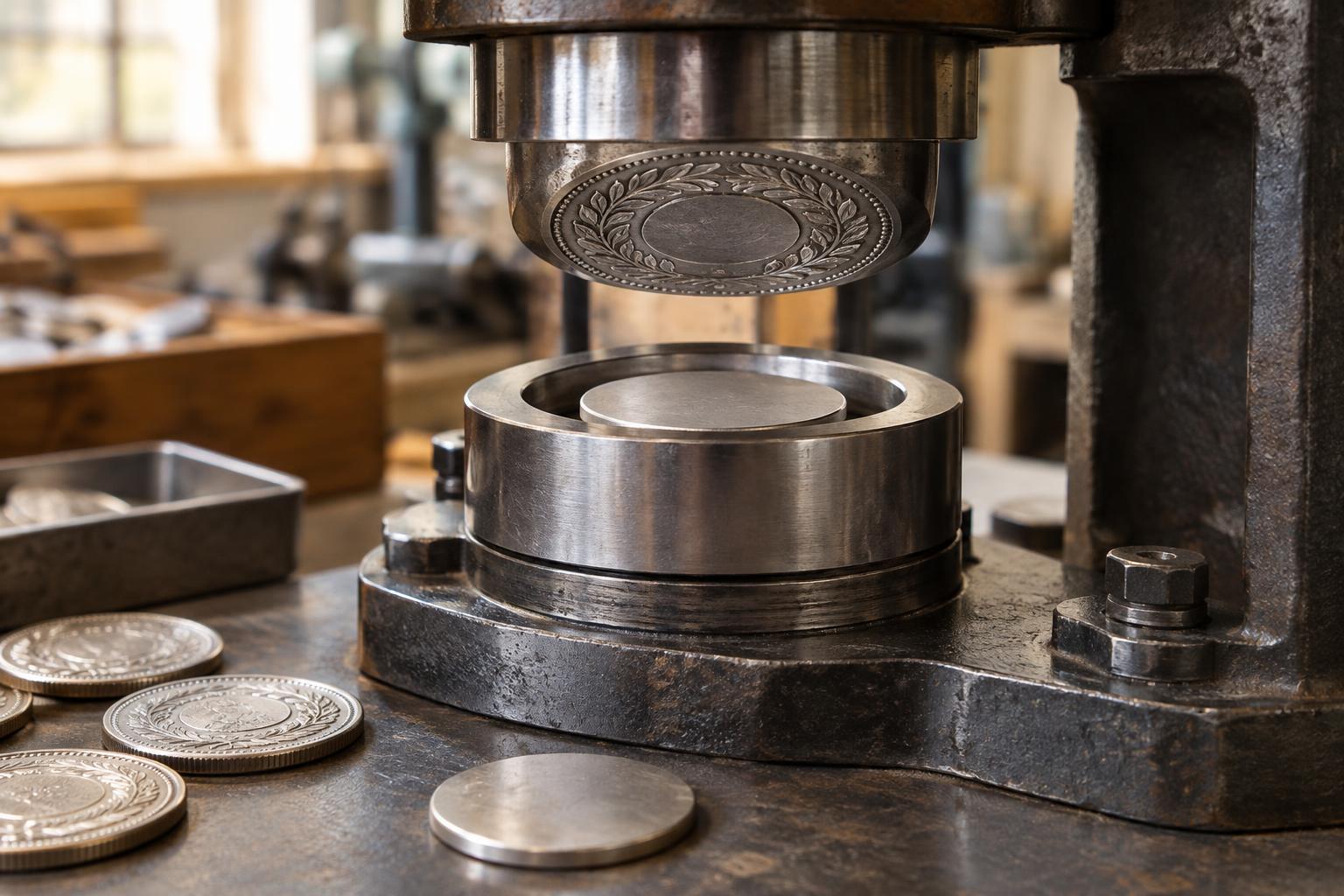
Before striking, planchets may be checked for properties such as size, weight and visible defects. A planchet that is too light, made of the wrong material or otherwise out of specification may be rejected. The accepted discs then move to the press, where dies form the faces of the coin. A surrounding collar can help control the finished diameter and, for some coins, form a patterned edge.
For a collector, this sequence offers a way to examine an unusual coin: ask whether the feature could have been present in the strip, appeared when the blank was cut, or developed during later preparation and striking. Understanding when each step happens is more useful than assuming every odd mark is a rare mint error.