From metal blank to planchet
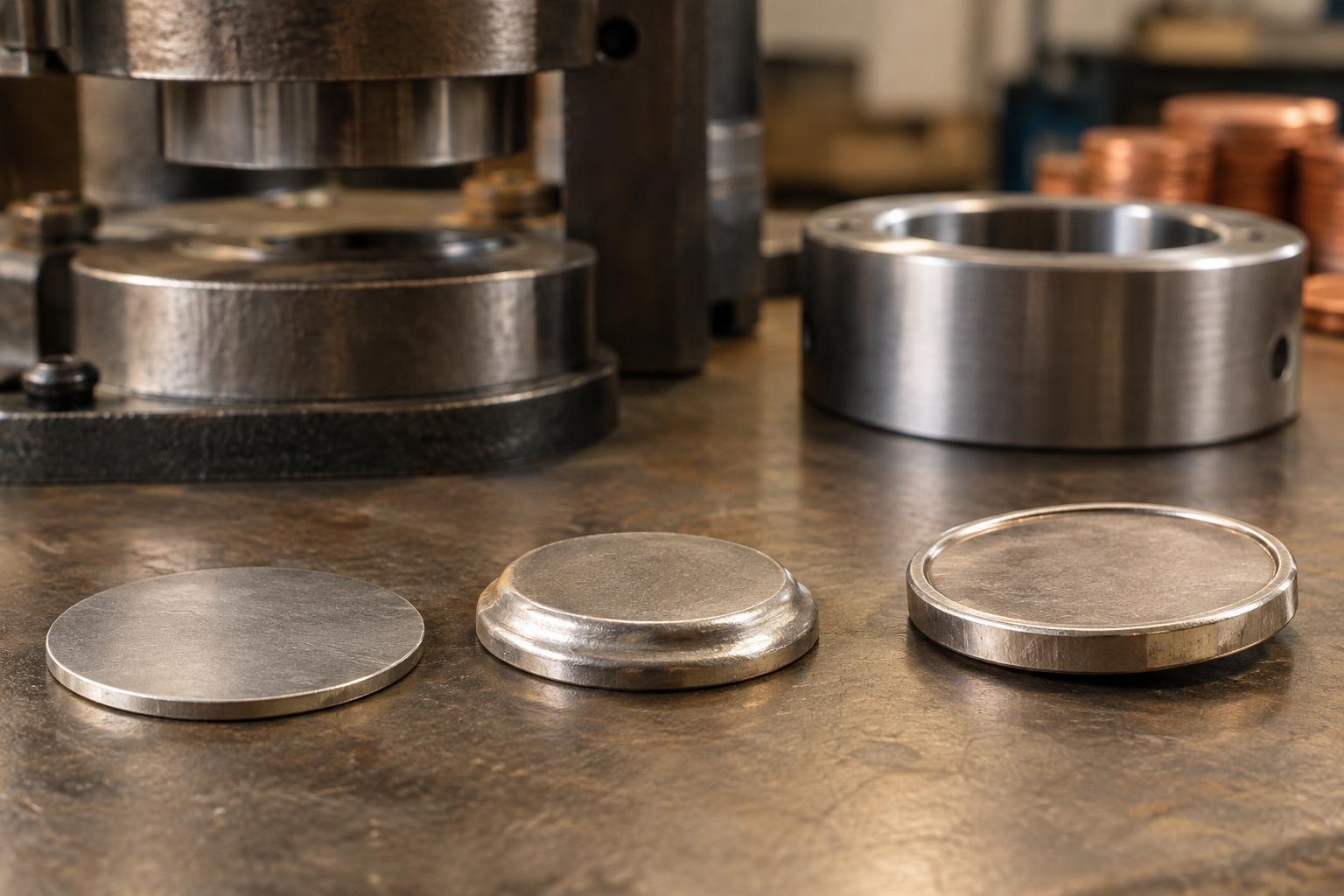
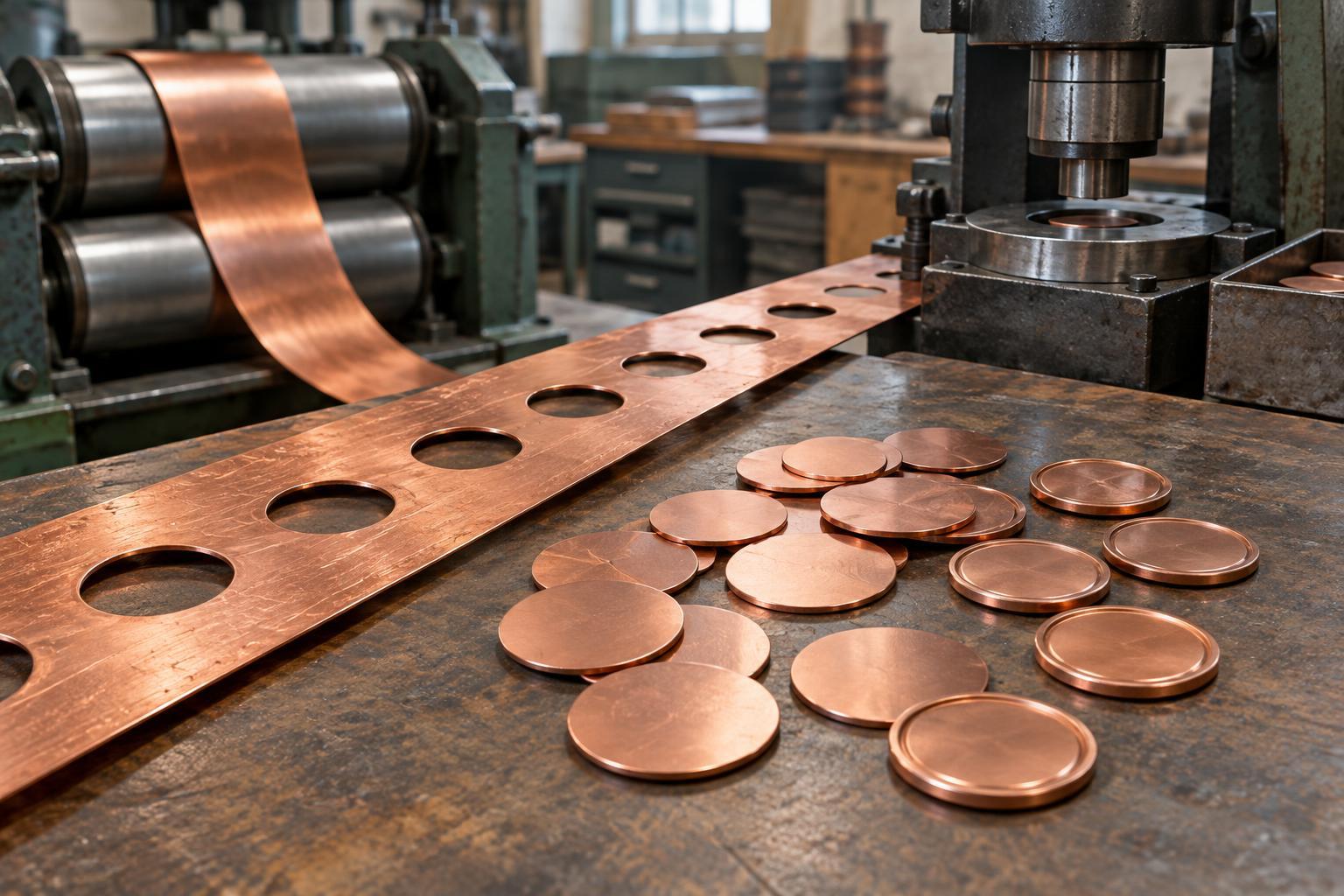
A coin press does not usually begin with a featureless piece of metal cut moments before the strike. Blanks are first punched from metal strip or otherwise prepared to the required size. A blank becomes a planchet as it is readied for striking, often through steps that can include heating and cleaning the metal and raising a rim around its edge. Exact methods depend on the mint, metal and coin.
The raised rim helps protect the finished design from some wear and gives the metal a starting shape for the strike. The planchet is then fed into the press. Its weight, thickness and composition matter: the press and its tooling must be suited to the particular coin being made. If a planchet is prepared incorrectly, the result may show an incomplete design or another visible irregularity, though appearance alone does not always reveal the cause.
The dies carry the design
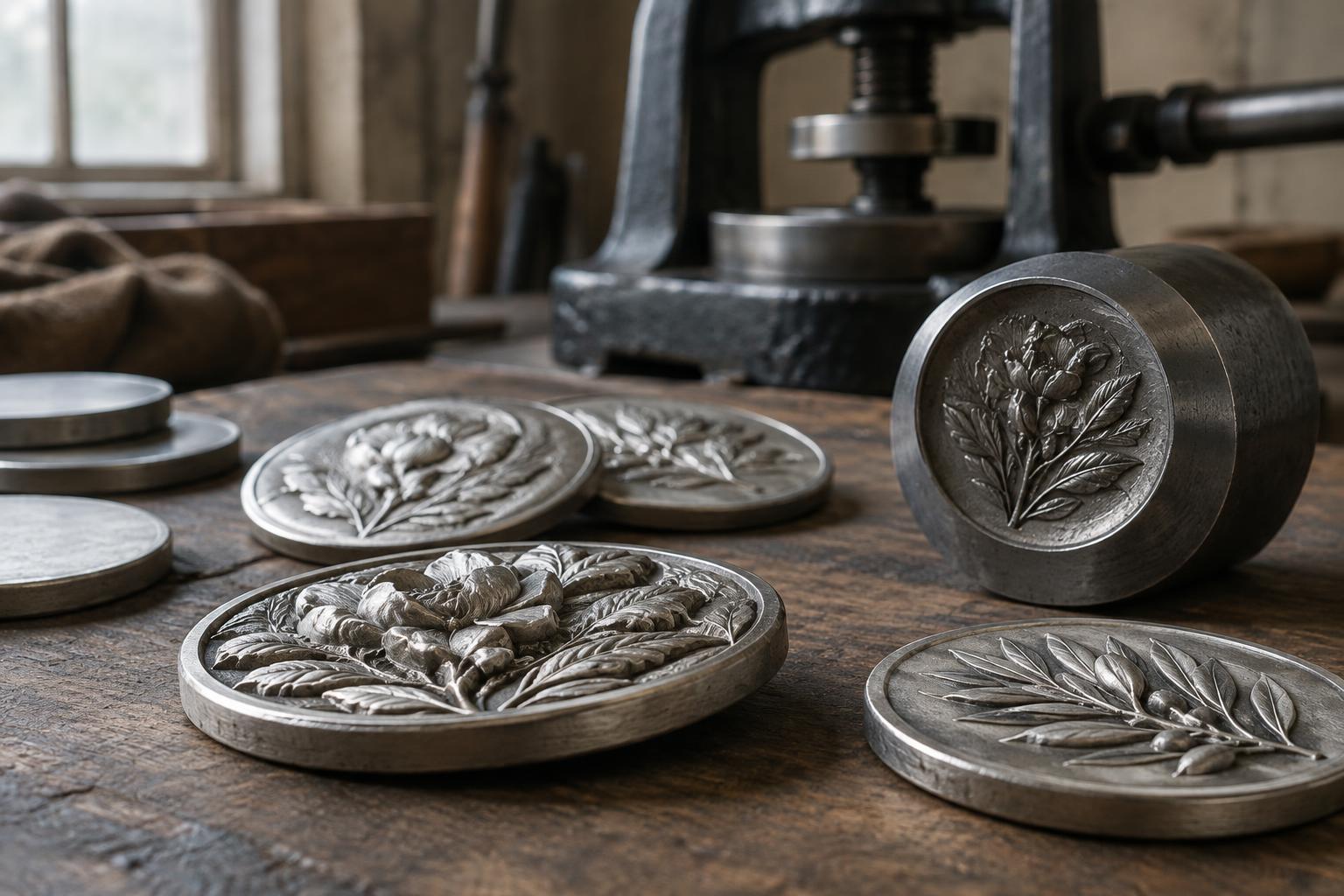
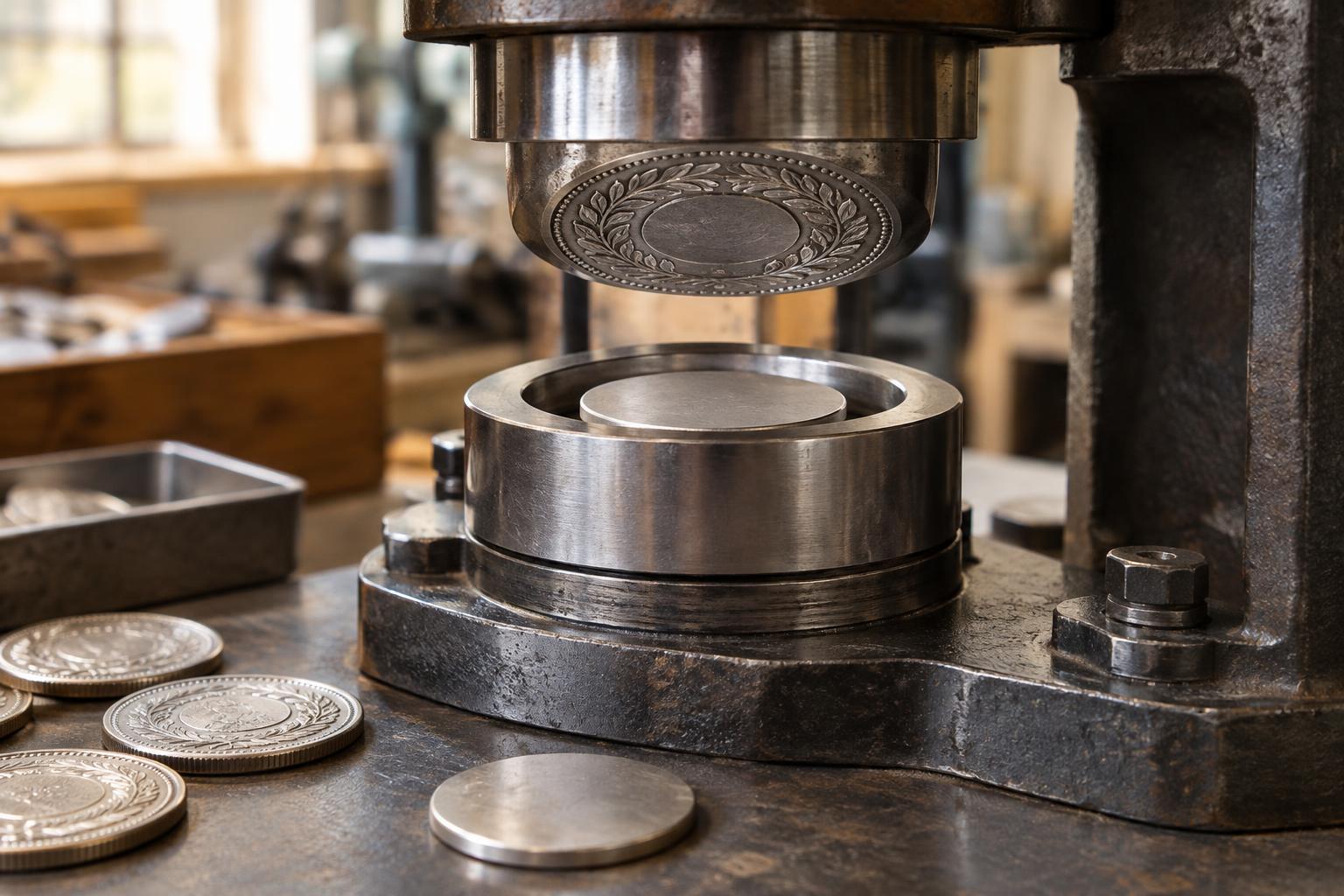
The press uses two hardened tools called dies. One bears the design for one face of the coin, and the other bears the design for the opposite face. On a working die, features intended to stand proud on the coin are generally recessed. When a die presses into the planchet, metal flows into those recesses, producing raised letters, portraits or other details on the finished piece.
Collectors call the front of a coin the obverse and the back the reverse, although deciding which side is the obverse is not always obvious from the artwork alone. A die is more than a picture stamp: its shape must account for the coin’s relief, rim and the way metal moves during striking. Dies also wear, crack or pick up damage over time. Such changes can leave repeatable marks on coins struck from the affected die, which is why collectors sometimes compare small details across multiple examples.
The collar controls the edge
A collar surrounds the planchet while the dies meet it. By limiting outward movement of the metal, it helps establish a consistent diameter and supports the formation of a well-defined rim. The collar also shapes the edge. A smooth collar can produce a plain edge; a collar with grooves can form the familiar ridged edge known as reeding.
Not every edge feature is made by the collar during the main strike. Edge lettering or other elaborate edge designs may require a separate operation or specialized equipment. That distinction is useful when examining a coin: its face designs, rim and edge are related, but they do not necessarily record a single manufacturing step. If a planchet is not properly seated in the collar, the strike may be off-center or produce an irregular edge. Such effects should not be assumed to be genuine mint errors without careful examination.
What striking pressure does
During a strike, the dies come together with enough force to compress the planchet. Metal moves outward toward the collar and into the recessed areas of the dies. The design appears because the metal changes shape under pressure, not because material is carved away. The press then opens, the coin is removed, and another planchet can take its place.
There is no single striking-pressure setting that fits every coin. The required force depends in part on a planchet’s size, thickness and metal, as well as the depth of the design and the equipment used. Too little effective pressure can leave parts of a design weak or missing, particularly where metal must move farther to fill the die. But a weak-looking area does not, by itself, prove that the press was set incorrectly: die wear, planchet variation and other factors can affect what appears on a coin.
Reading the finished coin
A finished coin brings the three main parts of the strike into view. The dies account for the face designs, the collar helps explain the diameter and edge, and the pressure brings those elements together by moving the planchet’s metal. Looking at all three can make a coin more interesting than simply identifying its date and denomination.
For a beginner, a useful exercise is to compare several coins of the same type under steady light. Check whether the rims are complete, whether fine design details are equally sharp, and whether the edges match. Differences may reflect normal wear after minting, variation during production or damage. Resist treating every unusual feature as rare: understanding how an ordinary strike works is the best starting point for describing an unusual one accurately.