A design begins with a brief
Before an artist draws a coin, the issuing authority usually establishes what the coin must communicate. A brief may specify a subject, required inscriptions, a denomination, and the space available on each side. It may also set practical limits: the coin’s size, shape, and intended method of manufacture affect how much detail can survive on a small metal surface. The approval process varies by country and issuing program, but these constraints give the designer a starting point.
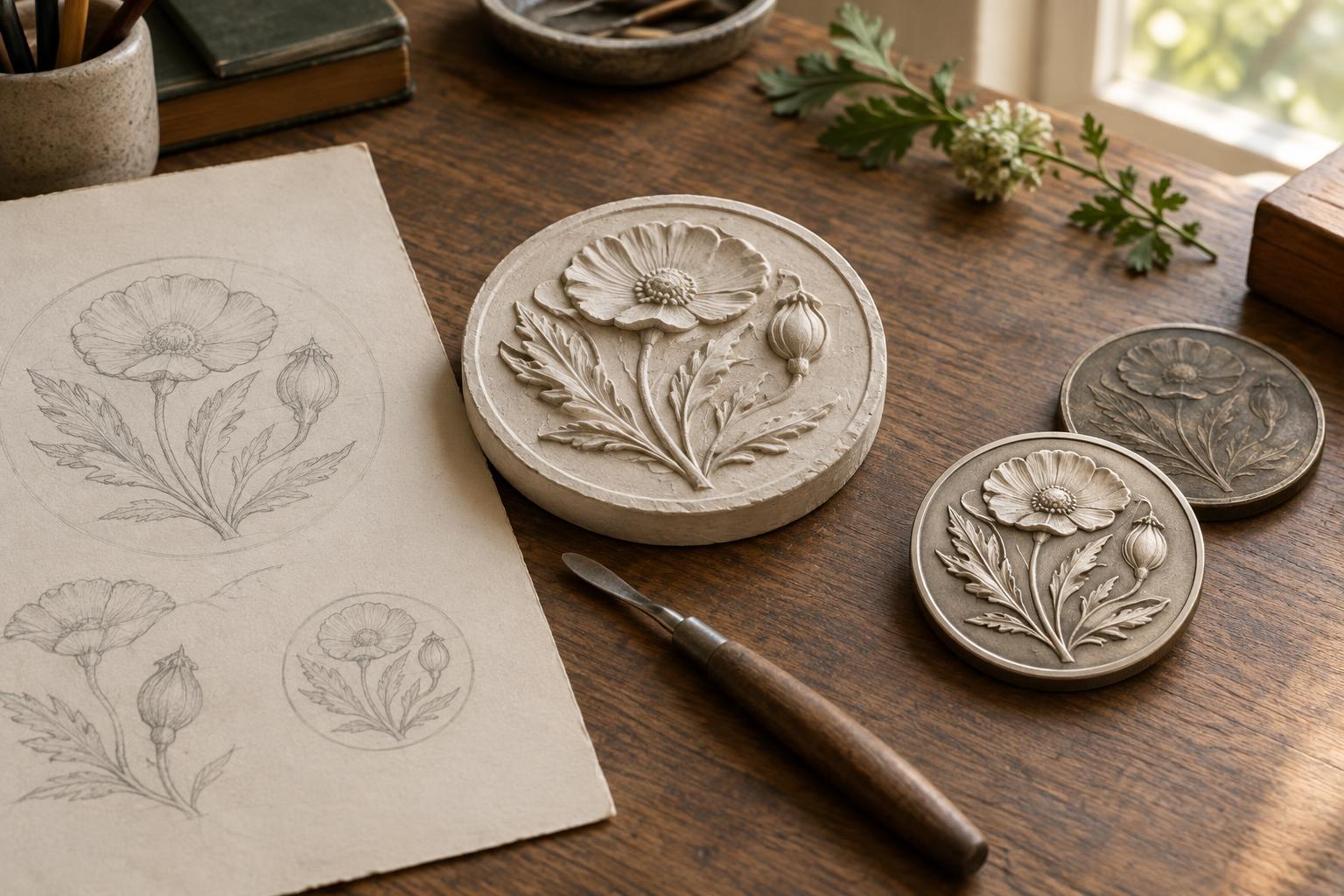
Research and reference images can help an artist develop a recognizable portrait, building, animal, or symbol. Early sketches test broad choices such as pose, lettering, and the balance between the central image and open space. At this stage, changing an element is relatively easy. A strong drawing, however, is not automatically a strong coin design: it must also work when translated into shallow relief.
Sketches become three-dimensional models
A coin is not a flat illustration. Its raised and recessed areas catch light, create contrast, and help make its features legible. To judge those effects, a designer may develop a relief model by sculpting or using digital tools. A model lets the team examine the height and slope of forms: for example, whether a face appears rounded without projecting too far, or whether a letter remains distinct from the nearby image.
Designs are often viewed at a larger scale during development, then assessed at the coin’s actual size. This change in scale matters. Fine lines that look clear on a screen or large model may crowd together on a finished coin. Artists may simplify hair, feathers, fabric, or architectural details so the main subject reads at a glance. They may also adjust the background, called the field, to give important features room to stand out.
Why a model may need several revisions
Revisions are a normal part of coin design, not necessarily a sign that an earlier version failed. An approving authority may ask for a different likeness, clearer symbolism, or more accurate wording. Production staff may identify areas that would be difficult to strike consistently. A design can also feel balanced in a large drawing but appear cramped when reduced to the intended coin size.
Changes may be subtle. Moving an inscription away from a portrait, widening the space between letters, or lowering a high point in the relief can make a considerable difference on a small coin. The designer has to preserve the idea while accommodating both visual and manufacturing needs. Not every proposed version becomes public, so collectors usually see only part of a design’s development.
Testing the design in metal
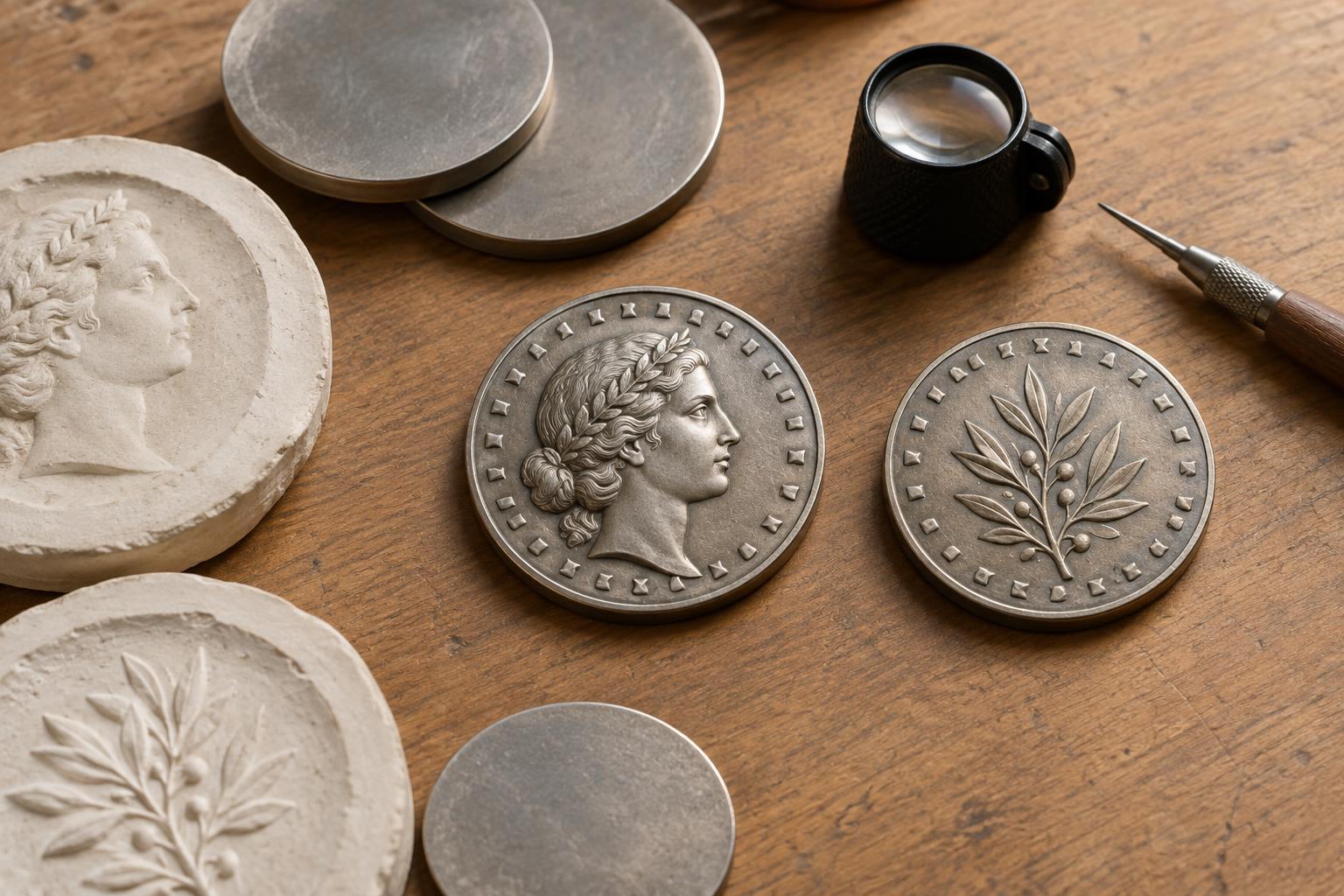
Once a model is sufficiently developed, the mint can use it to help create the tooling that transfers the design to a blank piece of metal. The details of this process differ among mints and technologies, but dies ultimately carry the designs used to strike coins. Trial strikes or sample pieces, when made, offer a more direct test than a drawing or model because metal does not always flow into fine details exactly as expected.
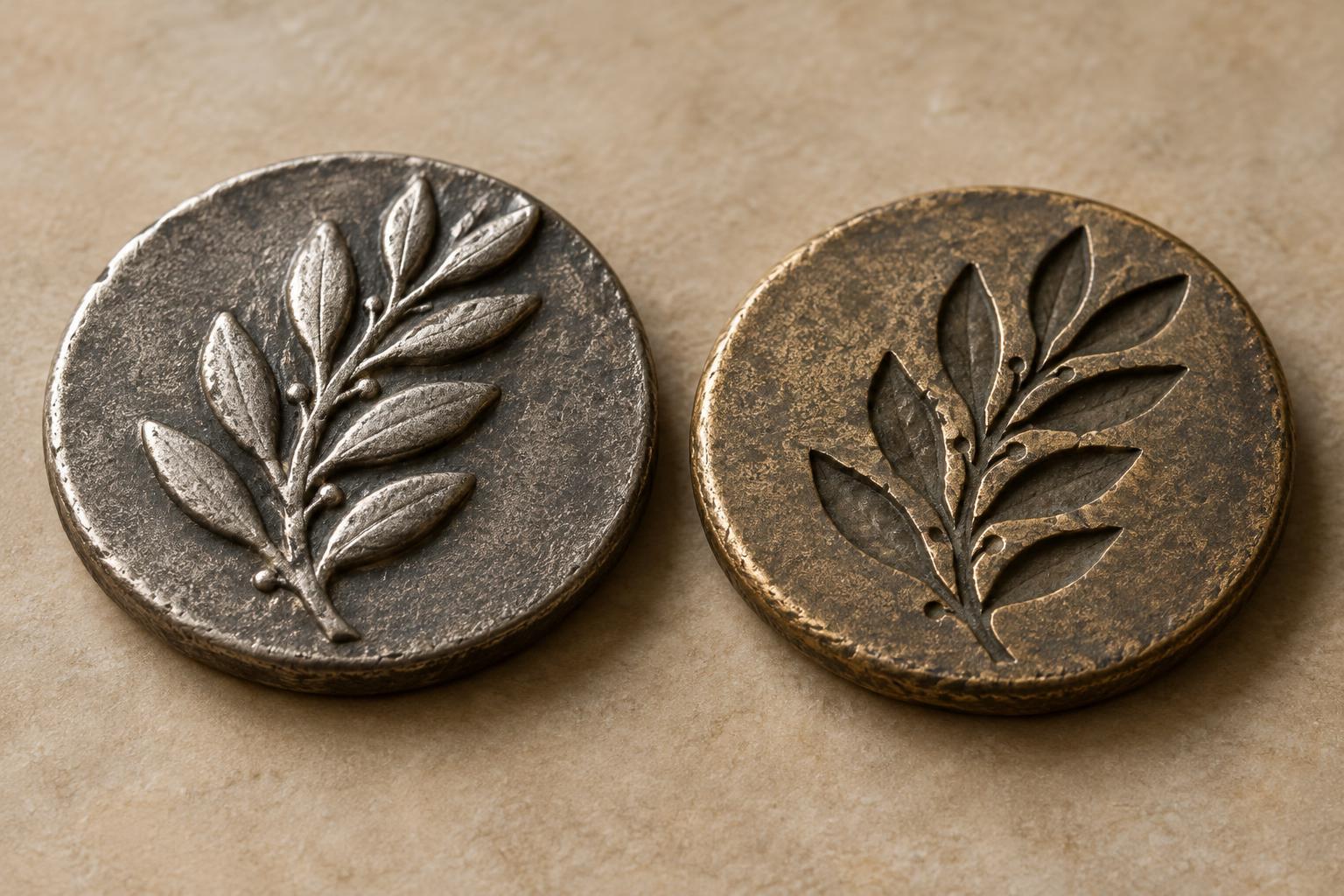
A trial piece can reveal weak lettering, crowded details, or a relief that does not give the intended visual effect. Its appearance may prompt another adjustment to the model or tooling. Finish, lighting, and the coin’s actual diameter can also change how a design seems to the eye. Approval therefore concerns not only the artwork as imagined, but the result that the mint can reproduce.
Reading the finished coin as a collector
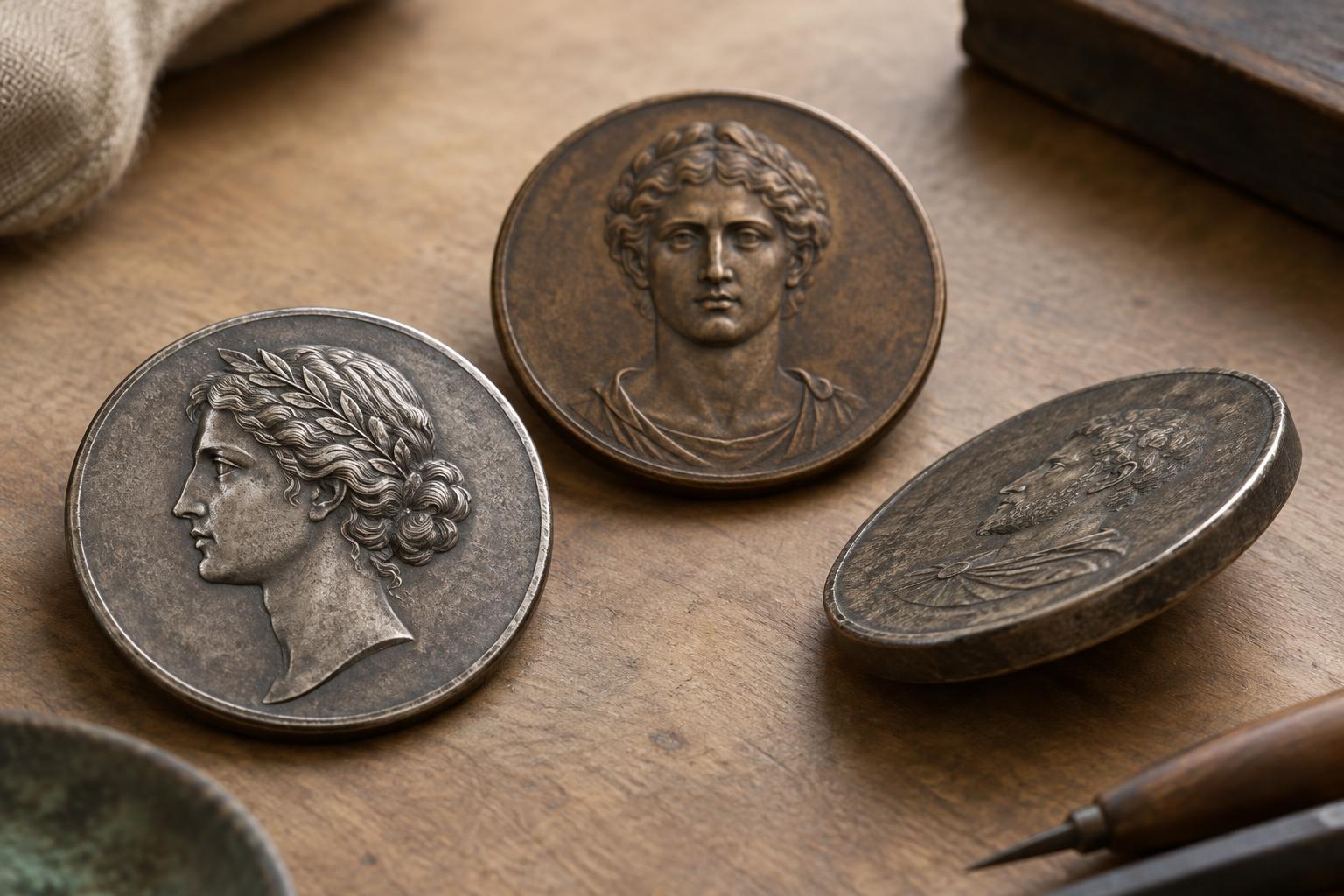
An approved design is the outcome of many choices, some artistic and some practical. When examining a coin, look first at its overall composition: where does your eye go, and how do the inscriptions frame the subject? Then tilt it under steady light to see how the relief gives form to the image. Compare crowded areas with open fields, and notice which details remain clear at ordinary viewing distance.
Collectors may encounter drawings, models, or trial pieces in exhibitions and reference materials, but these should not be confused with ordinary issued coins. They can be useful for understanding what changed before approval. Even without access to them, a finished coin invites the same questions a designer faced: what had to fit, what needed to be recognizable, and how were those goals achieved in metal?