The edge is part of the design
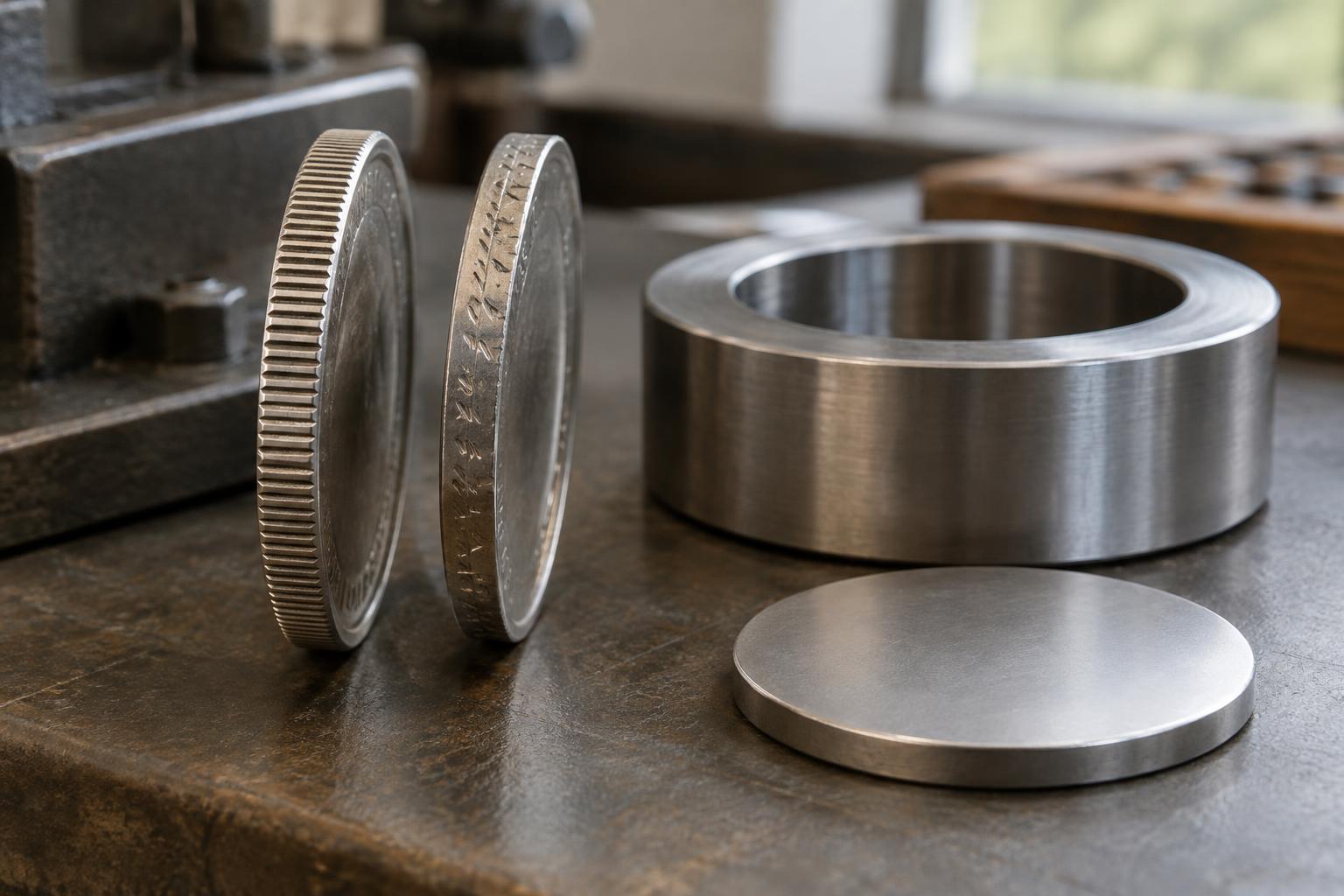
A coin has two main faces and a narrow surface around them called the edge. The edge may be plain, grooved, or marked with letters and symbols. Those features are distinct from the rim, the raised border near the outside of each face. Collectors sometimes call edge grooves “ridges,” but the more precise term is reeding.
Edge treatments have served several purposes. On coins made from precious metal, a patterned edge could make removal of metal from the outside easier to notice. Reeding and lettering can also distinguish denominations, carry a motto or other design element, and add complexity to production. An edge feature alone, however, does not prove that a coin is genuine.
How a collar forms reeding
Many modern coins begin as metal blanks cut from a strip. A blank may pass through an upsetting machine, which pushes metal toward its perimeter and forms a raised edge before striking. At the press, the prepared blank, now often called a planchet, sits between two dies that bear the designs for the coin’s faces. A surrounding component called a collar helps control the coin’s diameter as the dies strike it.
To produce reeding during the strike, the inside of the collar has a series of grooves. Under pressure, metal at the planchet’s edge flows into those grooves. When the finished coin is released, its edge carries the matching raised reeds, separated by narrow channels. A smooth collar instead produces a generally plain edge. The exact equipment and sequence vary by mint and coin, so reeding should not be assumed to come from the same machine in every case.
How letters reach the edge
Edge lettering requires a different pattern: readable characters must be transferred to a surface much narrower than either face. One approach is a separate edging operation in which a coin or planchet moves against lettered tooling under pressure. The tooling presses characters into the edge. Depending on the process, this can take place before or after the faces are struck.
Another approach uses a specially constructed collar during striking. A segmented collar can open to release a coin whose edge has more elaborate raised details. In general, whether letters appear sunken into the metal or raised above it depends on the tooling and method used. The wording, orientation, spacing, and relationship to the face designs are choices made for a particular coin issue—not rules that apply to all lettered coins.
What the production sequence can tell you
The order of operations matters when examining a coin. If lettering is applied in a separate step after the faces are struck, its orientation relative to the portrait or other face design may vary. If an edge design is formed as part of the strike, its placement may be more closely controlled by the press tooling. Neither pattern should be treated as universal: the expected result depends on how that specific coin was made.
An imperfect edge can also have several explanations. Weak pressure, worn or misaligned equipment, and a problem with the planchet may affect how completely a pattern forms. Later circulation can flatten reeds or obscure letters, while knocks to the edge can create marks that resemble minting irregularities. Before calling an unusual feature an error, compare it with well-described examples of the same coin type and consider ordinary wear or damage.
Examining edges without harming coins
To study an edge, hold the coin over a soft surface and turn it slowly under steady light. A magnifier can help you see whether reeds are evenly formed or letters have clear outlines. Handle a collectible coin by its edge when possible, with clean, dry hands; avoid rubbing either the faces or the edge. Cleaning is unlikely to restore lost detail and can leave new marks.
When organizing a collection, record edge features alongside the date, denomination, mint identification if present, and general condition. Note whether the edge is plain, reeded, lettered, or combines features. This habit helps beginners notice design differences without treating every variation as rare. The edge is a small part of a coin, but it offers a useful view of the choices and machinery behind its manufacture.