Start with a collecting goal
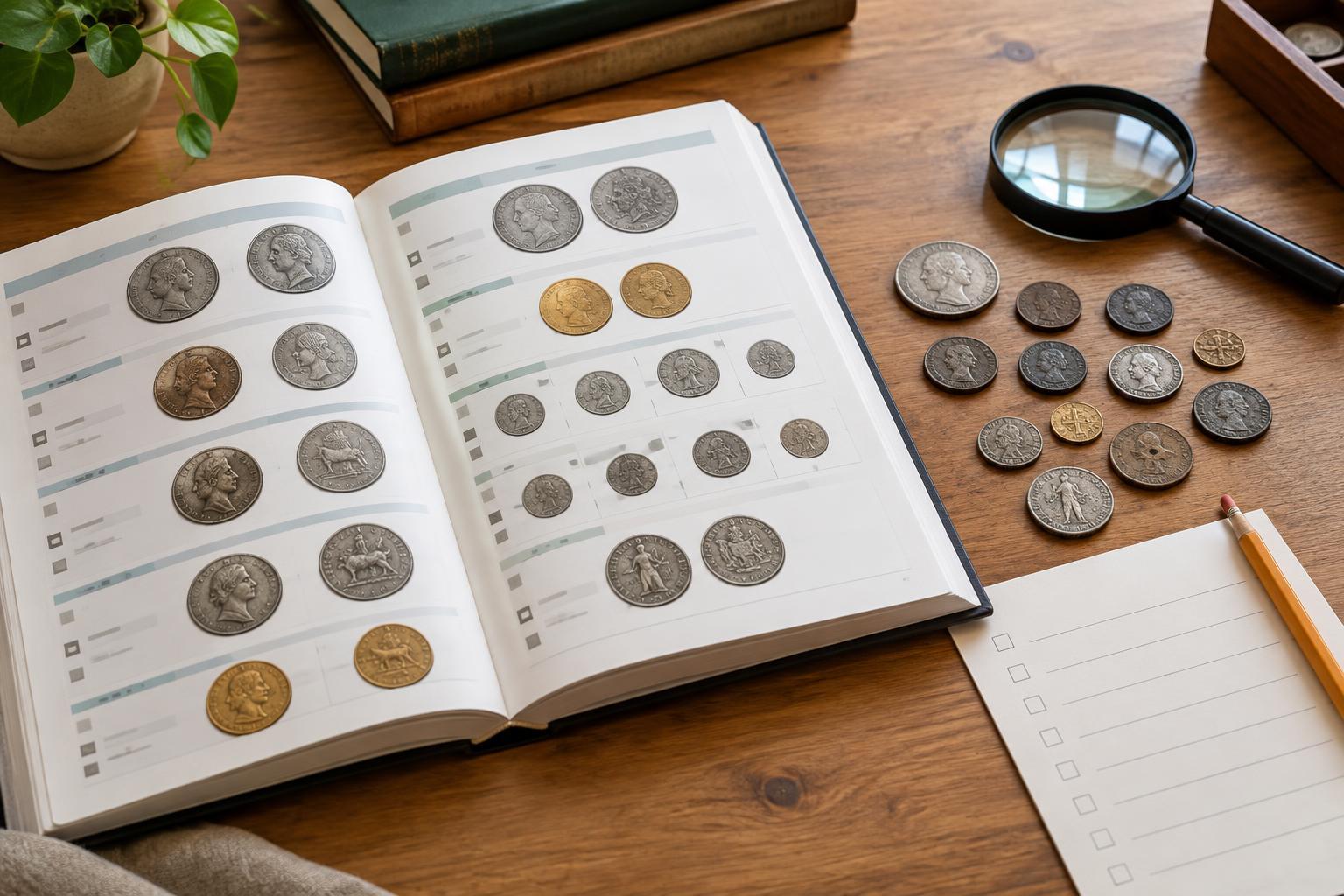
Before contacting a dealer, decide what you are looking for and how much you are comfortable spending. A focused goal might be one coin for a date-and-mintmark set, an example of a particular design, or an inexpensive coin that helps you learn to compare condition. You do not need a complete collecting plan, but a goal makes it easier to judge whether an offered coin belongs in your collection.
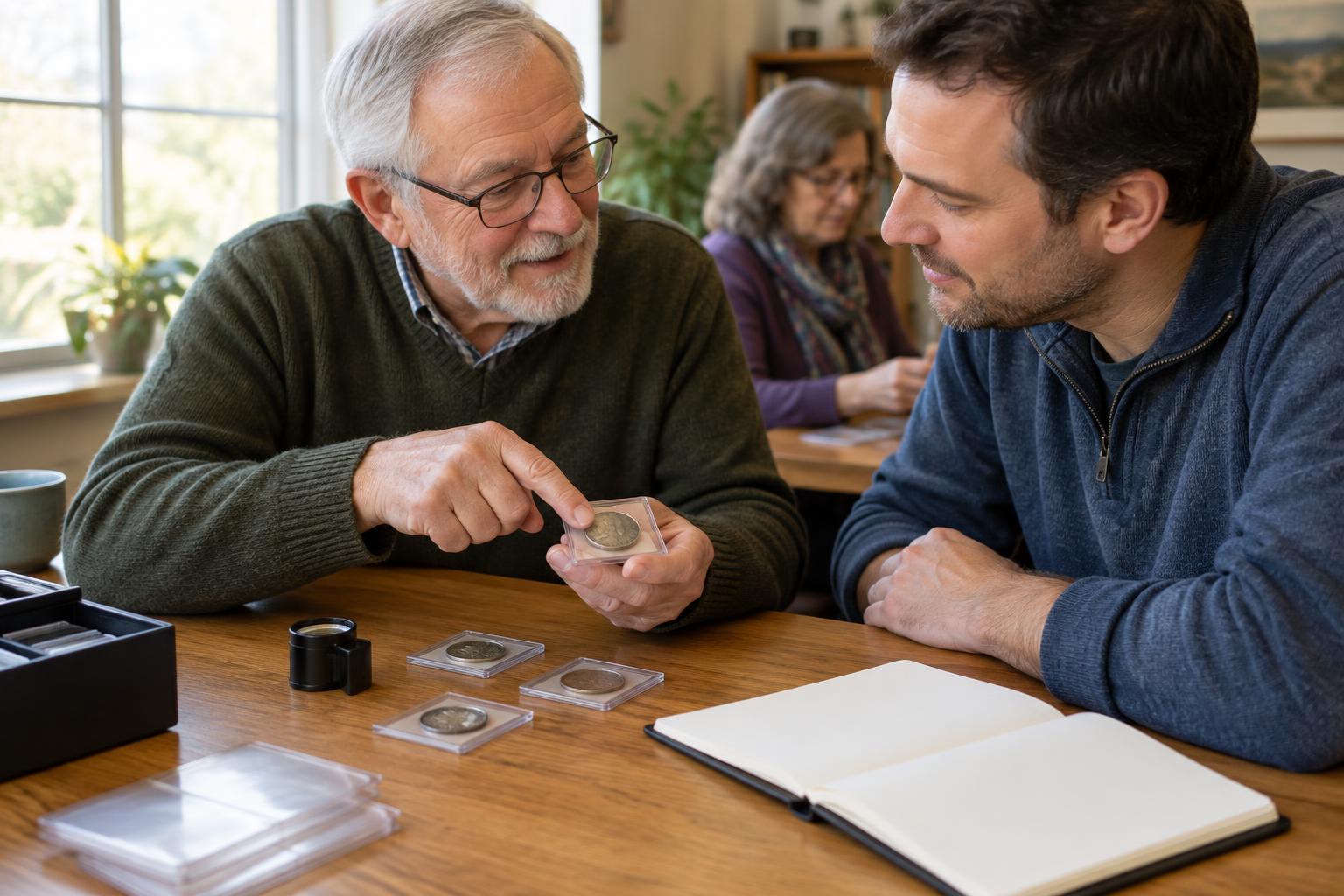
Tell the dealer what interests you and ask, “What choices do you have within my budget?” Also ask why they recommend a particular coin. A useful answer should describe the coin itself, not just suggest that it is rare or likely to rise in value. Prices can vary with condition, demand, and the details of an individual coin; collect for your interests rather than relying on a promise of future value.
Confirm exactly what is being offered
Ask for the coin’s country or issuing authority, denomination, date, mintmark if applicable, and any variety used to identify it. If a listing uses terms such as “proof,” “uncirculated,” or “commemorative,” ask what those terms mean for that specific piece. Small differences in identification can matter to collectors, so make sure the description and the coin you receive will match.
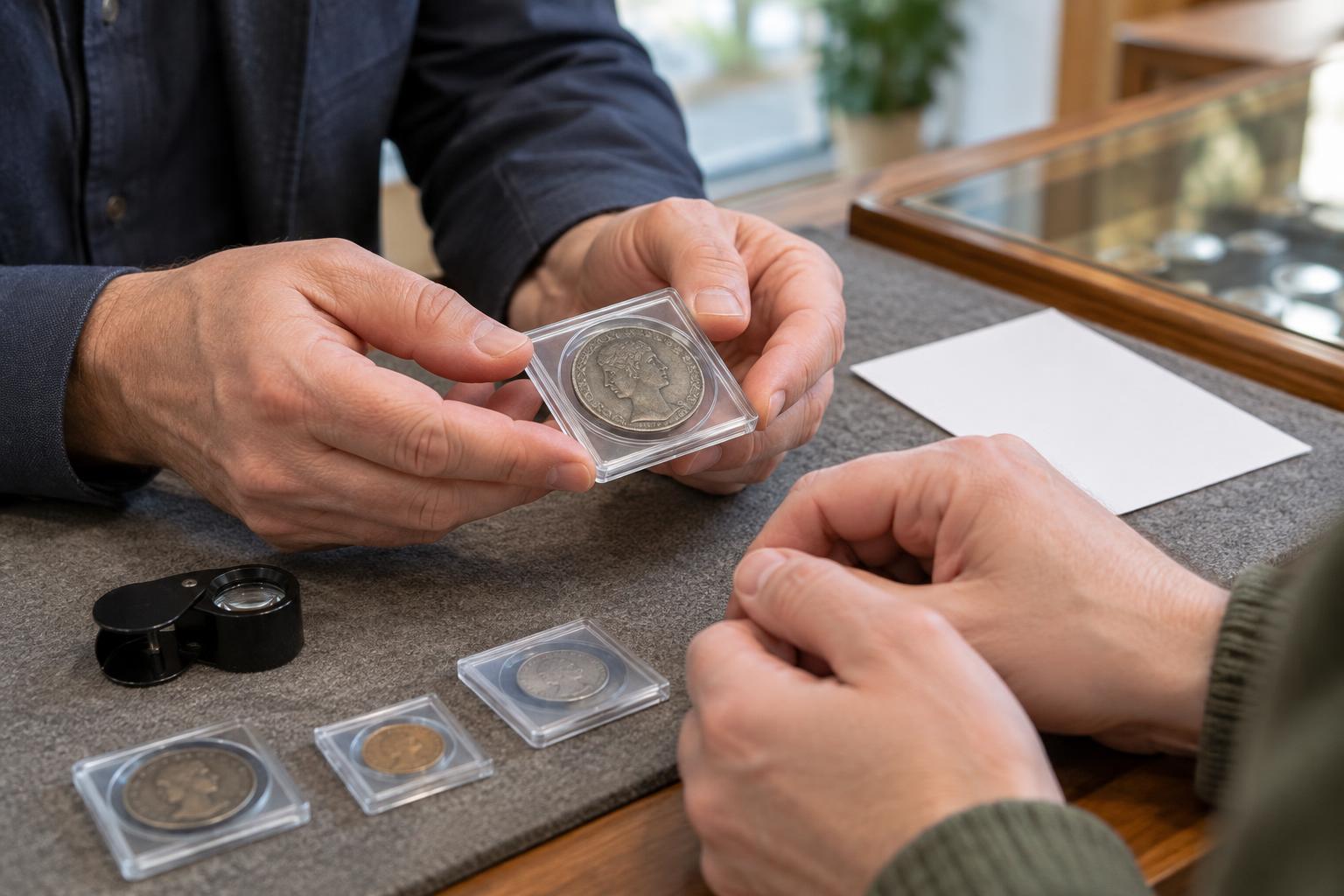
For an online purchase, ask for clear photographs of the exact coin, front and back, rather than an example image. If a detail matters to you, request a closer view and ask whether the photographs show any marks that are less obvious in person. At a counter or show, ask permission to examine the coin under good light. Handle it only as the dealer directs, and keep it in its holder if it is already packaged.
Ask how condition and authenticity were assessed
Condition descriptions are opinions, even when they use familiar grading terms. Ask, “How did you determine this grade, and what wear or damage should I notice?” Look for signs of wear on high points, scratches, spots, or evidence of cleaning. Cleaning can change a coin’s surface and affect its appeal to collectors. If you cannot yet assess condition confidently, compare several examples of the same type before deciding.
Ask whether the coin has been authenticated or graded by an independent grading service, or whether the description is the dealer’s own assessment. A holder can provide useful identification information, but read its label carefully rather than treating every holder as equivalent. For a costly or commonly counterfeited coin, ask what supports the attribution and authenticity, and consider waiting until you understand the answers. It is reasonable to pass on a purchase you cannot evaluate.
Understand the full price and the terms
Ask, “What is the total price I will pay?” Include shipping, insurance, taxes where applicable, and any payment-related charges. If you are comparing coins from different dealers, compare the total cost alongside condition, eye appeal, and the clarity of each description. Asking how a price was set may help you understand a dealer’s reasoning, but no single asking price establishes what every similar coin is worth.
Before paying, get the return policy in clear terms. Ask how long you have to inspect the coin, whether a reason is required for a return, who pays return shipping, and whether opening a holder affects eligibility. Check what happens if the delivered coin differs from its description or is damaged in transit. For an in-person purchase, ask for a receipt identifying the coin and recording any relevant terms.
Build confidence one purchase at a time
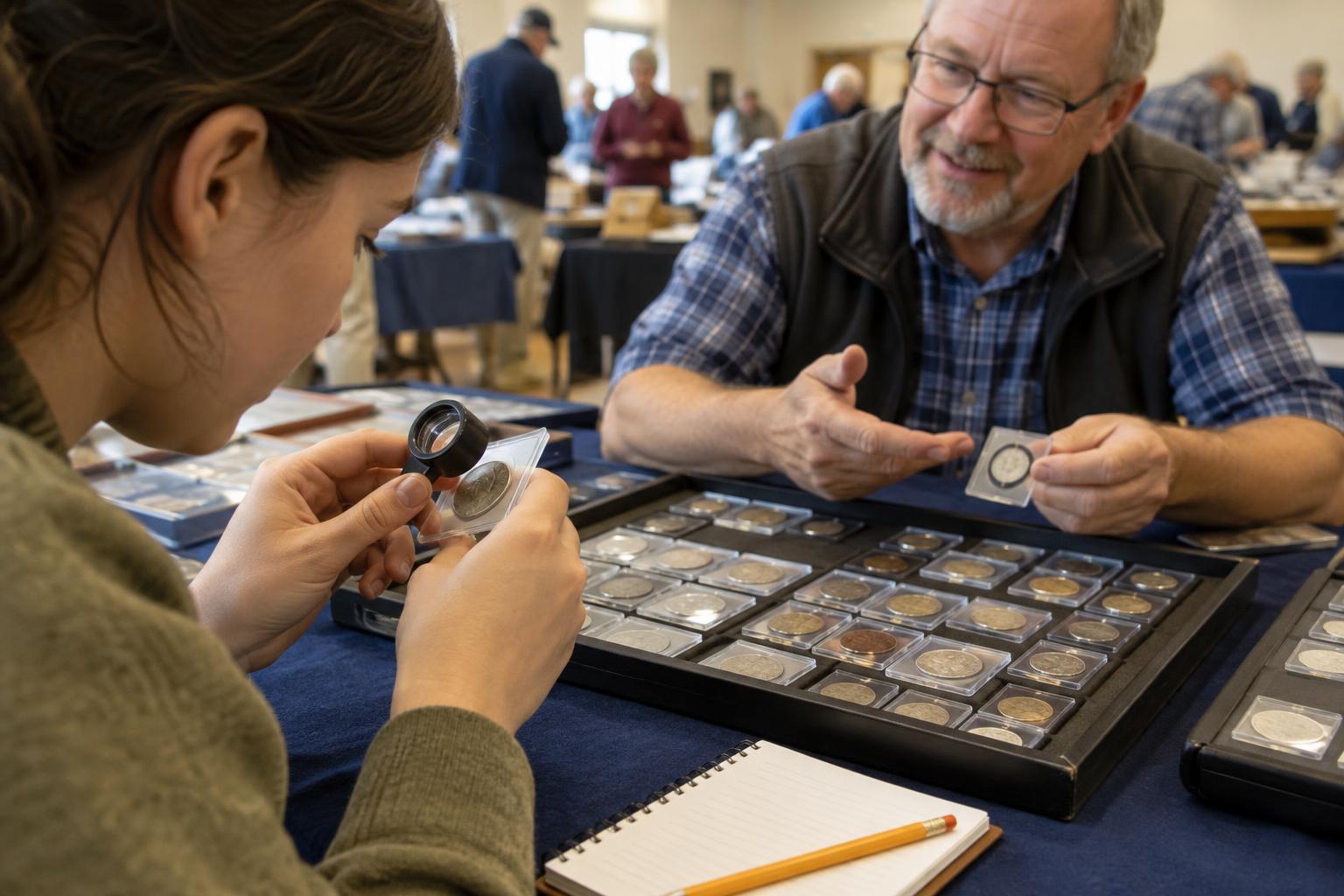
Pay attention to how a dealer responds to ordinary questions. Clear descriptions, consistent answers, and a willingness to let you take time are more helpful than pressure to decide immediately. If you are buying at a show, you can make notes about coins you like, walk around, and return after comparing options. Avoid removing a coin from its packaging or attempting to clean it after purchase; either action can make later assessment more difficult.
Keep the receipt and a record of the coin’s description, price, and any questions you asked. When the coin arrives, compare it with the listing or your notes while the return period is still open. Over time, these records help you recognize what you enjoy collecting and which descriptions you find useful. A first dealer purchase need not be ambitious: a well-understood, affordable coin is a sound place to begin learning.