Start with a collecting question
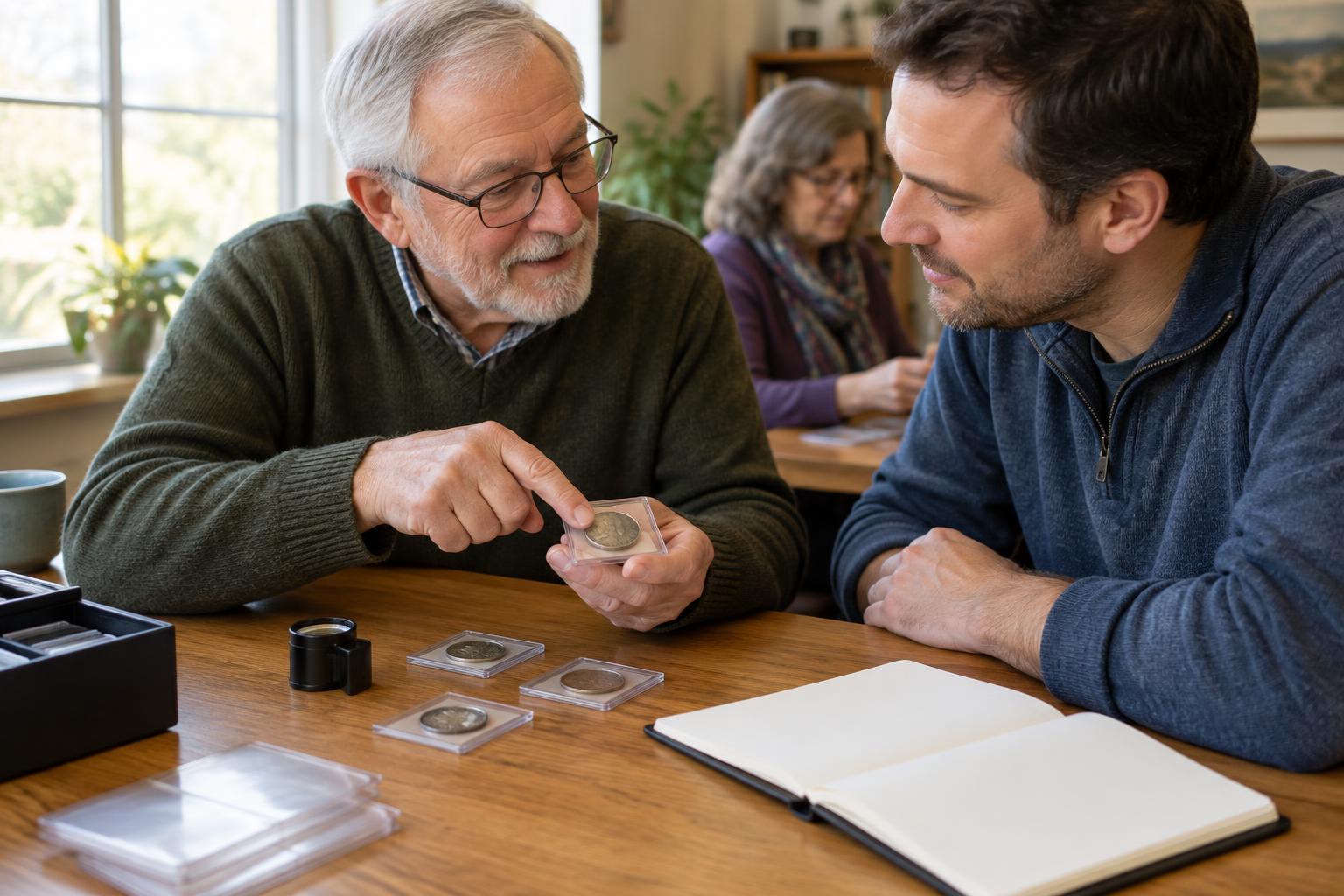
A coin catalog is most useful when you bring it a question. You might want to collect one denomination across several designs, coins from a particular country, or examples of a minting technique. A catalog lets you see what belongs within that idea before you begin looking for individual pieces. It can also reveal that a seemingly small theme includes more dates, mint marks, or varieties than you expected.
Write down a tentative scope before you browse. For example, “one example of each design” is a different project from “every date and mint mark.” Neither approach is more legitimate; they simply call for different amounts of time, money, and searching. Treat your first plan as adjustable. Discovering what is available and interesting is part of building a collection.
Learn what a catalog entry is telling you
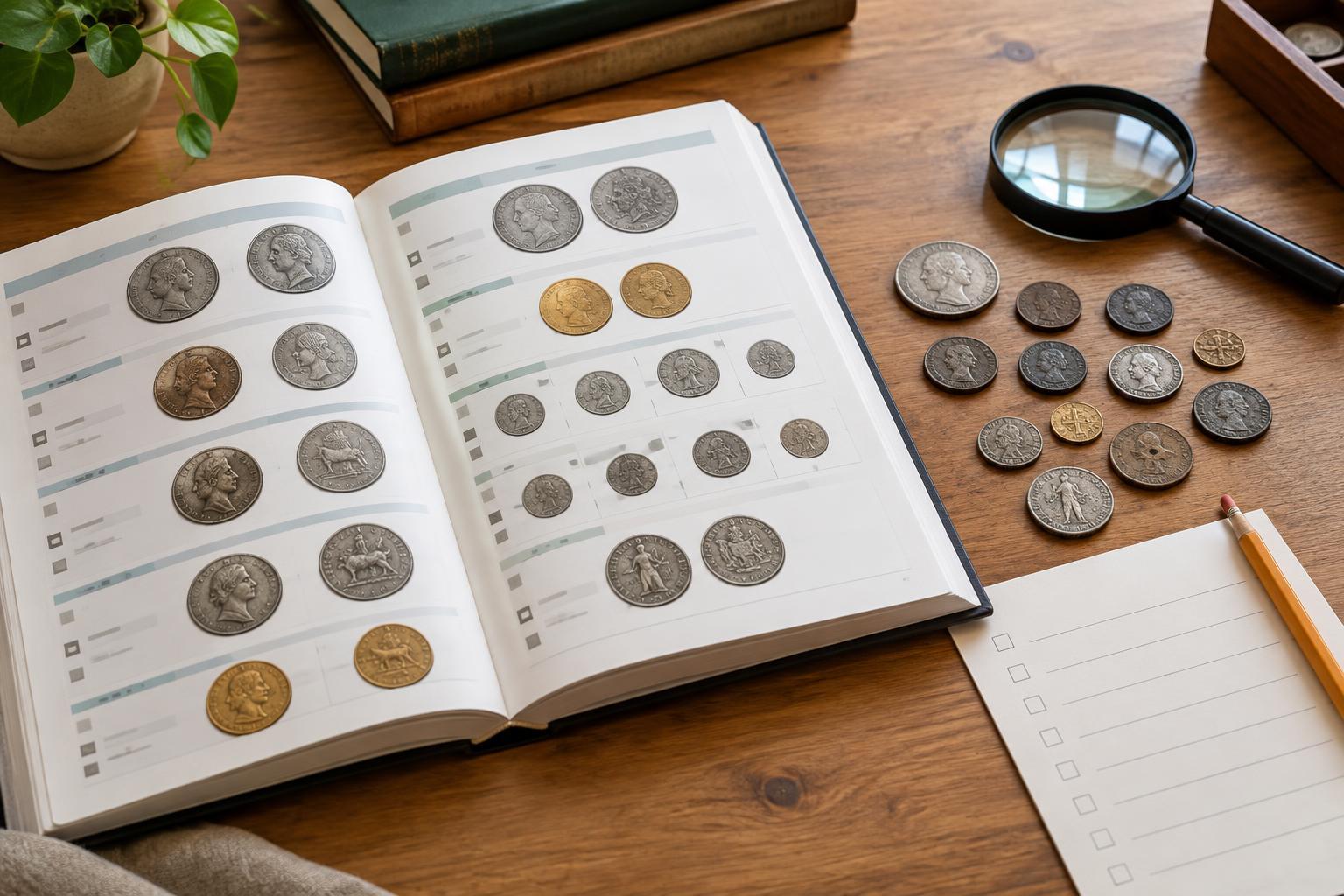
Catalog layouts differ, but an entry commonly groups coins by country, denomination, date, and design. It may also give a catalog number, metal composition, diameter, mint mark, or estimated mintage. Read the introductory notes and abbreviations before relying on a listing. A catalog number is a reference label within a particular catalog system, not a feature stamped on the coin.
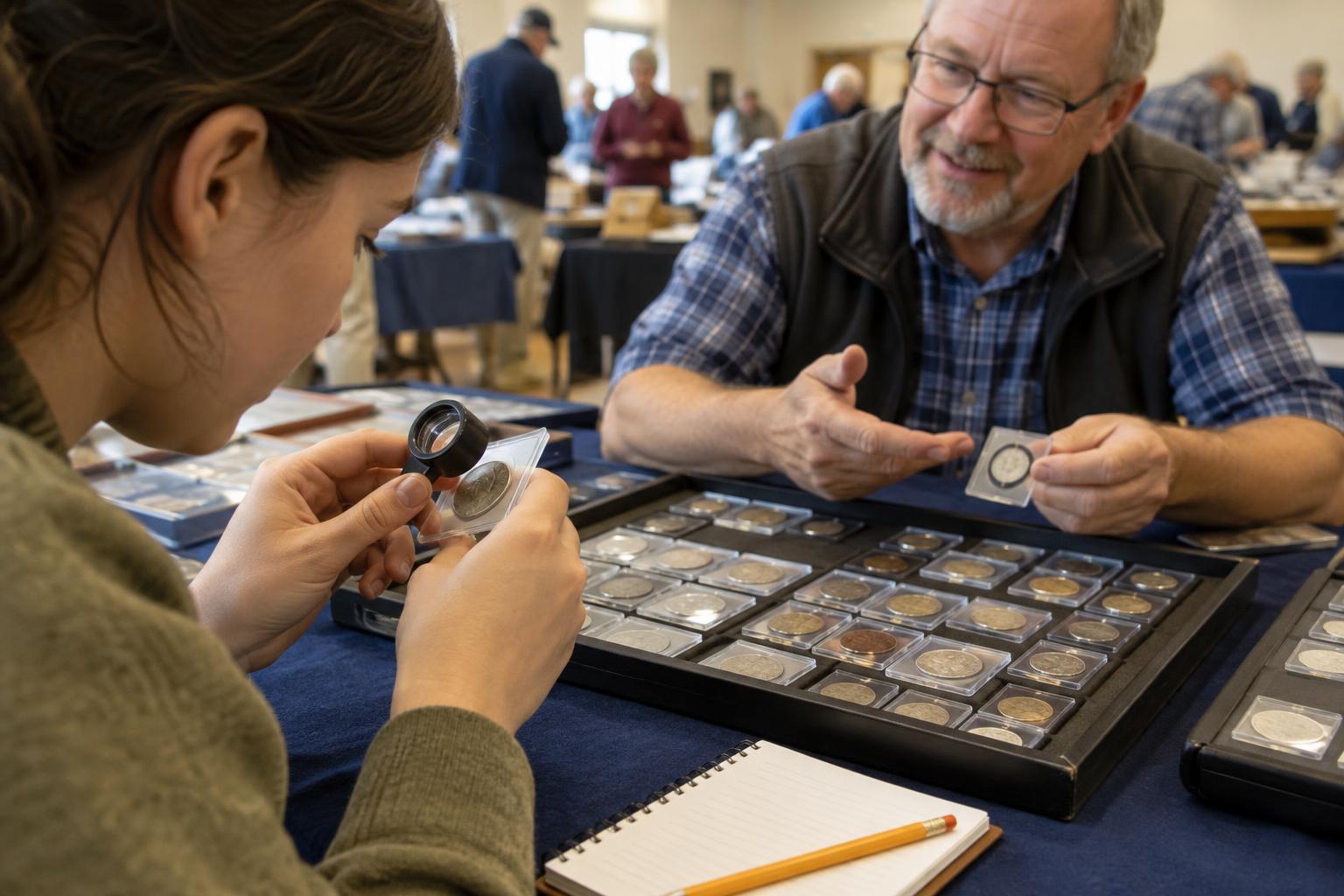
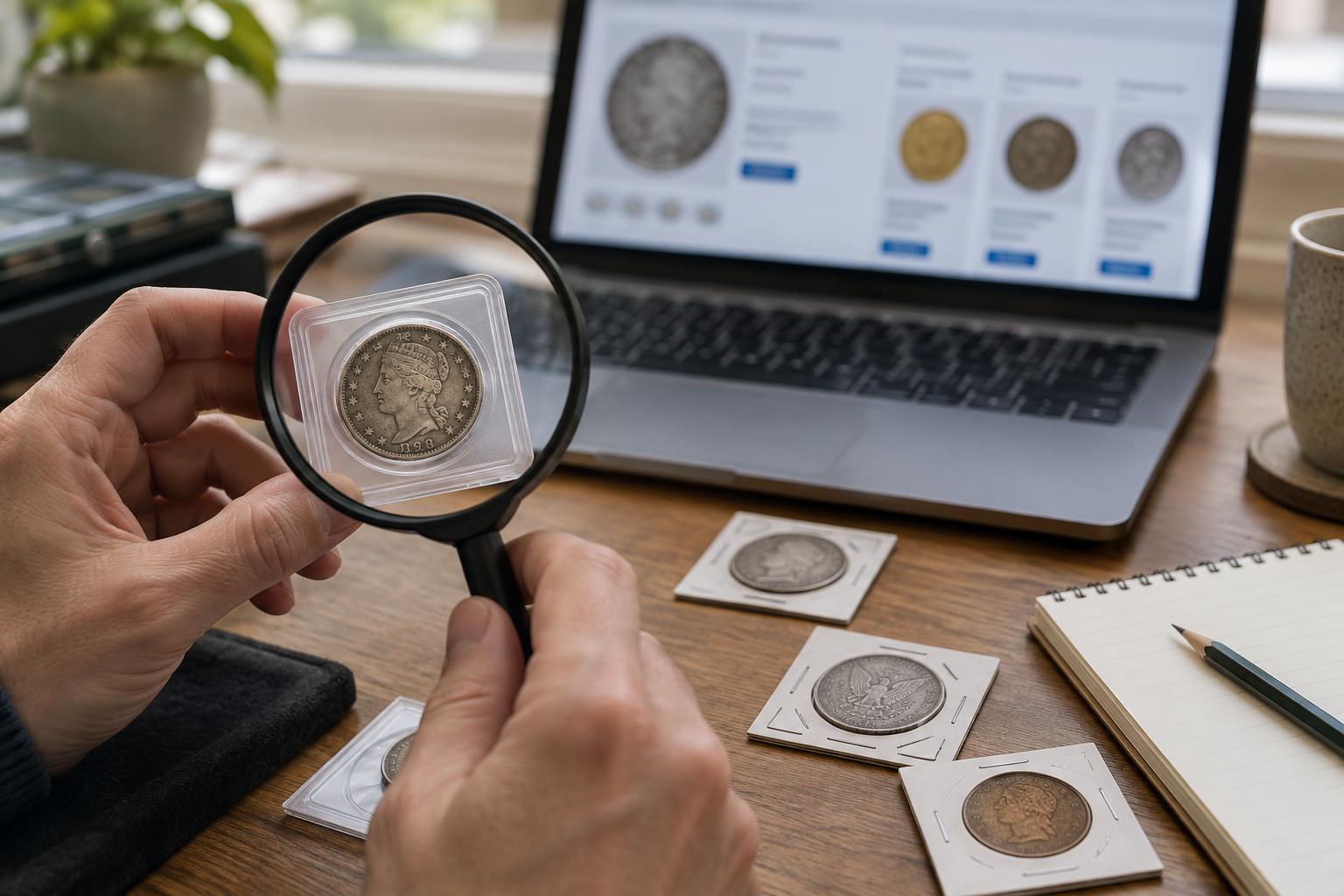
Compare the full description with the coin you are researching rather than matching only its date. A mint mark may identify where it was made, while a design change or a small difference in lettering may separate two listed varieties. Catalog photographs can help, but lighting and wear can obscure details. If you cannot confidently distinguish two entries, record both possibilities and look for clearer reference images or an experienced opinion before deciding.
Turn listings into a realistic checklist
Once you understand the entries, make a checklist for your chosen theme. Include the identifying details you will need later: denomination, date or date range, mint mark if relevant, design type, and catalog reference. Leave space for condition notes and questions. A checklist makes gaps visible without implying that every listed variety must be acquired.
Pay attention to how a catalog divides a series. Some entries represent major design changes; others describe minor differences that may require close inspection. If your goal is to learn the history of a design, a representative set may suit you better than a complete variety set. You can mark optional entries separately and revisit them as your knowledge grows. This keeps the catalog a planning tool rather than a list of obligations.
Read prices as context, not promises
Many catalogs include values by grade, but those figures are not fixed prices. A grade describes a coin’s condition using a particular system; wear, damage, cleaning, and surface quality can all affect how an individual coin is assessed. Values may also differ with demand, availability, location, and the age of the catalog. Do not assume that a coin will buy or sell for the number printed beside its entry.
Use price columns to notice broad patterns and to identify entries that may need closer study. If a variety appears unusually valuable, verify the identifying features rather than assuming a similar-looking coin is the scarce version. For purchases, consider the coin’s actual condition and compare descriptions from more than one source when possible. Setting a comfortable spending limit can help you enjoy the project without making a catalog value the goal.
Keep notes and revisit your plan
A catalog works best alongside your own records. For each coin you acquire, note how you identified it, its visible features, its condition as you understand it, and any uncertainty. If you record what you paid, keep that separate from catalog values. Photographs of both sides can help you review a coin later, especially when you encounter a revised edition or learn to recognize a variety you previously missed.
Catalogs are references, not final authorities for every question. New editions may reorganize listings or refine descriptions, and a general catalog may not cover a specialized series in depth. As you explore, note which questions need a more focused reference. Revisiting your checklist after handling and studying real coins may lead you to narrow, expand, or change your theme. That flexibility is one of the pleasures of building a collection.