Start with what you enjoy noticing
A collection does not need to begin with a rare coin or an ambitious checklist. It can begin with a question: Which coins make you want to look closer? Perhaps you enjoy portraits, animals, changing national symbols, or the small design differences between coins from different years. Your answer gives you a starting point that is more personal than a list of coins someone else says you should own.
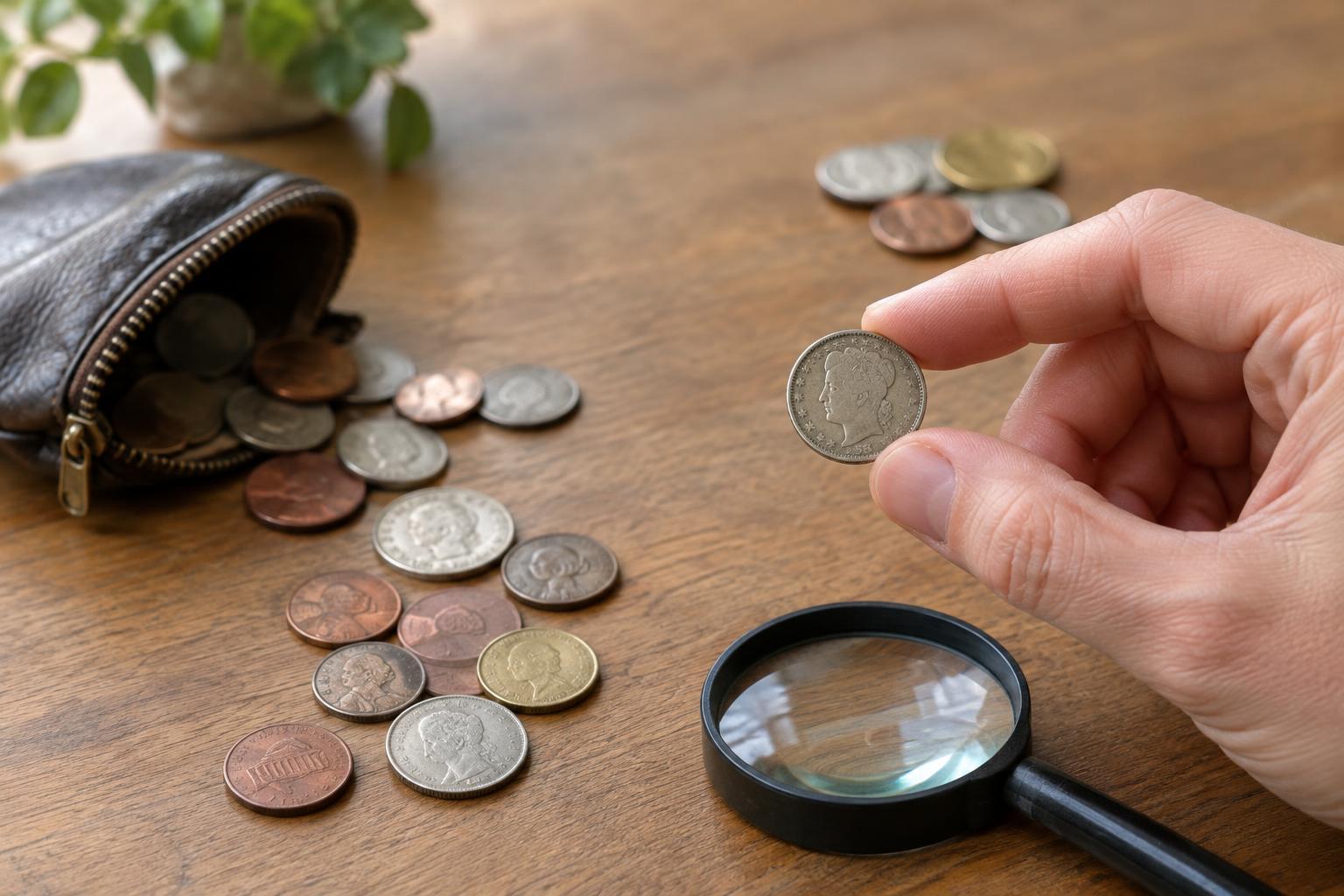
Handle or view a modest variety of coins before choosing a focus. Look at their dates, denominations, designs, inscriptions, and countries of origin. Notice whether you are drawn to the artwork, the history behind an issue, or the challenge of finding variations. A focus should make the next coin interesting to you, not merely give you a reason to fill an empty slot.
Choose a theme with clear boundaries
A theme turns a group of coins into a collection. You might collect one denomination from a particular country, coins featuring a design subject, or examples from a defined period. Even an appealing theme can become unwieldy if it has no limits. “Coins with animals,” for example, covers an enormous range. “Animal designs on coins I encounter in everyday circulation” is narrower and gives you a practical way to begin.
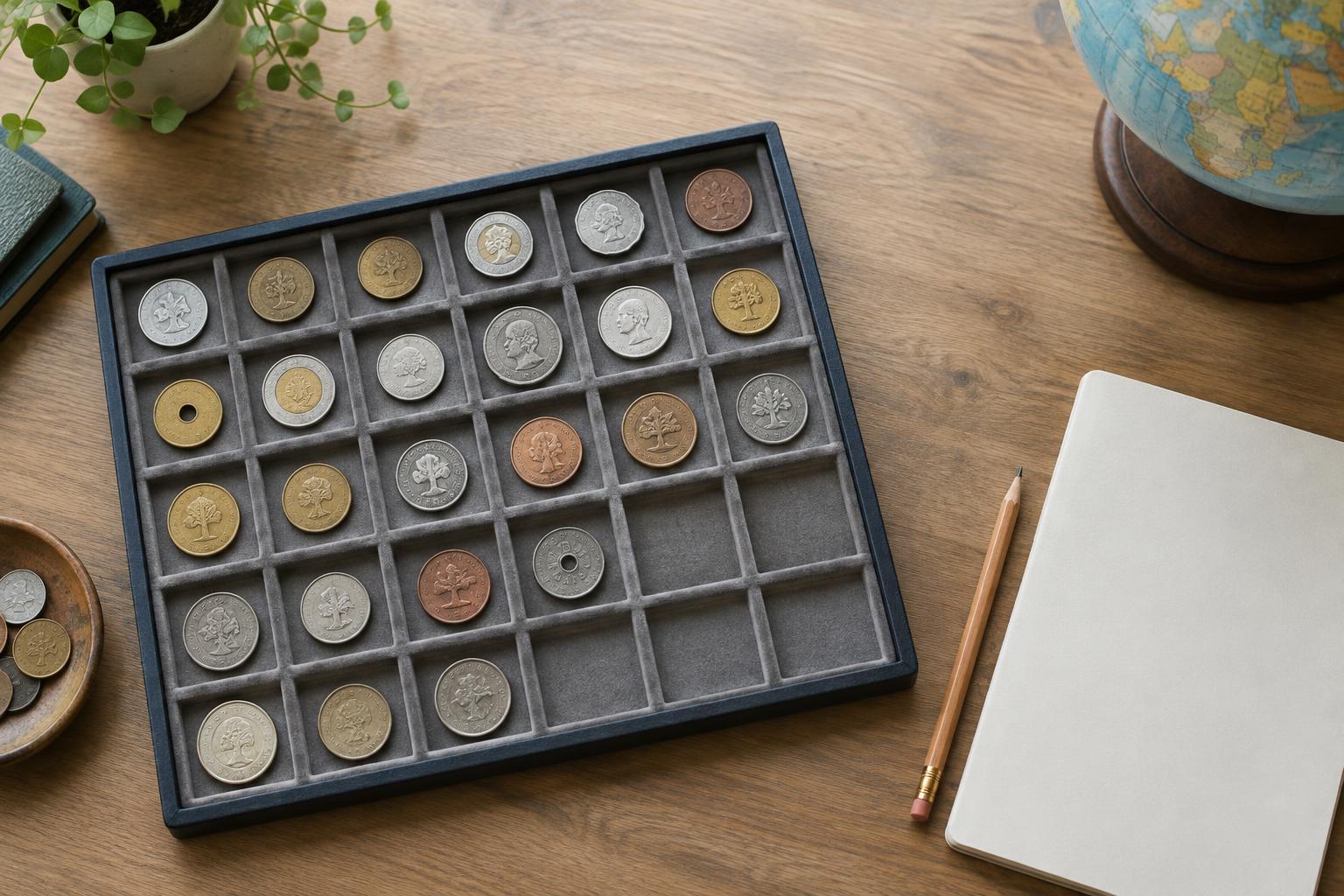
Write your focus as one sentence, then ask what belongs and what does not. You can set boundaries by place, date range, denomination, design, or how you obtain the coins. Decide whether different years count as separate goals and whether you want every example or simply a representative selection. There is no requirement to complete a set: a small collection chosen with care can be satisfying on its own.
Make sure the search fits your time and budget
Before committing to a theme, see whether you can find a few suitable coins without stretching your budget. Checking coins you already have, asking family members about spare change, or browsing educational references can help you understand the range of possible examples. If nearly every coin on your wish list seems difficult to locate or costly, consider a shorter period, a smaller group of designs, or a collection of representative types instead.
Plan for supplies as well as coins. Holders and a safe place to store them are part of the collecting experience, and shipping or other purchase costs can add up when you buy coins individually. Prices and availability vary with factors such as condition and demand, so a fixed spending limit per coin may be more useful than assuming a theme will always be inexpensive. It is fine to leave a space unfilled until the right example comes along.
Decide what matters about each example
Two coins with the same date and design may look quite different. Wear from circulation, scratches, staining, and other changes affect their appearance. Decide early whether your goal is to find readable, affordable examples or to seek coins with a particular level of detail. For a beginner, a coin whose main features you can identify often teaches more than a hard-to-find coin acquired simply because a checklist calls for it.
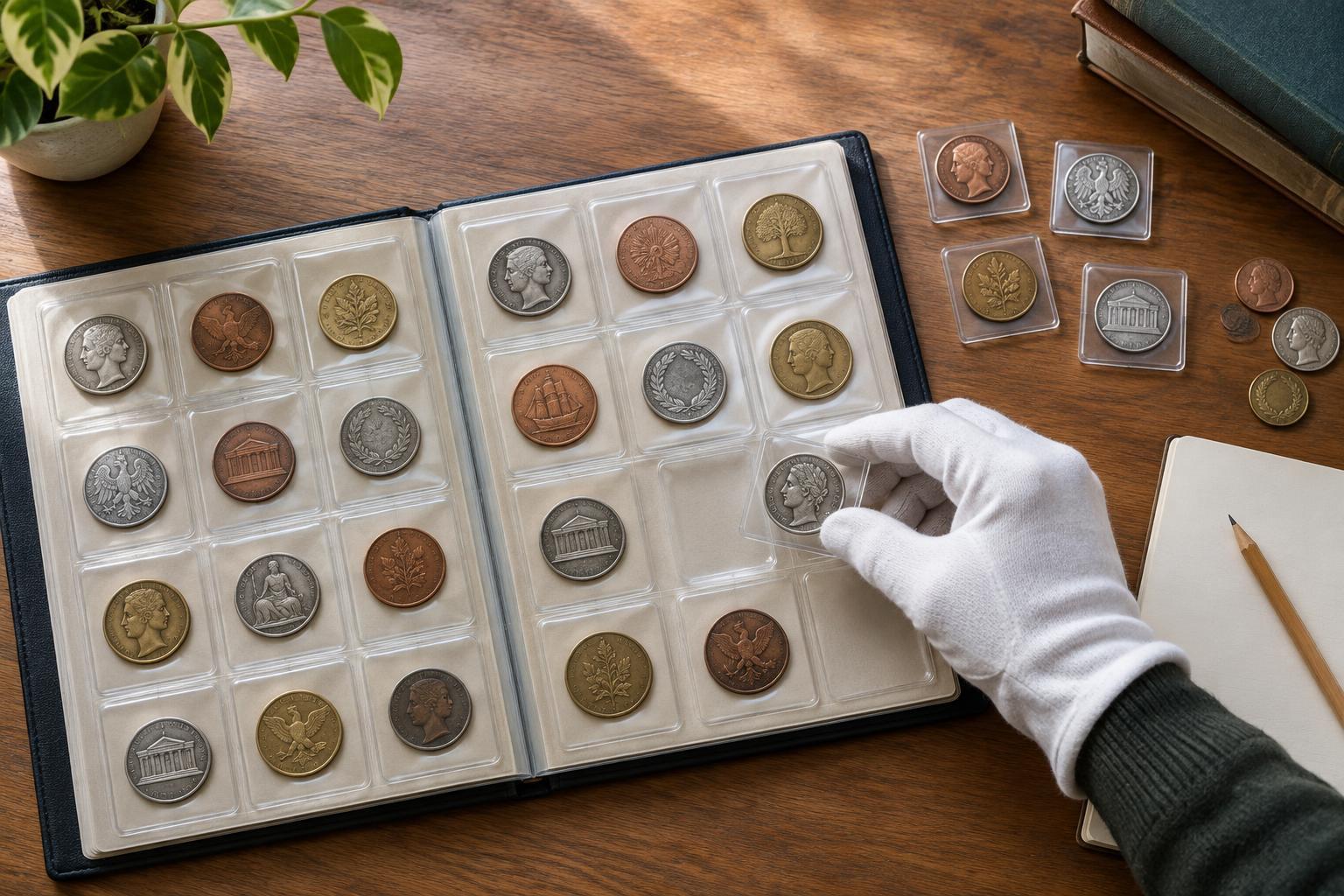
Be cautious about making condition rules so strict that they remove the fun of searching. You can record a well-worn coin now and replace it later if a clearer example turns up. Avoid cleaning coins to make them match: cleaning can change their surfaces and is generally not a useful shortcut to better condition. Handle coins by their edges when practical, and keep them in suitable holders so you can enjoy comparing them over time.
Keep a simple record and allow your focus to evolve
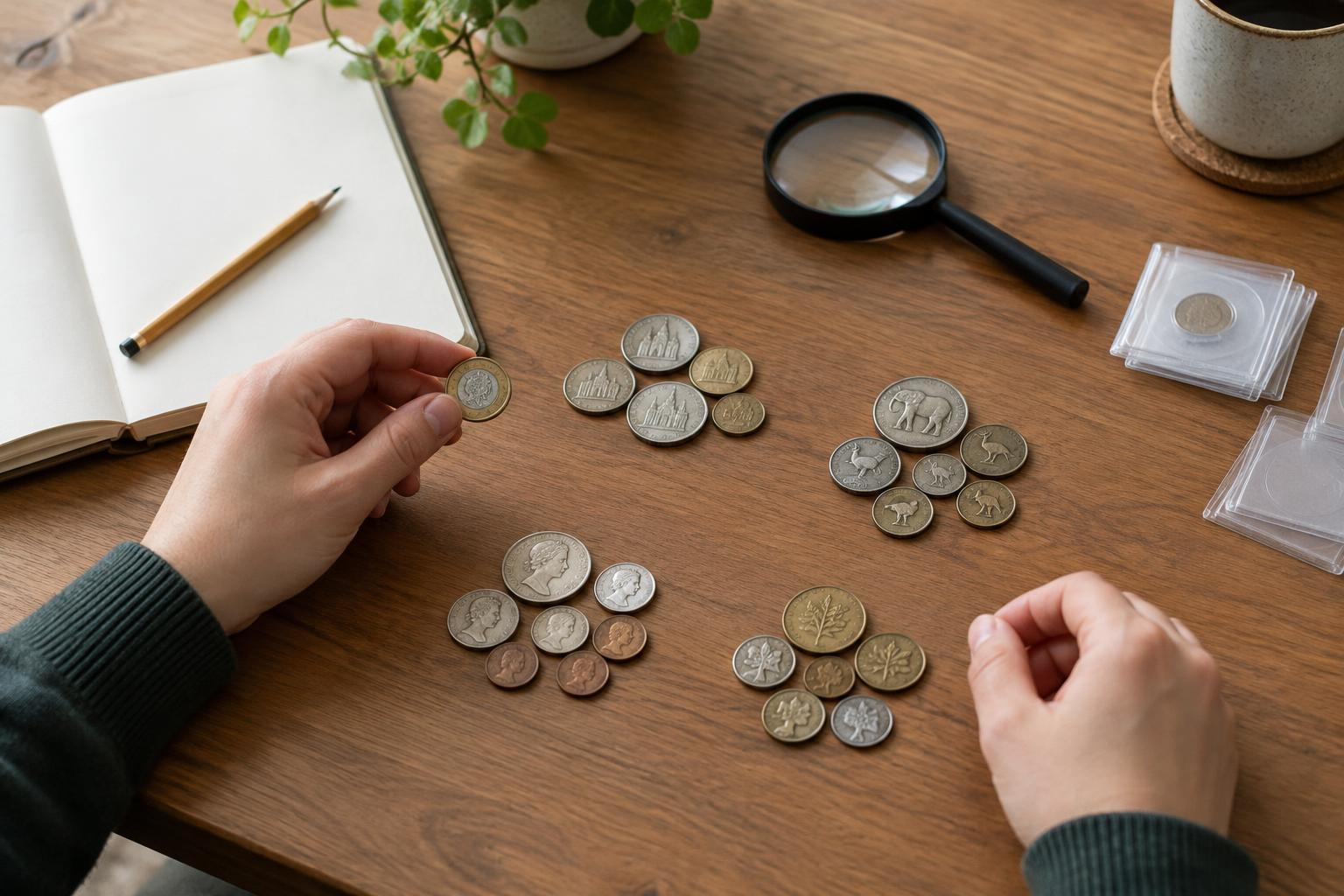
A basic record makes your focus easier to follow. For each coin, note its country or issuing authority, denomination, date, identifying design details, and where you found it. You can also record its condition in ordinary words and why you chose it. These notes help prevent accidental duplicates and let you see which parts of your theme are most interesting to you. A notebook or simple spreadsheet is enough.
After you have collected a handful of coins, revisit your one-sentence focus. Has it helped you decide what to look for, or does it feel too broad or too restrictive? You might narrow it to a favorite design, broaden it to include related coins, or start a second, small theme. A first collection is not a permanent contract. Its best purpose is to give your curiosity direction while you learn what you enjoy collecting.