Start with everything you can see
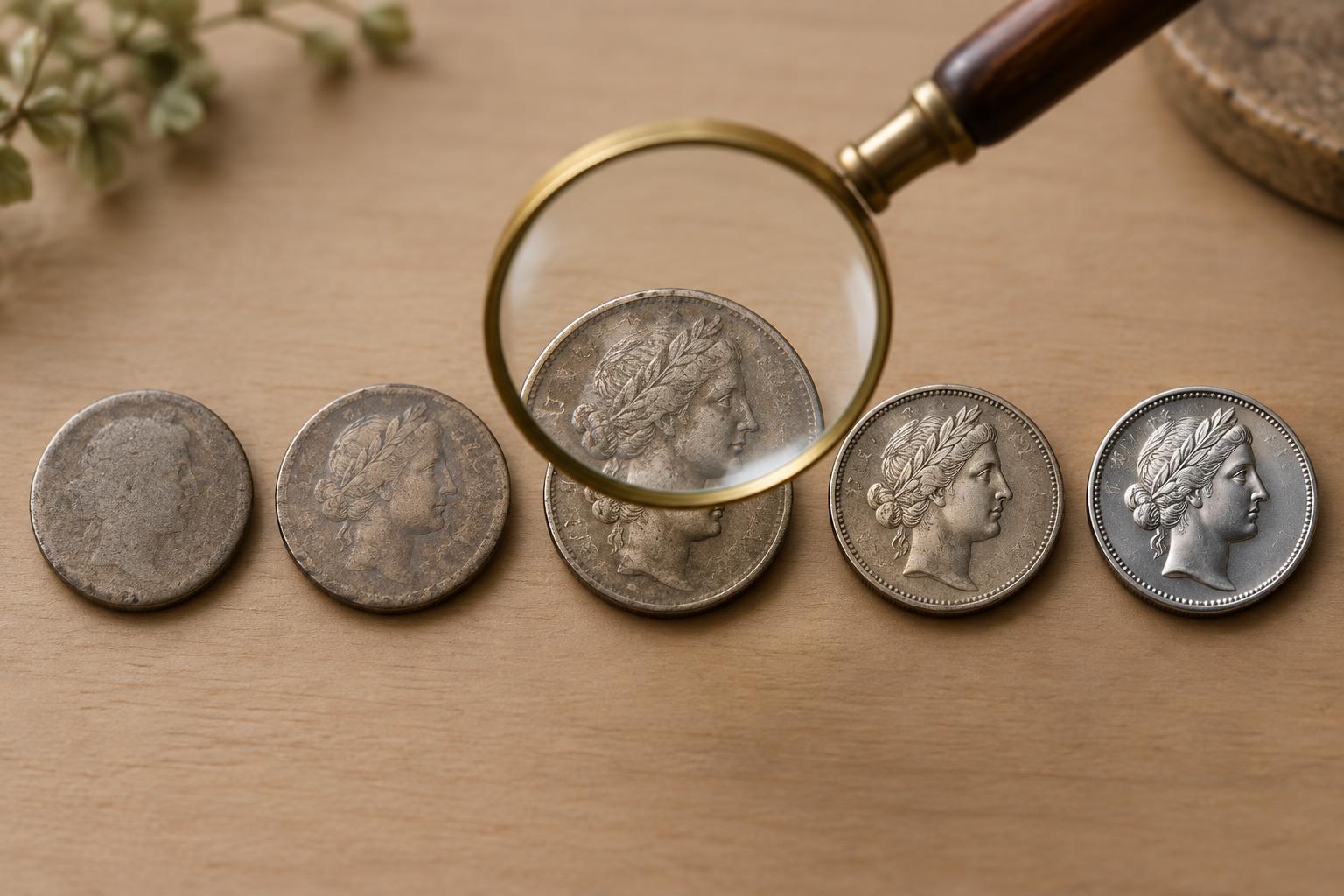
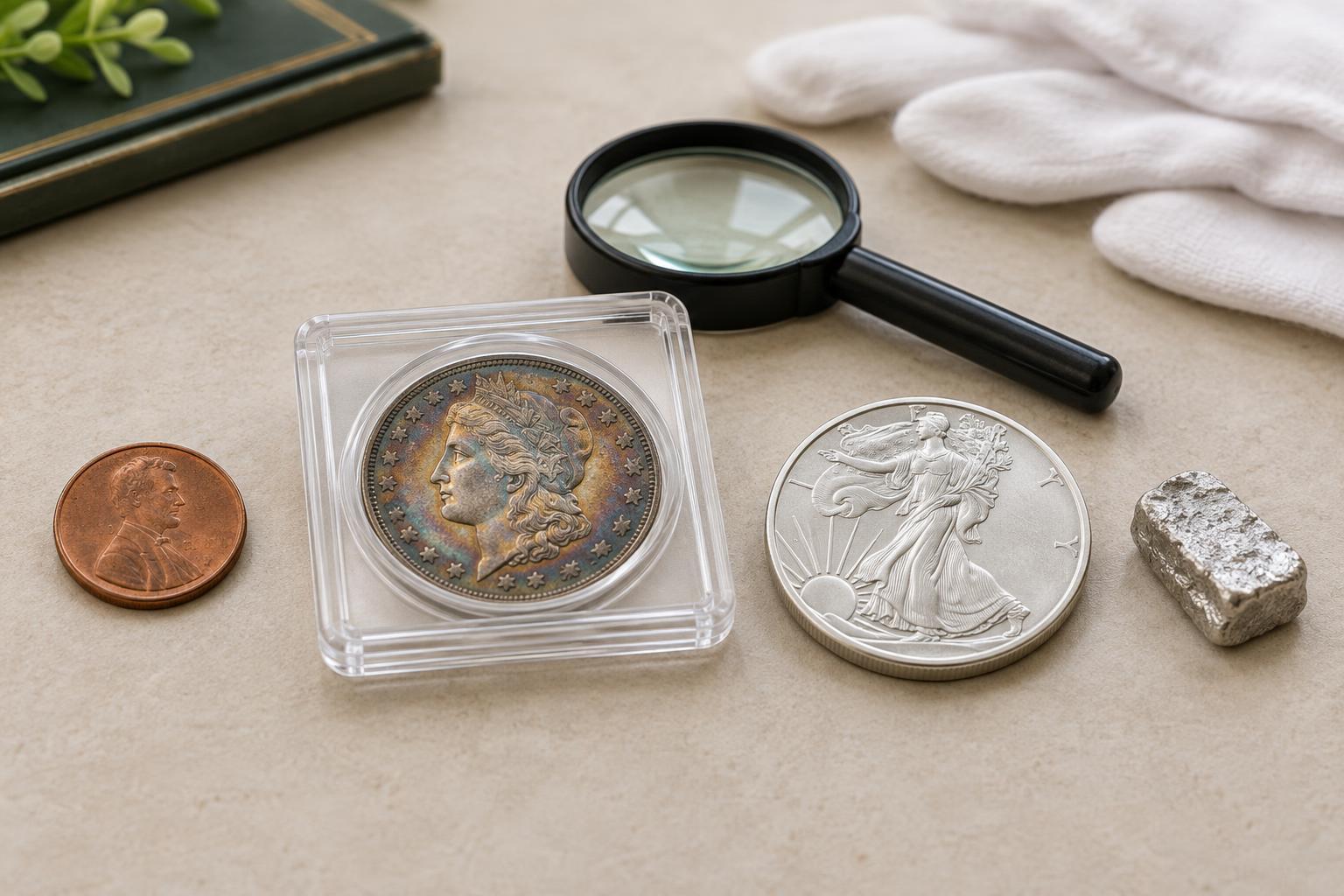
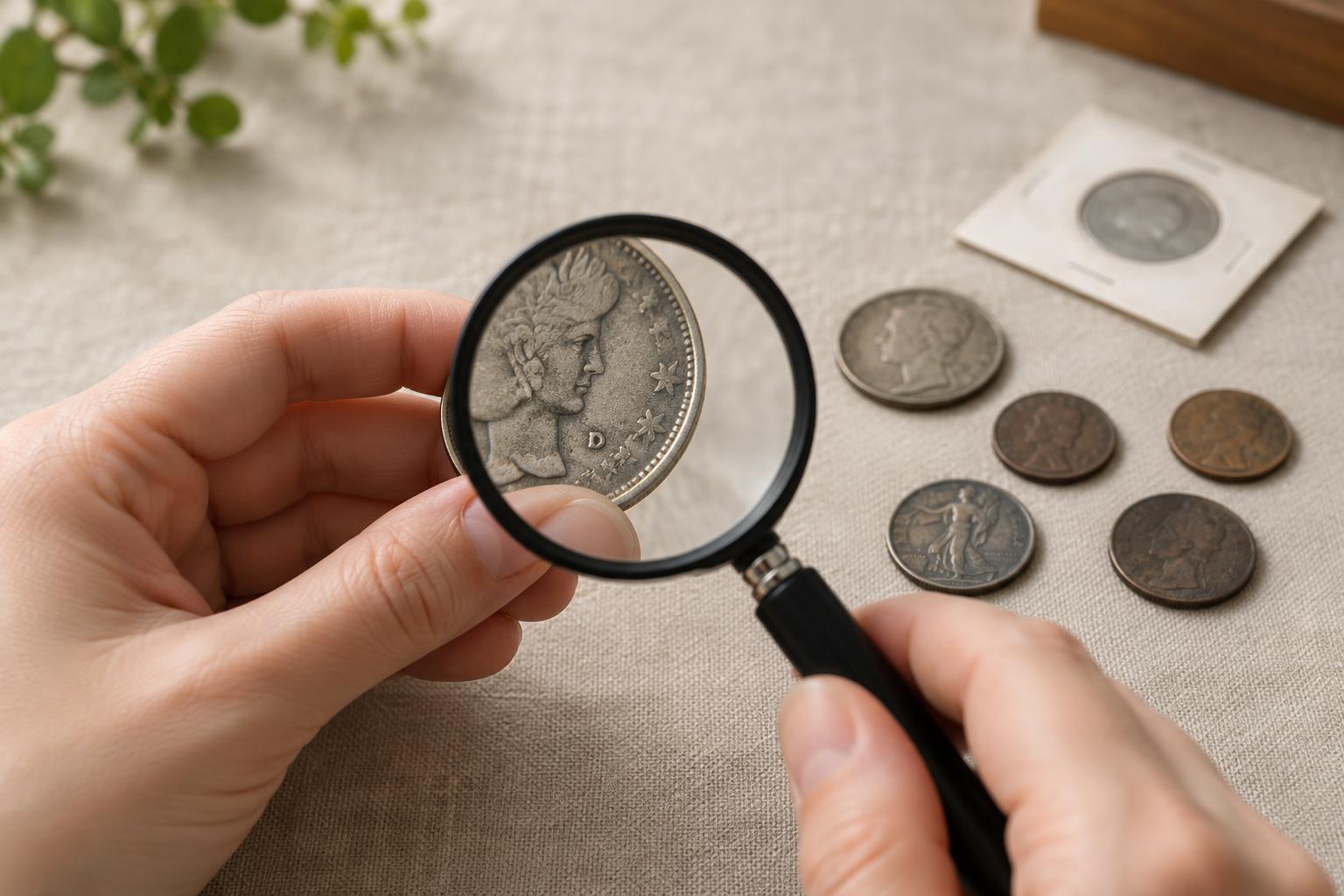
An unfamiliar coin can be difficult to read, especially when its lettering uses a script you do not know. Begin by examining both faces in good, indirect light. Turn the coin slowly: small inscriptions may run around the rim, beneath a portrait or inside a coat of arms. Check the edge as well, since some coins carry words or numerals there. A magnifier can help, but avoid rubbing the surface to make a detail clearer.
Write down what you can observe before deciding what it means. Record any words, numerals, portraits, animals, buildings, coats of arms and distinctive symbols. Note the coin’s approximate size, color and shape. These clues work best together; a familiar-looking numeral or flag-like design, by itself, may point you in the wrong direction.
Find the issuing country
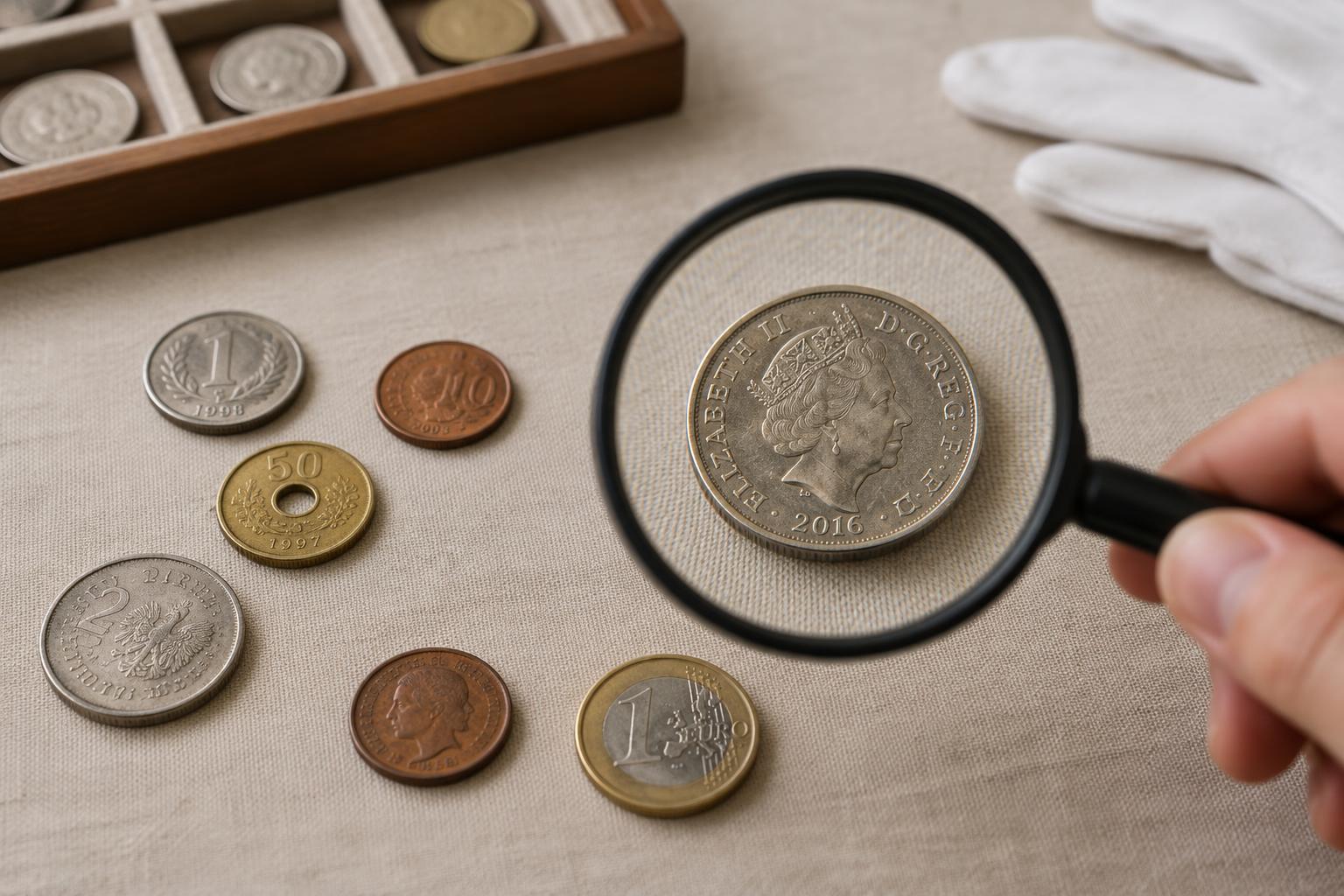
Look first for a country name. It may appear in the country’s own language rather than in English, and older coins may use a historical name. On some coins, the name runs around a portrait or emblem and is abbreviated. If you can copy even a few letters accurately, you have a useful starting point for comparing the coin with a reference.
Not every coin names a country plainly. A ruler’s name, national emblem or recognizable monument may offer a clue, but designs can be shared, imitated or changed over time. Also distinguish the issuing country from a mint mark. A small letter may identify where a coin was made, not the country that authorized it. When the evidence is unclear, treat the country as a possibility until the coin’s other details match.
Read the denomination, not just the largest number
The denomination is the coin’s stated face value, usually expressed as a number and a unit: for example, a major currency unit or a smaller unit within it. The number may be prominent, while the unit appears in smaller lettering nearby. On other coins, the value is written entirely in words. Search both faces before assuming that the first number you find is the denomination.
A large number might instead be a year or part of a commemorative inscription. Likewise, the same numeral can represent different values in different currency systems. Compare the words beside it, the coin’s design and its size with reference images of likely matches. A coin’s denomination tells you its stated value within a currency system; it does not establish what a collector would pay for it.
Locate and interpret the date
Dates often appear near the bottom of a design, beside a portrait or within a surrounding inscription. Inspect every cluster of numerals. Some coins carry more than one year, such as a year being commemorated and the year the coin was issued. A number following a ruler’s name may also be a year of that ruler’s reign rather than a familiar calendar year.
Do not assume that every coin uses the calendar or numeral forms you know best. Some dates use other scripts or calendar systems, and an unfamiliar date should be checked against a reliable coin reference before you convert it. Small letters near a date may be mint marks or design initials, not part of the year. If wear makes a digit uncertain, record it as uncertain rather than filling it in from memory.
Confirm the whole identification
Once you have a likely country, denomination and date, compare the entire coin with a catalog entry or clear reference image. Check both faces, the placement of inscriptions, the edge, and the approximate diameter. Coins from the same country and year can have different designs or denominations, so a match on one feature is not enough.
Keep a simple record of what you found and why you think the identification fits. A photograph of each face can help you revisit a hard-to-read detail without repeatedly handling the coin. Hold it by the edge when practical, and do not clean it for identification: cleaning can alter the surface while leaving the mystery unsolved. If a feature still does not match, leave the identification open and look for another explanation. Careful observation is more useful than a quick guess.