Why handling matters
A coin may be made of metal, but its surface can still be vulnerable. Fingerprints can leave oils and moisture behind, while sliding a coin across a table or rubbing it with a cloth can create marks. These changes may be especially noticeable on coins with reflective surfaces or little wear. The aim is not to avoid looking closely at your collection. It is to make each inspection deliberate, so you can see what you need without repeatedly exposing the coin to unnecessary contact.
Start by deciding what you want to check: a date, mintmark, design detail, possible damage, or the condition of a holder. If the detail is visible through a clear holder, leave the coin inside. Opening a holder is not a routine part of inspection, and some sealed holders are not intended to be opened at all.
Prepare the workspace before opening a holder
Choose a stable table with enough room for the coin, its holder, and your notes. Clear away drinks, food, and objects that could fall onto the coin. Place a clean, soft pad on the table to reduce the risk of damage if a coin slips. A pad should be free of grit: even a soft material can cause trouble if hard particles are trapped on its surface.
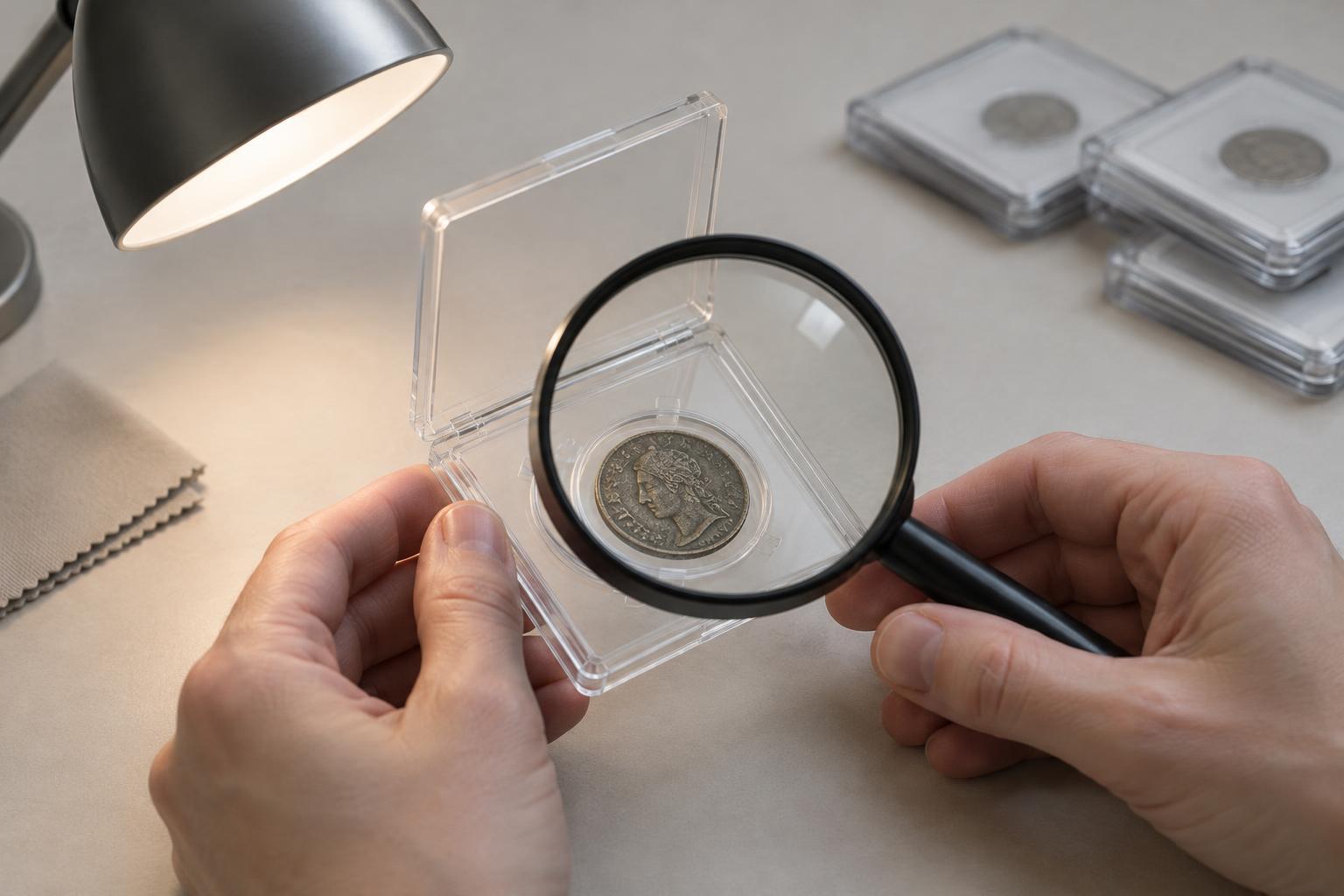
Set up your light and magnifier before taking out the coin. A steady lamp that you can aim from different angles is often more useful than a very bright light fixed in one position. Have the storage container ready so the coin can go straight back when you finish. Working with one coin at a time also makes it less likely that coins will touch each other or end up in the wrong holders.
Look first, then touch only if needed
Begin with the coin resting securely in its holder or on the prepared surface. Look at both sides under ordinary light before reaching for magnification. Tilt the light, rather than the coin, to see how surface marks, lettering, and raised details appear from different directions. A magnifier can help with small features, but it also makes ordinary texture look dramatic. Step back to a normal viewing distance before drawing conclusions about a mark.
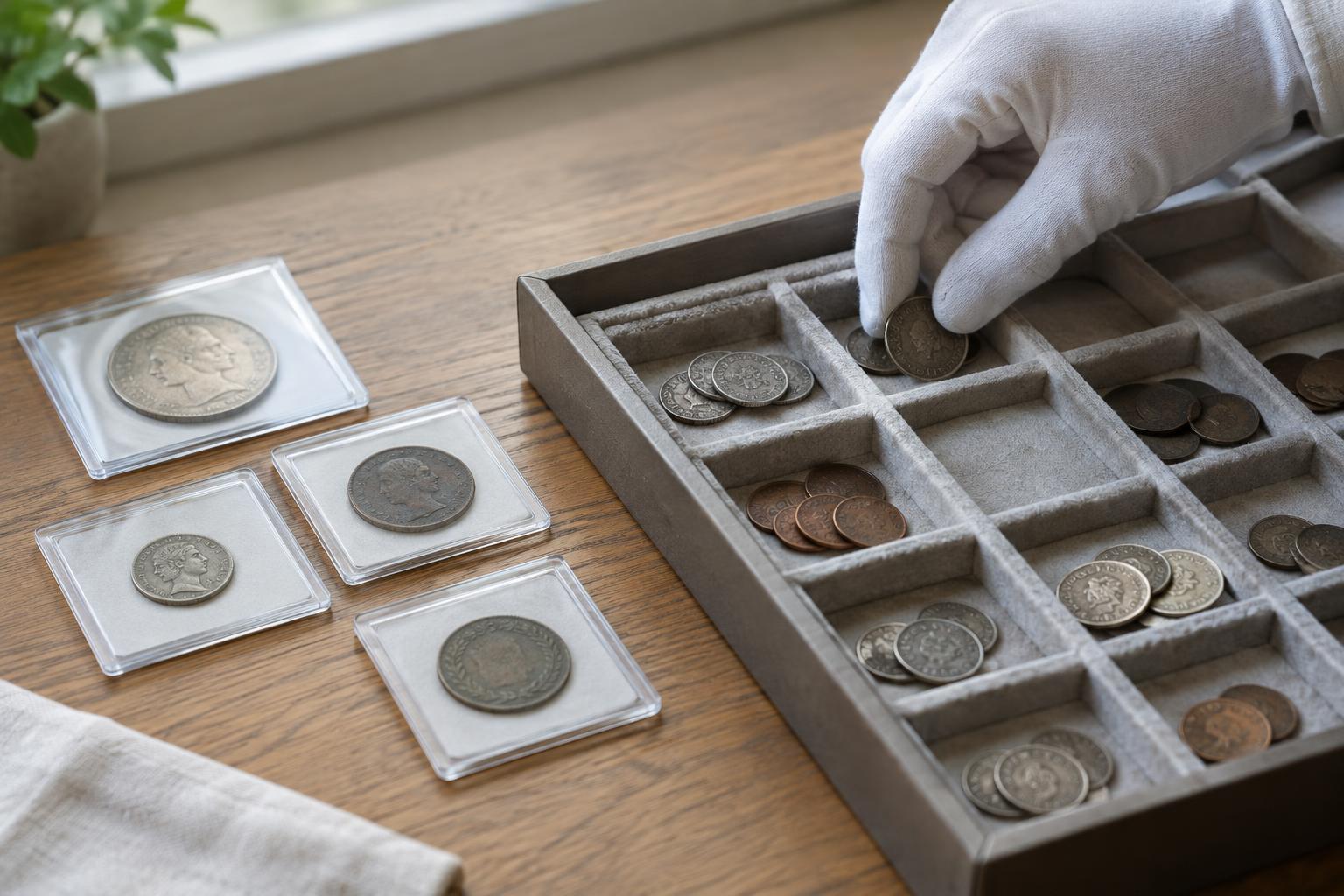
If you need to pick up an unholdered coin, handle it by the edge with clean, dry hands, over the padded table. Keep your fingers away from the faces, including the areas near the rim. Some collectors use gloves, but loose fabric can reduce grip or catch on an edge; gloves are not a substitute for careful handling. Avoid passing an exposed coin from hand to hand. Put it down securely before another person examines it.
Inspect without trying to fix what you see
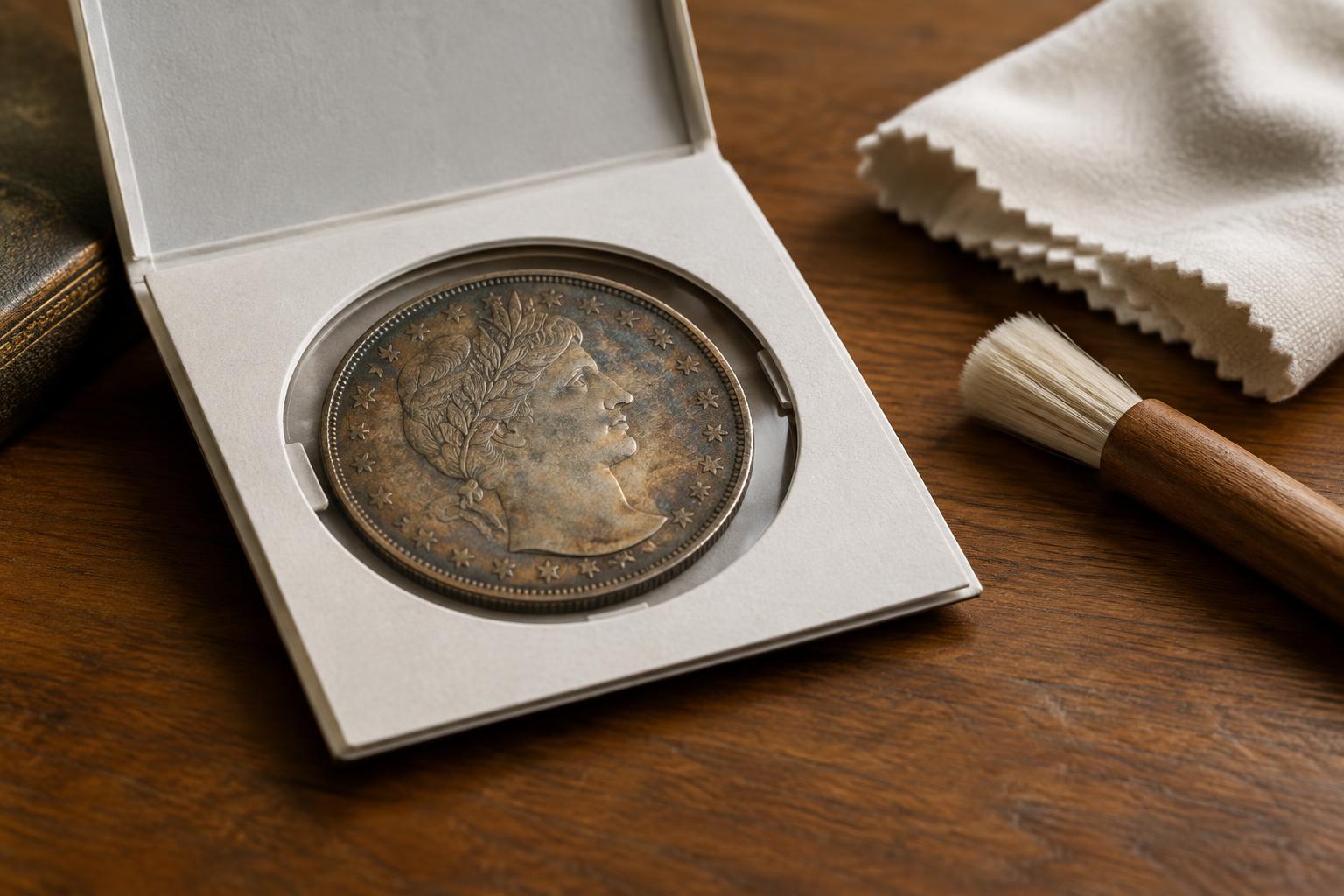
Inspection may reveal spots, toning, dirt, or scratches. Resist the urge to wipe the coin for a better view. Rubbing can add fine marks, and washing or applying household products may alter the surface. Even a mark that looks removable may be safer to document and leave alone. If you are unsure whether a feature is part of the design, minting process, or later damage, compare it with reliable reference images or another example rather than testing it with a tool.
Keep notes brief and specific. Record where a feature appears and what it looks like under the light you used. A photograph taken while the coin is safely supported can help you compare it later without opening its holder again. Photos may not capture color or surface texture exactly, so treat them as a record of your observations rather than a complete replacement for viewing the coin.
Finish with a storage check
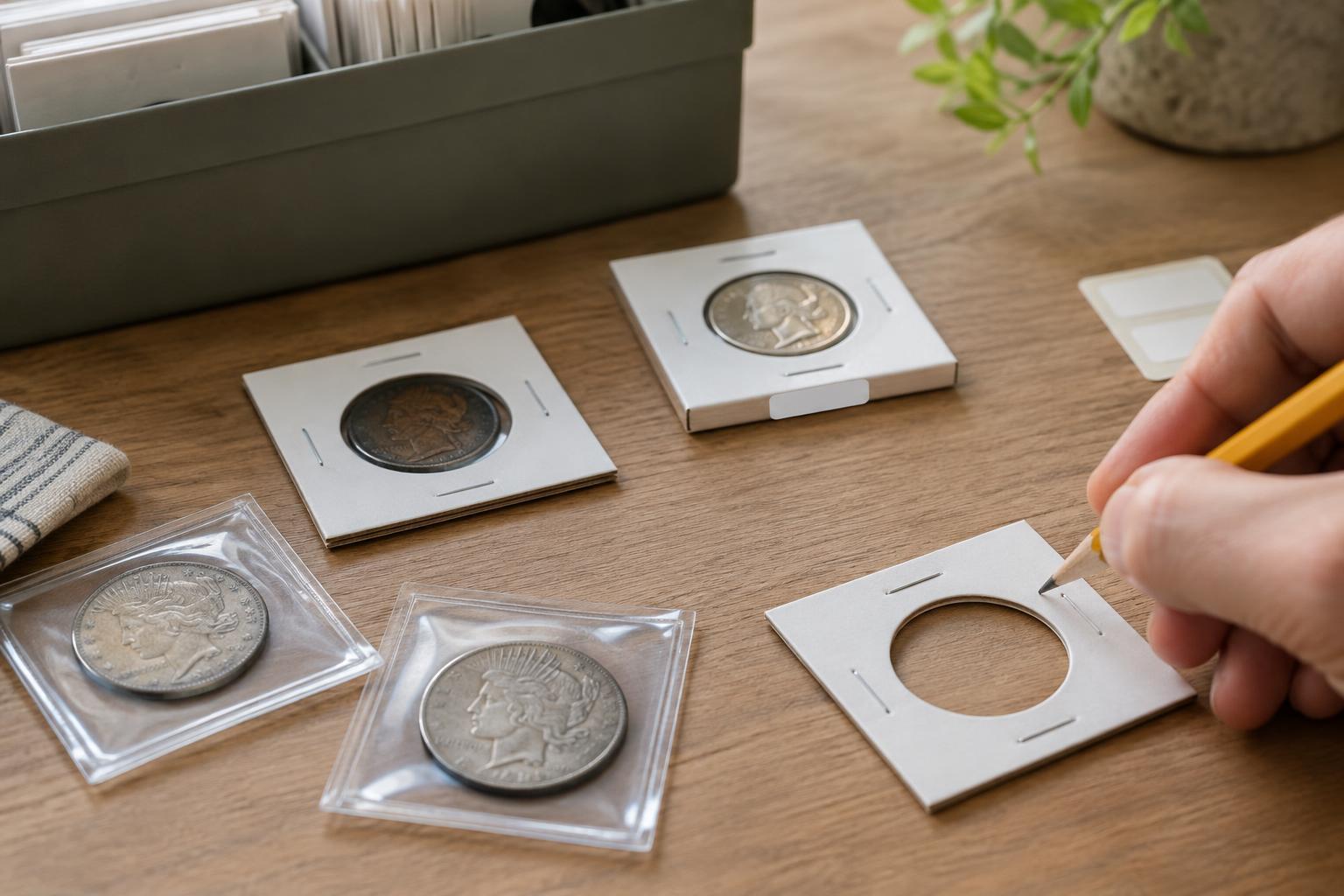
Before putting the coin away, check that its holder is clean, intact, and suitable for the coin’s size. A loose coin may shift inside an oversized holder; a holder that is difficult to close may press against its surface. Choose materials sold for coin storage, and be cautious with unidentified soft plastics that may not be intended for long-term contact with coins. If you replace a holder, prepare the new one first to keep the transfer short.
Return the coin to its labeled place and close the storage container. Store the collection where temperature and humidity are reasonably stable, away from spills and frequent disturbance. A consistent routine—prepare, observe, record, and put away—makes inspection easier to repeat. More importantly, it lets you enjoy a close look while keeping direct handling to a minimum.