Keep the label on the holder, not the coin
Labels make a collection easier to browse, but a coin should never be used as the writing surface. Ink can mark a coin, and adhesive or its residue can be difficult to remove safely. Even when a mark is not immediately visible, placing a sticky label against a coin creates an avoidable point of contact. The aim is to identify the coin while keeping writing materials on the outside of its holder.
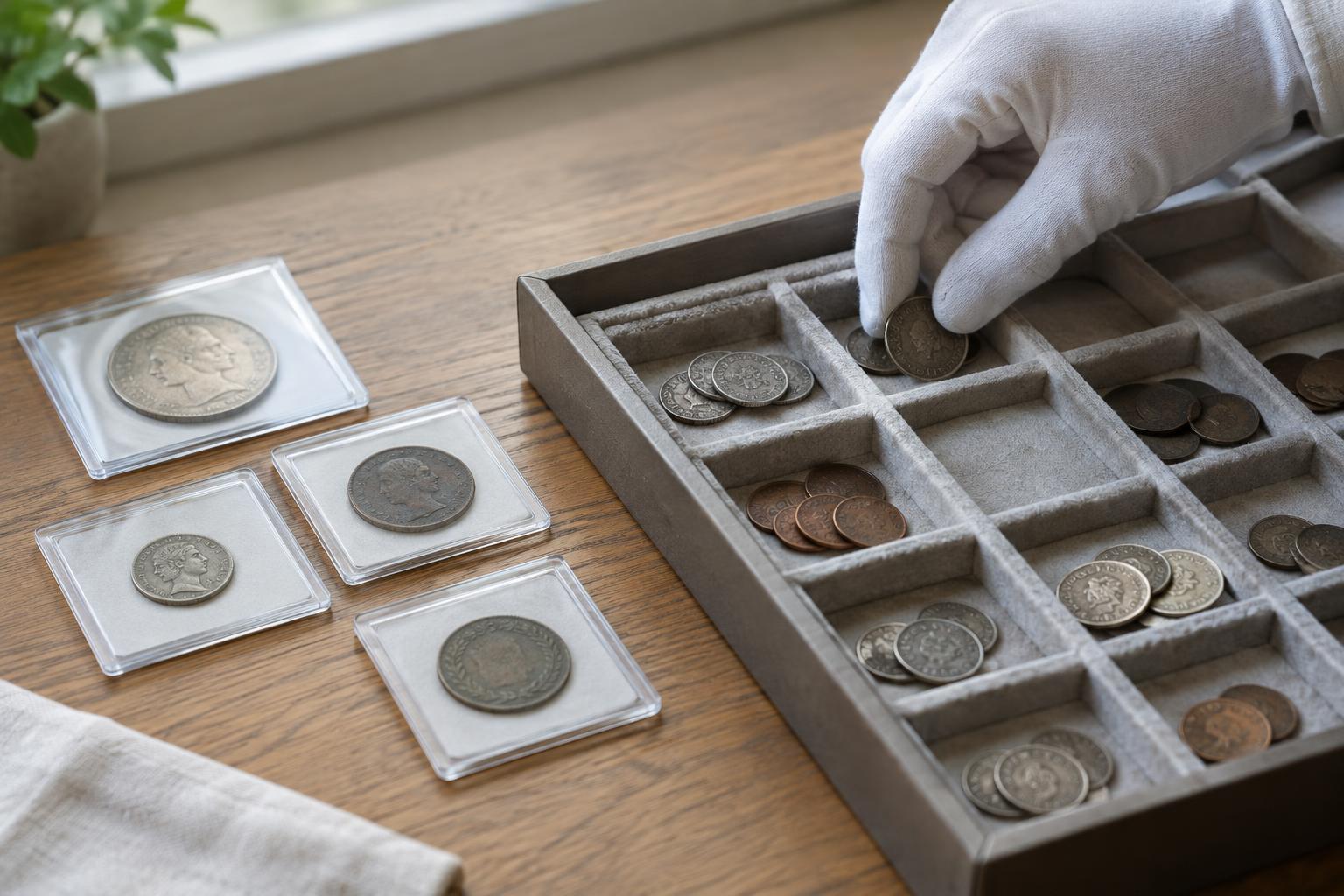
Before labeling, look at how the holder closes and where the coin rests. Choose a space that does not cover the design, date, mint mark, or other detail you may want to inspect. If a holder has no suitable labeling area, use a separate sleeve, envelope, tray divider, or inventory record rather than squeezing a label into contact with the coin.
Write before the coin goes into a new holder
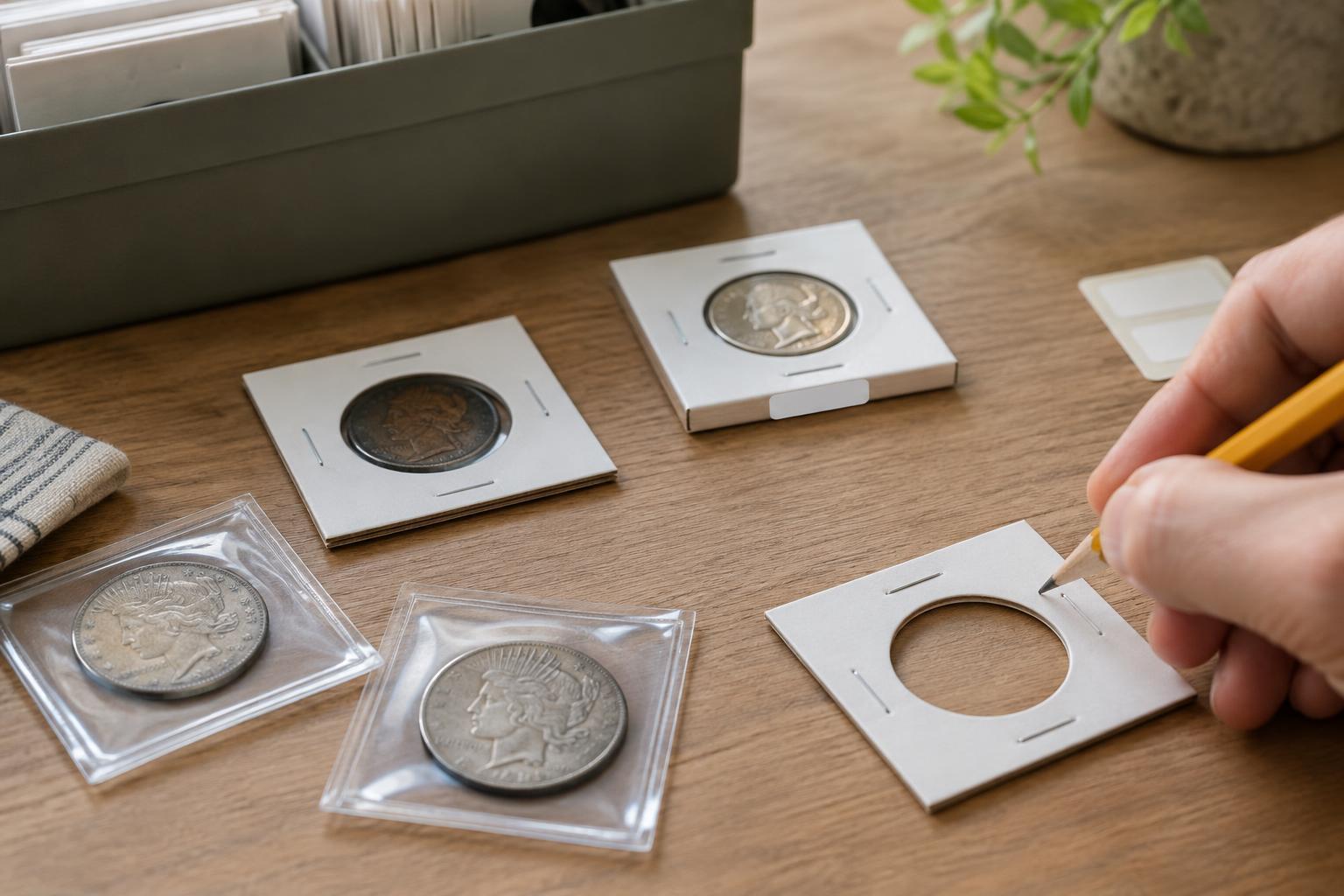
When preparing an empty holder, add its label first and let any ink dry fully before inserting the coin. This avoids pressing a pen against a holder with a coin inside and reduces the chance of transferring wet ink. Write on the intended paper area of a cardboard flip, on the outside of a suitable envelope, or on an insert designed for a plastic holder. Do not write on a loose slip of paper that will lie directly against the coin.
For a coin already housed safely, there is usually no need to remove it just to improve its label. If the exterior has a usable writing area, label it there without applying heavy pressure. Otherwise, place the holder in a labeled outer sleeve or give it an inventory number that points to a separate record. Fewer unnecessary transfers mean fewer chances to drop, touch, or misplace the coin.
Use adhesive only where it cannot reach the coin
A self-adhesive label can be useful on the outside of a rigid box, storage divider, or other surface separated from the coin. Avoid sticking labels inside a pocket or across an opening where an edge could curl toward the coin. Adhesives vary, and a label that stays in place today may loosen over time. Check stored holders occasionally for lifting corners or residue.
When choosing holders and inserts, look for products intended for long-term coin storage and follow their instructions. Avoid assuming that every clear plastic pocket or household tape is suitable for coins. If you are uncertain about a material, keep it outside the coin’s immediate holder. Do not tape a coin into place or use glue to repair a holder around one; replace a damaged holder instead.
Record enough to identify the coin, not every detail
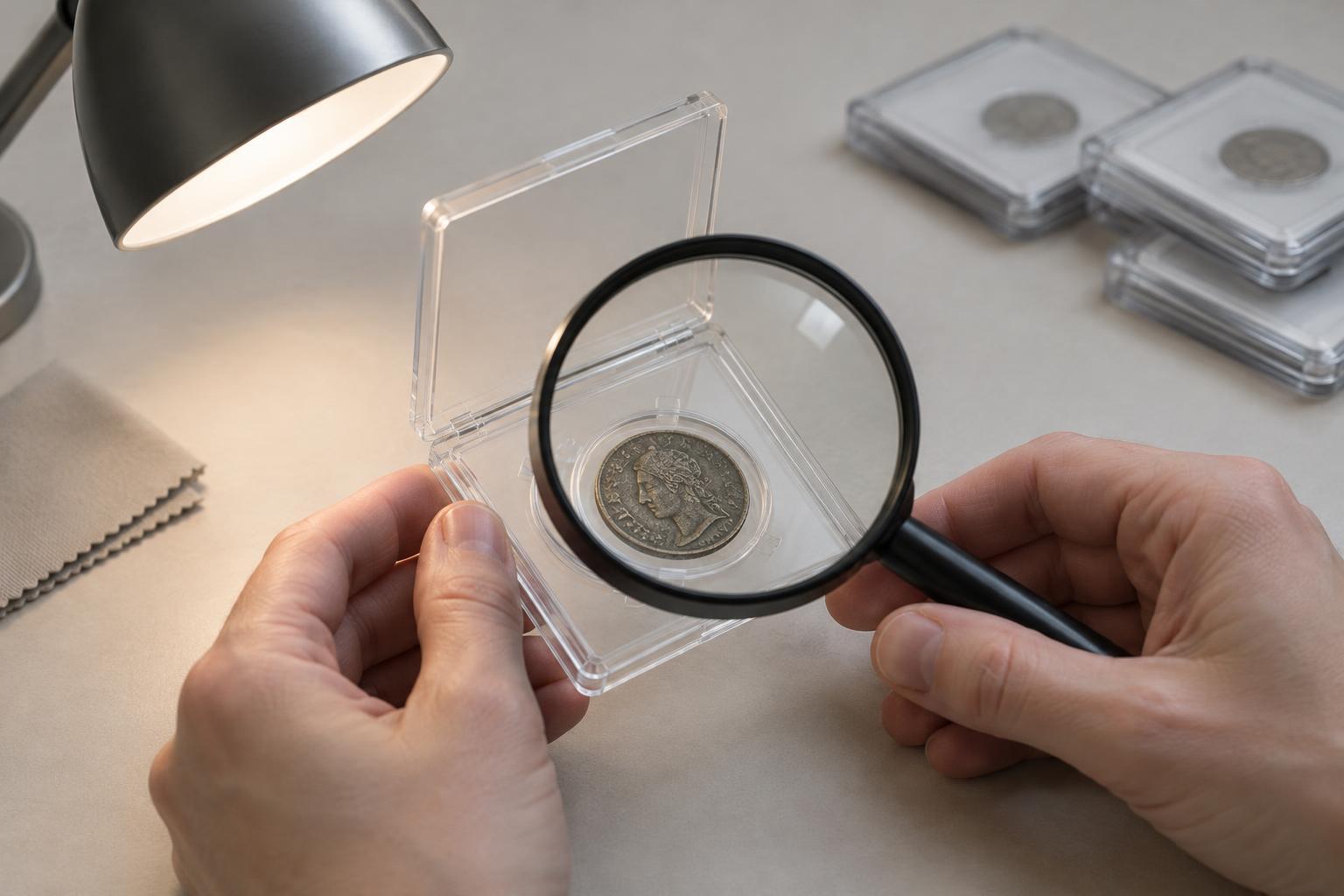
A short label is often the most readable. The country or issuing authority, denomination, date, and mint mark, when present, may be enough to distinguish one coin from its neighbors. Add a catalog reference or variety name only when you are confident of the identification. If a feature is uncertain, mark it as a question in your separate notes rather than presenting a guess as fact on the holder.
An inventory number is especially helpful for small holders. Write the same number on the holder and in a notebook or digital list, then keep longer notes there: where the coin came from, visible features, measurements you have taken, and any questions to revisit. If you record a purchase price, treat it as part of your collecting history, not as a statement of the coin’s present value. Coin values can vary with condition, identification, and demand.
Make the system easy to maintain
Use a consistent label layout so you can find information at a glance. For example, put the inventory number in the same corner of every holder and write the coin’s basic identification beneath it. Check each entry against the coin before filing it, especially if you are labeling several similar pieces at once. A neatly written label is not useful if it belongs to the wrong coin.
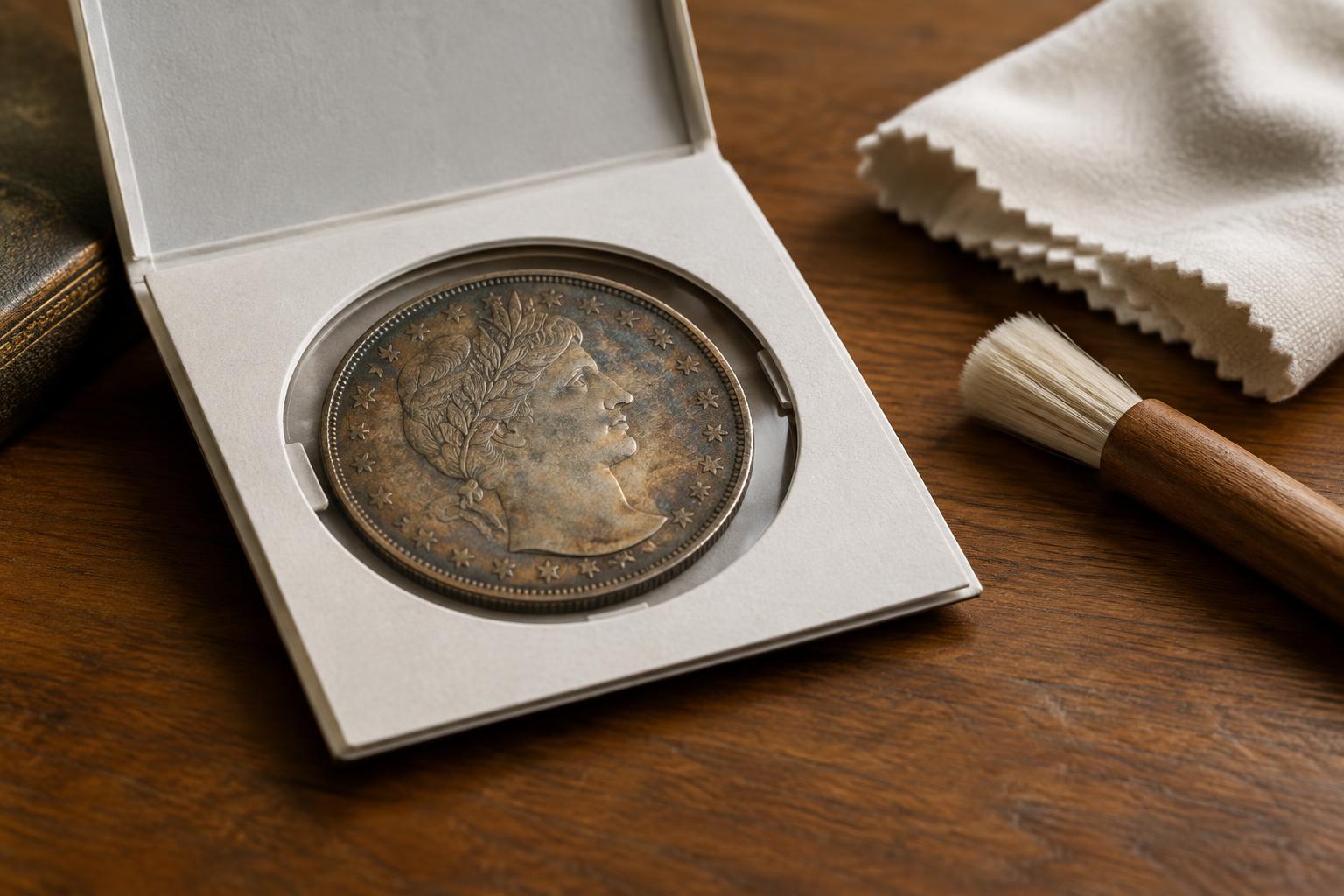
Keep labels legible, but do not sacrifice the holder’s protective function to make room for more writing. Leave sealed or professionally encapsulated holders closed, and put any additional information on their exterior storage sleeve or in your records. Store the finished holders in a clean, dry, stable place appropriate for the holder type. Good labeling works alongside careful storage: it helps you find and study a coin without having to handle it more than necessary.