Why storage marks happen
A coin does not have to be dropped to acquire a scratch. Coins can slide against one another when a box is moved, rub against a hard container, or catch on a staple or piece of grit. Even a coin that looks clean may carry tiny particles that mark another coin’s surface. Once a scratch is there, storage cannot undo it, so the most useful approach is to limit unnecessary contact.
Not every coin needs the same protection. A common group of coins being sorted by date may be kept in bulk for convenience, while a coin chosen for its condition or personal significance deserves an individual holder. Think about how often you will handle or move the coins, as well as what you want to preserve. A stationary container of duplicates presents a different risk from a box carried to meetings or taken out for frequent viewing.
Give coins worth protecting their own space
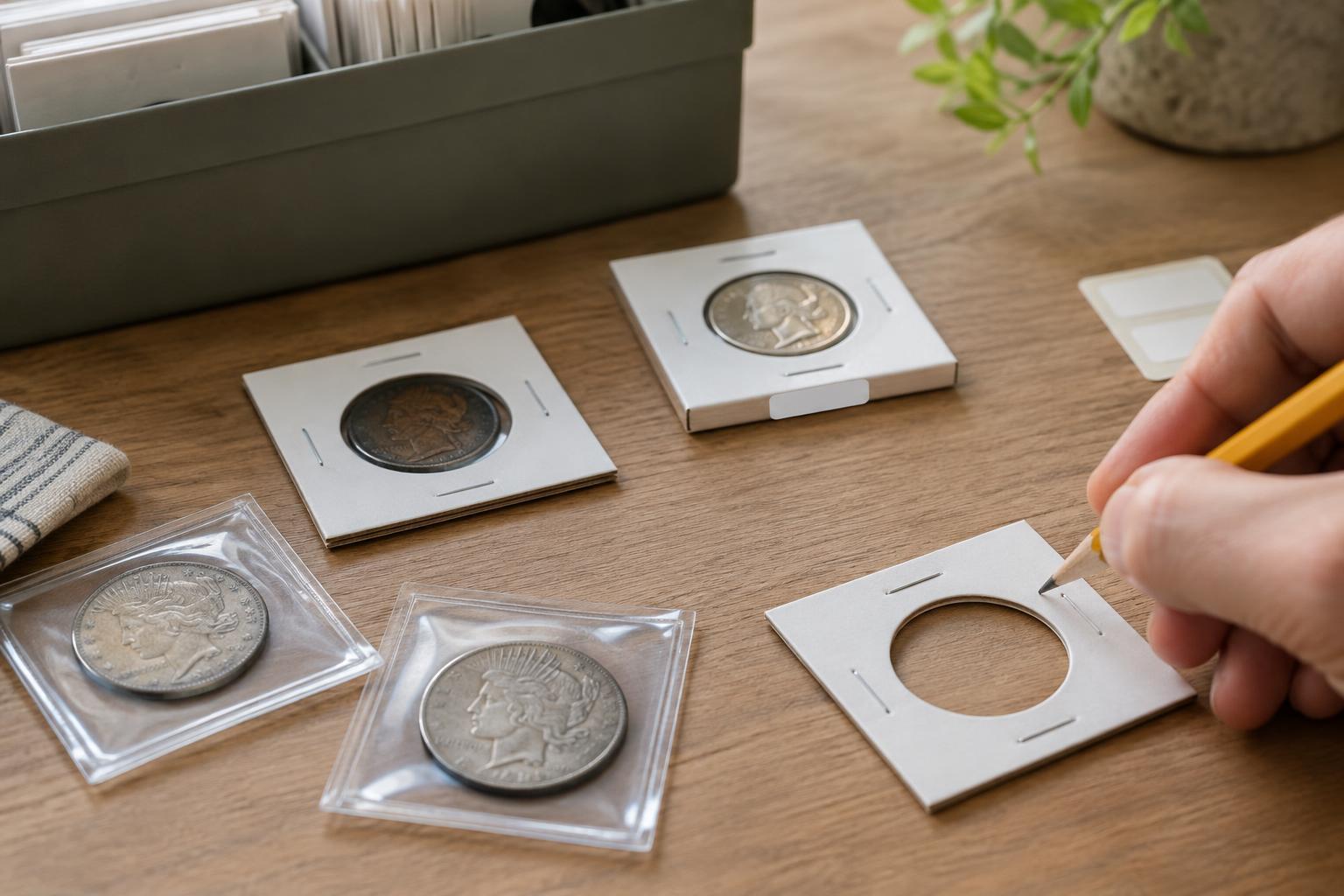
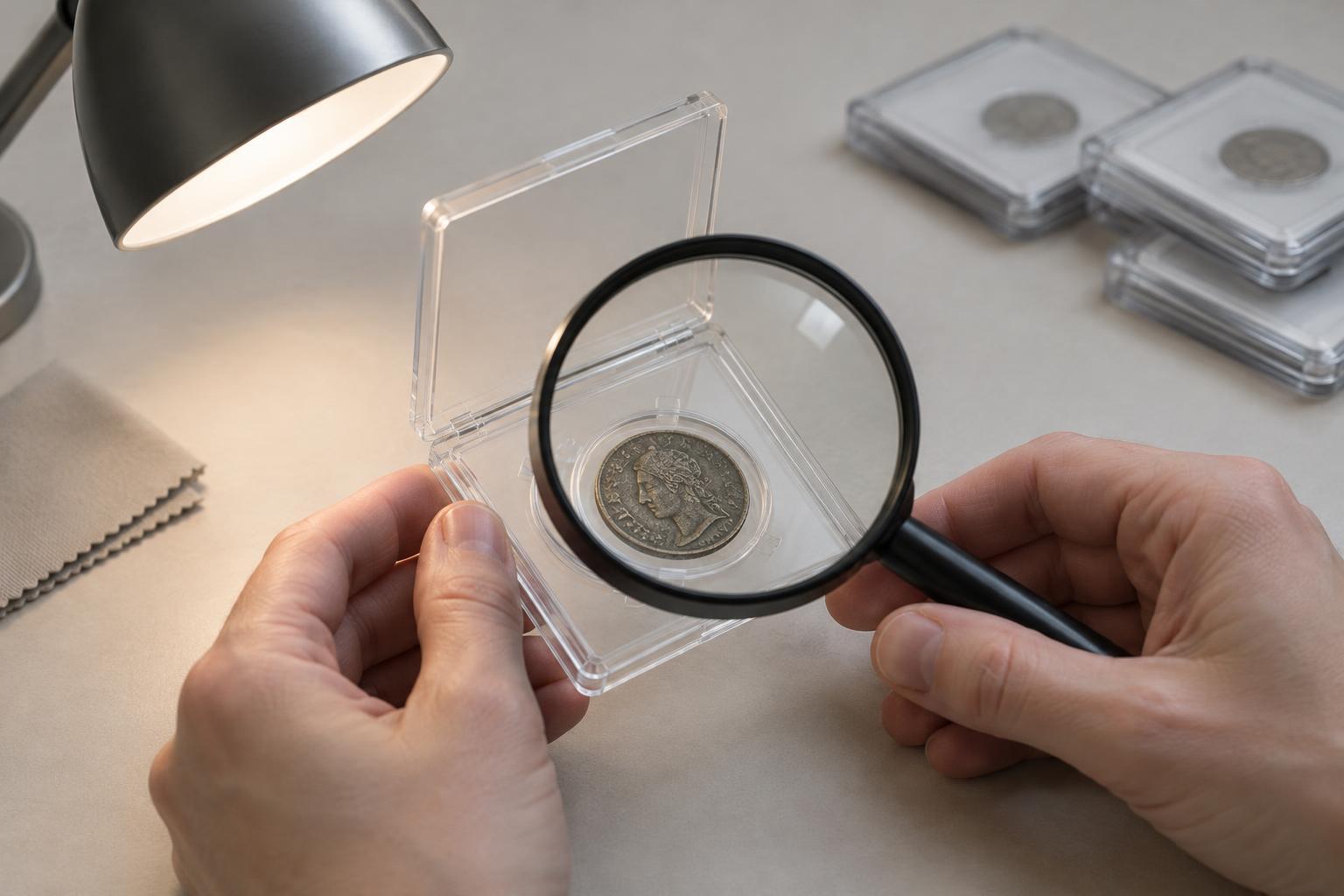
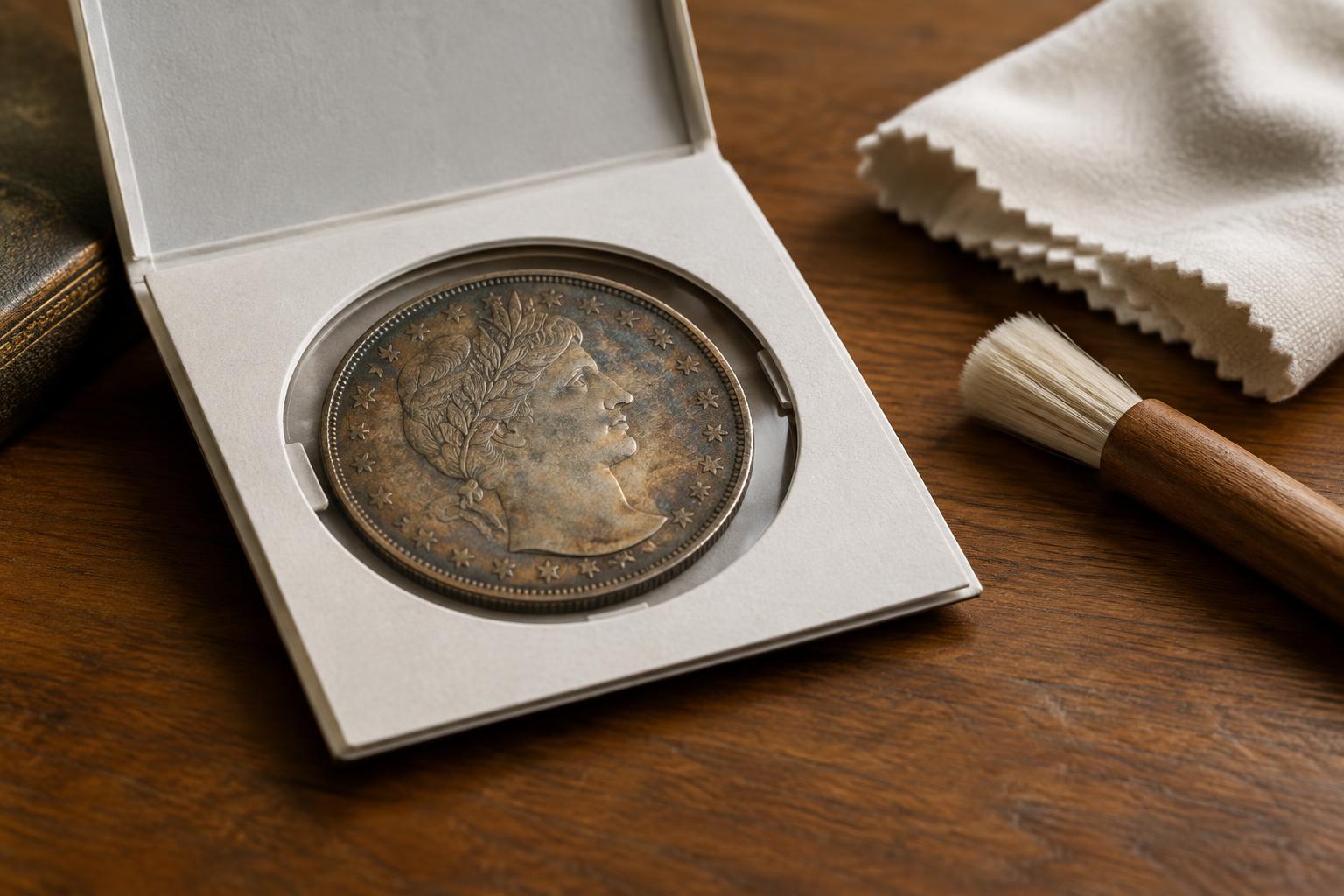
Individual storage is the simplest way to prevent coins from striking each other. A correctly sized coin capsule, a suitable flip or a cardboard holder with a clear window can separate a coin from its neighbors. Choose materials intended for coin storage; avoid soft plastic with unspecified ingredients, since some plastics can change over time and leave residue on coins. If using a holder with staples, flatten the staples fully and keep their edges away from any coin you remove or insert.
Fit matters as much as the type of holder. A coin that rattles inside an oversized capsule may still rub against the holder, while one forced into a tight opening can be marked during insertion. Hold the coin by its edge, work over a clear, soft surface and let it settle into the holder without pushing on its faces. For coins with especially delicate surfaces, minimize handling rather than repeatedly changing holders.
Label the outside of each holder with information you know, such as denomination, date or where the coin belongs in your collection. That makes it easier to find a coin without opening several holders. Keep labels, adhesives and ink off the coin itself.
Make bulk storage less abrasive
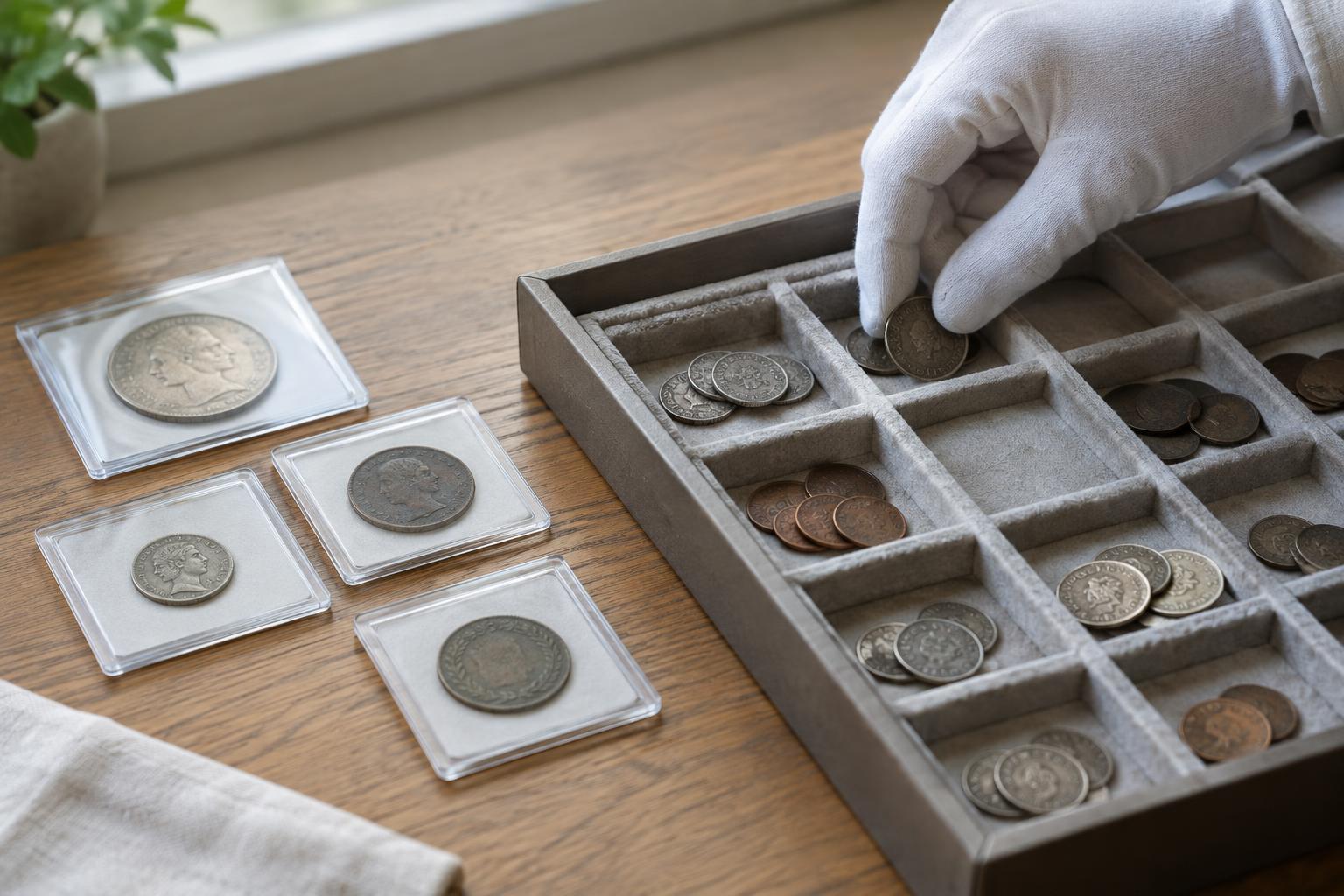
Bulk storage is useful for ordinary duplicates or coins awaiting sorting, but it should not mean one overfilled bag that is shaken every time you look for a date. Separate coins into smaller groups using rigid containers, trays or coin tubes of an appropriate size. Grouping by denomination and approximate size helps reduce movement and makes sorting easier. Do not force an extra coin into a full tube or pack a container so tightly that coins must be scraped out.
If coins must share a container, keep that container steady and avoid pouring them from one hard vessel into another. When you need to sort them, tip out a small number onto a clean, soft work surface rather than rummaging through the whole group. Check trays and containers for grit before use. Dividers can stop groups from mixing, but they should be secure and free of rough edges.
Set aside unusually appealing or better-preserved coins as you sort. A bulk-storage system can be practical without treating every coin as interchangeable. Moving a standout coin into its own holder promptly prevents it from continuing to rub against the rest of the group.
Handle and move stored coins carefully
Good storage can be undone by a hurried transfer. Wash and dry your hands before handling coins, hold them by their edges and use a clear work area where a slipped coin will not strike a hard floor. If you use gloves, make sure they are clean and that you can grip the coin securely; an awkward grip may be worse than careful handling with clean hands. Avoid wiping dust from a coin’s face, since rubbing particles across the surface can leave marks.
Before moving a collection, close holders and lids securely and arrange containers so they cannot tumble inside a larger box. Keep heavy items from resting on flips or lightweight holders. Carry tubes and boxes upright when possible, and open them over your work surface rather than in your hands. These small habits matter most for coins that are taken out or transported often.
Check the storage setup over time
Store coins in a reasonably stable, dry place away from spills and large swings in temperature or humidity. These conditions help protect the collection generally, though they do not replace protection from physical contact. Inspect holders and containers occasionally for cracks, loose closures, rough edges or changes in the plastic. Replace a damaged holder carefully, and avoid opening intact holders simply to check the coin more often.
The goal is not to make every coin untouchable. It is to choose a level of separation that fits each group, then handle the coins consistently. Individual holders for coins you want to preserve, sensible smaller batches for ordinary duplicates, and a clean surface for sorting will prevent many avoidable storage scratches.