A coin’s surface is part of its story
When a coin looks dark or dull, cleaning it may seem like an obvious improvement. Collectors, however, often care more about an intact surface than a bright one. A coin’s color, fine texture, and signs of age can help show how it has been stored and handled. Removing those features may make the coin look newer at first glance while leaving it less appealing to someone who collects coins.
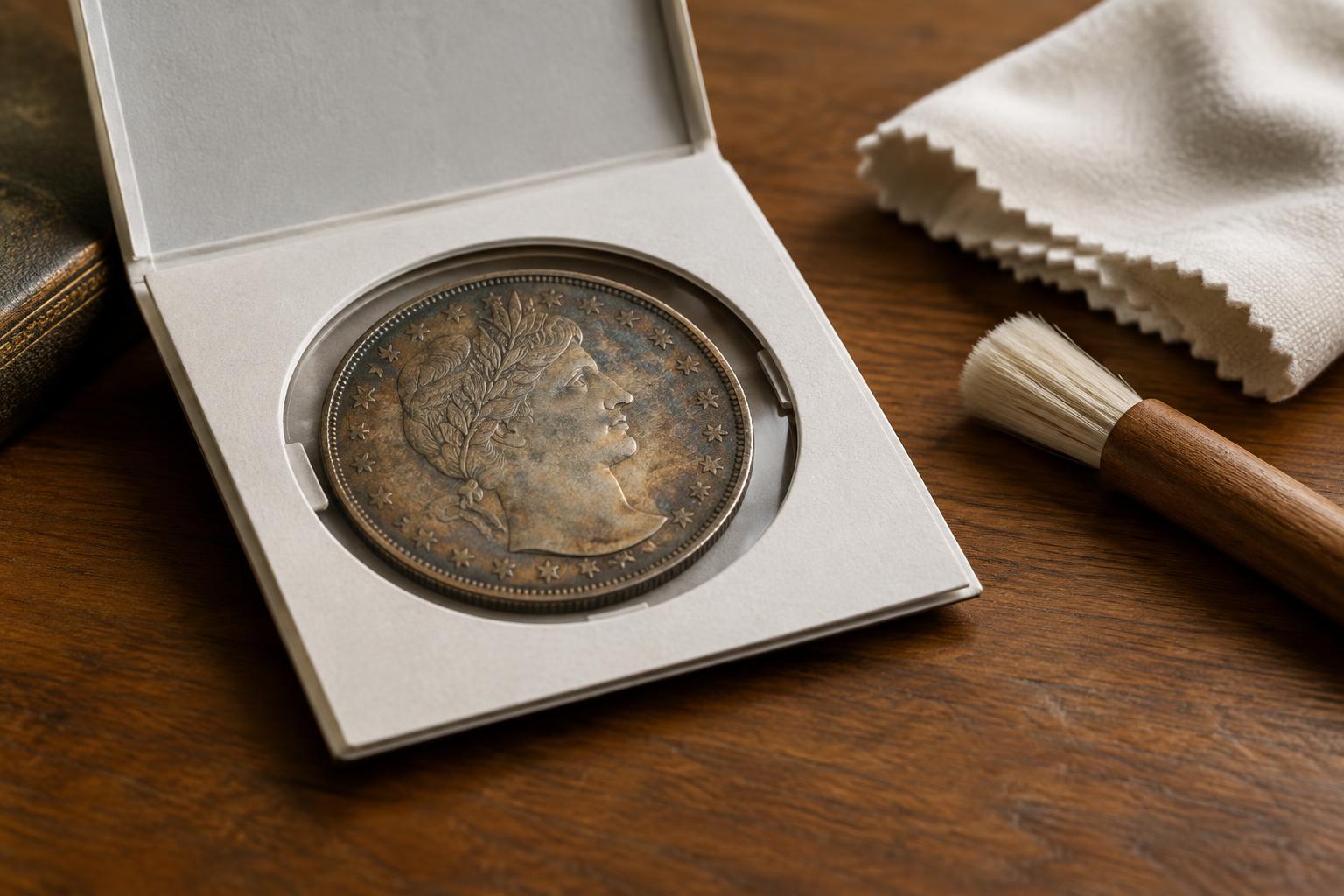
Not every change in color is dirt. Toning is a gradual change in a metal surface’s appearance, and its colors and patterns can vary. Dirt, fingerprints, tarnish, and corrosion are different things, but they are not always easy to distinguish by eye. If you cannot tell what is on a coin, that uncertainty is a good reason to leave it alone rather than try a household cleaner.
Why gentle cleaning can still leave damage
A coin’s surface has tiny details that are easy to disturb. Rubbing with a cloth, tissue, cotton swab, or soft brush can create fine scratches, even when the material feels harmless to your fingers. Polishes and abrasive pastes can remove a thin layer of metal along with the discoloration. Once that surface is altered, ordinary storage cannot restore it.
Chemical dips and household products carry different risks. They may change the coin’s color unevenly, leave residue, or react with its metal. The same treatment will not have the same effect on every coin: a product that appears to brighten one piece may affect another very differently. Cleaning can also create an unnaturally bright look beside worn details, making the alteration more noticeable rather than less.
Clean is not the same as well preserved
It helps to separate a coin’s condition from its shine. A coin can be dark but retain strong detail and an undisturbed surface. Another can gleam after polishing yet show scratches or a changed texture. For many collectible coins, those differences matter when people describe condition. Cleaning does not reverse wear from circulation, remove dents, or put back detail that has worn away.
The effect of cleaning on a coin’s desirability varies with the coin and what was done to it. That does not mean every mark or patch of toning should be treated as a problem to solve. Before considering any intervention, ask what you are trying to accomplish. If the goal is simply to make an older coin look new, leaving it as it is will usually preserve more of what makes it interesting.
What to do instead of cleaning
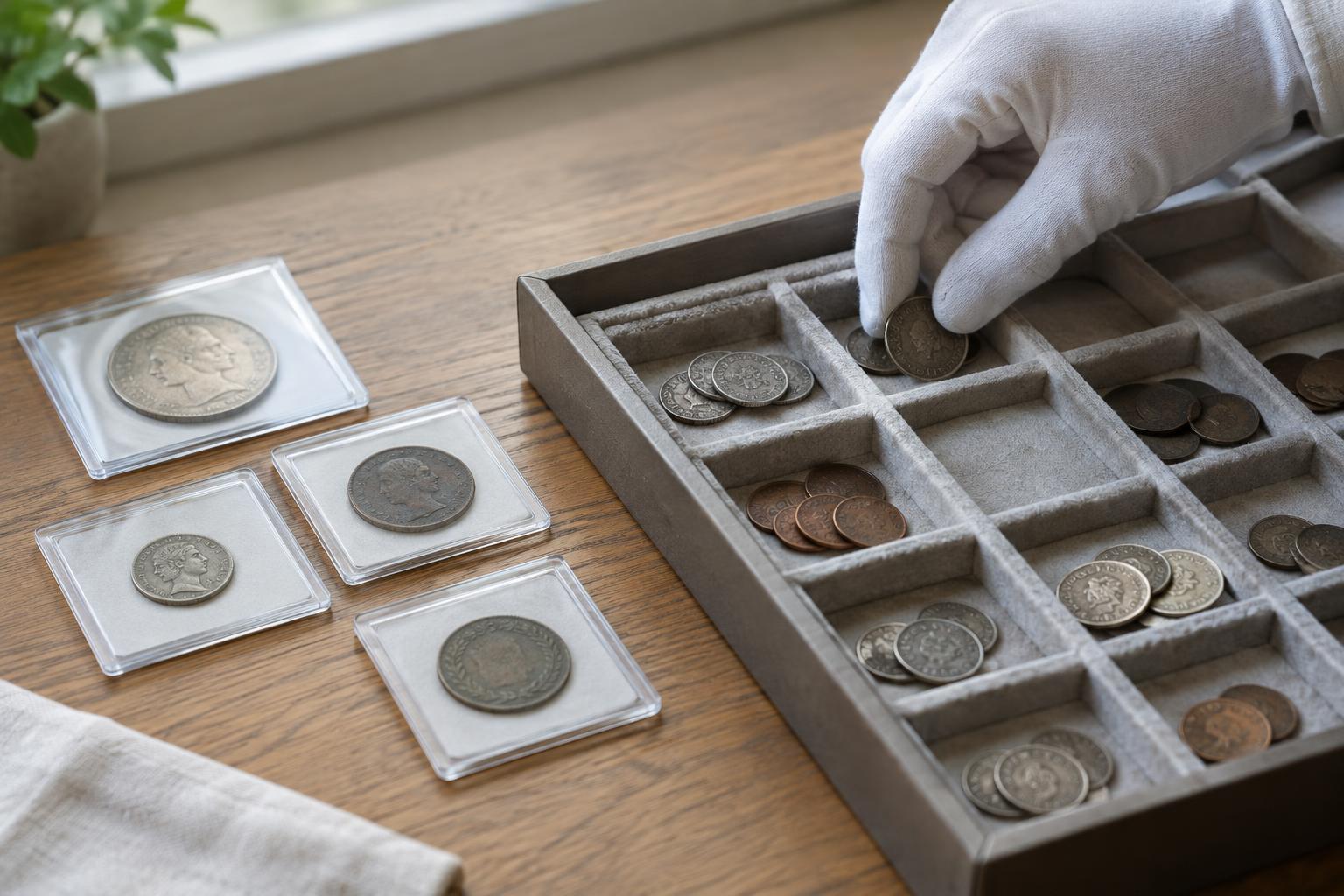
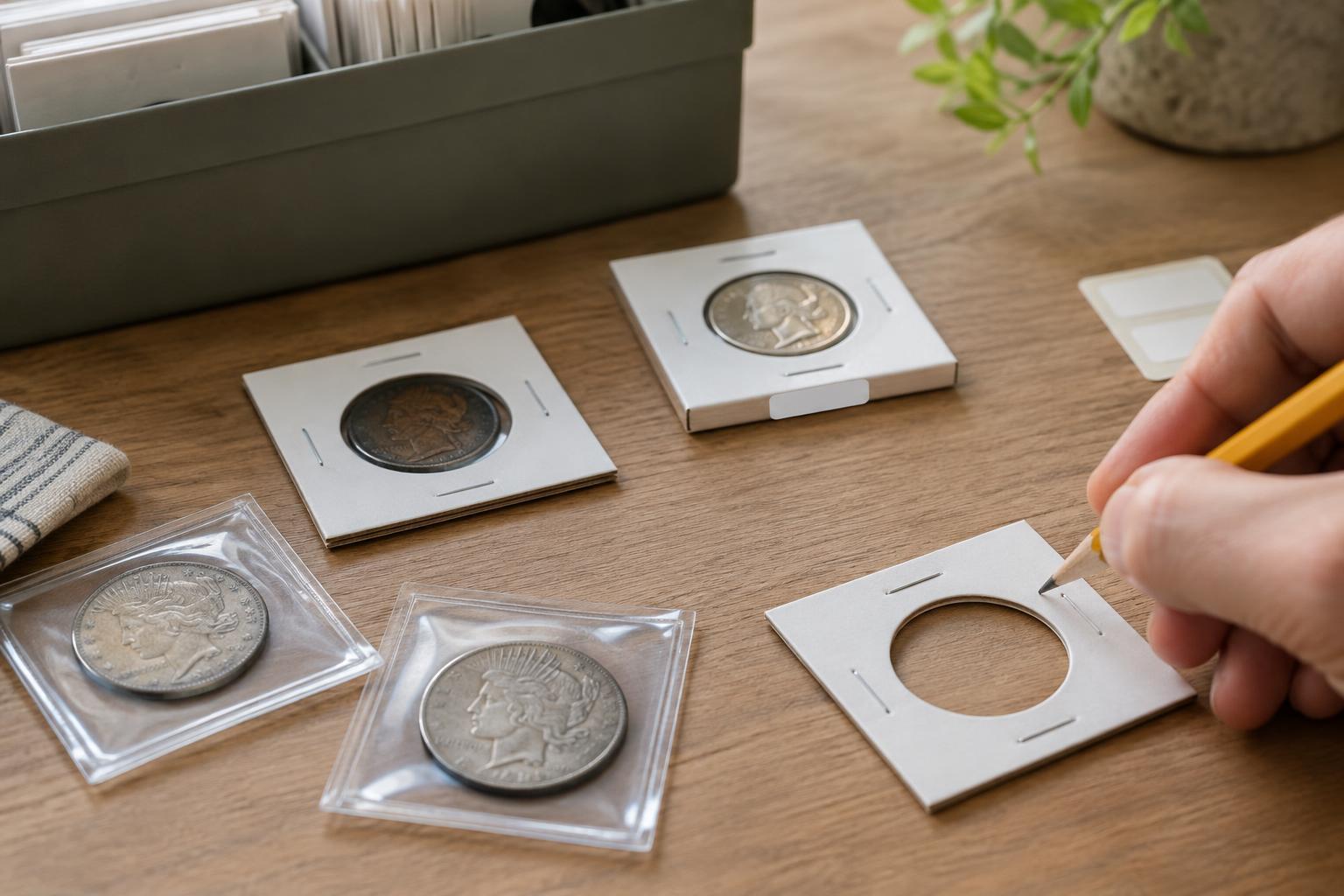
For routine handling, hold a coin by its edges with clean, dry hands, and work over a soft surface in case it slips. Put it in a holder suited to its size and metal rather than leaving it loose with other coins. Choose storage materials intended for coins, and avoid soft plastic holders containing PVC, which can leave damaging residue over time. A reasonably dry, stable storage area is preferable to a place with frequent swings in humidity.
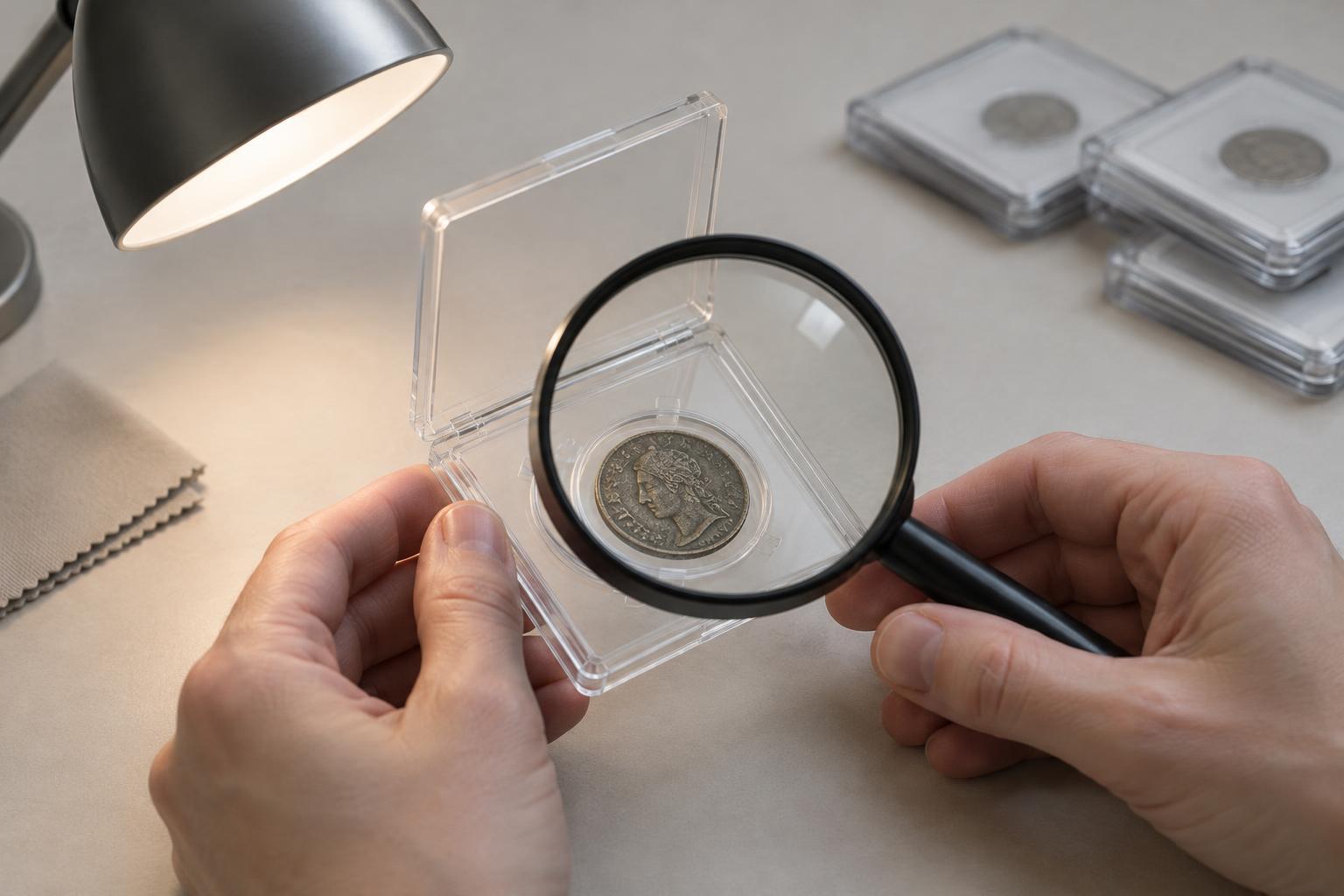
If a coin has loose dust, sticky material, or suspicious spots, resist the urge to test a remedy on it. Even an attempt to wipe away loose particles can drag them across the surface. If the coin matters to your collection, photograph it and note what you see. A knowledgeable coin dealer or conservation specialist can help you assess whether the material is harmless, whether it is causing ongoing damage, and whether any treatment is appropriate.
When a coin may need more than careful storage
There is a difference between cleaning for appearance and addressing a possible preservation problem. A coin exposed to moisture, a spill, or a deteriorating holder may need prompt attention, but rubbing or applying a household chemical can make matters worse. Move it away from the source of the problem, handle it as little as possible, and seek advice before attempting to remove anything attached to its surface.
Professional conservation, when appropriate, aims to address a specific problem with as little alteration as possible; it is not a promise to make a coin look new. Most beginners will do more for their collections by learning to recognize surfaces and improving storage than by learning cleaning techniques. When in doubt, pause. You can decide later whether a coin needs attention, but you cannot undo an unnecessary polish.