Start with observation, not cleaning
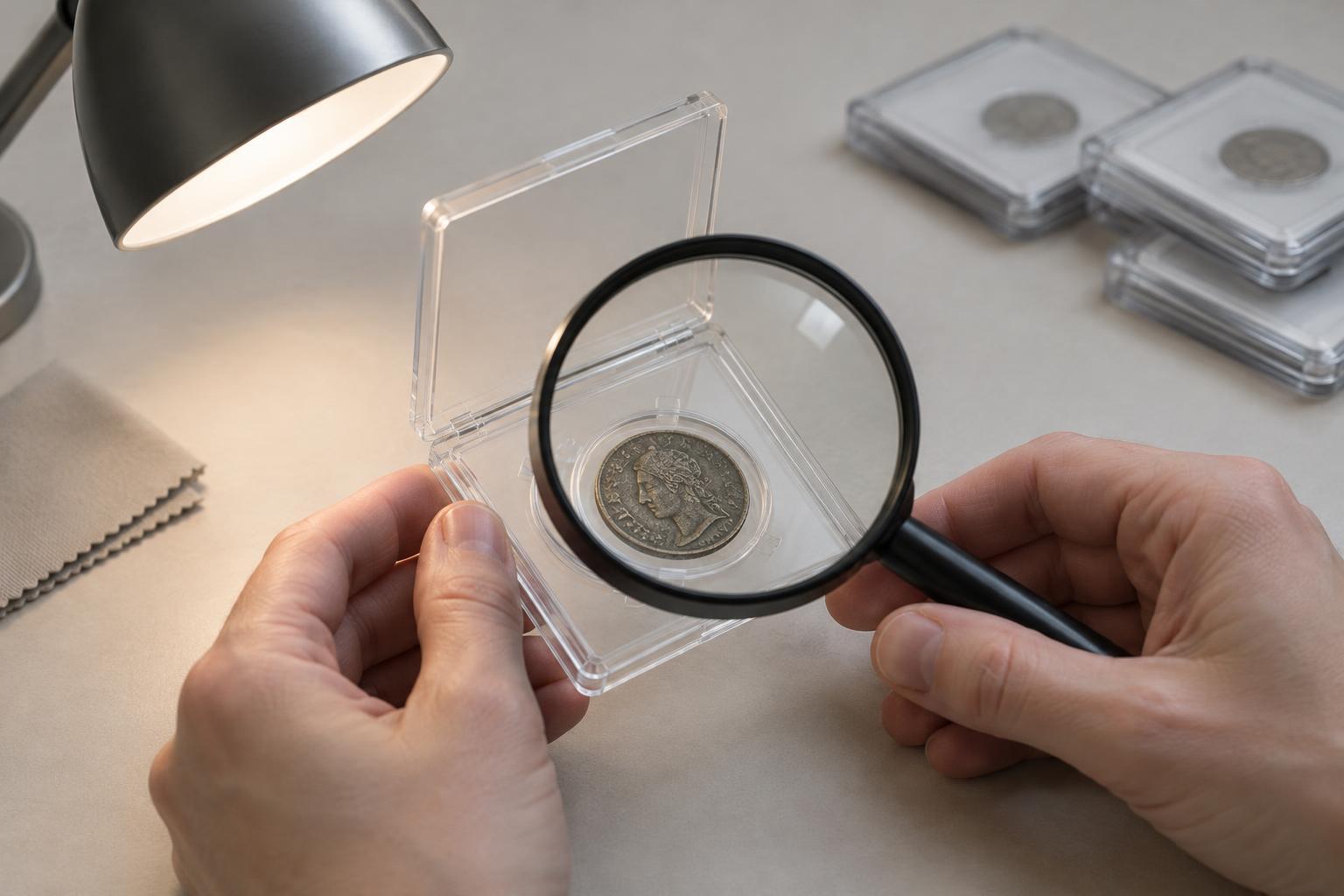
When a coin develops a new spot or unusual color, the first impulse may be to remove it. Resist that impulse until you understand what you are seeing. Corrosion, harmless toning, dirt and residue can look similar at a glance, while cleaning can leave permanent scratches or alter a coin’s surface. Look at the coin under steady, diffuse light and, if useful, a low-power magnifier. Note whether a mark looks flat, raised, powdery, sticky or etched into the metal.
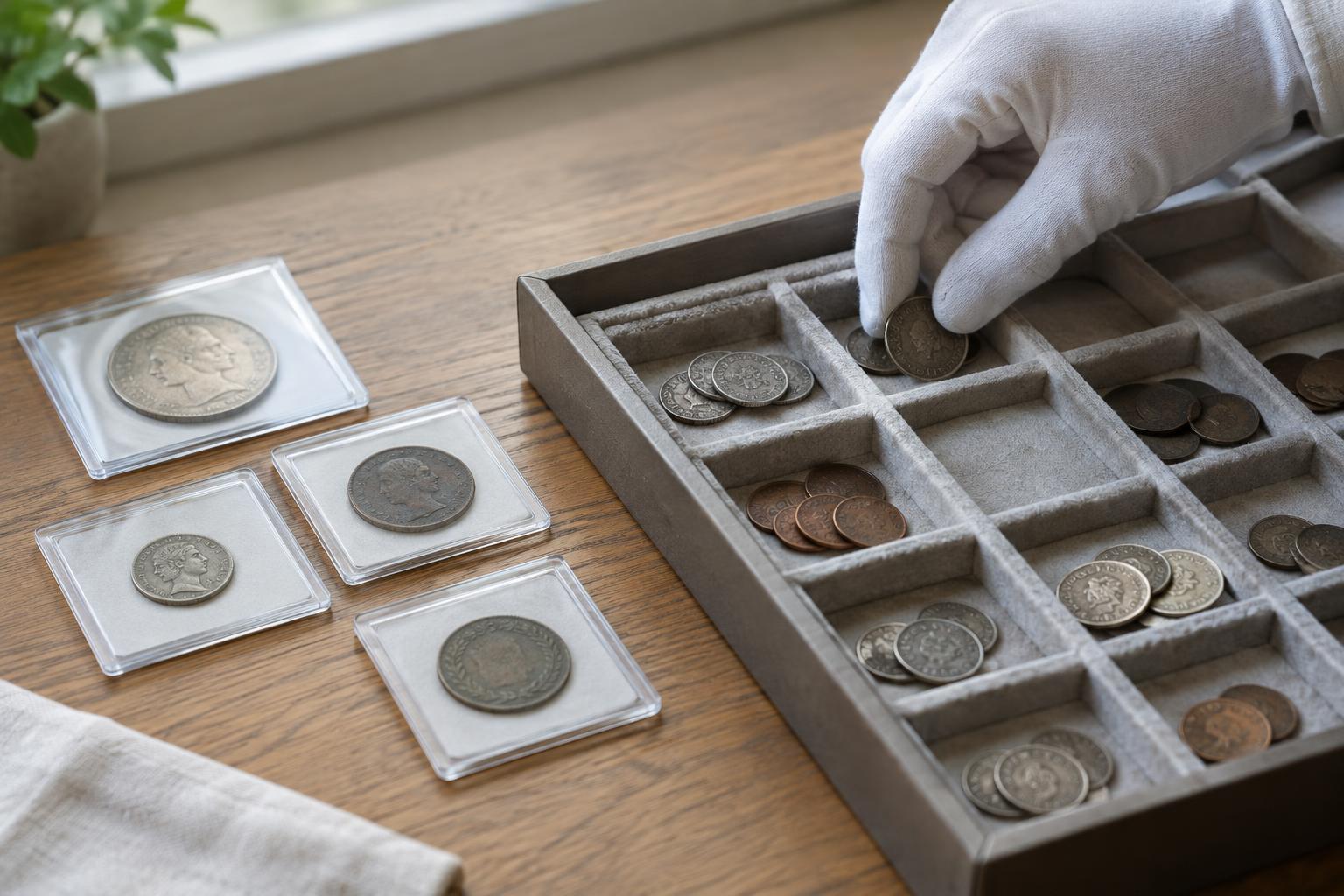
If you have an older photograph of the coin, compare it with what you see now. A change over time is especially useful to notice: a spreading spot or fresh deposit deserves more attention than stable discoloration. Handle the coin by its edges over a soft, clean surface, and keep your fingers away from its faces. You do not need to identify every mark with certainty to make a sensible storage decision.
Toning and corrosion are not the same thing
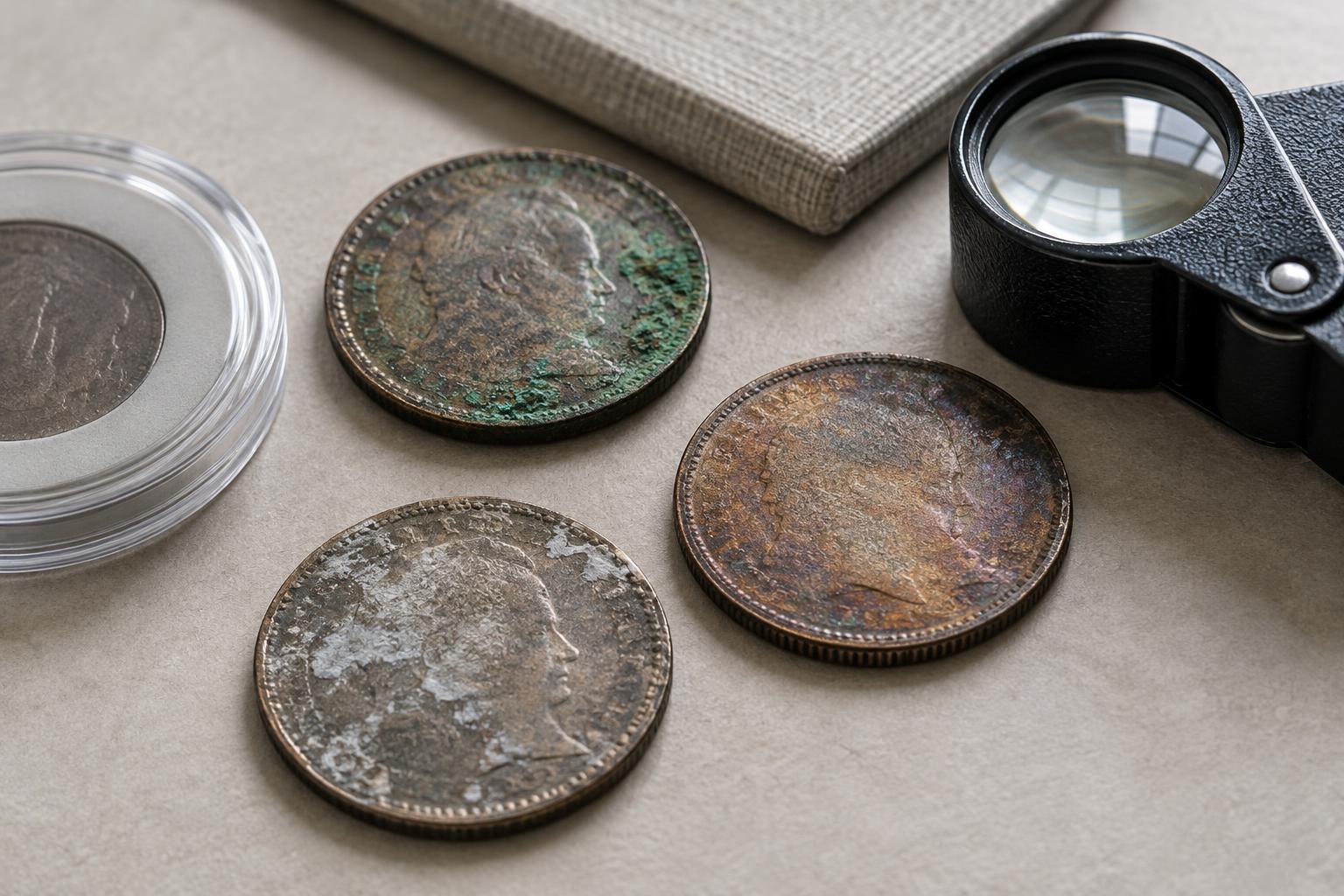
Toning is a change in surface color caused by reactions between a coin’s metal and its surroundings. On silver coins, it may appear gray, gold or multicolored; copper coins may gradually become brown. Toning can be even or patchy, and its appearance alone does not prove that storage conditions are good or bad. Collectors differ in their preferences, so color should not be treated as an automatic reason to intervene.
Corrosion is more concerning when the surface appears rough, pitted, crusted or actively changing. Green deposits on copper-alloy coins, white or gray crusts on some other metals, and spots that seem to grow may warrant closer attention. Color alone cannot identify the cause: the alloy, earlier handling and old treatments all matter. If material looks loose or powdery, avoid brushing it away, since the underlying surface may be fragile.
Look for clues left by holders and handling
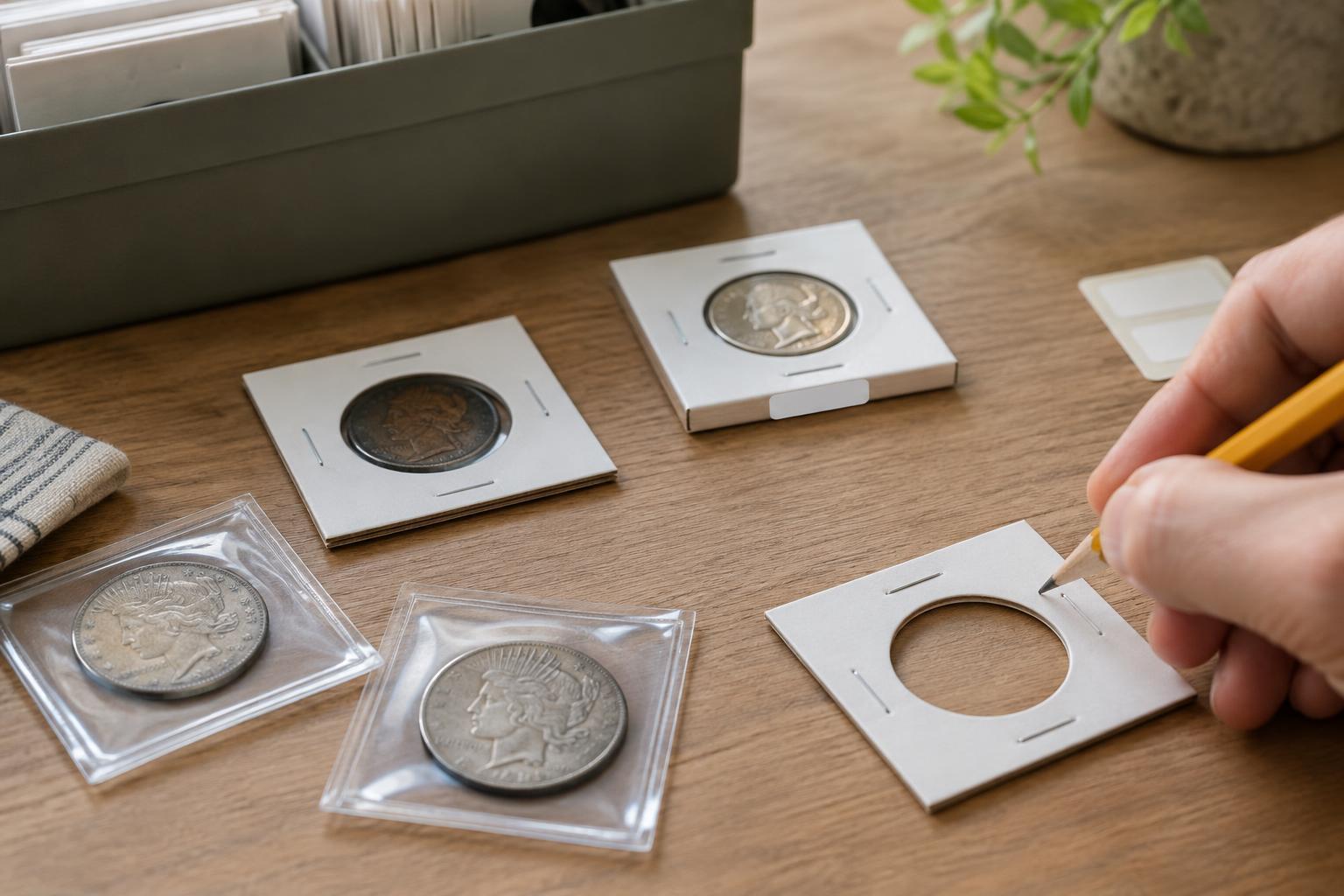
Storage materials can leave recognizable patterns. A cloudy or tacky film may suggest residue from a soft plastic holder; greenish residue is sometimes associated with plasticizers in certain older flexible holders. Paper envelopes, labels and adhesives can also transfer stains or leave patches where they touched a coin. A mark that follows the shape of an insert, tape edge or holder opening is a clue to investigate the packaging rather than the coin alone.
Fingerprints are another common storage surprise. Oils and moisture transferred during handling may become more visible later, sometimes as dull or discolored ridge patterns. Dust and loose fibers can settle on a coin without being bonded to it, but it is difficult to judge that safely through a holder. If several coins in the same album or box show similar new marks, check the shared materials and environment before moving them into more of the same supplies.
Check the environment around the coin
A coin’s holder is only part of its storage system. Damp air, condensation and repeated temperature swings can encourage surface reactions, particularly when moisture is trapped inside packaging. Look for fogging within holders, warped paper, musty odors or signs of water exposure in a box. These clues do not establish what has happened to an individual coin, but they can show that the storage location needs attention.
For routine storage, choose holders sold for long-term coin use and keep them in a clean, relatively stable, dry indoor space. Avoid placing collections near plumbing, exterior walls prone to dampness, or sources of heat and fumes. Replace damaged or suspect outer packaging carefully. A holder that is sealed, stuck to a coin or difficult to open may be best left to someone experienced, rather than forcing it apart.
Respond cautiously when you find a problem
If you suspect active corrosion or a problematic residue, separate the affected coin from others so that you can inspect the group and its storage materials. Make a note of the date and photograph the coin under consistent lighting; later comparisons can help you tell whether a mark is changing. Moving an unaffected coin to a suitable holder may be straightforward, but avoid rubbing, dipping, polishing or applying household chemicals to a marked coin.
For a coin that is fragile, valuable to you or visibly changing, consider asking a qualified coin conservator or reputable numismatic specialist for an assessment before attempting treatment. The safest response is often to correct the storage conditions and leave the surface alone until you have better information. Regular, gentle inspections can help you catch problems early without turning every spot into an emergency.