Why coin paperwork needs its own storage plan
A coin may arrive with a receipt, a certificate, an old envelope or a handwritten note. These items can explain where the coin came from, identify a variety someone noticed or simply preserve part of the collection’s history. If the paperwork becomes separated from the coin, that context can be difficult to recover. Keeping it all together is useful, but keeping it all inside the same coin holder is not always wise.
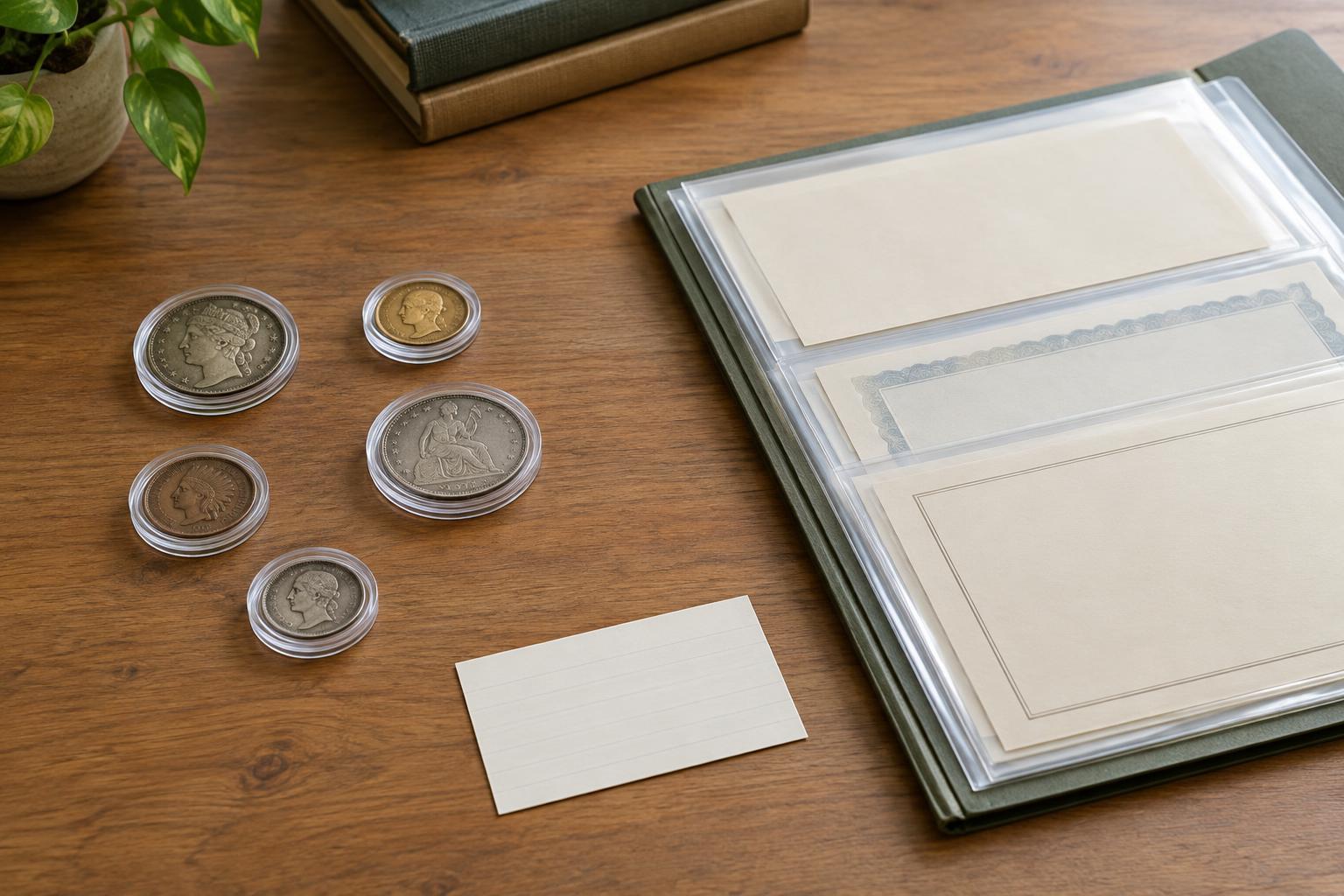
Paper, printing inks, staples, tape and adhesives are not ideal companions for a coin surface. Their composition varies, and some materials may change or leave residue over time. Rather than placing a receipt or note against a coin, give the coin an appropriate holder and store the paperwork in a separate sleeve or folder. You can still keep both in the same storage area if there is a clear way to connect them.
Give each coin and its records a shared identifier
A simple identifier makes separation manageable. Assign each coin a short, unique code, such as C001 or C002, and put that code on its holder or on a label attached to the outside of its container. Write the same code on a record sheet and on a sleeve for any related paperwork. Mark only the holder, sleeve or record—not the coin. If a coin is already in a certified holder, avoid covering its printed information with your label.
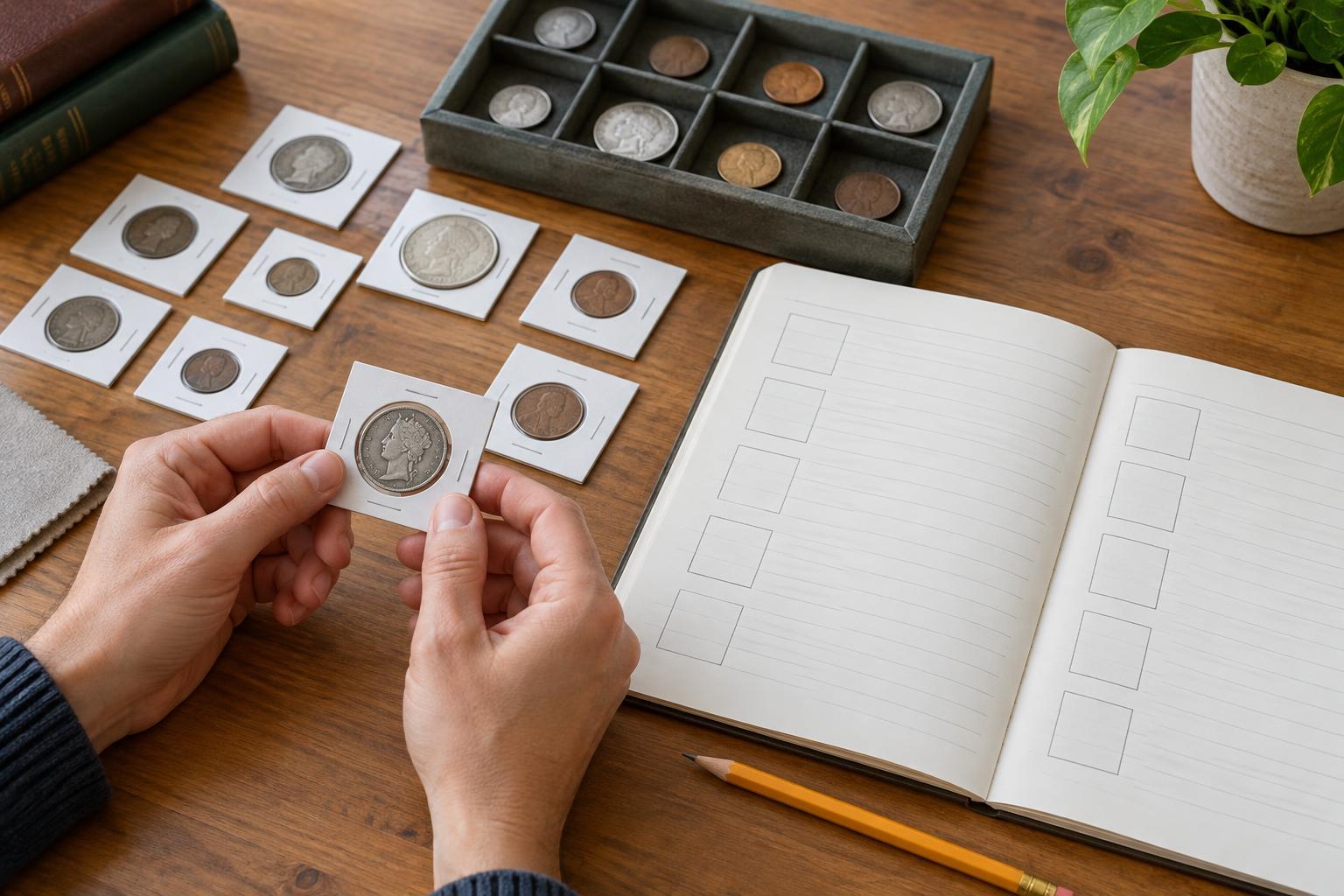
A basic record can include the coin’s identification, where it is stored, the date you acquired it if known, and a brief description of any associated documents. Record uncertainty plainly: “seller described this as a proof” is more useful than turning an unverified description into a fact. If you move a coin to another tray, box or album, update its location in the record. That small habit makes an inventory much more useful when you need to find one piece without searching through every holder.
Protect the documents without crowding the coins
Place receipts and notes in labeled folders or document sleeves, rather than folding them around coins. Keep staples and paper clips away from coin holders where they could scratch a surface during handling. If an old envelope carries useful writing, retain it as a document even if you choose a different holder for the coin. A photograph or transcription of a fragile note can make its contents easier to consult while the original stays undisturbed.
Certificates of authenticity deserve the same careful separation. A certificate may be worth retaining as part of a coin’s accompanying material, but its presence alone does not establish that a coin is genuine or correctly identified. Record which coin the certificate accompanied and keep its packaging details if they help preserve that connection. For sets, use one identifier for the set and, if needed, additional identifiers for individual coins so that documents do not become mixed up.
Make the system easy to maintain
Your record system can be a notebook, a spreadsheet or a set of cards. Choose one you will actually update. Photographs can help distinguish similar coins and document the condition you observed, though lighting and camera settings can affect how a coin appears. Name digital files with the same identifiers used on your holders, and keep a separate copy of important digital records in case a device fails. If your inventory contains purchase details or storage locations, consider who can access it.
When you add a coin, use a short routine: place it in a suitable holder, assign an identifier, file its documents, enter its storage location and check that the entries agree. Revisit the system occasionally to correct missing labels or outdated locations, without opening holders unnecessarily. A good storage record should reduce handling, not create more of it. The goal is simple: protect the coin, preserve its accompanying information and make both easy to find when you need them.