What is a mint mark?
A mint mark is a small symbol, often a letter, used to identify a minting facility or another officially designated source of production. It may appear beside the date, near a portrait or in a less obvious part of the design. Its position is a design choice, not a universal rule: the same issuing authority may place marks differently across coin series or years.
A mint mark is only one clue to a coin’s identity. To interpret it, first establish the coin’s issuing authority, denomination, date and design. The same letter can mean different things on coins from different places. A tiny character that looks like a mint mark might instead be a designer’s initial, an engraver’s signature or a privy mark used to distinguish a particular issue. Comparing the whole coin with a reliable identification reference is safer than assigning a meaning to a letter on its own.
How does a mint mark get onto a coin?
A coin receives its design when metal is pressed between dies. The mint mark must therefore be present in the working die that strikes the coin. Depending on the mint’s methods and the period, a mark might be incorporated during an earlier stage of preparing the design tools or added to an individual die later. This difference matters because it affects how consistently a mark appears across the dies used for an issue.
Older methods sometimes involved placing marks on working dies individually. Small differences in position or appearance can result when separate dies are prepared this way. With other production methods, the mark can be included before multiple working dies are made, producing a more consistent location. A collector should not assume that every variation in a mark’s position is a mistake, or that every mark was made by the same process. The coin’s series and production period provide the necessary context.
Why might a coin have no visible mint mark?
An unmarked coin is not automatically an error. Some issues were designed without mint marks, and an issuing authority may have used the absence of a mark as part of its normal system for distinguishing production. Rules can also change over time. Before treating a missing mark as unusual, check whether that exact coin type and date was supposed to carry one.
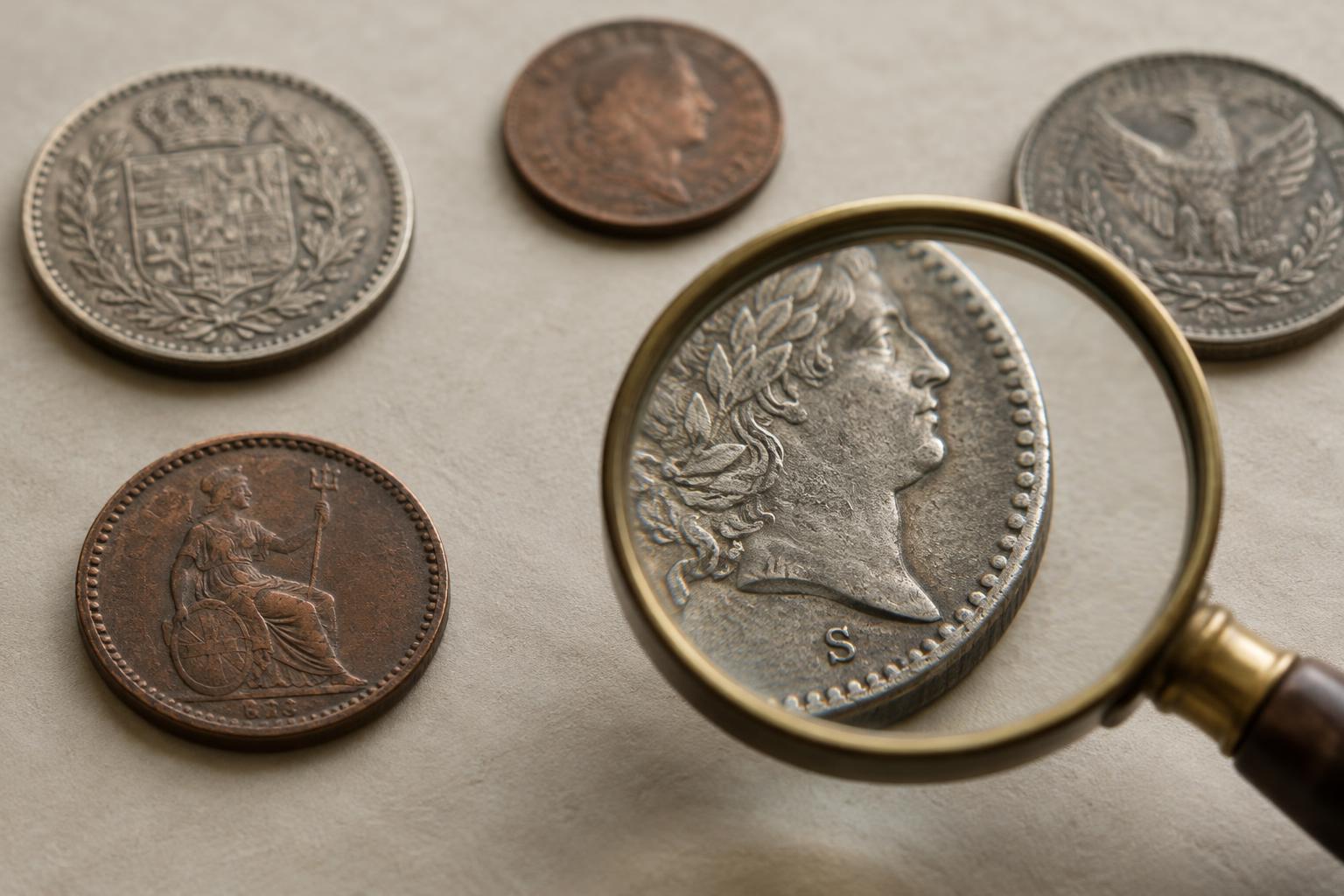
Even when a mark is expected, visibility can be affected by ordinary wear, a weak strike or damage to the coin. Dirt or toning may obscure a small detail, while a photograph taken at the wrong angle may hide it entirely. Examine the area under steady light and modest magnification without rubbing the surface. If the mark still cannot be found, compare the coin with clearly identified examples and consider the condition of the surrounding details. A worn or unclear coin usually cannot support a confident claim about a rare missing-mark variety.
Using mint marks while building a collection
Mint marks can provide a practical way to organize a collection. A beginner might choose one coin design and gather examples from its different marked and unmarked issues, recording the date and visible mark for each. This creates a focused goal while encouraging close observation. It also makes gaps easier to spot without assuming that every date exists with every possible mark.
Keep the identification separate from any judgment about value. Scarcity, condition and collector interest can vary from one issue to another, and a mint mark alone does not establish what a coin is worth. Record uncertain readings as uncertain, especially on worn pieces. The most useful habit is simple: identify the coin first, check which marks were used for that issue, then examine the mark itself. That sequence turns a tiny design detail into a reliable part of the coin’s story.